No Charges. Black Missouri Teen Saveion McConnell Was Unarmed, Charged With Nothing, and Gunned Down by a Cop Who Shot at Him 9 Times. The State Just Ruled His Slaughter Legal.
Four and a half months after a Lafayette County deputy rammed nineteen-year-old Saveion McConnell with a patrol car and then fired nine rounds at him on the shoulder of U.S. Highway 50, Johnson County Prosecutor Robert Russell announced Tuesday that no crime was committed. Saveion had no weapon. Witnesses say his hands were in the air.
Exclusive · Justice · Kansas City
Exclusive Video: Horrifying Bodycam Footage Reveals Missouri Cop Firing 9 Shots at Unarmed Black Teen, Continues Shooting As Lifeless Body Lays on Ground
“Trying to find a Black kid at night, that’s always fun,” one of the two officers on the recording can be heard saying on body camera in the minutes before Lafayette County Deputy Kenneth Lewie shot nineteen-year-old Saveion McConnell to death on the shoulder of U.S. 50. The Kansas City Defender has obtained the footage, and the prosecutor’s memo that cleared Lewie. Neither says what the state has been telling the public.
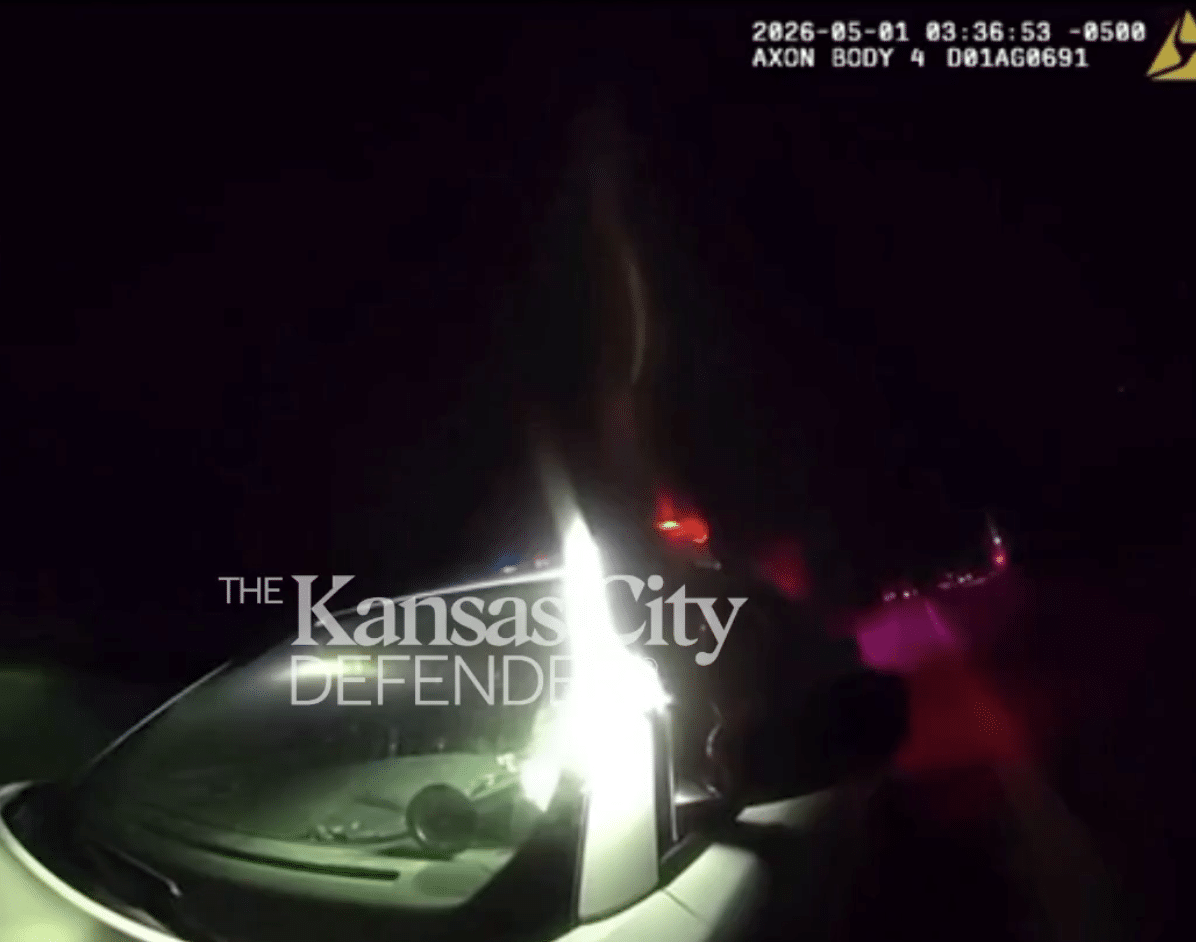
The Kansas City Defender has obtained exclusive video footage of the horrific slaying of Black nineteen-year-old Saveion McConnell. The haunting footage vastly contradicts the police statements that have been disseminated to the media thus far, and it arrives two days after Johnson County Prosecuting Attorney Robert Russell announced that the deputy who killed Saveion will never see a courtroom.
McConnell’s family, and the broader Black community across the Kansas City region, are demanding justice, a reopening of the case, and accountability for the white cop who shot Saveion multiple times, watched his body fall to the ground, and continued shooting the teen at least six times after he lay incapacitated and lifeless on the ground.
In the months since Saveion’s brutal killing, hundreds of students, community members, family, and community organizations have continued to rally for charges to be brought against the cop who killed him, but until now there has been no video evidence of what occurred that night. Now there is. And the state’s own memo, which The Defender has also obtained, turns out to be a second piece of evidence, one the prosecutor may not have intended to release into the hands of people who would read it closely.
The Footage
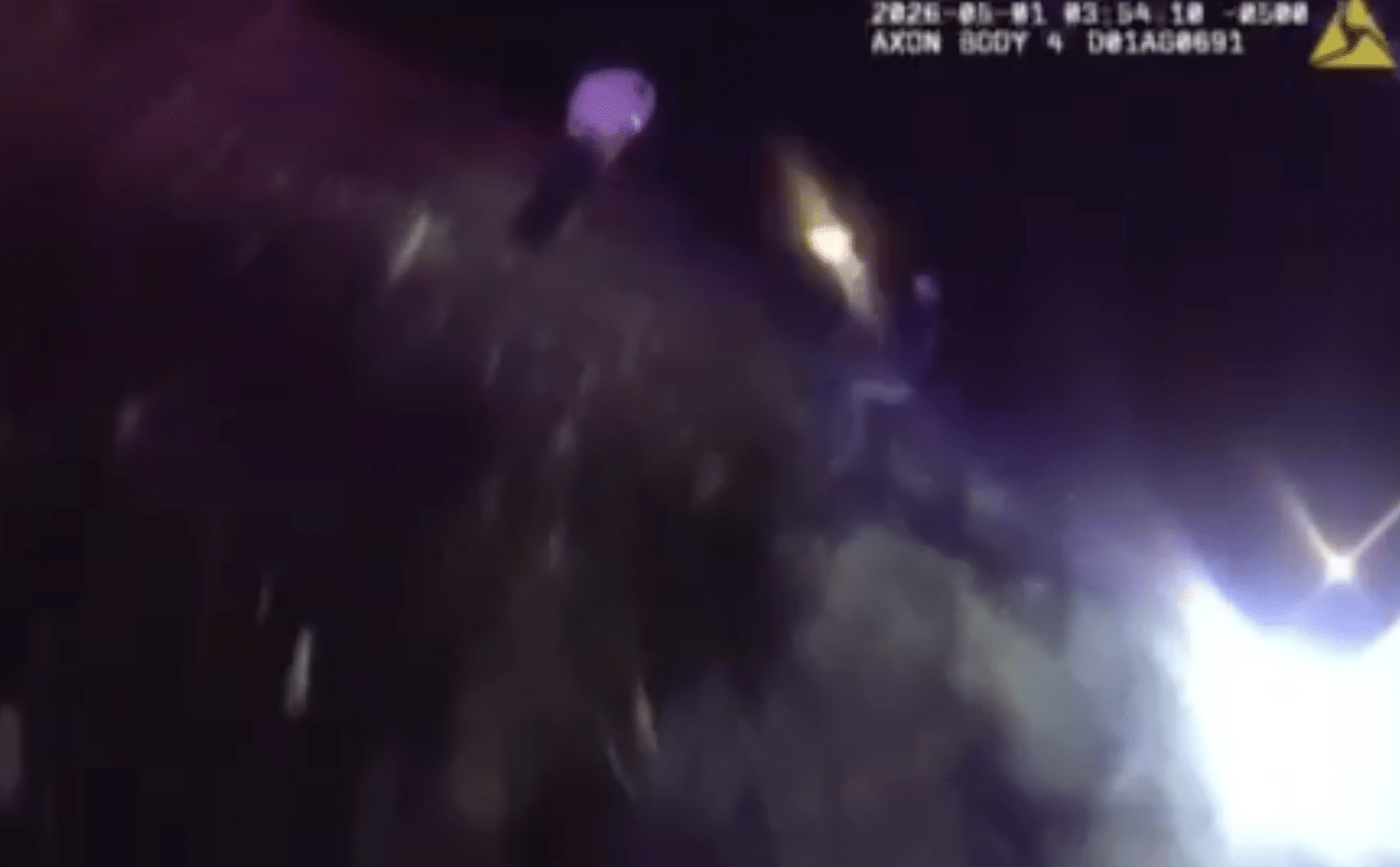
Content warning
This footage shows the killing of Saveion McConnell.
We are publishing it because the State of Missouri hid it for four and a half months and then declared what it shows to be legal. It is unbearable. Watch it if you can, and if you cannot, the record below tells you what it shows.
Tap to view the footage
Content warning
This footage shows the killing of Saveion McConnell.
We are publishing it because the State of Missouri hid it for four and a half months and then declared what it shows to be legal. It is unbearable. Watch it if you can, and if you cannot, the record below tells you what it shows.
Tap to view the footageIn the final moments of the footage, Saveion is seen standing only yards away from the cop who killed him, along with another cop who is farther away and wearing the body camera. The cop wearing the camera, Odessa Police Officer Nathan Holmberg, appears to have his Taser unholstered and pointed at McConnell. The closer cop, Lewie, has his lethal weapon pointed at McConnell instead.
The cop who could see Saveion best, close enough to be certain, chose the gun. The one farther back chose the Taser.
The one farther back is also the one whose camera the prosecutor relied on to describe what Saveion’s hands were doing.
Nine casings were recovered from the scene. On the audio, the officer holding the Taser can be heard shouting “Taser! Taser! Taser!” in the seconds before the gunfire, and then “Shots fired! Shots fired!” The man standing next to Lewie had judged the moment called for a Taser. Lewie fired a gun. The footage shows the shots continuing after Saveion has fallen. Slowed frame by frame, at least six of the nine rounds are fired after he is already down and no longer moving.
Nine Shots. One Justification.
Russell’s memo justifies a single moment. It describes a hand lifting a T-shirt and a hand reaching toward a waistband, and it concludes that a jury would likely find Lewie’s belief reasonable at that instant. It does not analyze the second shot. It does not analyze the ninth. It does not mention that most of the rounds were fired after he was on the pavement.
The law the memo cites does not work the way the memo uses it. Missouri’s statute permits deadly force only when it is “immediately necessary,” and federal courts have held for decades that a use of force justified at the start of an encounter stops being justified the moment the threat it answered is gone. Every shot has to be reasonable on its own. A deputy who fires once at a man he believes is drawing a gun and then keeps firing at a man who has fallen and stopped moving is not describing one decision. He is describing nine, and the memo grades only the first.
Grant every word of the deputy’s story. That he was justified in his fear, that it was dark, all of it. That justifies the first shot. There are eight more, and six of them came after Saveion was incapacitated or completely lifeless on the ground.
Saveion was unarmed. But even a prosecutor who accepts that Lewie could not have known that has to explain why the shooting continued after there was nothing left to fear. Russell’s memo does not try.
Earlier, before the chase, the audio catches the officers hunting.
“Trying to find a Black kid at night, that’s always fun.”
Only two officers are on the recording, Deputy Kenneth Lewie and Officer Nathan Holmberg. The Defender has not been able to determine which of them said it. Russell’s memo, which claims to have reviewed body camera and car camera footage “prior to the officer involved shooting,” does not mention the sentence.
What the Prosecutor’s Memo Actually Says
Russell’s seven-page memorandum, dated September 14, is written to Col. Michael Turner of the Missouri State Highway Patrol, Sheriff Scott Munsterman of Johnson County, and Sheriff Aaron Dye of Lafayette County. Russell states that he received all reports on the case on July 30, six weeks before he announced his decision, and he closes by asking the three commanders to let him know if they need anything further “to close your law enforcement agency’s files.”
It misspells Saveion’s name on every page. And read against itself, it dismantles the justification it was written to provide.
The weapon Lewie says he feared was already in police custody. The memo’s justification rests on Lewie’s belief that Saveion “could be armed” with the weapon from the earlier incident. But the memo also records that when deputies responded to that first scene, they searched the car and recovered the alleged weapon inside it. The weapon Saveion was supposedly carrying was in the hands of law enforcement, at the intersection where, by the memo’s own account, Holmberg stood waiting for a drone before he went looking for a Black kid on the highway. The memo never reconciles those two pages. It never explains how a deputy could reasonably believe a teenager was reaching for a weapon that officers had already taken out of a car and logged into evidence. It simply states the belief, and then it excuses the shooting on the strength of it.
The Tape vs. The Memo
What the state wrote. What the record shows.
The memo says
The record shows
THE MEMO SAYSFact one: McConnell “was sought for the shooting of the juvenile female.”
THE RECORD SHOWSOn page six, Russell declines to charge anyone in that shooting because of “the conflicting versions of events from the witnesses in the vehicle.” The story of Saveion as an armed gunman on the run was too weak to charge a living person and strong enough to excuse killing him.
THE MEMO SAYSMcConnell “came into contact with the deputy’s vehicle.” Lewie “did not intentionally hit McConnell.”
THE RECORD SHOWSIn May, the Highway Patrol said the patrol car struck Saveion while he was running. A two-ton vehicle is made grammatically passive so that a boy can be made to run into it.
THE MEMO SAYSLewie “believed McConnell was reaching for a gun.”
THE RECORD SHOWSNo weapon on Saveion. No weapon at the scene. The weapon the memo says he “could be armed” with had already been recovered from the car by deputies at the first scene, where Lewie himself had been waiting. The waistband motion is described from the camera of the officer farther away, the one holding a Taser.
THE MEMO SAYS“Fatal Officer Involved Shooting.” “A sad and regrettable situation that resulted in the death of Savion McConnell.”
THE RECORD SHOWSNine shots. At least six after he fell. A deputy with a name the memo misspells on every page. Russell concedes “the loss of his life was avoidable,” then declines to say who could have avoided it.
Missouri Has Done This Before, and We Have the Receipts
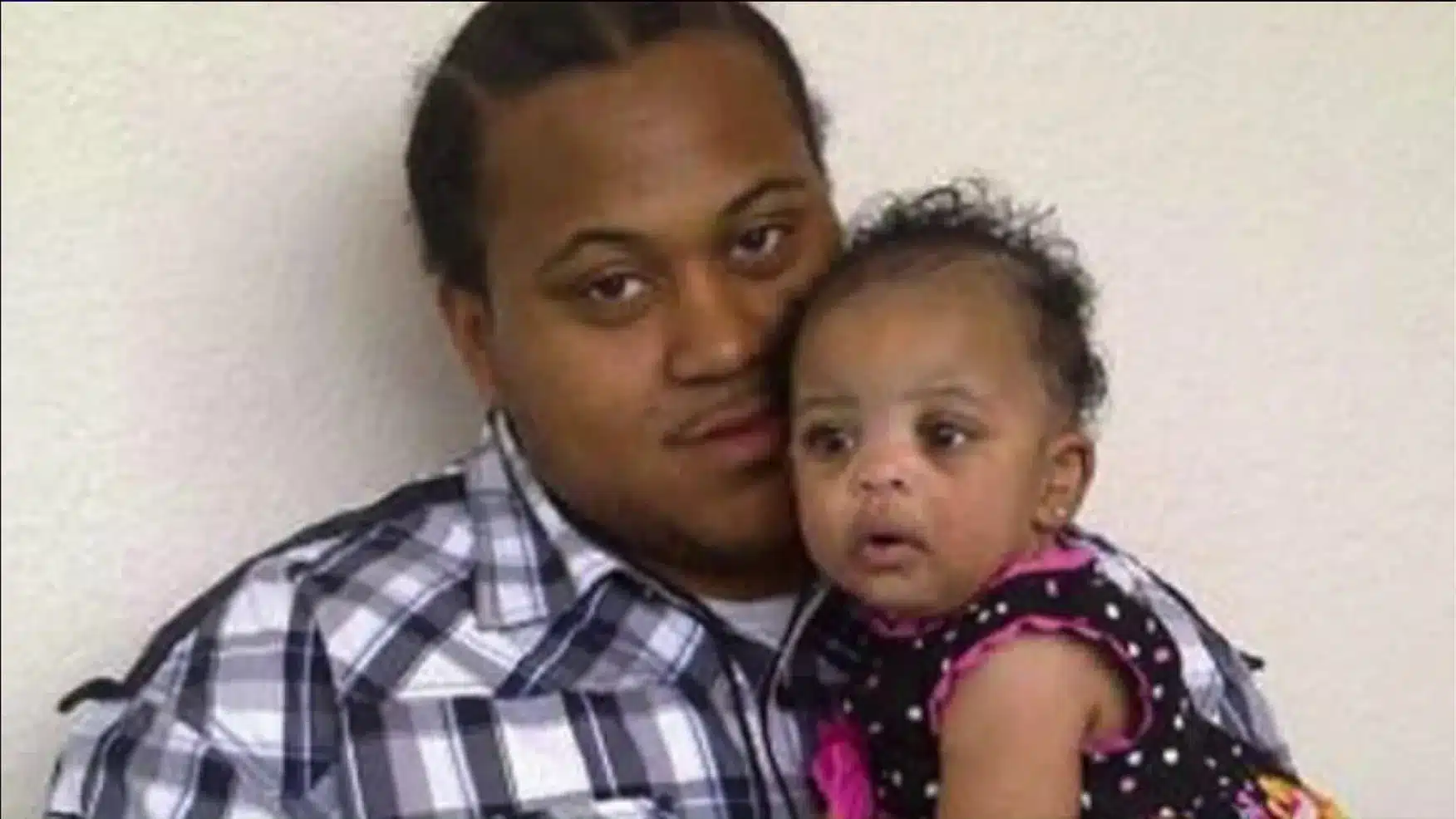
Black Kansas City did not need the footage to know how this would end. When KCPD officers killed Malcolm Johnson in March 2021, the Highway Patrol said “a struggle ensued.” Video released by pastors showed officers swarming a man rendered unable to fight back before he was shot in the head at point blank range. No officer was charged. When police killed Ryan Stokes, they said he had a gun he would not put down. He was shot in the back. The gun never existed. No officer was charged. When a detective killed Cameron Lamb in his own garage in 2019, police said a gun lay beneath his left hand. The first officer on scene saw no gun there. A judge convicted the detective, and a Missouri governor’s pen erased the sentence.
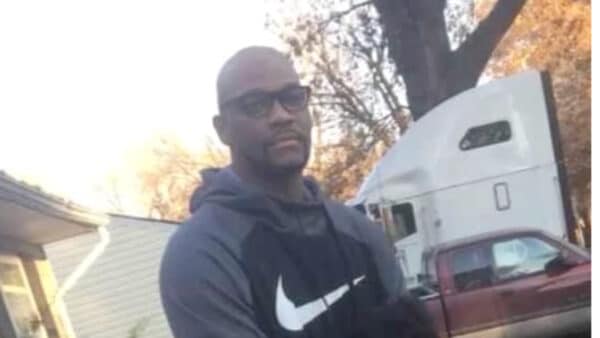
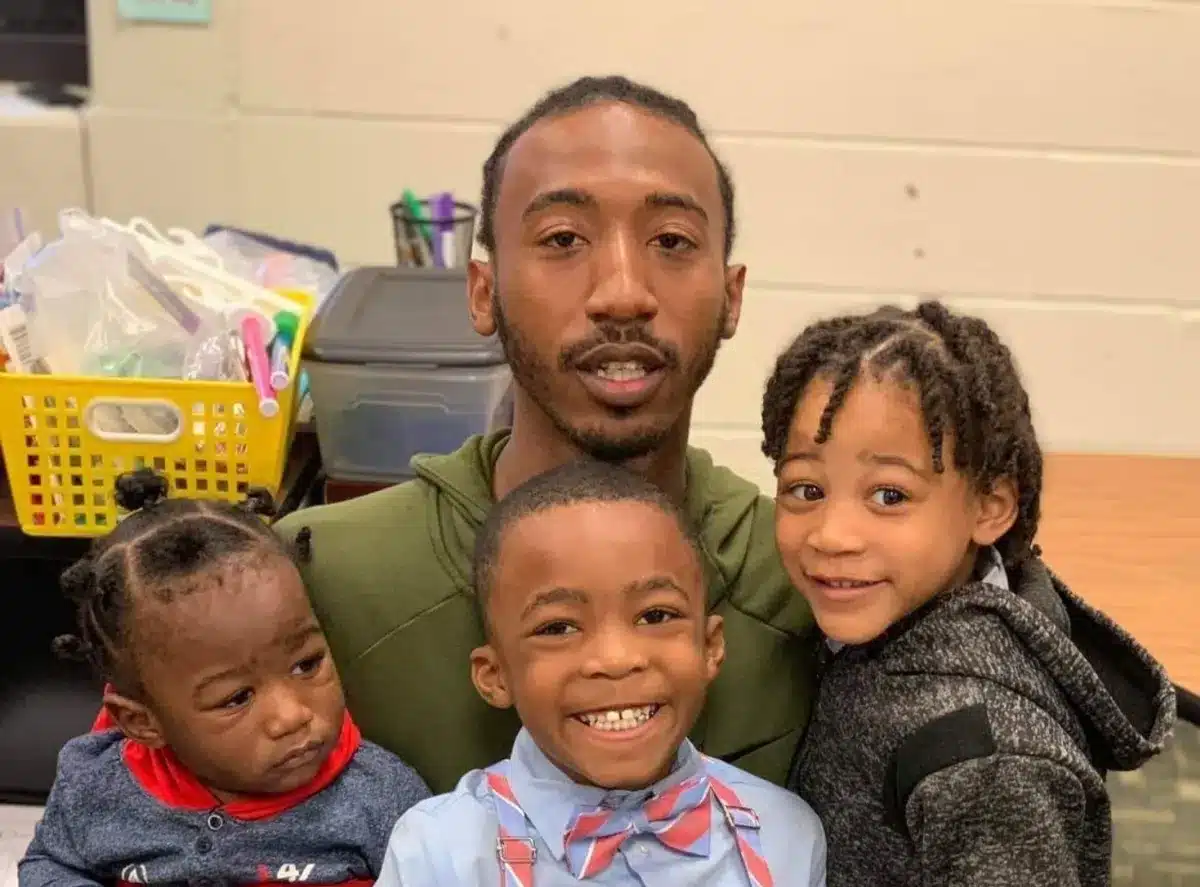
Malcolm Johnson.
Ryan Stokes and his one-year-old daughter.
Cameron Lamb with his children.
Four dead Black men. Four state investigations. Zero officers serving a sentence. The only thing that has ever varied is how long the state takes to arrive at the same answer, and how long it hides the tape.
His Mother Asked One Question
Michelle Washington stood in a park on what would have been her son’s twentieth birthday and asked the only question that has mattered: “Who is the deputy that did this, and will he be charged?”
The memo finally answers the first half. Kenneth Lewie. It answers the second half with a legal double negative and a request to close the file.
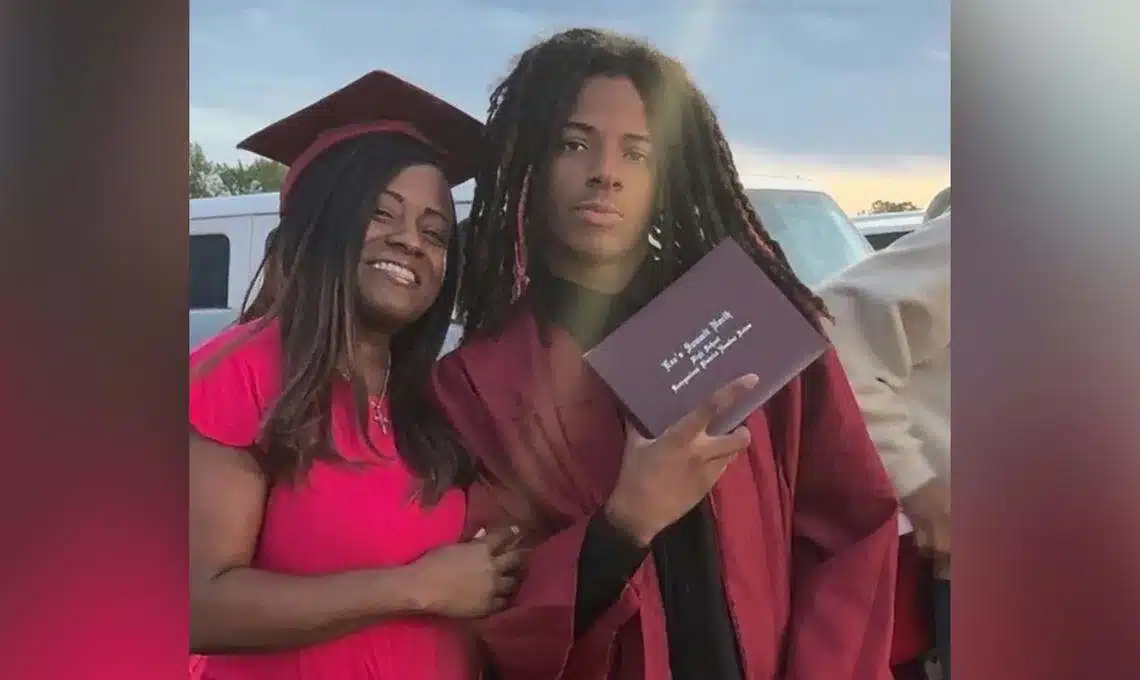
Her son was the only boy among her four children. He played football and basketball at Lee’s Summit North. He was weighing trade programs and college. On the last night of April he drove out to Warrensburg with friends to a fraternity party, and he never returned home.
“He should not have been taken away from us. He should still be here.”
His family’s attorneys at Romanucci & Blandin, the firm that served on George Floyd’s legal team and won ten million dollars for the family of Sonya Massey, said Tuesday that “the decision not to bring criminal charges does not mean there is an absence of wrongdoing.” Their investigation continues. Russell’s own memo agrees that a civil suit carries “a different burden of proof.” The footage The Defender publishes today will be evidence in it.
What We Demand
Reopen the case. A prosecutor who wrote his decision to the police, not the public, on a file he says he held for six weeks, is not the last word on whether nine shots at an unarmed teenager were a crime. The Missouri Attorney General, or a special prosecutor with no ties to the three agencies named on this memo, should review the footage and the file. Release every second of every camera, Lewie’s included, from the “Black kid at night” remark to the last shot. Sheriff Aaron Dye should answer, on the record, why the deputy who fired nine times at an unarmed teenager is still wearing a Lafayette County badge. And both Dye and the Odessa Police Department should tell the public which of their officers said that hunting a Black kid at night was fun, and what they intend to do about it.
We will print the word the headlines refused to print. Unarmed. We will print the name the state hid for four and a half months. Kenneth Lewie. And we will print the name the state could not be bothered to spell correctly in the document that excused his killing, as many times as it takes, until a courtroom somewhere in this country is made to hear it.
NINE SHOTS. AT LEAST SIX AFTER HE FELL.
Say his name. Saveion.
Say it.
Saveion.
The Full Footage, and How We Edited It
The two clips above are edited. In the interest of transparency, here is exactly how, and here are the complete recordings The Defender obtained.
The first recording is one minute and forty-six seconds long. It begins with an officer in his patrol car, pulling over, and getting out with his gun drawn on Saveion and another Black youth. The officers shout commands, “Let me see your hands,” “Walk back towards me right now,” “Hands on your head.” Saveion sounds confused by the screaming. Then he runs. The officers pursue, and the recording ends with the shooting. Our edited clip above shows the moments after the officers catch up to Saveion following the vehicle strike, slightly slowed down so that each shot can be seen. No other edits were made.
The second recording is the earlier body camera segment. Nothing of substance happens in it until the final ten seconds, when one of the two officers says, “Trying to find a Black kid at night, that’s always fun.” Our clip above is shortened to that portion. No other edits were made.
Both complete recordings follow.
Content warning · Full recording
Complete body camera recording, 1:46, ending in the killing of Saveion McConnell.
Unedited. Begins with the stop, the commands, and Saveion running. Ends with the shooting.
Tap to view the full recording
Content warning · Full recording
Complete body camera recording, 1:46, ending in the killing of Saveion McConnell.
Unedited. Begins with the stop, the commands, and Saveion running. Ends with the shooting.
Tap to view the full recordingAuthor

Related Articles
Exclusive Video: Horrifying Bodycam Footage Reveals Missouri Cop Firing 9 Shots at Unarmed Black Teen, Continues Shooting As Lifeless Body Lays on Ground
“Trying to find a Black kid at night, that’s always fun,” one of the two officers on the recording can be heard saying on body camera in the minutes before Lafayette County Deputy Kenneth Lewie shot nineteen-year-old Saveion McConnell to death on the shoulder of U.S. 50. The Kansas City Defender has obtained the footage, and the prosecutor’s memo that cleared Lewie. Neither says what the state has been telling the public.
Following Gloria Steinem’s Death, Black and Brown Feminists Ask: ‘Ain’t I A Woman?’
She spent time on the CIA payroll and a lifetime near power. Gloria Steinem died wealthy, surrounded by family and friends, lionized in the New York Times. Assata died in exile. Black and Brown feminists ask whose liberation the icon’s bourgeois politics served.
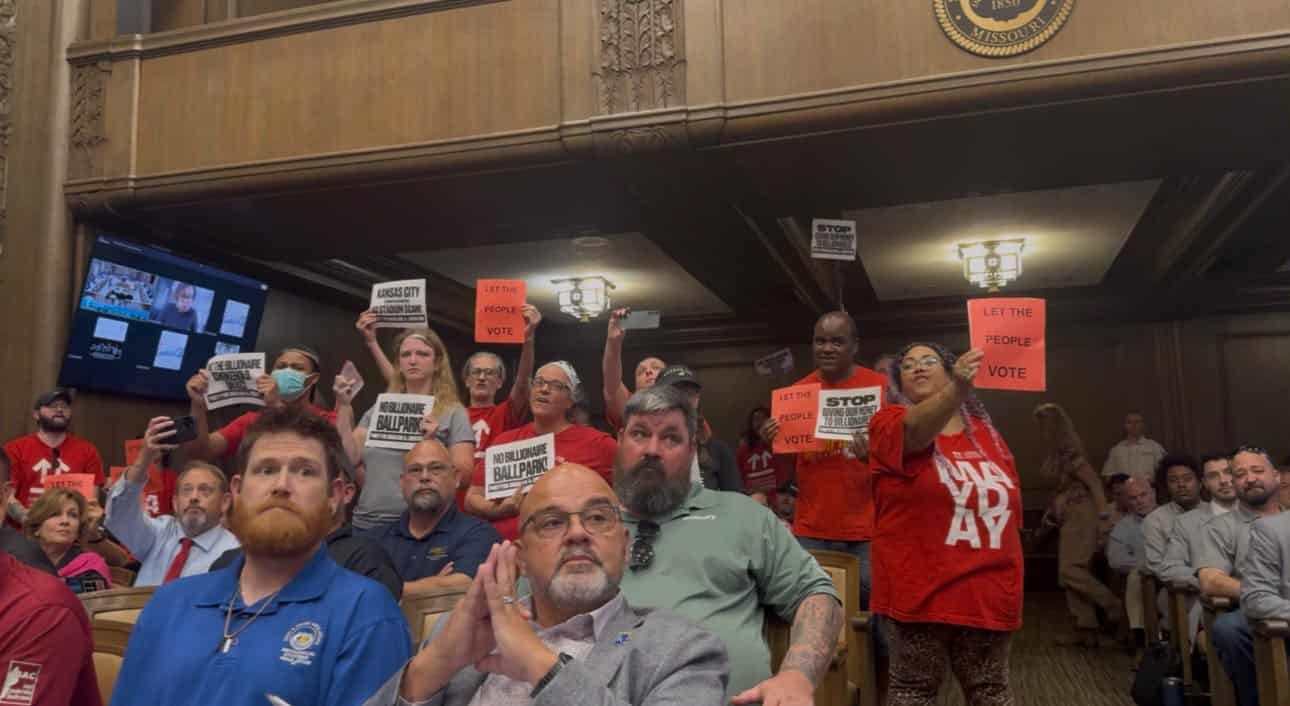
The People Said Let Us Vote. The Council Gave a Billionaire $600 Million Instead
Two days after city officials violently arrested a community leader, I sat in a chamber swarmed with police and watched eleven council members give a billionaire one of the biggest public deals this city has ever seen, without letting a single resident speak.