The first months of Trump’s second presidency have seen a whirlwind of anti-immigrant executive orders and pardons for convicted white nationalists.
If you remember his first term, you know this is just the beginning of a stressful, protracted struggle to protect our communities. But in order to effectively defend ourselves, we must understand what we are up against.
Fighting back requires making sense of this moment and understanding how it fits in a longer history of racial violence and white supremacy. We can start by studying how this history unfolded in the very places we call home. Studying histories of racial violence – and how our predecessors and ancestors fought back – in the Kansas City region provides a sobering, but empowering reminder, that we have been here before. More importantly, it serves as a reminder that we will prevail.
The land Kansas City, MO rests on was acquired by the U.S. from the French through the Louisiana Purchase in 1803. The French were going broke after the Haitian Revolution forced them to surrender one of their most profitable colonies.
This goes to show how Black resistance has always been part of our city’s history. Missouri and the surrounding region are the ancestral homeland of several Indigenous Nations, including the Kansa, Osage, Pawnee, and Missouria. Indigenous peoples were not consulted when the U.S. took over these lands from France. Slave codes in these territories prohibited teaching enslaved people to read and write.
In 1808 the Osage nation signed a treaty with the U.S. to relinquish the state of Missouri over to a land-hungry settler project fixated on colonial expansion. Missouri was admitted to the Union as a slave state in 1821. French fur traders established settlements along the banks of the Missouri river in the 1820s. The “Town of Kansas” was officially recognized in 1850. Enslaved Black workers helped build its roads and government buildings.
By the mid-nineteenth century, Jackson County was the wealthiest county in the state. Enslaved workers propped up this wealth by producing hemp, cotton, corn, and tobacco on small farms in the region.
In 1854, the Kansas-Nebraska Act forcibly removed an estimated 10,000 Indigenous inhabitants from the region as colonizers mounted an aggressive campaign of westward expansion and “Manifest Destiny.” The Osage tribe in particular suffered tremendous loss. By 1880, an estimated ninety-five percent of their total population had been eradicated.
This history set the stage for white homeownership and wealth accumulation, on one hand, and wealth dis-accumulation and extraction from Black folks and other racial minorities in the city.
America’s “greatness” is derived from this unfathomable violence and devastation. Similarly, the racial wealth gap in Kansas City can be traced back to racial slavery and Indigenous genocide.
Even through this loss, however, Black folks found ways to resist. In 1857 and on the cusp of the Civil War, Northerners from New England founded the town of Quindaro. Many of those founders were abolitionists.
The town served as a stop on the Underground Railroad, offering refuge for those escaping slavery before they made their way to freedom in states like Iowa and Nebraska.

Following the Civil War, many Black families laid down roots in Quindaro. The Black population in Kansas City grew significantly around this time.
Between 1879 and 1881, a large wave of “Exodusters” – Black agricultural workers from the South – migrated to the region.
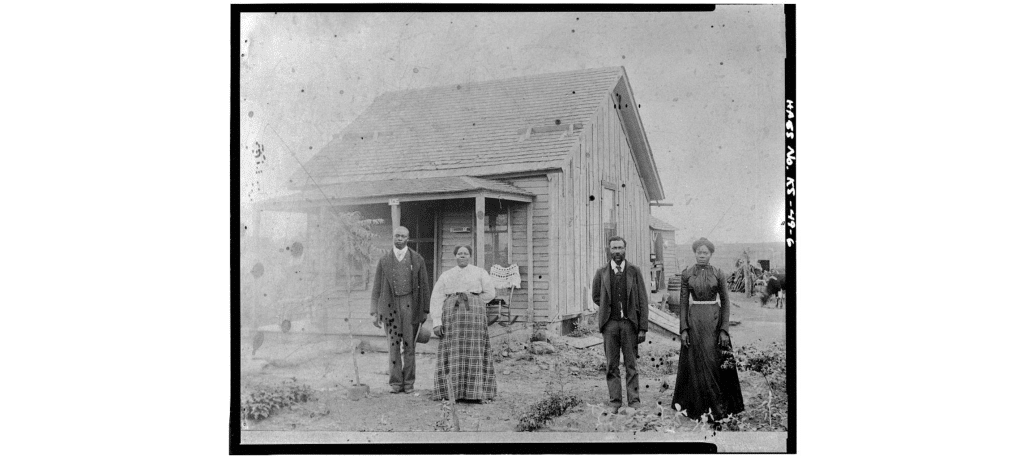
From the 1880s through the 1890s, the city’s Black population tripled. Black residents formed a “Protective League” in response to rampant police brutality and harassment. Around this period, the city’s upper and middle-class white residents led “anti-vice” campaigns that would gradually deepen segregation and further confine the city’s Black residents into substandard housing in underserviced neighborhoods. A widely circulated housing study by white reformers in 1913 claimed that Black residents were disorderly and “naturally” prone to criminality.
Restrictive covenants – contractual agreements that prohibited the lease, sale, or occupation of homes to racial minorities – went into effect as early as 1908. This practice lasted until 1954. Sixty-two percent of all subdivisions in Jackson County had restrictive covenants.
In 1933, the Homeowner’s Loan Corporation (HOLC) introduced “Residential Security Maps,” more commonly known as “redlining maps,” to evaluate the “creditworthiness” of neighborhoods. All-white middle-class neighborhoods received the highest rating while all-Black and majority-Black neighborhoods were deemed “high risk” and not worthy of federally-insured home loans. The Federal Housing Administration (FHA) adopted the maps and expanded the denial of home loans to African-American, immigrants, and other racial minorities.
Black residents and other racial minorities were locked out of new suburbs and excluded from accessing homeownership, a primary vehicle for wealth accumulation. Only one percent of FHA-backed home mortgages went to Black homeowners in the metropolitan region between 1934 and 1962.
These policies only compounded the effects of long-standing intergenerational poverty in urban neighborhoods, particularly redlined areas.
Beginning in the 1940s, urban renewal and so-called “slum clearance” policies further served to uproot impoverished, disproportionately Black, residents. City leaders and business and real estate elites planned and authorized these urban renewal activities in an effort to promote growth and eradicate what they deemed to be “blighted neighborhoods.” Thousands of households were displaced by these policies. Low-income Black residents were often channeled into substandard, segregated public housing.
Beginning in the 1950s, the city experienced waves of “white flight” as white residents increasingly moved to racially exclusive suburbs. Lower property values and decreases in public revenues only worsened socio-economic conditions in low-income, majority Black and brown areas of the city.
High unemployment in under-invested neighborhoods intensified a crisis in local schools. The Kansas City Missouri School District became majority African American in 1970. However, voters in the school district, most of whom were white, rejected votes to increase the district’s funding. As a result, schools struggled with maintenance issues and the district faced fiscal insolvency.

In 2000, Kansas City Public Schools (KCPS) became the first school district in the country to lose accreditation. After losing accreditation again in 2011, the school district was provisionally accredited in 2014 but it did not gain full accreditation until 2022.
For decades, Black and brown children bore the brunt of this systemic racism. Today, the school district is still majority-Black and continues to experience disinvestment. Each year, it loses out on millions of dollars in funding as the city’s economic development agencies grant tax incentives for speculative real estate developers to build unaffordable housing in gentrifying parts of the city. And while the city bends backwards to grant tax breaks for developers, it fails to fund public transportation, affordable housing, and other crucial social supports.
Meanwhile, the police department receives the largest share of public funding only to criminalize poverty and brutalize residents. It is no accident that those caged in local jails are disproportionately Black.
A failure to understand the history of racial violence and white supremacy in KC and how it shapes the present limits our political imagination. There are real repetitions and continuities in how Black and non-white people were treated in the past and how they are treated today. Just look at legislation proposed in Missouri to offer bounties for undocumented immigrants. Look at how majority-Black and Latinx/Hispanic census tracts harbor the highest rates of poverty, lowest levels of household income, highest rates of eviction, and lowest indicators of life expectancy.
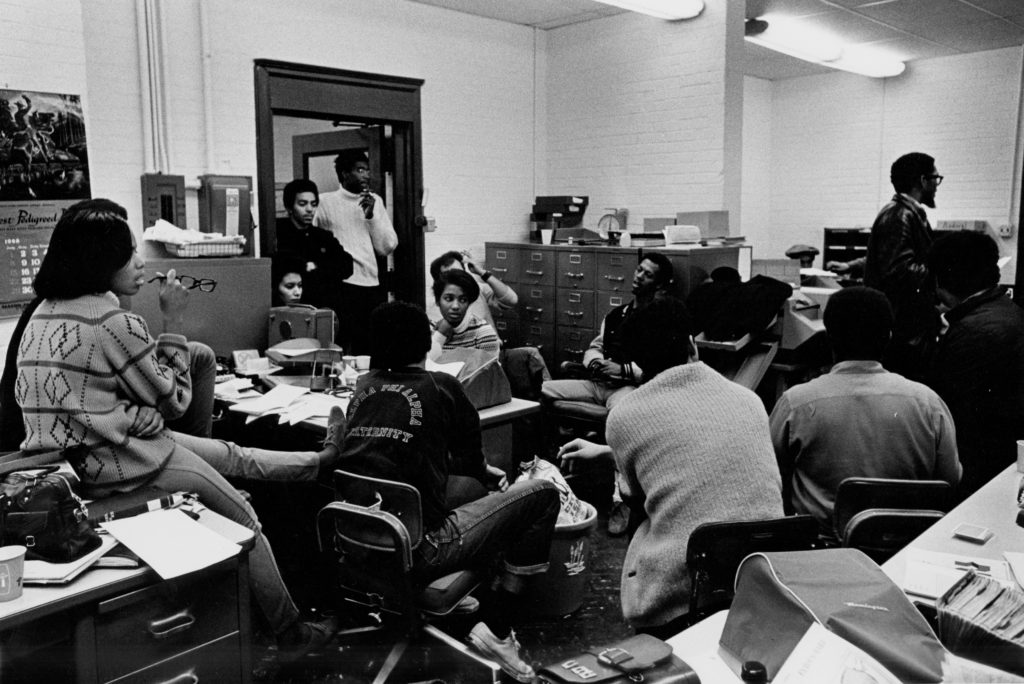
The Trump administration’s “anti-woke” crusade is not only an effort to the distort the past; it’s also a power move to force us to accept histories of white domination and surrender to the ongoing assaults against our people. Historian and keeper of the Black Radical Tradition Robin D.G. Kelley understands fascism as the marriage between nationalism and white supremacy. More importantly, Kelley reminds us that the power of fascism partially comes from forgetting the history of how rich white elites gained their power through violence, theft, and manipulation.
Kelley explains how throughout U.S. history, whites have been mobilized by elites – such as plantation owners, Southern politicians, and now pro-Trump billionaires – to target Black, Indigenous, non-white people as the sources of social malaise.
History also teaches us that liberals let this happen by endorsing moderate reforms that fail to redistribute wealth or undo systemic inequality in any meaningful way. Recall in 2019 when ex-president Joe Biden stated to wealthy donors how under his mandate “nothing would fundamentally change.” Fascism, then, is when the failures of capitalism and liberalism such as the loss of upward mobility, indebtedness, and extreme inequality are blamed on racial minorities, immigrants, gender-nonconforming people, and other marginalized members of society.
Those of us working to combat the current fascist surge must therefore stand against both liberal reformism and right-wing attacks on vulnerable communities.
This calls for understanding how the history of white supremacy in our own city continues to have violent consequences. It also requires supporting autonomous Black spaces where we can study this history and sharpen our political analysis. Thankfully, The Kansas City Defender just launched an Abolitionist Freedom School, titled Black Radical Education for Abolition & Liberation (B-REAL) Academy, to do just that.
As Black revolutionary Assata Shakur reminds us in her autobiography: “Many of us have misconceptions about Black history in amerika. What we are taught in the public school system is usually inaccurate, distorted, and packed full of outright lies. Among the most common lies…[is] that the history of Black people in amerika has consisted of slow but steady progress, that things have gotten better, bit by bit. Belief in these myths can cause us to make serious mistakes in analyzing our current situation and in planning future action.”
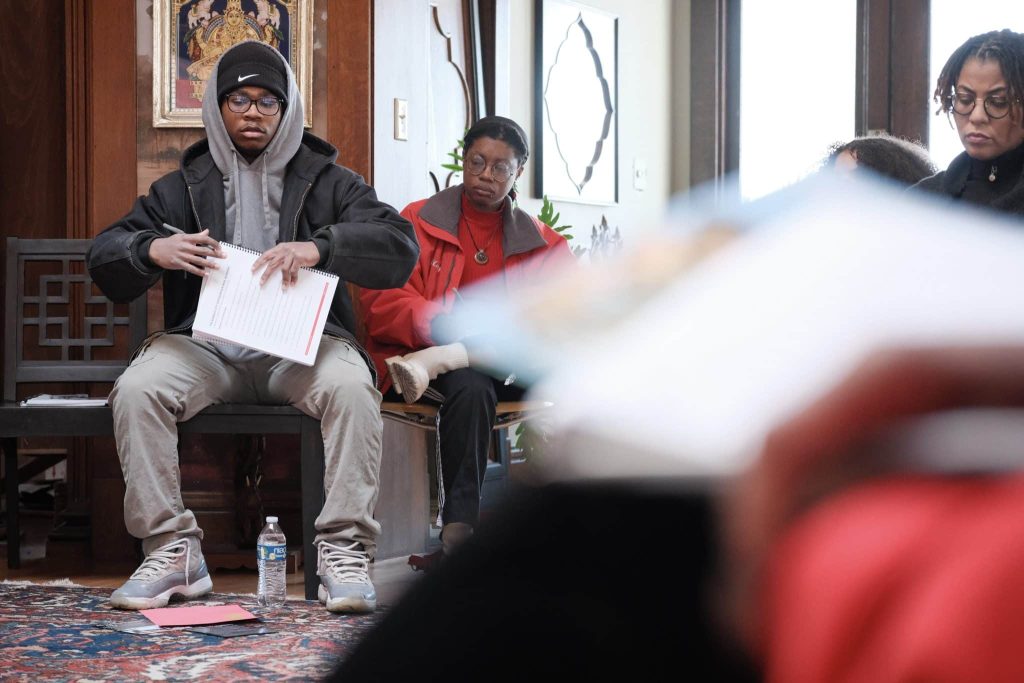

The new Abolitionist Freedom School builds on a long tradition of Black liberation which schools don’t teach and which the current administration wants to erase altogether. If we are serious about preparing ourselves for the long road ahead, we must support B-REAL Academy and other autonomous spaces where we “can come together, analyze our history, our present condition, and to define ourselves and our struggle,” as Shakur puts it.
Suggested Reading List:
Kolavalli, Chhaya. 2023. Well-Intentioned Whiteness: Green Urban Development and Black Resistance in Kansas City. Geographies of Justice and Social Transformation 56. Athens, Georgia: University of Georgia Press.
Gotham, Kevin Fox. 2014. Race, Real Estate, and Uneven Development: The Kansas City Experience, 1900-2010. Second edition. Albany: State University of New York Press.
Griffin, G. S. 2015. Racism in Kansas City: A Short History. Chandler Lake Books.
Shakur, Assata. 1987. Assata: An Autobiography. Chicago, Ill., L. Hill.