Writers at War: A Series on the 199th Anniversary of the Radical Black Press
Somewhere in Mississippi in 1917, a Black woman sat at her kitchen table before dawn and unfolded a newspaper that had traveled a thousand miles to reach her.
It had been smuggled south on a train by a Pullman porter who hid it beneath white passengers’ luggage, passed at a platform stop to a man who tucked it inside his coat, carried seven miles on foot to a church where it was read aloud to a room full of people who were never meant to hear what it contained.
By the time it reached her hands the ink had smudged and the paper was soft from being folded and refolded, passed and passed again. She read it by lamplight. It told her there were jobs in Chicago. It told her there were neighborhoods where Black people owned the block. It told her the South was not the whole world.
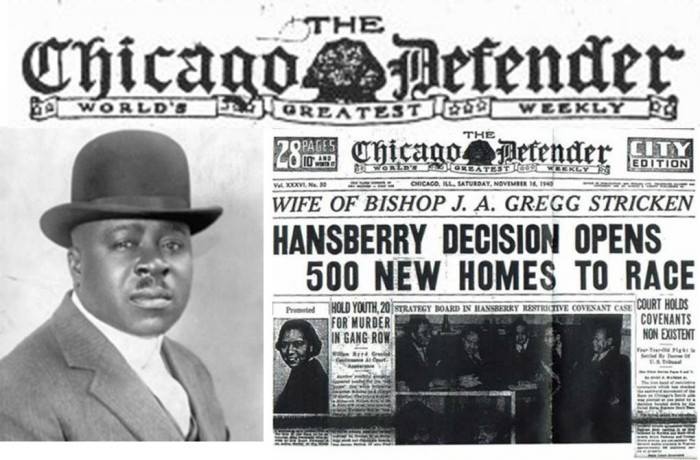
She left within the month. She was among the first of six million. The newspaper that moved them was the Chicago Defender, and many cities in the South had outlawed it for the same reason it had outlawed Black literacy a generation before: because a people who can read their own story will eventually refuse to live inside someone else’s.
There has never been a moment in American history when the information environment was not a battlefield. For Black people in particular, the question has always been who gets to construct reality and who is forced to live inside someone else’s construction of it, and no one has named the origin of that construction more precisely than W.E.B. Du Bois.
“The most magnificent drama in the last thousand years of human history is the transportation of ten million human beings out of the dark beauty of their own continent into the new-found Eldorado of the West. They descended into Hell.” – — W.E.B. Du Bois, Black Reconstruction
And at every stage of that descent, the story told about them was written by the people who put them there. The press that justified their enslavement. The archives that erased their philosophy. The institutions that made their dehumanization appear natural, inevitable, scientific even. For centuries, the only record of Black life in America was authored by those who profited from Black death.
For 199 years, the radical Black press has been the counter-cultural response. It has been the technology through which a people seized the power to name our own reality, to document our own history and create what one might call a weapon of mass construction. It is one of the most powerful and least understood technologies in American history.
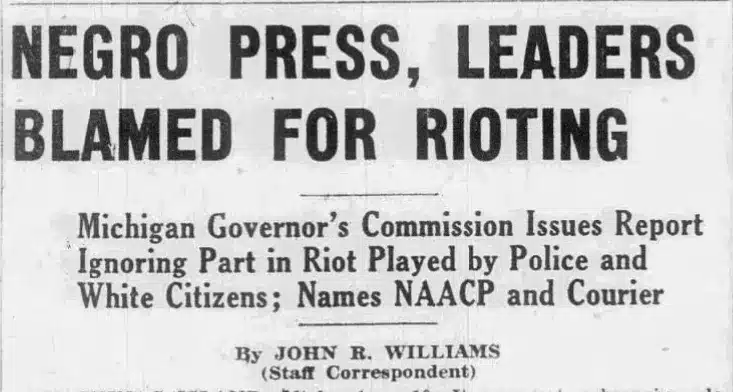
And now we enter the epoch of artificial intelligence, a moment when the construction of reality itself is being simulated and automated. When algorithms decide what is visible and what is buried. When machine-generated content floods the information landscape faster than any human institution can respond. When the tools of narrative are being consolidated into fewer and fewer hands, none of them ours.
If you have heard me speak about the radical Black press, you have likely heard me describe it as a fundamentally counter-cultural technology. I use that language deliberately, because in a moment when every digital platform is engineered to inflict psychological warfare upon us, the act of building and sustaining an independent Black press is as strategically vital now as it was in 1827. It is one of the few information technologies in American history that was designed by Black people, for Black people, toward liberation.
But to understand what the Black Press technology is capable of, and what it demands of us now, we must first understand what it was built to fight. And that means returning to the origins of the information war itself, before the first edition was ever printed, in the philosophical architecture that made the colonial press possible.
The colonial newspaper and the Black newspaper shared a form, yes. They were both print. But they served diametrically opposing purposes.
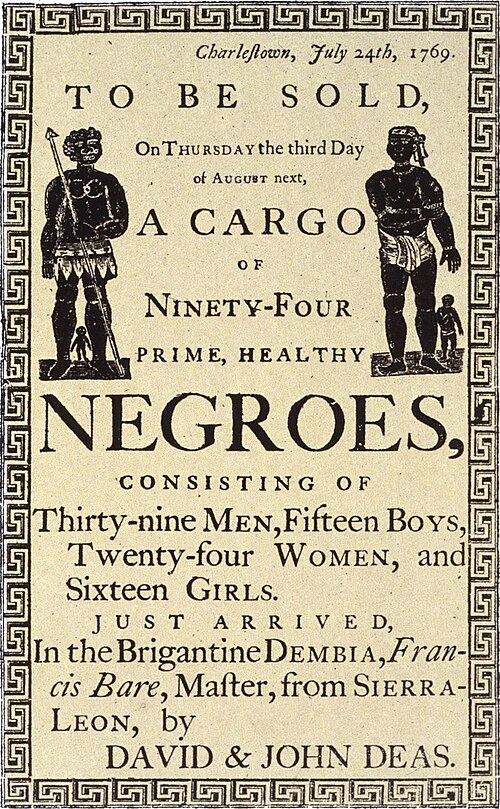
Philosopher Sylvia Wynter argued that the European “Enlightenment,” which we are taught advanced human knowledge, in fact accomplished something far more sinister in parallel. It invented a new category of the human, one defined by European rationality, property, and whiteness, and then declared that category universal. This is the logic that must be understood before anything else, that when you create a universal definition of who is human, you necessarily create a category for who is not. And once that boundary exists, everything that follows is enforcement.
The colonial press was among the earliest and most effective instruments of that enforcement. As scholar Dr. Christopher Tinson documents, white supremacists used the press to cast Africans as inferior beings whose supposed nature made them incapable of self-sufficiency. It was further utilized to justify imperialism, colonization and of course, slavery.
The Colonial American White Press went beyond merely reporting on a world in which Black people were less than human, it became vital to actively constructing that world, day by day, edition by edition, advertisement by advertisement.
The Boston Newsletter, the first continuously published newspaper in American history, began running slave advertisements within a month of its inception. Colonial newspapers became the first slave brokers in this country, enabling the American slave economy to reach its massive and unprecedented scale. But what made this most insidious was not the scale alone, it was also the placement.
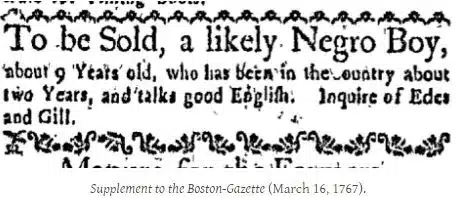
Slave advertisements ran alongside notices for land sales, livestock, and dry goods. The trafficking of human beings was printed in the same columns, in the same typeface, with the same casual regularity as anything else for sale. Imagine opening your morning paper and seeing an ad for a kidnapped woman listed between one for Lysol and one for chicken. That is what the colonial press normalized.
That is what the technology of print was designed to do in colonial America: to commodify Black life until the act of selling a human being required no more moral consideration than selling anything else.
And as scholar Joshua Myers has shown, it did not stop at the press. The institutions of the Western world, its universities, its archives, its media, were all built to enforce and reproduce these same dehumanizing philosophies, creating an architecture that was total.
Our people were killed in the realm of ideas before their mass enslavement in flesh.
Yet, the Black press gave birth to an alternative vision.
Freedom’s Journal, the first Black newspaper in American history, was born in the Black church and from its inception served as a liberatory technology. The tradition it established would make the Black press one of the most influential weapons against slavery. But abolition was only part of what it accomplished.
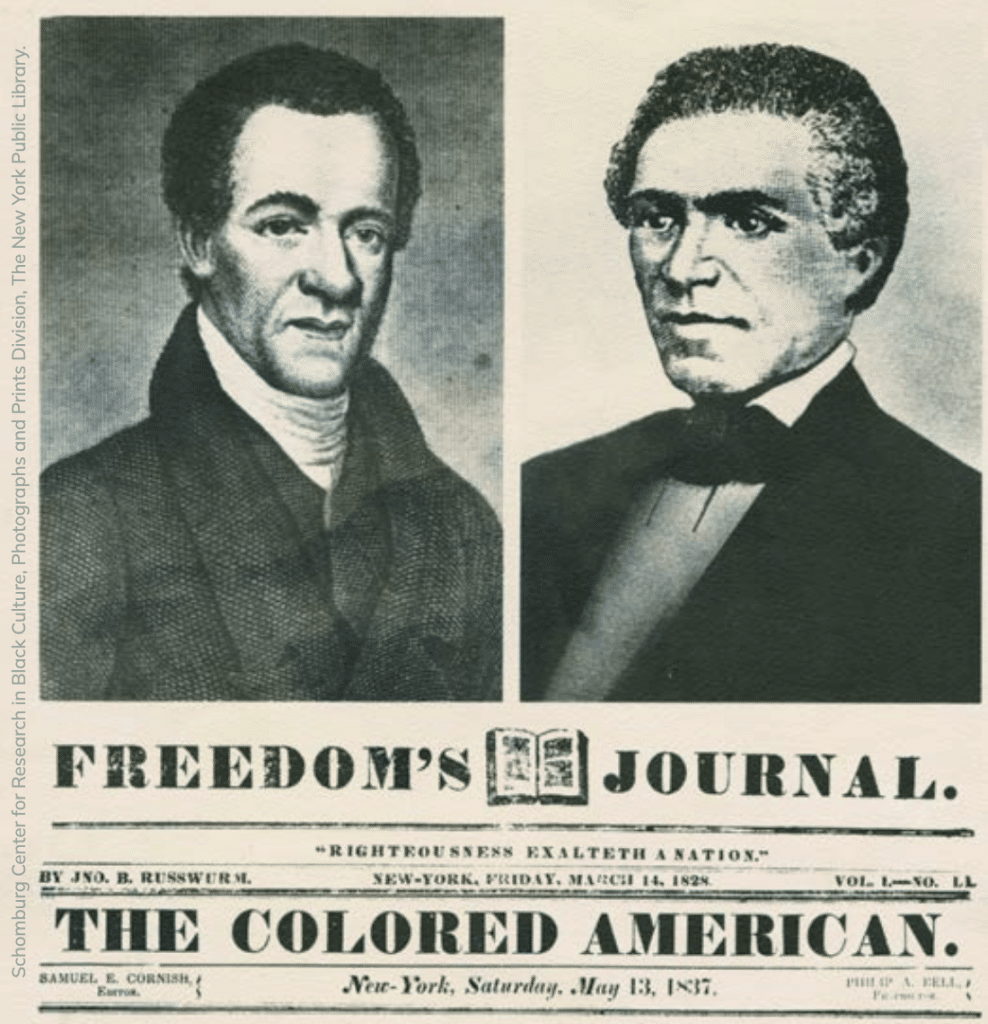
For the first time in the history of this country, a people who had been rendered invisible were made visible on our own terms. A people who had been denied the right to knowledge, to reading, who had been terrorized, legislated against, sold like cattle, and catalogued in the ledgers of commerce began to speak for ourselves.
I call this the ontological rupture of the Black press: a people moving from object to subject in the written record of this nation, by our own hand.
The Black press gave voice to the voiceless, yes, but it also revealed that the voice had been there all along and that the silence had been violently imposed.
And in enabling this voice, it taught us that the technologies of the oppressor can be seized, subverted, and repurposed for liberation.
The tradition of technological subversion is one of the most enduring inheritances of the Black radical tradition, and the Black press is one of the first places it began in American life.
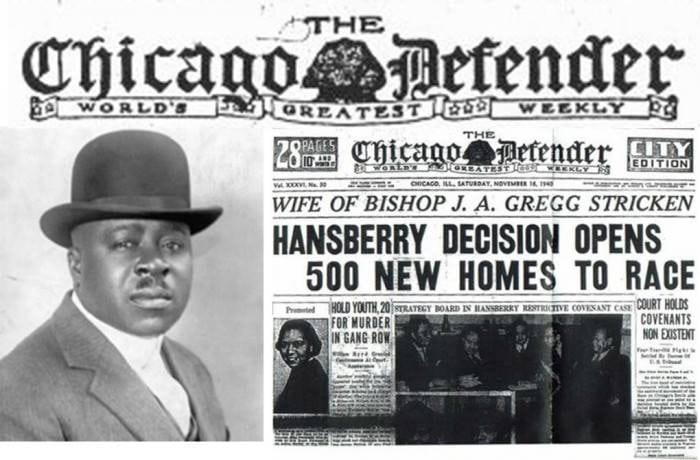
Every major turning point in Black American life was catalyzed by a newspaper. Abolition. The Great Migration. The Civil Rights and Black Power Movements. The Black press has always been the infrastructure beneath the movement. And it still is.
These newspapers were also organizing hubs of the community, spaces where information moved through reporting and editorials but also through relationship, fellowship, and collective action.
So how did a technology this powerful lose so much of its power? There are many reasons, and I will explore them later in this series. But the most important one is this: a war was waged upon those of us who picked up the pen as our weapon of choice.
The same FBI and COINTELPRO apparatus that named Malcolm X and Martin Luther King Jr. as targets similarly targeted editors of the Black press. It was not irregular for editors to receive visits from the FBI, to have their buildings bombed. The state understood that the Black press was dangerous because it organized a people around information and gave them the analysis and the infrastructure to act on it. And so the state moved to destroy it.
Claudia Jones, the Trinidad-born Black Marxist feminist who edited and wrote for communist periodicals throughout the 1940s and 50s, is among the most instructive examples. The FBI built its entire case against her from her own published writings. Her articles on the liberation of Black women, her speeches on peace and internationalism, her theoretical work on what she called the “triple oppression” of Black women, all of it was collected, catalogued, and weaponized by the state to justify her imprisonment and deportation.
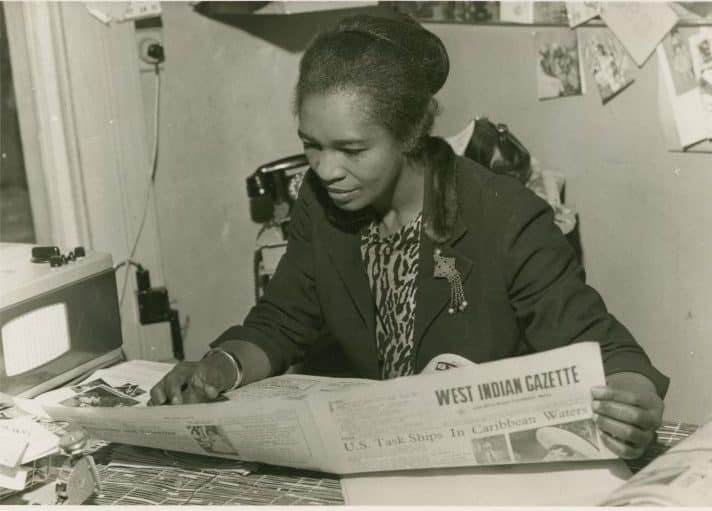
She was arrested multiple times, held at Ellis Island, and ultimately exiled from the country she had called home since childhood. The state did not imprison Claudia Jones for committing a crime, but simply for her writing with clarity about the world as it was and the world as it must become. She died in London at forty-nine, buried next to Karl Marx, having never been allowed to return.
The method has changed but the objective has not.
The FBI’s COINTELPRO today is no longer mailing anonymous letters to civil rights leaders urging them to take their own lives (yes, that actually happened). In many respects, the operation has been automated. Today it is state-sanctioned bot armies, algorithms surfacing content designed to fracture Black communities from within, platforms amplifying the most divisive voices while suppressing the most clarifying ones. State and corporate actors alike driving wedges between Black Americans and the Black diaspora, amplifying homophobic and transphobic views, re-igniting the “gender wars” every few months: exploiting every fault line that can be monetized or weaponized.
We must ask ourselves then, what is the role of the Black press today, amidst this onslaught of disinformation, fascism, imperialism, the decline of literacy, the proliferation of artificial intelligence and the erosion of human agency?
First and foremost, I believe, the radical Black press must be a searing and militant voice, constrained neither by threats of violence nor by funding.
I was once told that you can have no revolutionary movement without a people willing to die, and willing to die with a smile on their face. Not out of some sadistic martyr complex but because you have an undying love for the people.
The most prophetic writers of the Black press tradition exemplified this.
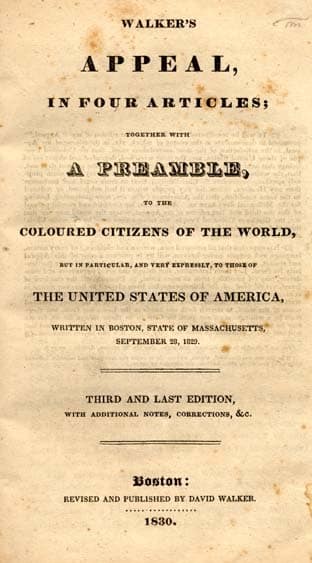
David Walker for example, who wrote for Freedom’s Journal itself and published his Appeal in 1829 calling for the liberation of the enslaved, had a bounty placed on his head by southern planters: three thousand dollars for his death, ten thousand for his capture alive. He refused to flee. He was found dead in the doorway of his Boston home months later.
Ida B. Wells documented lynching with such precision and moral ferocity that a white mob burned her press in Memphis to the ground and promised to kill her if she ever returned to the city. She is said to have begun carrying two guns on her at all times as a result, and importantly, she never stopped writing. These were writers at war.
They wrote with the full knowledge that the words could cost them everything, and they wrote anyway.
And so today when corporate media publishes logistics on how our regime’s gestapo ICE raids will operate, our tradition tells us to instead print how communities can fight back and which organizations they can join to resist.
When the mainstream press covers a Leavenworth city council vote to construct a concentration camp, and they cover it as a procedural matter, we tell our people who sold them out and how to hold them accountable.
The Black press must be an organ of the people. A mouthpiece for the oppressed. But it must also be something more. It must carry the radical imagination, a political vision for what could and must be. Corporate media lives in practical reality, narrating the world as it appears. The Black press has always shown people the world as it must become and then organized our people to build it.
That is the tradition we are carrying forward and that is the war we are fighting.
For 199 years, every time the state burned a press, a new one rose. When they exiled a writer, the words traveled further. When they literally outlawed the distribution of the Chicago Defender newspapers in the south, our people smuggled the papers like contraband through the pullman porters on the train system.
The Black press has survived every instrument of destruction this country has aimed at it, from the slaveholder’s torch to the FBI’s filing cabinet to the algorithm’s invisible hand.
In the spirit of Fred Hampton, one could say you can kill a revolutionary Black writer but you can never kill revolutionary Black writing.
This is the first installment of Writers at War. In the essays to come, I will write about what we are building at The Kansas City Defender and why. I will write about a Freedom School held inside a Black bookstore lined with 10,000 books the world tried to burn. I will write about what happens when an 11-year-old and a 77-year-old sit at the same table and study freedom together. I will write about what the journalism industry can learn from a tradition it has spent two centuries ignoring.
But for now, I want to leave you with this. The Black press was born 199 years ago in a church, with a newspaper called Freedom’s Journal, and its founding editorial declared: “We wish to plead our own cause.” Nearly two centuries later, the cause remains unpleaded in the halls of power, in the algorithms, in the boardrooms where decisions are made about our communities without our presence or consent. And so we write. And so we organize. And so we build.
The press is still free. The journal is still freedom’s.