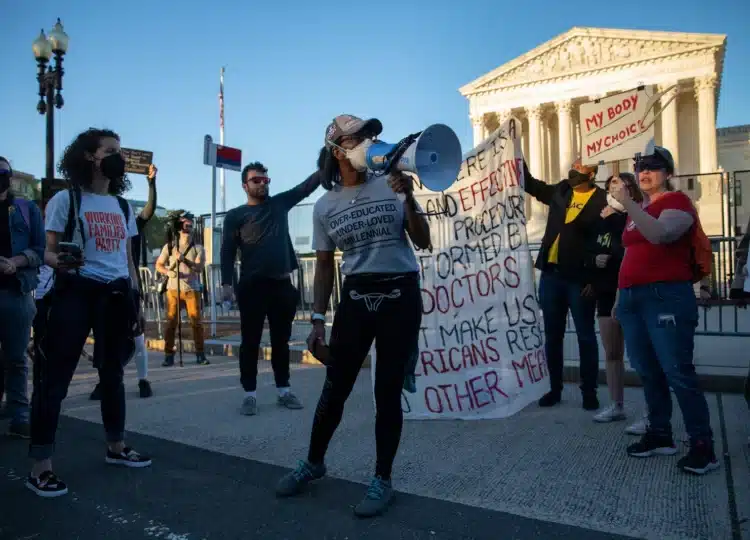
For many in Black and Brown communities, the news is more than background noise. It’s a direct reflection of lived realities.
Headlines about racial violence, economic instability, and political unrest are not distant abstractions. They’re stories that often involve people who look like us, live in our neighborhoods, or share our histories. That proximity makes the nonstop news cycle feel heavier, more personal, and more exhausting.
Research shows that even brief exposure to distressing news can have measurable effects. One Johns Hopkins study found that just 14 minutes of negative news consumption can significantly raise anxiety and depressive symptoms, triggering the body’s stress response—elevated cortisol, faster heart rate, and disrupted breathing.
Prolonged exposure compounds these effects, increasing emotional exhaustion and even physical symptoms like headaches and fatigue. For marginalized communities, the impact is intensified because these stories often speak to our survival, our safety, and our rights.
Kansas City-based therapist Liz Davis, owner of Liz Davis Therapy, sees the impacts of constant media exposure in her clients every week.
“Many of my clients spend hours doomscrolling, feeling anxious and guilty if they’re not keeping up with the latest headlines. It becomes a double-bind for their mental health and their conscience,” she explained. “The result is excessive worry, disrupted sleep, irritability, and, for some, self-isolation to avoid perceived dangers.”
Part of the problem, she said, is biological.
“Our brains evolved to process life in small communities, knowing what was happening with our neighbors and maybe the next town over. Not the entire globe in real time,” Davis explained. “Now, our nervous systems are flooded with crisis after crisis, and we can’t process them efficiently. Some people become hypervigilant, others emotionally numb, and some respond with anger. All of these reactions are rooted in our evolutionary survival patterns.”
When those survival instincts collide with a constant stream of global crises and negative stories at our fingertips, it can make the world feel hopeless.
That’s why the way we respond to news is just as important as the news itself.
From Consuming to Contributing
Julia Hotz, a journalist with the Solutions Journalism Network, said that disengagement is a common reaction to nonstop crisis coverage. “When we are constantly flooded with crisis-driven stories, we disengage, lose our sense of agency, and feel hopeless,” she said. Research backs this up—people are more likely to tune out of the news entirely when they believe there’s nothing they can do about what they’re seeing.
But there’s another path: connecting news to action. This is where the solutions journalism model plays a transformative role. Instead of stopping at the problem, solutions-focused reporting pairs the facts with examples of people and organizations working toward change.
Hotz said this style of journalism doesn’t just make readers feel better—it changes the way they perceive information. “When people see that others are taking action, they’re more likely to believe their own efforts can make a difference,” she explained.
That shift—from hopelessness to agency—can fundamentally alter our relationship to the news.
Why Action Changes How We See the News
Davis often guides her clients to ask one simple question after engaging with heavy news: What’s in my control? “If there’s something you can do to make a positive impact, do it,” she says. “If not, release it. That balance between healthy activism and personal well-being is what keeps us grounded.”
Psychologists call this agency-building: when our brains connect a threat to a clear, possible response, we process the information differently. Instead of interpreting it solely as danger, we see it as a challenge we can influence. In practice, this can mean that instead of doomscrolling after reading about a community crisis, you follow it up by donating to a mutual aid group, attending a local meeting, or volunteering your skills. Over time, this habit rewires the way you approach difficult information—you start scanning for solutions instead of sinking into despair.
Building a Healthier News Relationship
Both Davis and Hotz agree: the goal isn’t to withdraw from the news, but to engage with it in a way that fuels action instead of anxiety. That means curating what you consume, limiting the time you spend on it, and journalists balancing crisis reporting with stories of solutions and resilience.
Practical steps include:
- Choosing 2–3 trusted news sources and avoiding sensationalist media loops.
- Scheduling set times to catch up, rather than refreshing feeds all day.
- Pairing news consumption with grounding rituals such as walking, calling a friend, or meditating.
- Looking for concrete ways to contribute to the issues you care about most.
“When you consistently connect the news to action, you change the meaning it has in your life,” Hotz said. “It stops being a constant source of dread and becomes part of how you participate in your community.”
In a world where headlines come faster than we can process them, protecting mental health isn’t a sign of indifference. It’s the foundation for sustainable engagement. For the Black community, where the stories in the news are often our own, turning awareness into action isn’t just good for our well-being. It’s how we transform fear into fuel, and information into power.