Black Liberation Theology · Essay One
Racial Capitalism Broke My Family. The Church Basement Is Where I Put It Back Together.
Black people are growing lonelier as we age, and capitalism is the reason. In the first essay of the Defender’s Black Liberation Theology series, Minister Andrew Hairston, Baptist minister and co-chair of Austin DSA, writes about the family he lost in court, the Black socialist ministers who came before him, and why grief belongs in the pews and the organizing meeting rather than alone at home.
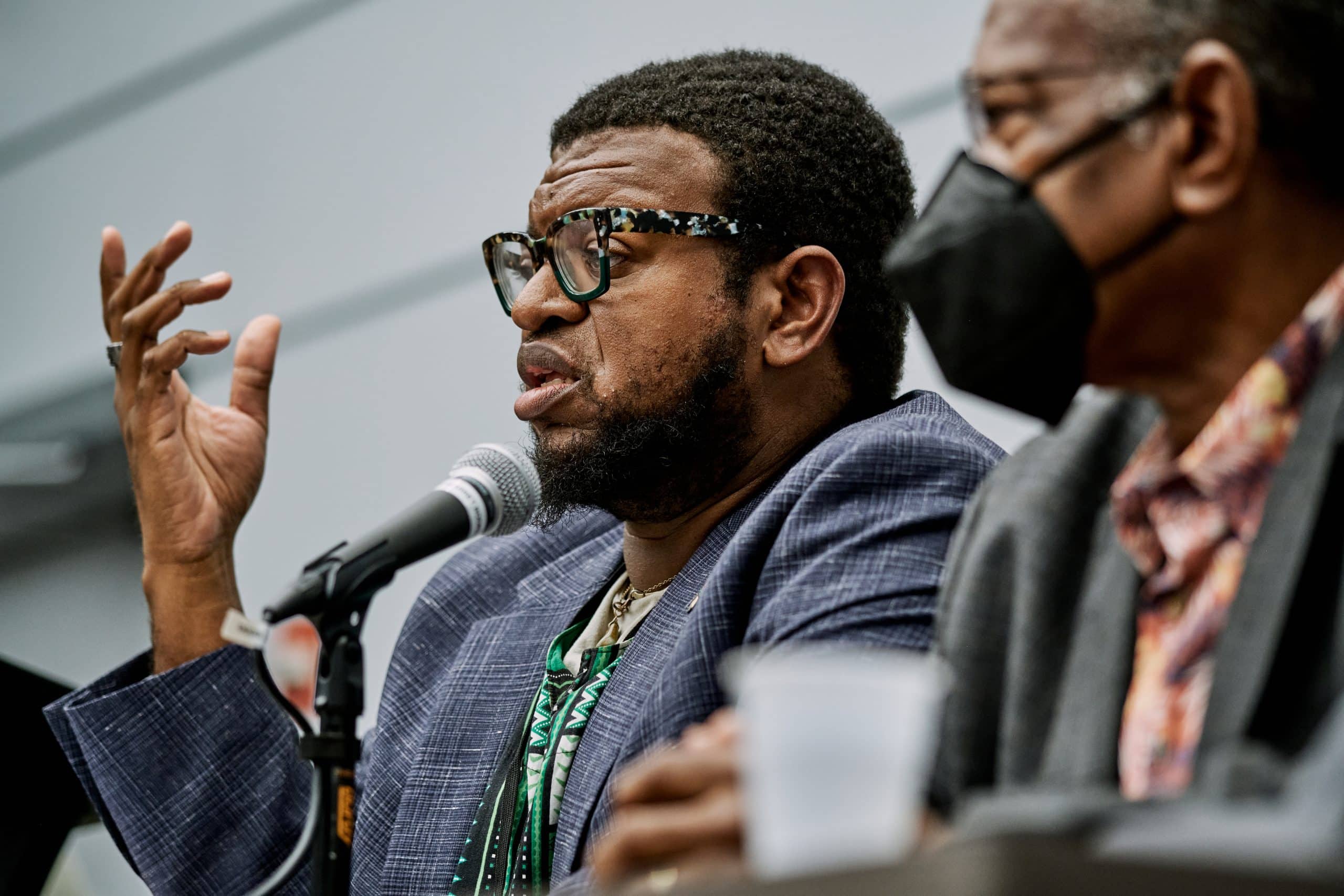
At thirty, the dust settled on a longstanding family conflict of mine. As a lawyer who played a central role in the mechanics of the courtroom drama, I possessed a specific level of relief & pain at the end. As a Black socialist, the contradiction stayed with me.
I felt vindicated because my position was the prevailing one in the signed final decree. Given that it was a year and a half before I commenced my sobriety, I drank a daiquiri in my mother’s hometown and exhaled because I had technically won after three years of anguish. I lamented the million fractures that now existed where whole relationships once thrived. I lost so much in the process of achieving that victory. I currently speak publicly and widely about my collectivist worldview, rooted in radical love and community care, while sitting with solitude most of the time I’m breathing.
In the five years since that civil trial, life has marched on. Still, I wonder often how many other Black people in the United States contend with any form of loneliness as they grow older. I hypothesize that it’s millions of us.
Through my ministry and my organizing, I usually witness people from the pulpit. Whether I’m assisting with worship administration at Ebenezer Third Baptist Church or co-chairing an Austin DSA meeting at the First Unitarian Universalist Church in the heart of the city, I’m looking out at scores of people with regularity. I see the young & the old, the new & the seasoned, the joyful & the sorrowful. I get to connect with comrades and congregants who are navigating their own grief each week; as we gather, all of us grow in the solidarity of community in the process. Undoubtedly, the faces I see have experienced intrafamily conflicts, displacement, and isolation; we come together to build back what has been torn apart.
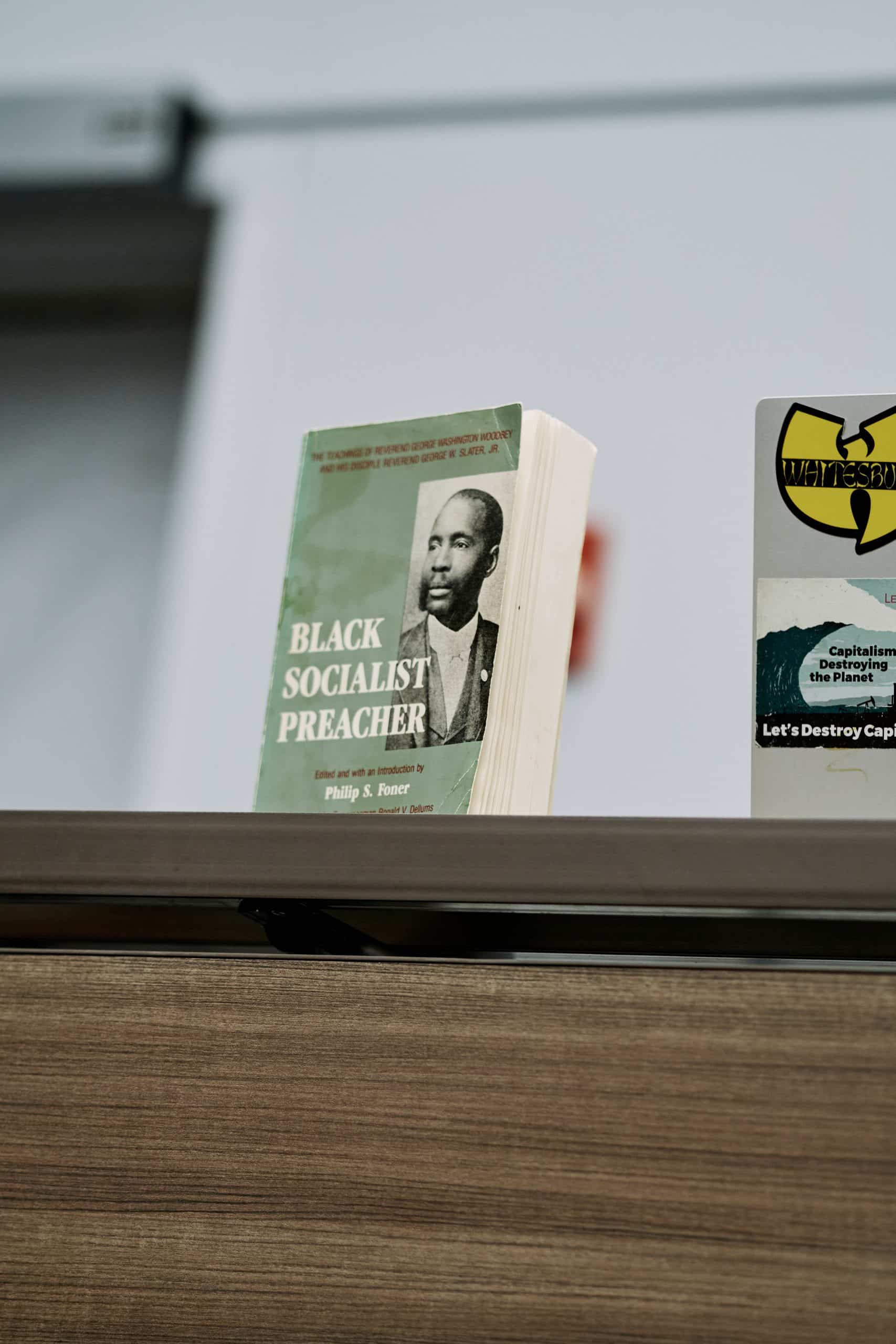
During Labor Day Weekend 2026, I presented at the Socialism Conference, hosted by Haymarket Books, alongside my father, Rev. Dr. Daryl R. Hairston, and my beloved comrade, Dr. Charles Holm. Charles offered context on George Washington and Annie Rebecca Woodbey, two Black socialist ministers who worked in the Midwest and the South from Reconstruction to the early twentieth century.
The lineage · Kansas to Austin
The Woodbeys primarily ministered in Kansas and Nebraska. Both reverends approached the Gospel through a liberatory framework, and George – according to The Black Church and Marxism: What Do They Have to Say to Each Other? – was “relegated to the periphery of the black church tradition, because of [his] strong advocacy of socialism.” Prior to her early death at the age of 46 in 1901, Annie R. Woodbey was a suffragist who preached about the need for socialism in a strong tradition rooted in Black feminism.
My father and I discussed our work as Black ministers in the twenty-first century, and I nodded considerably to my socialist organizing. I talked about the pillars of my efforts to improve the conditions of the downtrodden – Black queer feminism, prison industrial complex abolition, and socialism – and my inability to divorce these animating philosophies I hold from the radical work of Jesus Christ. I keep in mind that Jesus also contended with sadness, quite notably when he wept outside of the tomb of Lazarus in John 11 prior to raising him from the dead. All of this was in mind when I met Ryan in Chicago – a fateful event.
Leaving the conference, I gained a clearer picture on how the pain of a family conflict can generate the motivation necessary to keep organizing. I don’t actively speak to a number of my aunts, uncles, and cousins who were central and revered fixtures of my childhood. I recognize that racial capitalism is to blame for the wide gulfs now between us. A dispute that revolved around the ownership of a $200,000 house led to steady silence across four generations of our family. The conflict brought up age-old questions posed to Black people who face violent exploitation under capitalism: to what does my seniority entitle me? how far am I willing to go to stake my ownership claim in a parcel of land? how do I return to the elusive ease of childhood? I hope and pray that my family and I can tackle these questions collectively before even more of us pass away.
Despite my personal heartbreak, I presently serve as one of the co-chairs of the Austin Democratic Socialists of America and actively minister at Ebenezer Third Baptist Church in Austin & ACTS Community Baptist Church in Oklahoma City. I am grateful to have the grounding of Black liberation theology for my work; as I organize and minister, I say unequivocally that improving the conditions of Black people in the United States will lift the tide for all of humanity. I connect the suffering of Black people in America to the ongoing genocide of Palestinians in Gaza and billions of comrades of color across the globe who deal with the detrimental impacts of colonialism, imperialism, and militarism – all fueled by white supremacy.
Whatever has dispossessed, demoralized, and devastated you is so worth sitting with. As you process it, join comrades at churches and organizing meetings and let us hold your righteous grief with you.
In my first essay for the Kansas City Defender, I call upon my fellow Black comrades to feel it deeply. Capitalism continues to inflict ruinous wounds upon us and generations of our families. Yet, the irresistible vision of a better world – established by Black socialists and faith leaders who organized before us, labor alongside us, and have yet to grace the Earth with their indelible marks – serves as a beacon of hope. Whatever has dispossessed, demoralized, and devastated you is so worth sitting with – as you process it, join comrades at churches and organizing meetings and let us hold your righteous grief with you. Jesus conveyed that we must love God and one another with all of our might; Black comrades, invite one another into that love. It is my sincere belief that our willingness to gather with one another will yield the conditions where mutual aid is ubiquitous, repair of harm is central to how we relate to one another, and authentic democratic governance guides the fate of humanity forward.