A Black Church Saved the Only Black Student Government in America. Mizzou Tried to Destroy It.
As a generation walks away from a Black church it found too silent, Alfred Street Baptist Church answered Mizzou’s attack on the Legion of Black Collegians, and lit the path forward for every congregation watching.

Reverend Dr. Howard-John Wesley has a way of turning a Sunday morning into national news, and the people of Alfred Street Baptist Church in Alexandria, Virginia have learned to lean in when he rises.
They had watched him do it once already. Months ago, with the country lowering its flags for right-wing extremist Charlie Kirk, Wesley stood in that same spot and refused the script the nation handed him, telling his congregation that you do not become a hero in death when you were a weapon of the enemy in life. The clip traveled the world before the benediction.
So when he stepped to the pulpit again in mid-May, the ten thousand in the sanctuary and the tens of thousands more watching from their phones leaned toward him and waited.
This time he was not discussing a dead white man. He was talking about a thousand living Black students nine hundred miles away, in Missouri, whose state’s flagship university had decided they were no longer worth a line in the budget. “When you don’t support us,” Wesley told his people, “we will support our own.” Then his church helped them build a legal institution the university’s budget cuts could never reach.
It landed at a moment when a generation has been walking away from the Black church, certain it had stopped fighting for them. This was the church proving otherwise.
The University of Missouri Has Tried This Before
In April 2026, the University of Missouri ended designated funding for the Legion of Black Collegians, the first and only Black student government in America, and Alfred Street Baptist Church in Alexandria, Virginia responded by funding an independent 501(c)(3) for the students. The university has spent the better part of a decade trying to make its Black students disappear, and this spring it found a fresh instrument.
A budget of roughly sixty thousand dollars would collapse into a shared pool the group could petition for no more than three thousand a year, the same standing as any of the six hundred clubs on campus. The reason given was a Department of Justice memo on diversity programs, a memo that was guidance and not law, that carried no penalty and no force, and that the university chose to obey as though it had been carved into stone and handed down from a mountain.
This is a school built on a slaveholder’s land with money made from slavery. A school that, as The Defender first reported, protected a white student who joked online about killing Black people, and then turned and defunded the very institution Black students had built to survive the place.
The Legion of Black Collegians was founded in 1968, the year they killed Martin Luther King, after Black students grew tired of Confederate flags flying over a campus that was supposed to be theirs too. It has lasted fifty-seven years.
When its leaders learned the university was dissolving their government into a footnote, no one from the administration called them first. They left a comment on the students’ Instagram post, and in that comment they misspelled the name of the organization.
“When the government operates in evil, the kingdom operates in righteousness.” — Rev. Dr. Howard-John Wesley
Why the Black Church Is the Oldest Answer We Have
Alfred Street did not invent this tactic, but they do follow in the tradition of the prophetic Black church, which has been giving this answer since before this country let our people pray out loud.
When the law forbade the enslaved from gathering, from learning their letters, from praying above a whisper, we slipped into the trees after dark and built what the historians later named the invisible church, the brush arbor, the hush harbor, where a people the nation counted as livestock gathered to be told they were children of God. Out of that secret worship came the first free Black institutions this country ever saw.
In 1787, Richard Allen and Absalom Jones were pulled up off their knees in a Philadelphia church for praying in the wrong segregated section, and rather than argue for a better seat they walked out and built their own house.
In Charleston, spiritual leader and militant revolutionary Denmark Vesey read scripture and planned a revolt out of the congregation that history would come to call Mother Emanuel.
Nat Turner who led one of the most militant and successful slave uprisings in history was a preacher. Toussaint Louverture who led the Haitian Revolution was devoutly religious. Henry Highland Garnet was a preacher. The man who carried the Montgomery bus boycott did it from a Baptist pulpit, and the organization he built to move the movement across the South bore the word Christian in its name.
Fannie Lou Hamer, who could out-organize any man in Mississippi, did it carrying a hymn, and when the nights ran long she would lift up “This Little Light of Mine” until the room remembered why it had come.
Some of it happened in the mosque instead of the church. Malcolm became Malcolm because of Islam and the Nation of Islam.
Locked out of every institution white America built, Black people walked into the one place the country could not fully enter, and inside it they made schools and banks and burial societies and yes even the first Black newspaper, ultimately building an army of the spirit.
James Cone gave the thing its name in 1969 and called it Black liberation theology, the simple and dangerous claim that God stands with the oppressed and against the ones who oppress them. Cone spent much of his career exploring the significance of faith in America’s Black liberation movements.
But that claim did not start with Cone. The man at the center of the Christian faith was poor, colonized, and executed by the state, crucified the way the Roman empire killed rebels and insurrectionists, strung up in public as a warning to anyone who would defy the regime. He was not meek and he was not afraid and he was not above politics. Cone read him exactly as he was, a liberator who took the side of the oppressed against the powerful, and Cone said the whole purpose of the gospel was to put enough fire in a beaten people “to destroy white racism.”
So when Wesley says the kingdom operates in righteousness while the government operates in evil, he is not reaching for a pretty metaphor, but is instead describing a strategy our people have run for two centuries.
The church did what the church has always done when the world closes in.
They didn’t simply mail a check or issue a statement without action (although they did provide a major donation to the Legion of Black Collegians). Instead they helped the students of the Legion of Black Collegians stand up their own 501(c)(3), a legal body the university does not control and the Department of Justice cannot defund, a vessel that can hold money no administrator gets to vote away.
This is both material support but also teaches the students the radical uncompromising lesson of how to build structures of independent power.
This is the same instinct that told our community to grow the food and create a Black farmer network when the grocery store at 31st & Prospect closed and abandoned our neighborhood, or when we at The Defender inherited Mrs. Willa’s bookstore and archive so its history cannot be edited by people who were never in the room.
Alfred Street Baptist Church is showing us again, at a time when the radical Black church is needed more than ever, that when the state withdraws, you do not spend your one life begging it to come back. You build the thing it refused you, and you build it where the state cannot reach.
The Fire Belongs to Missouri and Kansas Churches Too
There are churches in this region that never let the fire go out, like the St. Marks Church in Kansas City led by Dr. Vernon Howard, who was among the few faith leaders in our city at the forefront of the fight against the construction of a new municipal jail. These are the faith leaders already marching, already feeding, already unlocking their doors for organizers when every other door was bolted. We know them by name and we are honored to stand beside them.
We have to tell the truth about the rest of us too. Somewhere along the way much of the Black church in America, and even in our own city grew quiet. It learned to preach private comfort and personal success, or to partner with the very same forces that oppress our people like the police, while the world outside its doors got harder. They learned to mistake silence for peace and neutrality for grace. Too many pulpits will pray over the suffering of our people and never name who is causing it.
That political neutrality is a large part of why the young people left. I know, because I was one of them. When the church had nothing to say about the police viciously killing our people, or about slumlords brutally exploiting our people, about the wars our taxes pay for, a generation walked out looking for somewhere that would tell them the truth. In every conversation I have had with people my age and younger, the word is often the same. They had not lost their faith. They had lost a church willing to fight for them.
Yet, it was not always so, and it does not have to stay so. I myself remain resolute in my faith because I know that the Black church is the institution that organized us out of slavery, that turned sanctuaries into war rooms where the boycotts and the marches and the freedom schools were planned. And yes, turning our people out to vote matters and we should keep doing it, but the call now is larger than a ballot. The church has to teach Black people the truth about our own power and become again what it once was, the place where that power gets gathered and aimed.
The Black church in Missouri and Kansas holds that very same inheritance. The politically informed, prophetic, unapologetic fire Wesley preached with, and the mutual aid he put behind it, can and should be taken up by Black congregations in Kansas City, in St. Louis, in Columbia, in Topeka and Wichita, and in every small town where a steeple still rises over a Black neighborhood. The question the moment asks is whether this is the generation that decides to pick it up.
At The Defender, we are not asking this from across the street. Most weeks you can find us speaking from or visiting a pulpit somewhere in our city. We continue to partner with various congregations. Our mutual aid team learned how to feed people with dignity by studying the models Black churches built generations before us.
So this is an invitation, and a specific one. We are looking for churches to organize alongside us, to carry The Defender’s print edition into their pews, to host political education and know-your-rights trainings in their fellowship halls, to help us build the kind of regional infrastructure that defends our students and our neighborhoods before the next crisis instead of after it. The work in front of us, feeding our people, defending our people, holding our own institutions upright, will never be done by a community organization alone or a church alone.
The infrastructure of Black survival in this country has always run through the sanctuary, and the days we are walking into now will demand that it run through it again.

The students of the Legion of Black Collegians have not stopped fighting. Their goal has not moved an inch, that the University of Missouri restore their standing and reverse the decision that tried to dissolve them. Their president, Amaya Morgan, thanked the churches and the alumni and the allies who refused to let them stand alone. They should not have needed a miracle to come riding in from Virginia, and they should not have to wait on the next one.
When the government operates in evil, Wesley told his people, the kingdom operates in righteousness. The kingdom has never been a building, it has always been a people who decided that no university, no memo, and no administration would ever have the last word on whether Black children get to learn in peace.
When you won’t support us, the man said, we will support our own.
Let the church say amen. And then let the church get to work.
Author
Related Articles
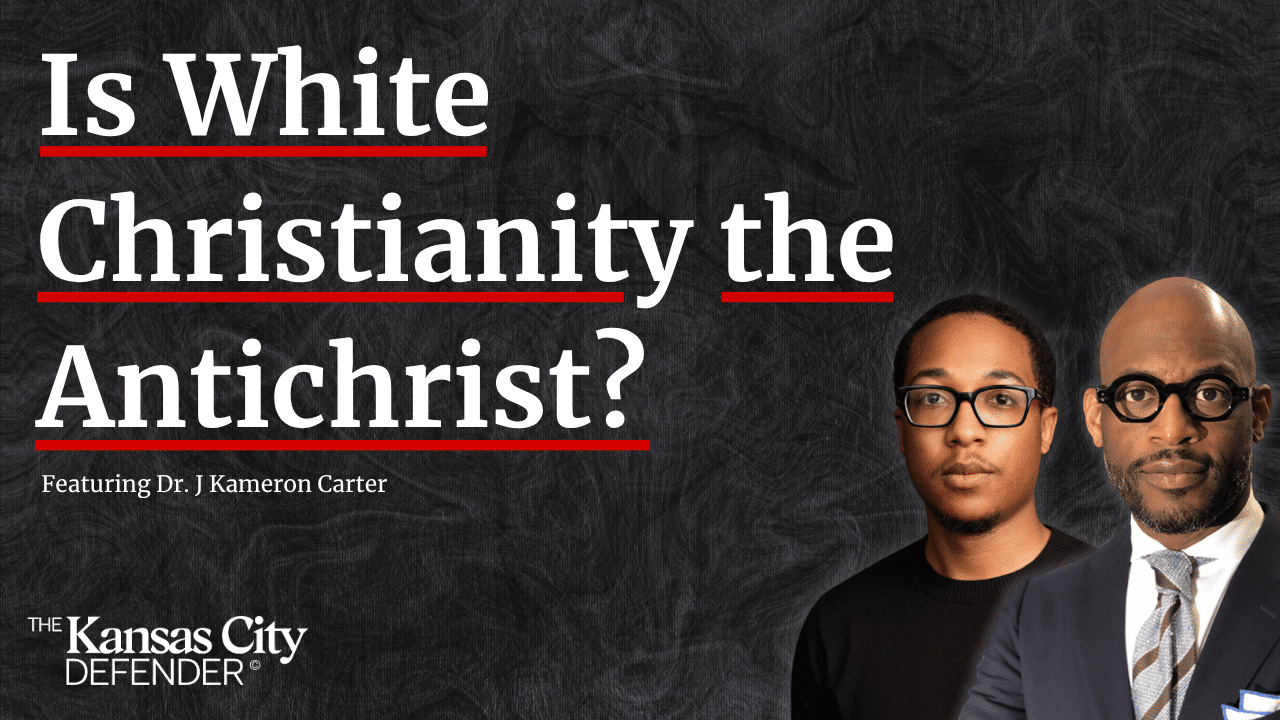
“Whiteness Is a Religion”: Dr. J. Kameron Carter on White Christianity, Empire, and the Anarchy of Black Religion
Is white Christianity the Antichrist? Dr. J. Kameron Carter traces how the church helped invent race and why Black religion is anarchic, on Liberation Now.
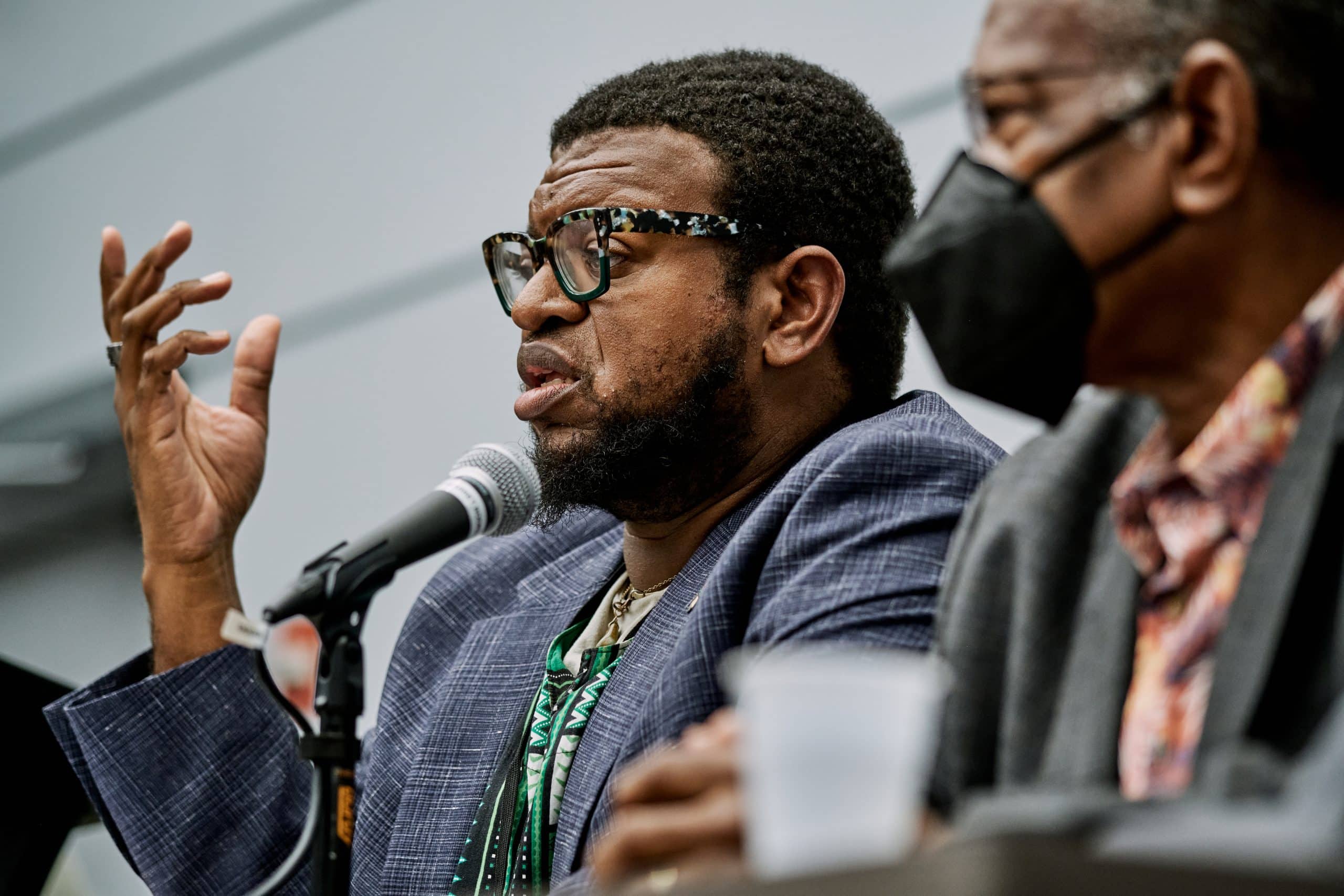
Racial Capitalism Broke My Family. The Church Basement Put It Back Together.
Black people are growing lonelier as we age, and capitalism is the reason. In the first essay of the Defender’s Black Liberation Theology series, Minister Andrew Hairston, Baptist minister and co-chair of Austin DSA, writes about the family he lost in court, the Black socialist ministers who came before him, and why grief belongs in the pews and the organizing meeting rather than alone at home.