In the last minutes of his life, Saveion McConnell was struck by a sheriff’s patrol car, got up off the pavement, kept running, and was shot to death beside a Missouri highway. He was nineteen years old. He was unarmed. No weapon was found on him, near him, or anywhere at the scene. The state has confirmed every one of those facts itself.
More than a month later, no agency has accused him of a single crime, because there was never anything to accuse him of. And the agency investigating his killing, the Missouri State Highway Patrol, says it holds body camera footage that justifies all of it, footage it will not release and will not describe.
“Saveion should be alive today,” said Joshua Levin, the senior attorney at the national civil rights firm Romanucci & Blandin, announcing the firm’s investigation into the killing. The deputy, in Levin’s words, used his police car as a weapon moments before shooting to death an unarmed teenager who posed no threat that could justify deadly force. The firm calls it “completely unjustified.”
There is a strong chance you are reading his name here for the first time. That is not an accident of your attention.
In the five weeks since a deputy killed Saveion McConnell, the coverage of his death has amounted to a handful of local television stories, and with a single opinion piece as the exception, not one headline among them has carried the word unarmed.
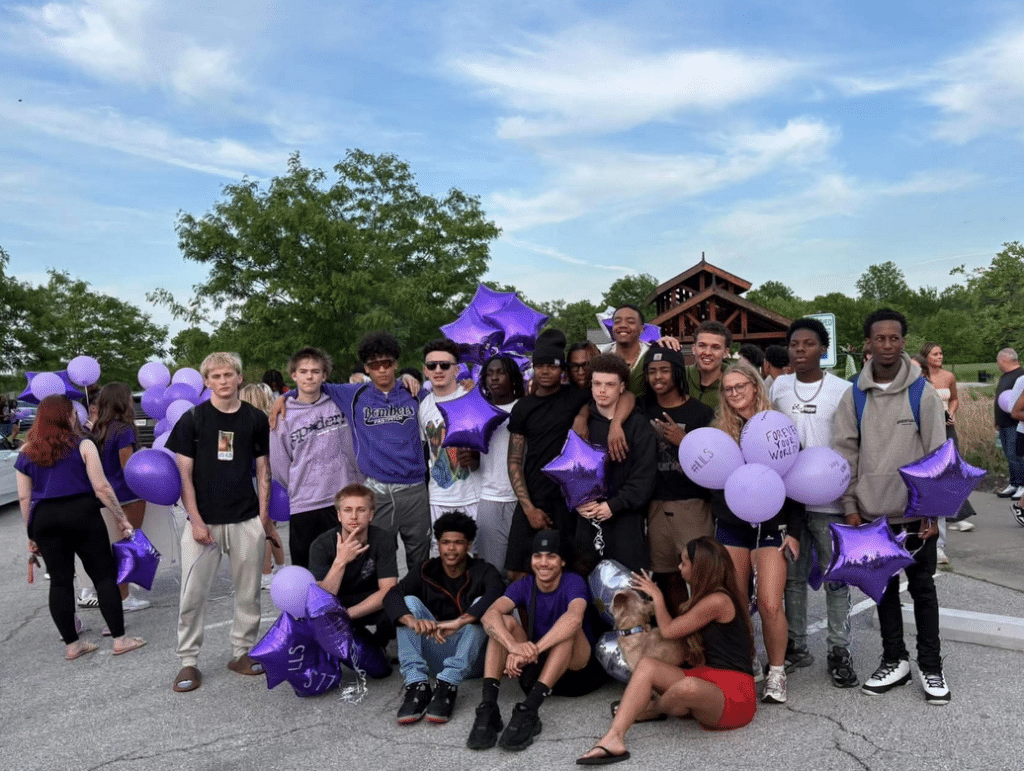
This Friday morning, June 12, at ten o’clock, his mother, Michelle Washington, will stand in Lexington, the seat of the very county whose deputy killed her son, to demand that footage and to demand charges against the man who fired. She is asking Kansas City to come stand with her.
Missouri Cops Have Lied & Covered Up Killings Before, and We Can Prove It
There is a reason Black Kansas City does not take the word of the state when the state explains why it killed one of us. The reason is the record.
In Kansas City, where the police department answers not to the city but to a board appointed by the governor, the agency that investigates the killing of a civilian by police is the Missouri State Highway Patrol and its findings go to the prosecutor, who decides if anyone is charged. It was the Highway Patrol that issued the words “a struggle ensued” on the night Malcolm Johnson died at the hands of KCPD in March 2021, words this paper documented as fiction, before pastors released video showing officers swarming a man who had been rendered unable to fight back, before a cop’s own bullet struck another cop, before shots were fired into Malcolm Johnson’s head.
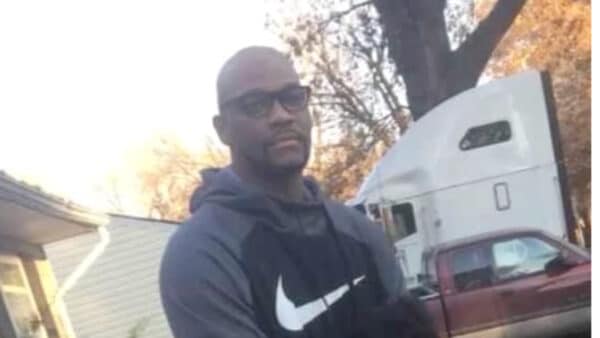
Ryan Stokes was shot in the back. Police said he had a gun and would not put it down. His mother, Nayrene, went to view her only son, her baby boy, and found the wound where no one running toward you puts a bullet. The gun the police described never existed.
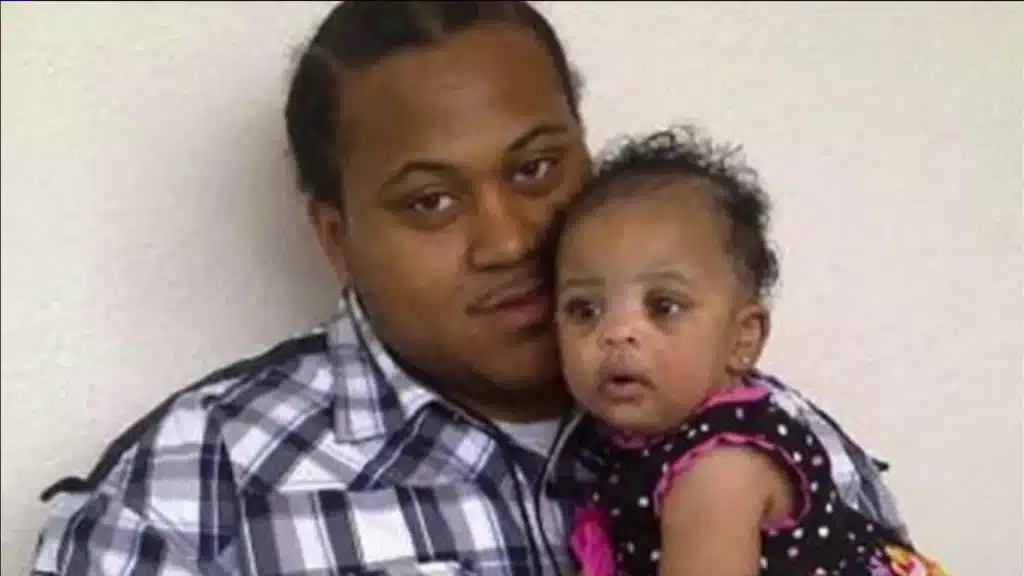
And then there is Cameron Lamb, because Cameron Lamb is the case that ends the argument. When a Kansas City detective killed him in his own garage in 2019, nine seconds after walking onto his property, police said there was a gun beneath his left hand. The first officer to reach the scene testified he saw no gun there. A gun appears in the police photographs taken later.
Bullets surfaced in Lamb’s pockets at the morgue that crime scene technicians never found at the scene. And Lamb was right-handed, with an old injury that had taken the use of the hand the state’s story required. Prosecutors put all of it before a judge and argued the scene had been staged and the weapon planted, and a judge convicted the detective who fired. A Missouri appeals court upheld that conviction.
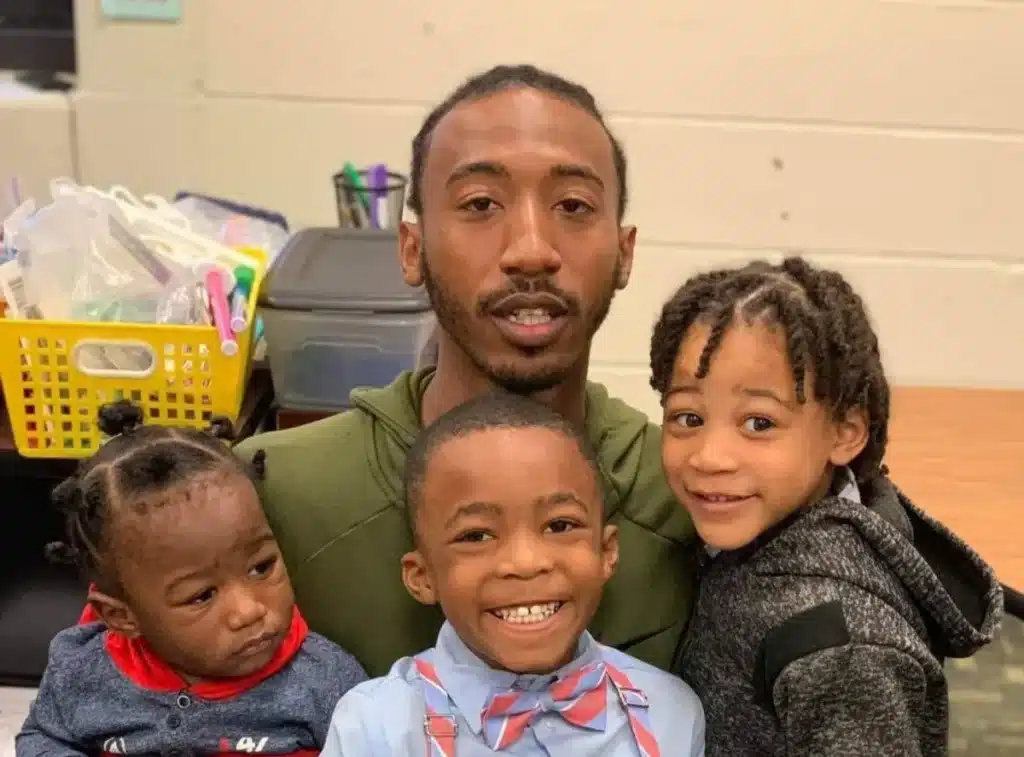
And notice who did the investigating. Police investigated police when Ryan Stokes was killed, and no one was charged.
Police processed their own staged crime scene when Cameron Lamb died, and the conviction a prosecutor wrenched out anyway was erased by a governor’s pen.
The exact same Missouri State Highway Patrol investigated when Malcolm Johnson was brutally executed then framed, and a special prosecutor reading the Patrol’s file found insufficient evidence to charge a soul.
Three dead Black men, three state investigations, zero officers serving a sentence. That is the apparatus now alone in a room with Saveion’s footage, asking the public to trust it.
So when the Highway Patrol tells us that footage we are not permitted to see disproves what witnesses say they watched with their own eyes, we are within our rights, we are within the lessons of our own history, to refuse to take it on faith.
The families of the dead in this city have always had to become their own investigators, their own press offices, their own truth commissions, because the official state-sanctioned account arrives first and arrives whole and is designed to outrun the facts. They should not have to.
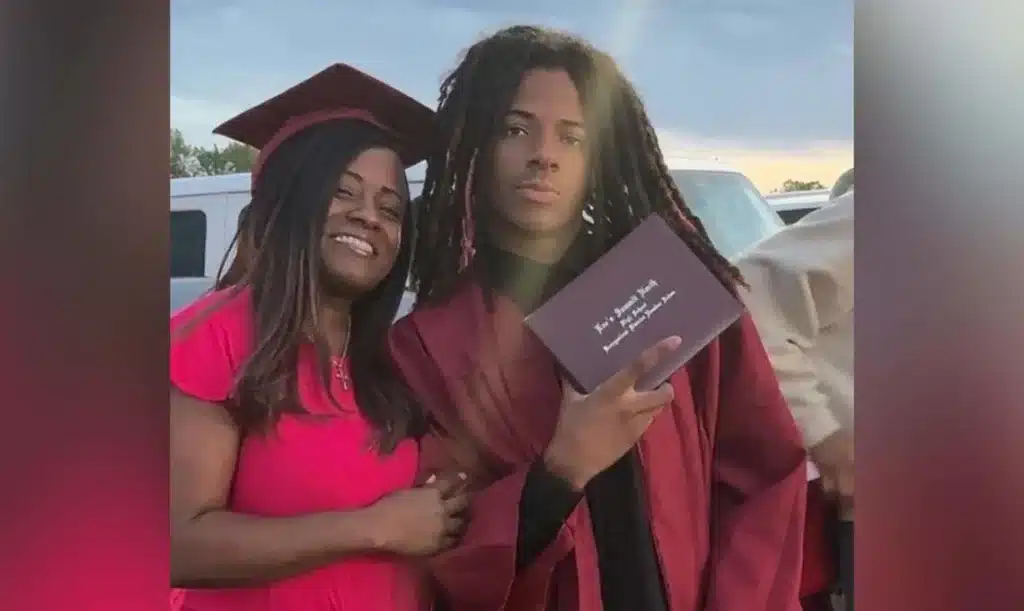
Saveion McConnell graduated from Lee’s Summit North in the spring of 2025, barely a year before he was killed. He played football and basketball. He was the only son his mother had, one of four children, and hundreds of people loved him.
He was looking at trade programs and weighing college the way a young man does when he believes the whole length of his life is still ahead of him, when none of it has been taken yet. On the last night of April he drove out to Warrensburg with friends to a fraternity party, which is the most ordinary thing a teenager can do in the spring of his life.
By a little before four o’clock on the morning of May 1, he was dead on the ground near U.S. Highway 50, killed by a Lafayette County sheriff’s deputy who had moments earlier run him down with a patrol car.
What Happened to Saveion McConnell? Here Is What the State Itself Admits.
Begin with what Saveion McConnell was accused of, because the state has had more than a month to answer and the answer has not changed: nothing. He was never arrested. He was never charged. No prosecutor has named him in any document. No agency, in any official record, has alleged that he committed any crime, that night or any other night of his life.
The Missouri State Highway Patrol’s entire explanation for why officers from three agencies converged on a teenager walking near a highway before dawn is a single phrase. He allegedly matched the description of someone deputies were seeking after a shooting reported nearly two hours earlier where a 17-year-old girl was found with a gunshot wound in a vehicle near Warrensburg, an incident the Johnson County Sheriff’s Office responded to and is still investigating separately.
When a suspect fled that scene, all three agencies — Johnson County, Lafayette County, and the Odessa Police Department — joined the search. None of them has produced a single piece of evidence connecting that search to Saveion that the public has been allowed to see. We are not told what the description said. We are not told who gave it. We are not told how a description taken in the dead of night could be matched at all, in the dark, at a distance. We are told only that a nineteen-year-old Black boy walking at night came close enough to it to die.
He ran. He was a Black teenager alone in the dark on a rural Missouri highway, armed strangers closing in on him, and the area he was running through has spent two centuries teaching Black children what stopping can cost. A Lafayette County deputy and an Odessa officer pursued him, the deputy in his patrol vehicle and the officer on foot.
That vehicle struck Saveion while he was running, the Missouri State Highway Patrol later confirmed. Saveion got up, injured, and kept moving away from the men who had just hit him with a car, and the officers came after him on foot. Then, just before four, the deputy fired. Saveion was hit and pronounced dead at a hospital.
He ran from men he believed might kill him. They did.
The Missouri State Highway Patrol was not there that night; it was called in at the request of the Johnson County and Lafayette County sheriff’s offices to investigate the killing, standard practice in Missouri for officer-involved shootings. When its investigation is complete, the Patrol’s findings go to the Johnson County Prosecutor’s Office, the office that holds the actual power to charge the deputy. That office has charged no one.
Now look at the sequence the Missouri State Highway Patrol itself has given us. A teenager walking near a highway before dawn. A patrol car used as a battering ram against a body that was running away. Gunfire into that same body. And when it was over, when they searched the ground, there was nothing in his hands, no gun, no weapon, and nothing near them.
He was unarmed when the car hit him, and unarmed when the bullets did.
Why Saveion Ran. Lafayette County, Little Dixie, and Two Hundred Years of Reasons.
Anyone who asks why a Black nineteen-year-old would run from police should first learn the reputation and history of the cops in Lafayette County. Lafayette sits at the heart of the region Missourians have called Little Dixie since before the Civil War, settled by enslavers out of Virginia, Kentucky, and Tennessee who trafficked human beings west with them in chains.
By 1860 the county held 6,374 enslaved Black people, more than any other county in Missouri, roughly one of every three human beings inside its borders, worked in the hemp fields whose profits built the river town of Lexington. Lexington is the county seat. It is the town where Saveion’s mother is calling for a public rally on June 12 and asking anyone who believes her son deserved to live to come stand with her.
It is also a town where the old homes still have slave quarters standing out back. The courthouse at its center, the oldest in continuous use west of the Mississippi, was already hearing cases while a third of the county’s people were held there as property.
So understand what it means when a Black child of this region sees headlights swing toward him on a dark rural highway and his legs decide before his mind does. That is not consciousness of guilt, but instead can be interpreted as inheritance.
The people who fled this county’s hemp fields toward the river and the north ran for the same reason, from the same families of men, across the same ground. Black flight from armed white authority in rural Missouri is two centuries of accumulated instruction, handed down at kitchen tables and in church basements, about what happens to us when we stop.
The deputy did not disprove the fear that set Saveion running, but instead confirmed it. So when the question comes, and it always comes, why did he run, we should turn the question around.
Ask what Lafayette County has ever done, in two hundred years, to teach a Black child that stopping was safe?
When emancipation came, the county did not repent. Lafayette County stood fiercely with the Confederacy through the war, and in the decades after Reconstruction white mobs there lynched Black men. The historical record shows white mob violence against Black people ran higher in this region than anywhere else in Missouri, in a state that carried out at least sixty racial terror lynchings, the second most of any state outside the South.
None of this is ancient. It is the soil. The county Saveion was running through remains overwhelmingly white to this day, and its institutions descend in an unbroken line from the ones built to hold his ancestors.
He was not fleeing justice. He was running through Little Dixie in the dark.
The Body Camera Footage Missouri Refuses to Release
Saveion’s uncle, Phillip Washington, says two witnesses who were there told him Saveion stopped when he was ordered to stop. They say he raised his hands and said, “OK, OK,” and that this is the moment another officer pulled up and shot him.
The Highway Patrol’s response to that account is worth reading slowly, because it tells you exactly where this is going. On May 4, Sgt. Justin Ewing wrote that the claim Saveion’s hands were up is “not accurate,” and that, in his words, “a review of available body camera footage disputes this claim.”
So there is body camera footage, and in Missouri the agency that investigates a deputy who kills someone is the Highway Patrol, the same agency now holding that footage. The agency investigating the deputy has watched it. The agency investigating the deputy has decided what it allegedly proves. And the agency investigating the deputy will not let this city see it, will not describe a single frame of what is on it beyond insisting that it clears the man who pulled the trigger. KCTV5 has filed a Sunshine Law request for every officer’s footage from the stop, the chase, and the shooting. As of the station’s most recent report in late May, that request was still pending.
There is a name for evidence that only the accused are allowed to see and interpret. It is not evidence but a verdict. If the footage truly shows what the Highway Patrol says it shows, there is no reason on earth to hide it, and there is every reason to release it now.
The body camera footage in the killing of Saveion McConnell belongs to the public, and it should be released today. And releasing it is not the only thing this city should be demanding. Under Missouri’s standard process, the Highway Patrol’s completed investigation goes to the Johnson County Prosecutor’s Office and that office holds the power to charge the deputy. There are two institutions that owe this family an answer, and only one of them has spoken.
Missouri law lets agencies keep investigative records closed while a case is active, and that closure is the shield the Patrol is holding up. But Missouri law also gives the family of a person killed on police video a path to ask a court for that footage even while the investigation is open. When a sheriff’s deputy killed Sonya Massey in Illinois, the footage was public within weeks. Concealment here is a choice.
The Firm That Won for George Floyd and Sonya Massey Is Now Investigating Saveion’s Killing
The family is not standing alone, and the people who killed Saveion should be losing sleep over what that means.
Romanucci & Blandin, a national civil rights firm out of Chicago, has opened a civil investigation into Saveion’s death. This is the firm that served on the legal team for the family of George Floyd and helped win the twenty-seven million dollar settlement from the City of Minneapolis, the largest pre-trial civil rights wrongful death settlement in the history of this country.
It is the firm whose founding partner won a ninety-eight million dollar verdict for the family of Botham Jean, the young man shot dead in his own apartment in Dallas. It represented the family of Daunte Wright. And it stood with the family of Sonya Masseyand won them a ten million dollar settlement. In Sonya’s case, the deputy was charged with murder within weeks of the killing. In Saveion’s, more than a month has passed and the deputy who killed him has been charged with nothing. These are not lawyers who chase small cases in quiet counties.
Their senior attorney, Joshua Levin, has already named the thing plainly. The deputy, he said, struck Saveion with his car, using the vehicle as a weapon, and then shot an unarmed teenager who posed no threat that could justify deadly force. He called it “completely unjustified.”
When a firm with that record arrives in a rural Missouri county before the body camera footage has even been pried loose, it is telling you that the facts already on the public record are bad enough to build a case on. It is telling you this does not stay a local story.
They go where the killing of a Black person can change the law. They have come to Lexington, Missouri.
Unarmed. The Word Kansas City’s Headlines Refused to Print.
There is one more institution that owes this family an answer, and it is the press. Five weeks have passed since a deputy ran down and shot an unarmed teenager who had been accused of nothing, facts confirmed by the state itself, facts that in other cases have carried a story to every screen in America.
The coverage of Saveion’s killing amounts to a handful of local television reports. And read the headlines of the stories published so far. To KSHB, Saveion was a “19-year-old shot, killed by Lafayette County deputy.” To FOX4, a “19-year-old killed by Lafayette Co. deputy,” and later a “vigil held for 19-year-old shot, killed.” Things that happened to him, arranged in the past tense, with the most important confirmed fact in the entire case missing from every one of them. With a single opinion piece as the exception, no headline in this region has put the word unarmed next to his name.
One word did make it through, and it came straight from the Highway Patrol’s press statements: suspect. Outlets carried it forward unexamined, and a FOX4 report managed to call Saveion an “unarmed 19-year-old suspect” in a single breath, apparently without pausing over the question the phrase begs. Suspect of what?
No crime has ever been alleged against him, before his death or in the five weeks since. The word has no charge behind it, no warrant, no case number. What it has is a function. It tells the reader, before a single fact arrives, that the dead teenager belongs to the story of crime rather than the story of his own killing.
When a Sangamon County sheriff’s deputy shot Sonya Massey in her own home, the body camera footage was released, the country saw it, the story became national news, and the deputy was charged with murder within weeks. Every element of that sequence began with the footage. In Lafayette County the footage is still withheld, the story has stayed small, and the deputy has been charged with nothing, and it is worth asking in which direction the causation runs.
The Black press was born for exactly this loop, for the stories the dailies judged too small and the dead they judged unworthy of a headline. So we will print the word, as many times as it takes. Unarmed. Unarmed. Unarmed.
Concealment starves coverage. Thin coverage relieves the pressure to stop concealing. Somewhere inside the loop, a mother is begging to see the last minutes of her son’s life.
Stand With Saveion. The June 12 Rally in Lexington, Missouri.
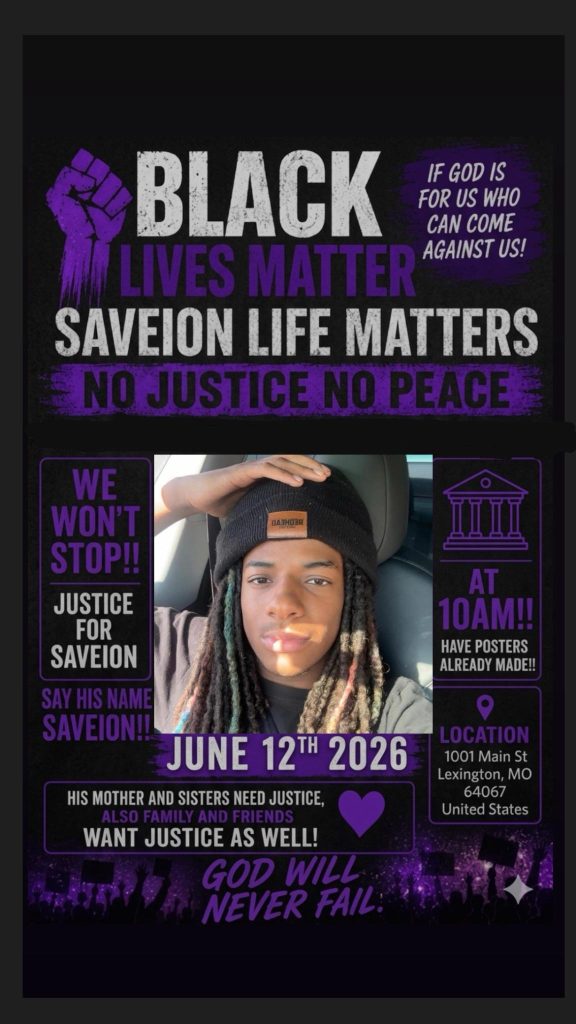
Michelle Washington calls her son’s killing what it is, and she will not let it disappear into the slow machinery of a prosecutor’s eventual review. “We’re not letting up and we’re not giving in,” she has said.
She is demanding criminal charges against the deputy who fired. His family is demanding that departments change how they pursue and how they detain, so that the next mother is spared this. And underneath the demands is the simplest thing a parent can carry, which is the wish that the world know who her child actually was. The graduate. The athlete. The young man who, his sister said, had a good heart, who loved his people in his own way. Loved by hundreds. His life, in his mother’s words, senselessly cut short.
The family has put their grief in the language of the church that raised them. If God is for us, who can be against us. God will never fail. It is the oldest theology of Black survival in this country, the conviction that no power on earth, not a deputy and not a Highway Patrol and not a sealed hard drive of footage, holds the final word over a life.
On Friday, June 12, at ten in the morning, Saveion’s mother and his sisters will gather in Lexington, in the seat of the very county whose deputy killed their son and brother. They have already made the posters. They are asking Kansas City to come stand with them, to bring our bodies and our voices to a place that would rather this stay quiet, and to say the name the state would prefer we forget.
Say it.
Saveion.