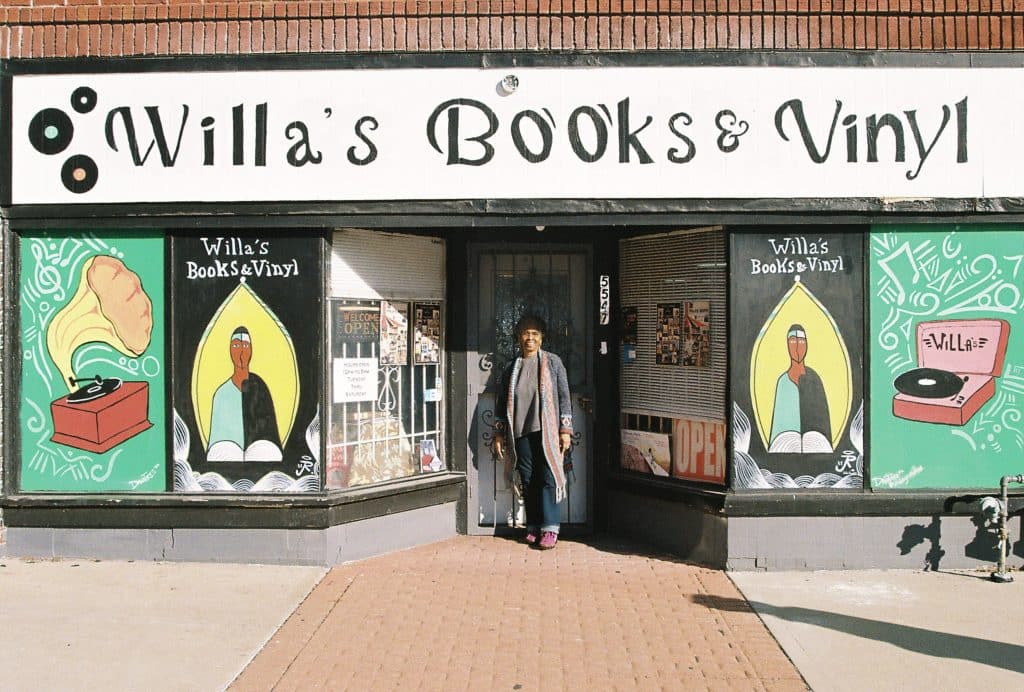
There is a building on Troost Avenue that holds centuries.
Perhaps not in the way that museums hold centuries, behind glass, temperature-controlled, accessible by appointment-only. This building holds centuries the way a grandmother holds a story, with her whole body, with the weight of everything she has carried and the understanding that if she lets go, it may never be told again.
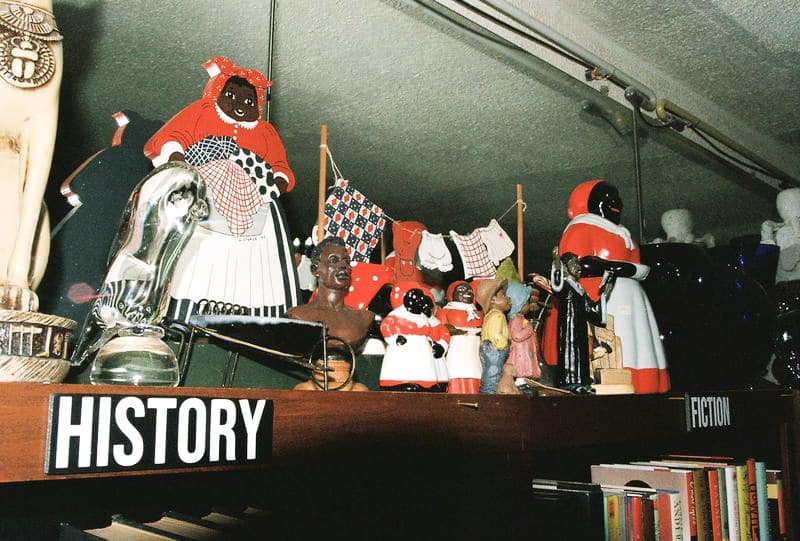
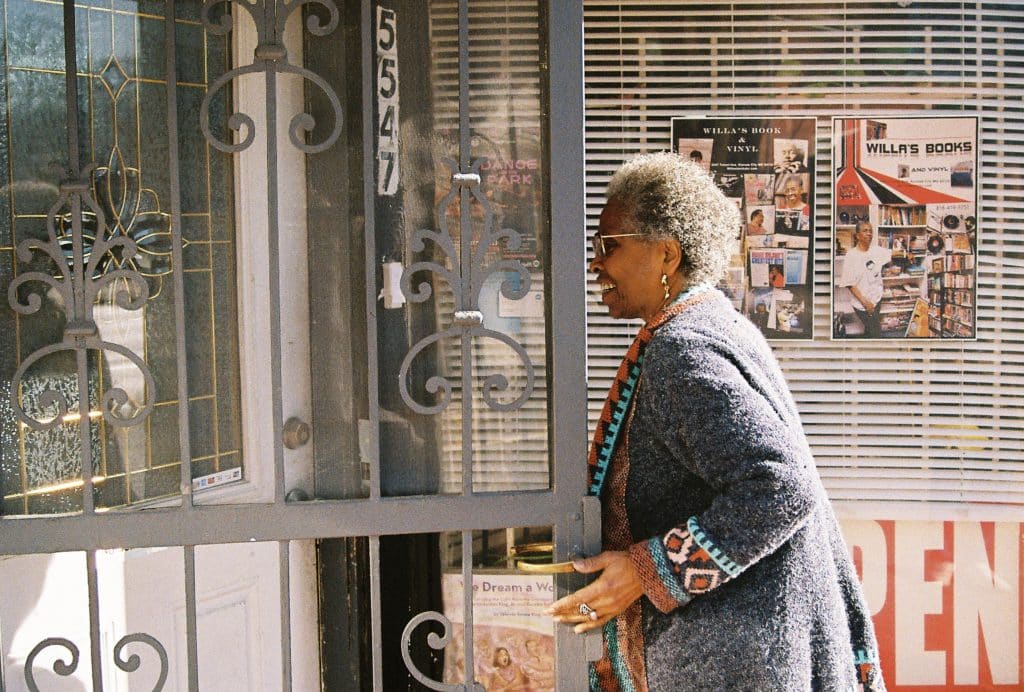
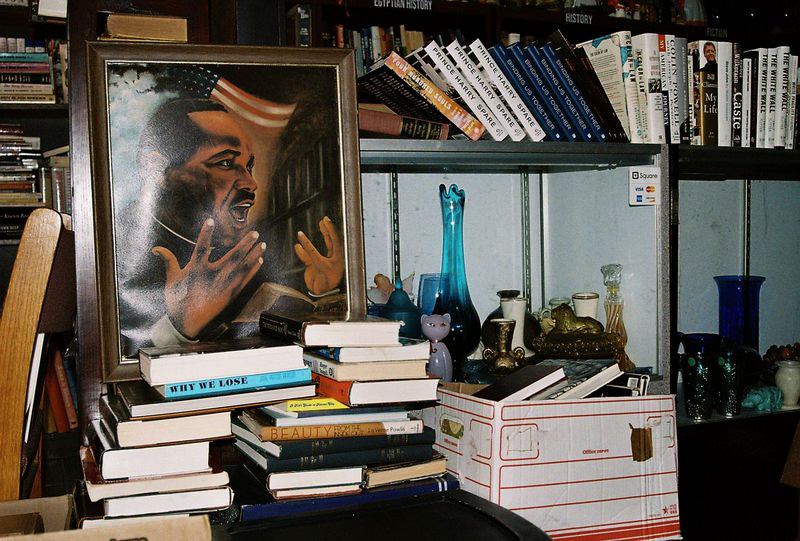
For over 40 years, Ms. Willa Robinson poured her life into Willa’s Books & Vinyl, the oldest and longest-standing Black-owned bookstore in the state of Missouri. The collection grew to more than 10,000+ works. First-edition Frederick Douglass. First-edition Zora Neale Hurston. Paul Laurence Dunbar. Booker T. Washington. W.E.B. Du Bois. Langston Hughes. Books printed in 1863, the very year our ancestors seized emancipation. Jazz and Blues records pressed before integration. Children’s stories where Black youth could see themselves on a shelf, in a state where legislators have spent years trying to make sure they never do.
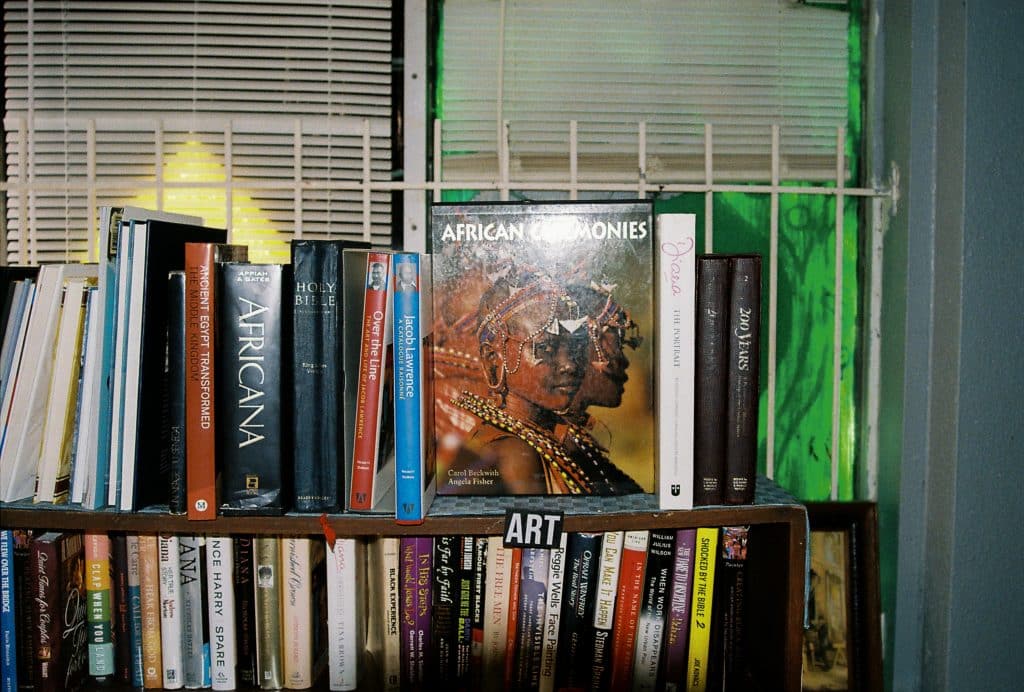
Ms. Willa built all of this from a table in a post office, from crates hauled to 18th and Vine, from grief so deep it remade her. After the devastating murder of her youngest daughter and granddaughter to domestic violence, she turned to books the way the wounded turn to prayer. “I know why people hoard,” she once said. “It’s because they’re trying to fill an empty spot. And the empty spot that I was trying to fill was my daughter and my granddaughter that were gone.”
She filled that spot with the whole of Black memory. And then she opened the door and let everyone in.
One Monumental Week
In 2024, with rent climbing and no paid staff to share the weight, 84-year-old Ms. Willa stood one week away from surrendering her entire archive to out-of-state collectors, most of them white. Another quiet casualty of Troost Avenue’s relentless gentrification. Another century of Black knowledge boxed up, priced, and scattered to private shelves where no child from the east side would ever touch it.
This is the math of erasure that is familiar to many of us. It doesn’t always arrive as a banned book list or a legislative vote (although it comes as those too). Sometimes it arrives as a landlord’s notice. Sometimes it arrives as an 84-year-old woman, exhausted and alone, making the only phone call that seems left to make.
But that is not the call she ended up making.
“What Can We Do?”
In the winter of 2023, a 22-year-old Kansas City Defender volunteer named Nina Kerrs walked into Willa’s Books & Vinyl looking for a job.
“I opened the door and Ms. Willa was sitting there at a small table,” Nina recalled. “She told me she can only afford to be the sole person working and invited me to sit down. Ms. Willa put on a record and for four hours, until closing, we explored abolition, war, and slavery. It dawned on me how her store and her wisdom felt like it wasn’t being appreciated fully by our young Black communities.”
Nina kept coming back. She bought books. She helped around the store. She and Ms. Willa became something rare in a world that separates generations by algorithm and geography: real friends. “A legendary person to me,” Nina called her.
So when Ms. Willa told Nina, in the summer of 2024, that she had decided to close the store and sell the collection, Nina did not hesitate. Nina, who was already an organizer with the Defender, informed us of the emergency.
“I was just like, guys, I’m really worried we are about to lose our longest-standing Black bookstore, and we are going to lose a huge staple for Black culture in our city. And this is terrifying. What can we do?”
Within a day, five Defender organizers sat with Ms. Willa in the shop. They told her what her store meant. They asked her for one month.
“We didn’t know how any of this would work,” Defender founder and executive editor Ryan Sorrell said. “But with the rise and proliferation of disinformation and the erasure of Black histories, the thought of her having to sell this bookstore that literally houses first-edition Frederick Douglass books, that houses books dating back to 1863, the thought of losing that history, particularly in this political moment, was devastating.”
Ms. Willa agreed to give them that time.
She had never heard of the Kansas City Defender before that afternoon. “It’s this wonderful group of young people,” she said. “They came in, and were very kind, very supportive of me and the books.”
One month turned into a movement.
The Work
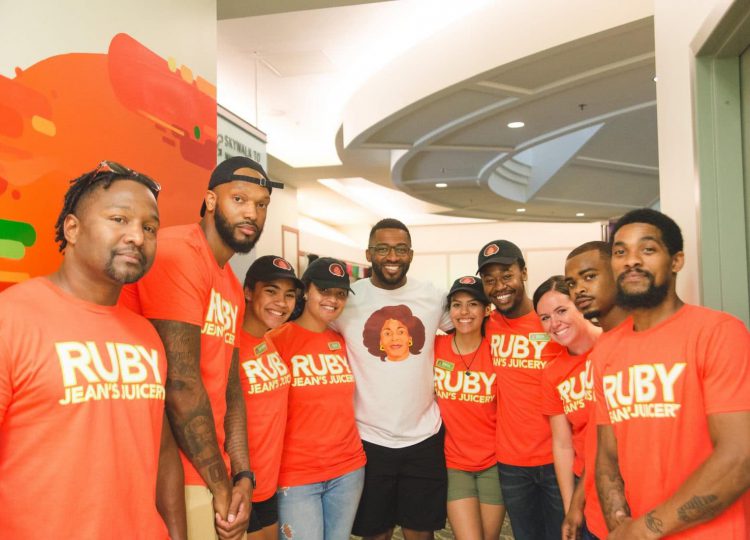
By August 2024, the Defender began covering Ms. Willa’s rent in full. On the editorial side, the team published a feature co-released with the Kansas City Call, the city’s historic Black newspaper. Eighty people reached out to volunteer.
Then came the real labor.
Campaign co-directors Nina Kerrs and Lauren Winston organized a team of more than 40 organizers who spent six to eight months cataloging Ms. Willa’s collection of 10,000+ plus books, one by one, spine by spine, in defense of Black memory. Some volunteers had library and archival backgrounds. Most were simply people who understood what was at stake and showed up anyway.
This is what organizing looks like when it is not performed for cameras. Weekends in a small shop on Troost. Dust on your hands. A record playing. An elder nearby, watching young people handle her life’s work with care, learning their names, telling them stories between the shelving.
The Defender’s mutual aid team had been built for exactly this kind of intervention. When the newsroom broke the story of a serial killer targeting Black women in Kansas City in 2022, readers flooded in wanting to do something, to act, and the Defender organized a vigil. That moment revealed the need for a second wing of the organization, one that could move beyond reporting into direct community response. The campaign to preserve Willa’s Books grew from that same root.
The World Took Notice
In the very heartland where the modern white-supremacist book-ban crusade was born (North Kansas City, 2021) and where segregation was first dragged into court (Brown v. Board of Education, Topeka), this small bookstore on Missouri’s most segregated street had held the line. And a young, radical, abolitionist newsroom had refused to let it fall.
The story traveled.
In July 2025, Harvard University’s Nieman Foundation for Journalism published a feature on the campaign, documenting how the Defender had moved from crisis response to a model of what community-rooted Black press could look like in the 21st century: a newsroom that does not simply cover the story but intervenes in it, that treats preservation and organizing as extensions of its editorial mission.
In September 2025, the Washington Post brought Ms. Willa’s face and story to a national audience, and more than 41,000 people responded with their hearts. The post’s framing was simple and true: she spent decades building a Black bookstore, and her community wants to save it.
But this was never a story about saving. Saving implies rescue. What happened on Troost Avenue was something more radical than rescue. It was an act of collective inheritance. A community deciding, in real time, that the knowledge an elder spent a lifetime gathering would not be scattered to the highest bidder. That it would stay. That it would grow.
What This Moment Demands
Consider the landscape.
Across Missouri, three consecutive anti-CRT bills have advanced since 2021. In Kansas City alone, 54 Black-authored books were pulled from school shelves between 2022 and 2024. The erasure is well-funded. It has legislative sponsors and school board allies and an entire media infrastructure dedicated to the premise that Black children knowing their own history is a threat to public order.
Meanwhile, property values along Troost have risen 41% since 2020. More than 150 Black-owned businesses have been displaced from the corridor. The avenue that once served as Kansas City’s racial dividing line (by law) is now being redrawn as a site of extraction, where Black culture is consumed as aesthetic but Black ownership is treated as expendable.
In this landscape, a collection of 10,000+ Black books is not an artifact but instead is a curriculum that cannot be voted out of a school board meeting or memory-holed by a state legislature. It is the physical, tangible, touchable proof that Black people have always been thinking, writing, singing, theorizing, dreaming, and building, no matter who tried to stop us.
The Passing of the Torch
In July 2025, Ms. Willa Robinson retired. Willa’s Books & Vinyl closed its doors.
But the collection did not leave Troost Avenue.
Ms. Willa entrusted her life’s work to the Kansas City Defender, believing in what the young people who had shown up for her could build from what she had gathered.
“The young people are the ones with ideas,” she said. “They got the energy to carry it out. I think the young people can do it better than I can do it now.”
What Comes Next
The Kansas City Defender plans to purchase Ms. Willa’s collection in its entirety and transform the space at 5547 Troost Avenue into a permanent public archive and the Defender’s first-ever headquarters.
Imagine a space where a teenager banned from reading Toni Morrison at school can ride the bus to Troost Avenue and hold a first-edition Frederick Douglass in her hands. Where reporters from a young Black newsroom file stories from the same room where freedom school students study the history of resistance. Where mutual aid programs operate alongside vinyl listening sessions, where the walls hold both breaking news and century-old poetry, where an elder’s life work and a young generation’s radical vision occupy the same sacred ground.
This is what the Defender is building. A newsroom. An archive. A freedom school. A mutual aid center. A cultural anchor. A place where Black community members can gather in quiet and safety, where learning is rooted in liberation, where the present is tethered to the longest traditions of Black thought and struggle and imagination.
A lighthouse on Troost.
Historically, the Black press was the second most influential institution in Black communities outside the Black church, and that influence was rooted in physical space. Black newspapers served as community centers, gathering places, and engines of civic life. The Defender intends to follow directly in that lineage, to become more than a news outlet, and instead to be a home.
“My father is the reason why I love to read,” Ms. Willa once said. “My brother introduced me to jazz when I was a blues person. And my mother taught me about loving people.”
Love built this collection. Grief deepened it. Resistance preserved it. And now, a new generation of organizers, journalists, archivists, and dreamers will carry it forward, not as memorial, but as living infrastructure for Black liberation.
The doors at 5547 Troost will open again.
When they do, the story that walks through them will be centuries old and completely new.
Stay connected. The Kansas City Defender will formally announce its capital campaign in the coming weeks. To be the first to know how to support, volunteer, or join this historic effort, sign up for the Defender News Briefing at kansascitydefender.com or follow @preservewillasbooks on Instagram and Facebook.
Preserve Willa’s Books & Vinyl is a campaign of The Kansas City Defender, a nonprofit digital media organization producing news, tools, and public services for Black communities across the Midwest.