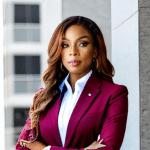
Public mural painted by artist Tatyana Fazlalizadeh in New York City for the 2016 Black Girlhood Conference and Exhibition at Columbia University (Tatyana Fazlalizadeh)
Early last month, a video surfaced where a Black woman shared her experience of being brutally assaulted after rejecting a man’s advances. Onlookers, mainly Black men, chose to blame-the-victim, look the other way and spread “it’s none of my business” rhetoric. There has not been one report of any of them rendering aid. While some Black men would go to great lengths to protect Black women, they are overshadowed by those who choose to remain silent.
The Backstory
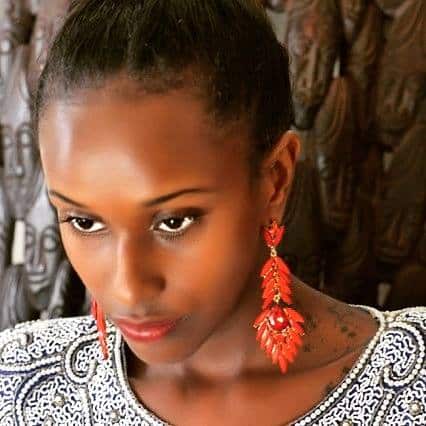

Left: Rhoda Osman Bashe; Right: Olan Fitzgerald Douglas (Photos taken from Facebook)
When Roda Osman Bashe (a Black social media influencer and junior journalist) shared her story that Olan Fitzgerald Douglas hit her in the face with a brick, some Black men chimed in to say they weren’t responsible for her protection, while others suggested intervening would be too dangerous. However, even if they wanted to avoid a physical confrontation with a stranger, they could have used their voices to condemn the man’s actions, called for help, or at least expressed empathy for her experience. Instead, these Black men seemed more than willing to turn a blind eye to her pain.
In a video taken from a hospital room, we can see Roda has a massive bruise and swelling on the right side of her face. Why was she beaten? When Olan asked for her phone number, Roda rejected him. Instead of accepting this rejection, Olan responded violently. Sadly, this is a common experience for Black women.
Lee Lee, a Tik Tok Content Creator, commented that she always gives her phone number to men who ask––even if she’s not interested––in fear that a man will react poorly to rejection. Let’s all keep in mind that women are not trying to be cruel in rejecting someone’s advances. They are expressing their right to socialize with whom they choose. Sadly, many women need to develop strategies to keep themselves safe, all because some men refuse to take “no” for an answer. As the Canadian poet and author Margaret Atwood said, “men are afraid that women will laugh at them. Women are afraid that men will kill them.”
In 2021, a 31-year-old Black woman was brutally attacked by a group of Black men after politely rejecting his offer to pay for items she was purchasing at a Harlem convenience store. After turning down their advances and trying to leave, the woman was chased, battered, and robbed by her attackers. Surveillance footage showed, when the group reached her, they beat her, kicked her, and one man bit her forehead in what she thinks was an attempt to “bite [her]eye out,” the victim said. Reportedly after the attack, someone told the woman to run away because one of the suspects had been seen committing the same crime in the past. In a similar violent crime, after spurning his advances, a female victim was hit in the face with a skateboard by one of the men in June 2021. In this case, the Harlem woman survived and one of the attackers in this case was arrested a in a separate incident for choking his girlfriend and breaking her jaw.
Black men refusing to intervene in situations where Black women are harmed–-while simultaneously excusing their lack of action out of fear–-only perpetuates misogynoir and feeds the stereotype that Black men are “dangerous.”
Sadly, there are many Black women who do not survive the consequences of Black men feeling snubbed or rejected. Rachaell Davis wrote an article for Essence, sharing the story of eleven Black women who were murdered for refusing to succumb to the advances of Black men. In Kansas City, Kansas, a Black woman reported being attacked and brutally beaten by Sean Gasaway, Sr., for saying “no” to him and for revealing what she believes to be racist and fraudulent acts perpetrated by the Clay County, Missouri Sheriff’s Department and two court officials -Judge Alisha O’Hara and Commissioner Sherill Paige-Roberts. Twenty-four year old college student, Cherica Adams, made national headlines when she was murdered by a hitman hired by her boyfriend, NFL star Ray Carruth––Cherica was eight months pregnant when this incident occurred and stemmed from her refusal to have an abortion. When Kasandra Perkins, a 22–year–old, refused to grant her ex, FL star Jovan Belcher, full custody of their daughter, he shot her and then himself in Kansas City, Missouri. These are only a few examples of the violence Black women endure here and throughout the country, when they tell a man “No.” Sadly, what happened to Roda, experiencing violent retribution for rejecting a man, happens to Black women at a more alarming rate because many of these atrocities go unreported.
Unveiling the Data: Statistics That Tell the Story
Black women are the group most likely to become victims of intimate partner violence and domestic violence in America. According to the Institute of Women’s Policy Research, more than 40% of Black women will experience domestic violence and are 2.5 times more likely to be killed by men than white women. Sadly, 92% of Black women killed by a domestic partner were intra-racial – meaning they were committed by Black men against Black women. It’s a social problem that many willingly ignore. When Black woman speaks up or provides these statistics online, she’s quickly berated, disparaged, accused of hating Black men, and the topic immediately becomes divisive. However, the truth is wanting to mitigate violence demands that we all cease turning a blind eye to it.

2018 data analyzing Black women’s experiences with domestic violence in the Violence Policy Center’s “When Men Murder Women” Report (Graphic courtesy of University of Illinois Chicago’s Women’s Leadership and Resource Center)
Just recently, we witnessed how Black men attacked Megan Thee Stallion, taunting her for over two years after she confronted Tory Lanez, a Black man who is currently serving ten years for violently shooting her in the foot. It was heartbreaking for Black women to see so many Black men blame Megan for getting shot instead of condemning Tory’s for shooting her.
The Remarkable Impact of Language
When members of the Black community, particularly Black men, internalize and perpetuate harmful ideologies, they contribute to a cycle of internal and external violence that impacts us all. It’s crucial to understand that these internalized viewpoints serve to reinforce the very systems that oppress us. While some may argue that these perspectives could provide fodder for those who seek to harm us (such as racist cops and karens). But let’s be clear: the responsibility for any form of violence against Black folks lies solely with the perpetrators and the systems that enable them. However, dismantling these harmful viewpoints within our own community is an absolutely essential part of broader efforts to combat systemic anti-Blackness.
This blame-the-victim response is akin to how white people respond when confronted by the racial violence––blaming Black men for not complying with police instructions and blaming women for wearing revealing clothes, are legitimizing myths cut from the same cloth, that feeds racist attacks. In both instances, they attempt to normalize the violence a marginalized group endures. Victims of oppression must be careful not to mimic the traits of their oppressor against their own people. These traits are evident in those who believe that most men are good people who would never hurt a woman as they attempt to justify the violence Black women endure. Their first instinct is to ask, “well what did she do” and blaming them instead of holding men accountable. As if there is any justifiable act, outside of self-defense and defense of others, to justify having a brick smashed in your face. Shamelessly, Black men immediately took to social media, looking for videos of Roda to tarnish her character, to justify the man hitting her in the face with a brick. Many Black men spent more time sharing videos of Rho slapping a white man instead of using the power of social media to uncover his identity. These same Black men were so focused on her expressing feminist ideals, they missed the part in these videos that stated that they were a skit made for entertainment purposes only. Black men instead spread the rhetoric that women who believe that they should have equal rights and access to opportunities make them unworthy of protection.
Black women and girls are often de-gendered victims of identity politics when it comes to violence and oppression. Therefore the ‘she’s so strong’ mythology is not complimentary and harmful to Black women and girls. Statements like this perpetuate the notion that seemingly if she’s strong she can take a hit and does not need or deserve softness, compassion, or care. Black men must do better. Black women who contribute to this vile rhetoric are not excused from this deplorable behavior and are equally as guilty. The well-being and safety of Black women needs to matter on a collective level. Individual Black men doing the work matters less than the damage perpetuated by the masses.
The Linguistic Key: Unlocking the Power of our Voice
People often wonder why Black women do not usually speak out about their experiences despite being most victimized by domestic violence. The disrespectful and hateful comments by Black men tell us why. Being the victim of domestic violence is traumatizing enough. Having people doubt your experiences, accuse you of lying, imply that you deserve it, or attempt to minimize domestic violence as if it were an anomaly instead of a common occurrence is salt added to the wound. Too often, Black men abuse Black women without regret, redress, or recourse. Far too long, have people shied away from having a meaningful conversation about mitigating domestic violence for fear of dividing the black community, which needs to be unified in its resistance to white terrorism.
It is imperative that the Black community start to address the injustices Black women experience in our communities while also working together to challenge racist beliefs, systems, laws, and policies that harm Black women, men, children, and nonbinary people. We can acknowledge the harms of domestic violence while also acknowledging that the black family has been under systemic attack by the white power structure —including CIA-sponsored white feminists like Gloria Steinem, who helped to undermine the civil rights movement by exploiting male-female tensions. There’s a sentiment held by some that if Black women speak about violence they experience from Black men, our sense of community will shatter. Perhaps we should redefine the term “black unity” and examine its usefulness if it can only exist when Black women are silenced. Black women are driven by their love for the Black community. Therefore, despite it all, Black women continue to inspire to raise their voices in protest, believing that change is possible.
So, why do so many Black men turn a blind eye to domestic violence Black women endure? Unfortunately, there exists a subset of men who are happy to see a Black woman, like Rho Bashe, get hit in the face with a brick.
UN-Women notes that gender-based violence (GBV) includes “harmful acts directed at an individual or a group of individuals based on their gender.”
“It is rooted in gender inequality, the abuse of power and harmful norms. The term is primarily used to underscore the fact that structural, gender-based power differentials place women and girls at risk for multiple forms of violence.” It is hard for a few men to accept that some exhibit unjustified cruelty toward women and applaud others who do. It is also true that some men who feel uncomfortable with the violence they see women endure become struck with the bystander effect – a social psychological phenomenon in which the presence of others hinders individuals’ helping behavior. Still, there are those who believe it’s not their place to confront a man harming a woman. However, to endorse this belief that no one has the responsibility to intervene, also means you think a man has the right to harm a woman, that it’s wrong to stop him, and his reasoning for doing so is justified. Amina Mohammed, the UN Deputy Secretary-General, said men and boys who “turn a blind eye” to violence against women must accept they are “accomplices to violence.” I believe Albert Einstein put it best, “The world is a dangerous place, not because of those who do bad things, but because of those who look on and do nothing.”
Help is available
If you or someone you know is a victim of Intimate Partner Violence (IPV), Domestic Violence (DV) or Adolescent Domestic Violence (ADV-child to parent abuse), call Better Days Psychiatric Services at (816) 582-5665 to schedule an appointment or speak with a trained professional. The National Domestic Violence Hotline is available 24/7. Call 1-800-799-7233 or text “START” to 88788.