Black voters in Missouri could be at risk of voter suppression on the 2024 abortion-rights ballot due to misleading language — aimed to oppose legal abortion.
Facing massive disparities and inequalities in accessing the right to vote, Black Americans are continuously affected by voter suppression tactics.
Black Americans have become subject to the insidious ways language is used on voting ballots to block Black voter participation. This particularly affects first-time voters and voters who may have low literacy skills — discouraging themselves from voting if they find it difficult to comprehend.
History of Voting Tactics on Black Americans
Republican lawmakers have long used harsh tactics against Black voters — beginning in 1865 with Emancipation, where many states tried to block or restrict Black citizens from voting.
According to the Equal Justice Initiative, “States in the American South used disenfranchisement, violence, terror, intimidation, poll taxes, and a range of other tactics to deny African Americans the right to vote.”
Not only have these tactics happened in the South, they’ve spread to other states as well.
The enactment of the Fifthteenth Amendment guaranteed Black men the right to vote in 1870; Black women wouldn’t be allowed to vote until the passage of the 19th amendment in 1920.
Literacy Test
Prior to the Voting Rights Act of 1965, Black Americans had to take a literacy test in order to get the right to vote. The test was composed of about 30 questions that had to be answered in 10 minutes. If applicants answered any question incorrectly, they automatically failed.

Literacy tests were designed to put Black applicants through mental contortions and, ultimately, were at the mercy of white Americans who judged whether applicants passed. White Americans were not usually asked to take the literacy test but if they did, they typically passed because their white counterparts administered the test.
Voting Rights Act of 1965
In 1965, the Voting Rights Act was intended to address this history of racially motivated barriers to voting — but many states still continue to excavate voting opportunities in Black communities through tactics like complicated voter ID laws, criminalization of the ballot box, felony disenfranchisement, and voter registration.
The election system remains as a literacy test. Even if Black voters need assistance, some states continue to make it difficult to receive help.
This is a recurring issue for Black voters that goes back many decades — still holding Black voters up from being able to vote the way that they should.
How is this affecting Black Missourians currently?
Missouri, among other states, has been accused in lawsuits regarding biased language on the 2022 abortion-rights ballot.
Abortion-rights advocates raised concerns that incoming ballot language is “deceptive,” which could affect the outcome on the abortion-rights ballot in 2024.
The Missouri ACLU chapter filed a lawsuit asking the Republican Secretary of State, Jay Ashcroft, to use less biased language in ballot summaries.
According to the Plain Language Act of 2010, it’s required to use clear and understandable language when federal agencies communicate to the public. It aims to ensure that government information is easily comprehensible and useful to the general public.
Kansan Voters Grappled with Misleading Language in 2022 Abortion-Rights Measures
In last year’s effort to ban abortion in Kansas, Republican lawmakers said the measure would “reserve to the people the right to regulate abortion and affirm there is no constitutional right to abortion or to require the government funding of abortion.”
When the Kansas Supreme Court earlier determined that there is a right to abortion, it meant the ballot measure would be removed and that Kansas voters would maintain legal abortion in the state — rejecting the amendment to make them illegal.
This turnout revealed that the majority of Kansan voters agreed that women should make their own reproductive decisions. Those on the opposing side — like Kansas For Life, a major political group that opposes abortion rights — remain committed to their ongoing efforts. This could potentially affect the future of the abortion-rights law.
Some Kansan voters’ desired outcome has been achieved, but abortion access remains limited due to the restricted amount of clinics in Wichita and Kansas City areas.
Biased Language may Disenfranchise Black Women in the Fight for Reproductive Rights
The effort to manipulate the abortion-rights ballots may have a significant impact on Black women voters. The impact is two fold: not only causing Black women to worry about their reproductive rights being restricted, but also hindering their ability to vote effectively if ballot language is misleading.
Black women are disproportionately impacted with reproductive health issues — facing overwhelming costs and strenuous obstacles such as restrictive laws, financial distress, maternal complications and deaths, and postpartum depression.
Restrictive laws affect Black women’s access to abortion services and reproductive healthcare.

With Roe v. Wade being overturned last year, the law denies agency to Black women over their own bodies but also contributes to financial distress leading to the cycle of poverty.
For example, when Black women are forced to have an unwanted baby, they suffer financially because they are not prepared––facing medical costs and attention they were not initially seeking.
Black women are also at a higher risk for maternal complications — such as preeclampsia, preterm labor, hypertension and gestational diabetes — during pregnancy.
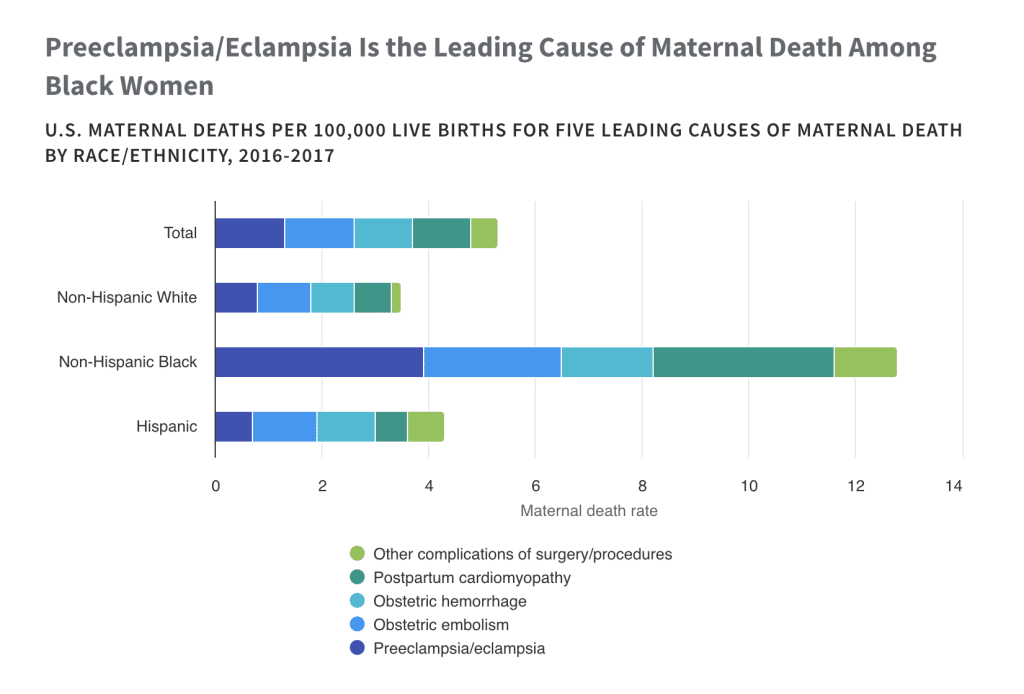
In the U.S., Black women are nearly three times more likely to die during pregnancy or delivery than any other race.
Pregnancy complications for Black women increases the risk of developing postpartum depression. Postpartum depression affects are 1.6 times higher for Black women.
Despite Black women being at higher risk of postpartum depression, they are less likely to receive financial and health assistance due to financial barriers, stigma around mental health, racism, and historical mistrust within the healthcare system, according to AHA Institute for Diversity and Health Equity.
Misogyny also hinders Black women within the health care system; health care workers who have an underlying bias against Black women refuse to take Black women seriously if she complains of pain or potential systems that may jeopardize her health.
In 2019, Black women accounted for 38.4% of abortion patients, the largest among other racial and ethnic groups, according to the Centers for Disease Control and Prevention.
That same year, Black women had the highest abortion rate (23.8 abortions per 1,000 women).
Black women are facing numerous challenges within reproductive rights and voter suppression tactics — racism, sexism, and felony disenfranchisement. It’s critical that voters turnout for Black women this next election cycle for reproductive justice.
Making change to abortion-right ballot measures
Abortion-advocates asked a judge to rewrite the misleading descriptions of several constitutional amendments on the ballot that voters could see on Missouri’s 2024 ballot.
Cole County Circuit Judge Jon Beetem rewrote the ballot summary because Republicans were challenged on using leading language concerning the 2024 abortion ballot. As a result of that, it would be likely that citizens would vote a certain way if the ballot summary were described as “dangerous” and “unregulated”.
Republican attempts to keep abortion off of state ballots and use of biased language could result in smaller turnouts amongst Black voters — particularly at the dismay of Black women should restrictions on reproductive rights prevail.