Black August is here.
In the summer of 1919, while white mobs swept through Black neighborhoods in Chicago, in Omaha, in Elaine, Arkansas, a Jamaican-born poet named Claude McKay sat down and wrote fourteen lines that our people have carried into every fight since:
If we must die, let it not be like hogs
Hunted and penned in an inglorious spot…
Like men we’ll face the murderous, cowardly pack,
Pressed to the wall, dying, but fighting back!
That was the Red Summer. The same year my organization’s namesake, the Chicago Defender, was being smuggled South in the luggage of Pullman porters because white authorities had banned it, understanding exactly what a Black press in fighting spirit could do. I keep a Defender clipping from February 1919 as a reminder of that lineage. McKay’s sonnet and that newspaper came out of the same fire, and both survived it.
Black August comes from the same tradition of answering death with defiance.
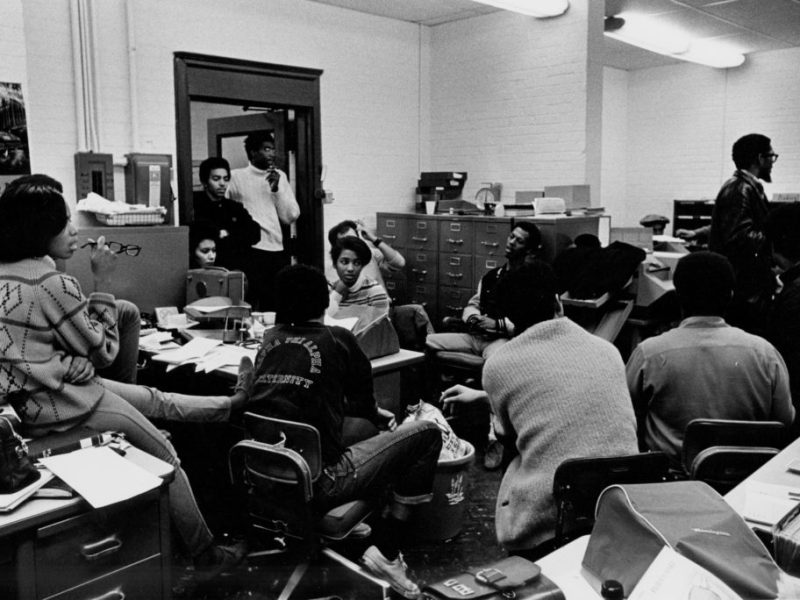
For those meeting it for the first time: Black August began inside California’s prisons in the 1970s, when incarcerated Black freedom fighters set aside a month of study, fasting, training, and remembrance to honor George Jackson, Jonathan Jackson, and every soul the state tried to disappear.
The Jacksons were revolutionary martyrs. At eighteen years old, George was handed one year to life for a $70 gas station robbery. A life sentence over seventy dollars. He educated himself from inside the walls, became one of the sharpest political minds of his generation, corresponded with Huey Newton and Angela Davis, and was named a field marshal of the Black Panther Party from his cell. His letters became Soledad Brother, a pillar of the revolutionary canon, and he finished Blood in My Eye just days before prison guards assassinated him on August 21, 1971.
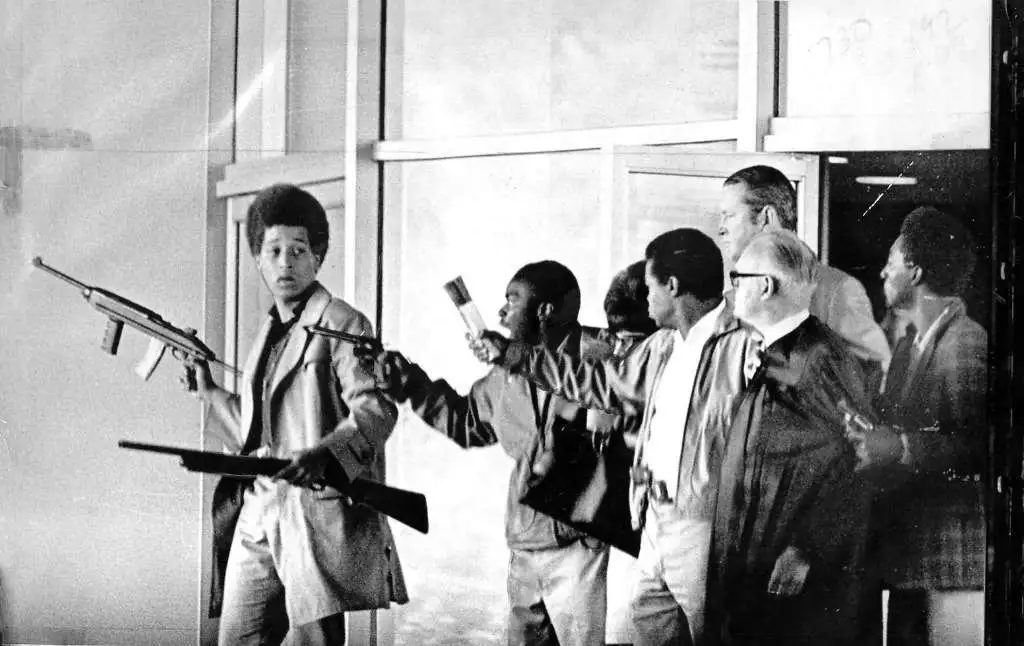
A year earlier, his little brother Jonathan, seventeen years old, stormed the Marin County courthouse demanding George’s freedom and was gunned down by the state. He gave his life trying to free his brother.
Soledad Prison · August 1971
“They’ll never count me among the broken men.”
That is the spirit of this month.
Black August has since grown into a global observance of Black political prisoners and Black resistance across the diaspora. It is a month of discipline, of memory, and of preparation. It is solemn on purpose. The elders who began it understood that our history holds an unbroken line of resistance and sacrifice, and that our job is to study it until we can see ourselves inside it.
And while the observance is global, our own vantage point here in Missouri and Kansas carries tremendous weight.
Our two states are central to the story of Black liberation in the American context. Dred Scott walked into a St. Louis courthouse and demanded his freedom on paper before this country tore itself apart over the question. John Brown sharpened his sword in Osawatomie. The Exodusters fled the collapse of Reconstruction and built free Black towns on Kansas soil. The first federal penitentiary in the United States rose in Leavenworth, and today that same county runs concentration camps holding hostage hundreds of immigrants and Black and brown people for profit.
And twelve years ago this month, in this state, the Ferguson Uprising began. What started on a street in St. Louis County grew into the movement that, by 2020, became the largest mass mobilization in American history and shook the whole world. It started here. In our state.
August keeps finding us.
August keeps finding us
An unbroken line of resistance
- Aug 21, 1791 The Haitian Revolution ignites. Enslaved Africans rise against the French empire and win, birthing the first Black republic.
- Aug 21–23, 1831 Nat Turner rises in Southampton County, Virginia.
- Aug 28, 1955 Emmett Till is lynched. His mother’s courage lights the fuse of the civil rights movement.
- Aug 28, 1963 The March on Washington fills the capital.
- Aug 11, 1965 Watts rises against police brutality in Los Angeles.
- Aug 7, 1970 & Aug 21, 1971 Jonathan, then George. The Jackson brothers give their lives, and Black August is born to remember.
- Aug 9, 2014 Ferguson rises for Mike Brown, in our own state, and reignites a global movement.
On August 21, 1791, enslaved Africans in Haiti rose against the French empire and launched the only successful slave revolution in modern history, birthing the first Black republic and proving to every empire on earth that we could win. Emmett Till was lynched on August 28, 1955, and his mother’s courage lit the fuse of the civil rights movement. The March on Washington filled the capital in August 1963. Watts rose in August 1965.
August is when our people move.
And the moving has never been confined to one country. In Jamaica in 1831, an enslaved Baptist preacher named Samuel Sharpe organized what began as a general strike and became the Baptist War, the largest rebellion in the history of the British Caribbean, sixty thousand strong. The empire crushed it with executions and fire, and then, shaken to its foundations, abolished slavery within a few years.
In Ethiopia in 1896, the forces of Menelik II met an invading Italian army at Adwa and destroyed it, keeping Ethiopia sovereign and sending hope surging through the entire Black world. For the first time in the age of conquest, a European empire had been stopped cold by an African one, and everywhere our people were held in bondage or under colonial rule, they heard about it and understood what it meant.
In Kenya, the Mau Mau took to the forests in the 1950s to drive the British from stolen land. The empire answered with detention camps and torture, and still could not kill the thirst for freedom. Independence came in 1963, and it came down a road the forest fighters paved. In Somalia, Mohammed Abdullah Hassan’s Dervish movement waged one of the longest anti-colonial wars in African history, twenty-one unbroken years of refusal against the British and the Italians.
These stories were kept from us on purpose. Most of us learned about Haiti in a single sentence, if we learned it at all. The Baptist War, Adwa, the Dervish state, the forest fighters of Kenya: absent from the curriculum, absent from the news, absent from the imagination we were permitted to have. A people taught that their ancestors waited passively for rescue will wait passively themselves. That is the design. Black August exists to break it.
So when I say the Defender observes Black August, I mean we are keeping a family tradition. Even today, we write with, publish the works of, and build power with political prisoners and those currently held hostage by the state, because the tradition demands it, because some of the sharpest thinkers I’ve ever read write to us from inside the walls, and perhaps most importantly, because abolition means nobody is disposable.
And more, we publish writers across the diaspora, including our brother Jon Jeter, who reports on liberation struggles unfolding right now on the African continent, because the bridge between Black America and the rest of the Black world has been left to crumble, and almost nobody in media is rebuilding it. A Black teenager in Kansas City tracing the story of the Haitian Revolution, or reading dispatches from the continent in a Black newspaper from their own city, is seeing their own struggle reflected across an ocean and recognizing family. Pan-African thought deserves a press and The Defender intends to be part of building it.
This month, commit to study. Gather. Read the ancestors and the ones still breathing. Hold the political prisoners close. Ask why these histories were hidden from you, and let the question radicalize you.
Let August do what August does.
Black August · Community Project
The People’s Syllabus
Send us one name: a Black revolutionary who shaped you. Your grandmother counts. Your organizer homie counts. At the end of the month we publish the full list, a reading and remembrance syllabus built entirely by this community.
Send one name →