Kansas City Killed the Data Center. The Tax Scheme It Was Feeding Is Still Alive
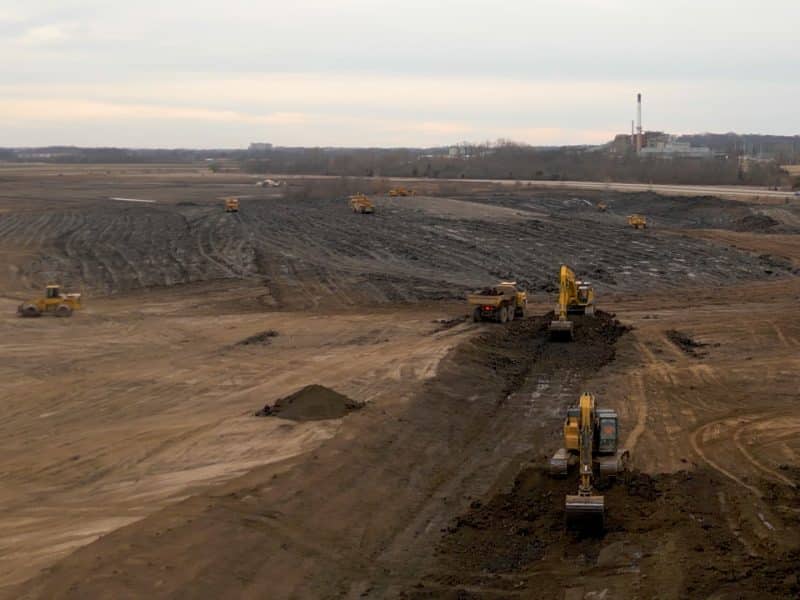
A Miami fund bought a 126-year-old downtown building, quietly signed away the right to demolish it, then asked Kansas City for permission to demolish it anyway and build a 20-story data center. A leading legal scholar reviewed the paperwork The Defender obtained and called it by its name. This week, Kansas City said no.

“This appears to be a syndicated conservation easement transaction.”
Nancy A. McLaughlin · Samuel D. Thurman Endowed Professor of Law, University of Utah
KANSAS CITY, MO – That is the verdict of one of the nation’s foremost authorities on conservation easement law, a scholar whose work spans more than two decades and has been cited by federal courts. McLaughlin rendered it after reviewing the paper trail The Defender obtained: the recorded deed, the securities filings, the public record. Put simply, it appears the developers attempted to exaggerate their property appraisal to inflate the deductions they could claim.
On Wednesday, the Kansas City Plan Commission voted to deny the project.
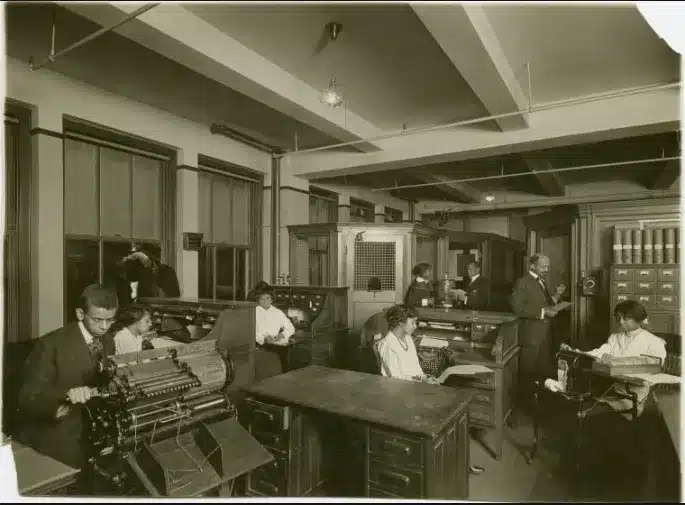
The building at the center of the verdict has outlived everything that was supposed to replace it. The Western Newspaper Union Building went up in 1900 at the corner of 10th and Central, printed the news for half the small towns on the plains, watched the streetcars come and go, survived urban renewal, the hollowing of downtown, and the decades when nobody wanted to live within a mile of it. It was renovated, occupied, and quietly profitable, which in the life of a 126-year-old building is a kind of triumph. Then, last December, a private fund out of Miami bought it, and gave the property a double life: protected forever on one piece of paper, condemned to demolition on another.
Like all good tricks, this one worked by pointing your eyes at the wrong hand. The waving hand holds a 20-story data center, the most despised building in America. The quiet hand held a piece of paper worth millions, and it had not moved since New Year’s Eve.
On Dec. 31, 2025, an entity affiliated with the Miami investment fund, Revitalization Unlimited, 304 W. 10 St. LLC, recorded a historic preservation easement on the building. In plain terms, this means the company attached a promise to the property’s official records that this building can never be torn down, by anyone, no matter who owns it, forever. And that is exactly what federal law expects if tax deductions are claimed on the easement.
Months later, in June 2026, the same company filed formal plans with the City of Kansas City to demolish that building and replace it with a 20-story data center. The demolition application contradicts the purpose of the easement and it is hard to imagine a version of events in which both documents are sincere.
What the deed actually says
The easement states verbatim: “No improvements to the Entire Property shall be demolished, removed or razed” except through a narrow casualty-damage process the deed details.
The deed The Defender obtained describes the easement as “an absolute and unconditional gift,” in which “judicial extinguishment” is the “exclusive mechanism by which the Grantor and Grantee shall pursue extinguishment of all or a portion of the Easement.”
“This conservation easement is perpetual, and unless there is some side agreement, the holder does not appear to have the right to agree to reverse it,” McLaughlin said. “And if it did, the easement would not be deductible.”
Nancy A. McLaughlin · Samuel D. Thurman Endowed Professor of Law, University of Utah
In other words: either no side agreement exists, and the reversal the fund’s CEO has publicly floated is legally unavailable to him, or one does, and the deduction this entire transaction is built to produce dies with it. There is no third door.
The Defender spent the past two weeks tracing how a company came to propose a tower its own deed forbids: through its investor pitch video, its securities filings, city and county records, federal enforcement files, legal experts, and the words of its founder at a public meeting where downtown residents finally cornered him.
What emerges looks less and less like a legitimate development proposal and more like a tax product, one of the most aggressive in America, being assembled in public, in our city, with our institutions cast as unwitting notaries.
What’s more: Among the national experts who study these transactions, whether the syndication industry would seize on the data center boom to inflate easement values was, until this month, a prediction. Kansas City appears to be where the prediction came true first. What happens here will be studied far beyond Missouri, by the practitioners and regulators watching whether a buried scheme can resurrect itself inside the most inflated asset class in America. Kansas City saw through it, and now we hand every other city the eyes to do the same.
Is it illegal? Ask Jack Fisher and James Sinnott, the two promoters whose version of this “syndicated conservation easement” maneuver moved $1.3 billion in fraudulent deductions before a federal jury in Atlanta convicted them in 2023. They are serving 25 and 23 years.
Congress wrote a law in December 2022 to kill their industry. But lawmakers left one carved-out exception where the old machine could be rebuilt, and the IRS is now warning that the old scheme has simply moved into that category. The exception is historic buildings.
Whether the Kansas City deal crosses that same legal line comes down to the extent of tax deductions claimed on a price tag no one outside the company has seen: the appraisal of an imaginary tower. That figure is due to the federal government by October 15, with or without a tower attached.
This is the story of the window Congress left open, and the city on the other side of it.
“If we don’t take the deduction, we will build something”
On a July Monday night, more than 80 people packed into the basement of a downtown bar called Something Good and showed up visibly aggravated and with plenty of questions. They came to fight a data center, the kind that eats a historic block and gives back nothing but heat and hum.
Steve Austin, founder and CEO of Revitalization Unlimited, explained the tower. He talked tax revenue, twenty to twenty-five million a year by his telling. An architect from Skidmore, Owings & Merrill promised the building would make its own power, recycle its own water, hum no louder than the street.
The room was not buying it, and by the end Kansas Citians understood why their instincts were right. Pressed on the fund’s actual intentions, Austin conceded: “We have no idea if this project is even financeable.” Pressed harder by Ethan Starr, executive director of Historic Kansas City, on whether this was a serious proposal at all, Austin said, as reported by the Kansas City Star, “Yes. Because if we don’t take the deduction, we will build something.”
The deduction, not the tower, may be the real thing being built.
Austin has said publicly that Revitalization Unlimited won’t seek a local property tax abatement for this project. That’s unusual for a Kansas City development, and it’s a different tax benefit than the one this story is about. A local abatement needs city approval. The federal charitable deduction tied to the conservation easement doesn’t. Kansas City can’t stop it and doesn’t vote on it. The only thing Kansas City controls is whether this building gets torn down. That’s why the appraisal needed the city’s help.
Residents left the July meeting unsure what they were actually being asked to fight. That confusion may not be incidental.
Starr had already named the mechanism to Austin’s face: “You’re trying to maximize the developable value of the property beyond what exists with the historic building, so then your appraiser can come back to you in the next few months, and you can have essentially a larger charitable deduction in coordination with your easement, and that is a benefit to your shareholders.”
One resident, quoted in the Business Journal, said, “How do we win in any of this? There are no long-term jobs with this data center. Eighteen-dollar-an-hour security jobs to walk laps around what used to be a beautiful building, and then the other option is that you’ve wasted all of our Monday nights, all of our time at council meetings, in order to just pursue a tax abatement based on a speculative project.”
Downtown Kansas City resident
The Downtown Neighborhood Association’s (DNA) written statement went further. “We question whether the firm has any intention of actually building this project.”
They are right to question it. The firm explained the whole design to potential investors, before it ever came to Kansas City.
The bigger the fiction, the bigger the check
You do not need a whistleblower for this story. You need five minutes and Revitalization Unlimited’s investor video.
In it, Austin lays out the fund’s method for accredited investors. Buy buildings that are “certified historic on the National Park Service registry” in “cities that are currently seeing significant redevelopment.” Evaluate the biggest, most lucrative project the site could legally hold. Then, often, do not build it. Instead, record a historic preservation easement and harvest what Austin calls “a charitable deduction for the lost opportunity had we redeveloped the building to its maximum potential.”
How is a lost opportunity priced? Austin walks through it. Hire the architects and engineers to design the imaginary project. Commission the market analysis. Hand it all to an appraiser who values it, in Austin’s words, “just the same as if we chose to actually build.” Subtract costs and the purchase price. The remainder, the profit you theoretically renounced, becomes the deduction passed through to investors.
With what appears to be an aggressive, deliberate exploitation of a legal boundary, a perverse incentive is created: the bigger the fiction, the bigger the check.
There’s nothing hidden about the math. The fund’s own investor FAQ caps these deductions at $2.49 for every $1.00 invested, a number set one cent under a federal threshold Congress set in 2022 that can trigger tax-shelter disclosure rules. Its marketing is barer still: “Reduce Your Tax Bill by Up to 50% with Investments into Historic Commercial Real Estate. Invest Smart, Save Big.” Securities filings show the structure underneath: Preservation Fund V, one of the fund vehicles Revitalization Unlimited manages, filed notice with federal securities regulators so it could legally raise up to $50 million from wealthy individuals, sold in $25,000 shares, with Revitalization Unlimited collecting fees as the manager. Understand what is being sold here: deduction, manufactured from an unbuilt building, retailed to the wealthy in $25,000 increments, and paid for by the only party with no seat at the table: the public treasury.
The tower that could never be built
Now I want to return to the timeline, because the order of events tells the story on its own.
an entity affiliated with Revitalization Unlimited buys the Western Newspaper Union Building. Nothing about the building is failing. Renovated in 2017, occupied, income-producing. Austin told Axios in January it was profitable as it stood and that “something would really have to pop out” to change course.
the fund donates the preservation easement to The Barn Group Land Trust of Georgia, permanently barring demolition. Roughly two weeks later, on Jan. 15, the City Council adopts new zoning restricting data centers, making them a special use in downtown districts. The change is why this project needs a special use permit and the company says it is still interpreting the rules. That same January, the fund’s architects request a meeting with city planning staff about a tower on the site, as the Business Journal first reported.
the company files the demolition-and-tower plans. For a building the company’s own easement had already protected from demolition for six months.
Confronted with this at Something Good, Austin did not dispute the architecture of it. He said the company is “evaluating what can and cannot be built” at the site in order to understand the value of its easement. He said claiming the deduction requires designing the project and proving to a bank it would be fundable, “as if for construction.” He acknowledged the Oct. 15 deadline, when the appraisal is due to the federal government, and that claiming the deduction means the tower can never legally be built. It is one or the other: the deduction or the building.
So the fiercest fight downtown has seen in years, the packed basement, the opposition statements from DNA and Historic Kansas City, the appointment before Kansas City’s Plan Commission, all of it concerns a building that the developer legally barred itself from constructing before it proposed it.
So yes, the outraged residents on the July Monday night were fighting the data center, and they were right to. But the contest that decides this may not be the one over blue prints and renderings. Under the tax rules, the imaginary tower’s value turns on what the city’s officials say can legally be built there, not on what its residents say should be. The neighbors have already done their part: they dragged the quiet hand into the light. Revitalization Unlimited needed a city too disoriented to object. It did not get one.
The people who packed Something Good were, whether they knew it or not, shrinking the probability that an inflated data-center valuation could ever hold up. The deduction is determined by the appraisal, but it depends on the tower being plausible, and every voice in that basement made it less so.
The $36 billion scandal this loophole descends from
This tax practice was not invented in Miami. It descends, move for move, from one of the largest tax shelter scandals in modern American history.
They were called syndicated conservation easements, a strategy where promoters pooled rich investors into partnerships, bought cheap rural land, commissioned appraisals of fantasy resorts and subdivisions that would never exist, donated easements “protecting” the land from those fantasies, and delivered deductions worth four and five times the investors’ money. The IRS has identified roughly $36 billion in deductions from these schemes since 2010 and challenged $21 billion claimed by some 28,000 investors. A bipartisan Senate Finance Committee report in 2020 called them “nothing more than retail tax shelters that let taxpayers buy tax deductions,” describing a “Dollar Machine” that paid out two federal dollars for every one handed to a promoter.
The reckoning, when it came, was biblical by white-collar standards. Fisher and Sinnott, the industry’s biggest promoters, were convicted by a federal jury of conspiring to defraud the United States through inflated appraisals and backdated paper. Twenty-five years. Twenty-three years. Hundreds of millions in restitution. Accountants and an appraiser pleading guilty around them.
And in December 2022, Congress drove a stake through the model: the Charitable Conservation Easement Program Integrity Act, disallowing any easement deduction larger than 2.5 times the investors’ basis. The Dollar Machine, outlawed by statute.
Except for one sentence. The cap, the law reads, “does not apply to any qualified conservation contribution whose conservation purpose is the preservation of any building which is a certified historic structure.”
Congress shut the front door and left a window open.
Now listen to Austin’s investor video one more time, knowing what December 2022 means. He tells prospective investors that “under the most current laws that were passed by Congress in December 2022,” they can use the fund’s deductions to cut their adjusted gross income by up to half.
He cites the law Congress wrote to bury his industry as the foundation of his fund. He is not marketing in spite of the crackdown but as the exception to it.
The IRS’s current enforcement guidance warns that “syndicated historic preservation easements often present the same issues seen in syndicated conservation easement transactions, especially overvaluation,” and that in many cases the property is already protected by preservation law or zoning, “meaning the taxpayer may be giving up little or nothing.”
Consider 934 Central in that context. Already historic. Already renovated. Already profitable. Already under easement before the tower was ever drawn. What development right is actually being sacrificed, and what is the sacrifice worth? The number a hired appraiser writes down.
The company has not named its appraiser, but in the land version of this scheme, appraisers went to prison alongside the promoters. Courts hearing the litigated cases threw out the overwhelming majority of claimed values. Only six percent were upheld. The line between aggressive and criminal in this industry, in every case prosecuted so far, has run through how far the appraisal was pushed to inflate the deduction claimed.
The keeper of forever has a record
Every easement needs a keeper, a nonprofit holder sworn to enforce it forever. Missouri has conservation organizations. Kansas City has preservationists who have fought for that exact building. Revitalization Unlimited reached past all of them to The Barn Group Land Trust of Georgia, an outfit whose stated mission is streams, wetlands, and rural land, and which also holds the easement on the Garment House, 1000 Broadway Blvd., the fund’s first Kansas City property.
The Barn Group’s record is its own warning. BBB’s Give.org, which rates the trustworthiness of publicly soliciting nonprofits, currently rates the organization “Standards Not Met” on charity accountability. And the trust has already served as the easement holder in a deal federal authorities refused to swallow: an Arkansas partnership bought 168 acres for roughly $618,000, donated an easement to The Barn Group, and claimed a deduction of $50 million, which the IRS blocked, triggering litigation. The same trust now holds the permanent protection of two Kansas City buildings, from an office 700 miles away.
Forever is the price of the tax break
Federal law grants the charitable deduction only for easements donated in perpetuity.
Revitalization Unlimited’s investor materials cap the deduction at $2.49 for every dollar invested, the one cent you have already seen. Its significance, per McLaughlin, is anything but modest. Treasury’s final regulations, issued in October 2024, affirmed the two-and-one-half-times line as the trigger requiring syndicated conservation easement transactions to be reported to the IRS as listed transactions, in her words, raising your hand and identifying yourself as engaged in a potential tax shelter. The pricing, she suggested, appears designed to stay beneath the line where the deal would have to announce itself. Meanwhile, the historic preservation easement recorded for the proposed data center site would give only the grantee, Barn Group Land Trust, the legal right to enjoin demolition of the building. A locked door with the only key a court recognizes sitting in an office in Georgia.
The deed the Defender obtained describes the Western Newspaper Union Building as preserved as a historic site “in perpetuity.” The deed Austin signed doesn’t describe preservation as contingent on a future tax decision. It describes an irrevocable gift, already made, that only a court can undo.
On August 5, Kansas City refused to sign the appraisal
McLaughlin, reviewing the sequence, said it plainly: “It looks like they are seeking approval to try to provide evidence to justify an inflated value for the conservation easement.” The inversion leaves the Plan Commission in a peculiar position: being asked to supply, after the fact, the evidence the valuation was missing.
She noted something else about the order of events. In the classic syndicated deals, promoters chased their approval signals before donating the easement, because the appraisal’s hypothetical project must have a reasonable probability of ever being permitted. Here the easement came first, on the last day of December, and the approval chase came after.
A preservation easement deduction is valued against the property’s “highest and best use,” the most profitable project the site could legally support. Legally is the load-bearing word. A fantasy tower is worth more on paper when the city has treated it as buildable: heard it, studied it, entertained its permit. When Austin says he must show “a loan officer at a bank that I have a viable project that is fundable,” he is describing the paperwork a qualified appraisal requires. The hearings are part of the paperwork. The city’s process is an input to the number.
So on Aug. 5, Kansas City’s Plan Commission convened to evaluate a tower whose developer barred its construction by deed before proposing it, admits it may never be built, and has told the neighborhood, in his own words, that the process will establish the value of its easement. The residents’ Monday nights, the associations’ statements, the commissioners’ deliberations, all of it risks becoming line items in a private appraisal that stands to relieve accredited investors, at $25,000 a unit, of up to half their federal taxable income.
When the vote came Wednesday morning, more than 50 residents had packed the hearing room, and the room had already answered. They testified about health, history, and a downtown cost of living already climbing. Ethan Starr of Historic Kansas City entered the contradiction into the official record, noting that the building’s purchase had been presented as a preservation-oriented investment, sealed with an easement recorded Dec. 31 and intended to protect the building permanently, before the same owner proposed to demolish it. Mayor Quinton Lucas noted afterward that the company can still ask the City Council to override the recommendation, and called a reversal highly unlikely.
Understand what the Commission actually did, because it is more than deny a permit. Under the rules this deduction lives by, a hypothetical tower is only worth what it has a reasonable probability of becoming. On Wednesday, Kansas City placed a formal denial of that tower in the public record. By the arithmetic of the fund’s own product, the city did not just say no to a building. It entered evidence against the number.
There was one question we had hoped someone would put to the applicant on the record: will approval of this project increase the appraised value of your easement donation? The Commission never needed to ask it. Its denial means this city will not be made an instrument of the valuation.
The Wrong City
If claimed as designed, every dollar of that deduction is a dollar the treasury never collects, drawn from the same national purse that tells our people there is no money for housing, no money for schools, no money east of Troost. In this country a Black mother can be charged with a felony for using the wrong address to get her child into a better school. A fund proposing a 20-story tower it may never build, in service of a deduction worth millions, gets a hearing date. The difference was never the size of the taking. The difference is who is permitted to take. And if every page of this deal holds up, it appears no criminal law may have been broken, which is the sharpest indictment available. A tax code that makes an address swap a felony and an imaginary tower a business model, is working as designed, for the people it was designed for.
There is a version of this story where Kansas City is simply the victim, a mid-sized city that a Miami fund took for an easy mark. That version is too small. The truth is that this city was chosen because it is rising, because the World Cup and the cranes and the national attention made its future valuable enough to sell short. They are not betting against Kansas City. They are betting on it, and arranging to collect without contributing a single brick.
Extraction dresses in the vocabulary of the moment. It has come to this city as redlining, as urban renewal, as a highway through a neighborhood, as a stadium tax, and now it arrives as a data center that may never have been coming at all, wearing the two costumes this decade trusts most: preservation and technology. The costume changes. The transaction underneath never does. Wealth leaves, and the people who made the place valuable are handed the bill.
And should the company ever attempt the reversal Austin has floated, McLaughlin left the public its instructions: “At a minimum, you’d want to let the IRS know, and you would contact your attorney general.” The deed names who may act under Missouri’s statute, the landowner, the holder, and those authorized by other law, which includes the state’s Attorney General. A charity that agreed to unwind a perpetual easement would answer to all of them.
Schemes like this share a weakness their architects never price in. They depend on nobody bothering to understand them. This one has now been explained, and on its first test in daylight, it was denied. Now we can all see what’s in the quiet hand.