Across the world, from Kenya to the Caribbean to Kansas City, Dar es Salaam to the Dominican Republic to Detroit, Soweto to Sao Paolo to southeast Washington DC, the question persists: why do the sons and daughters of Africa remain poor—either in absolute terms or comparatively–decades after the sun has set on settler colonial rule, chattel slavery, Jim Crow and apartheid?
Known as privatization, the sale of publicly owned assets such as utilities, ports, and gas and oil industries, is a big piece of the puzzle. Similar to guns in the 19th century, finance has emerged as a principal tool for extracting wealth from workers– especially those of color– essentially reversing the gains made by liberation movements. By transferring decision-making authority to foreign, or corporate interests, local, state and federal governments are handing over control of their economy to outsiders who are motivated solely by profit margins with little consideration for the public good.
Consider the case of Kenya under the leadership of President William Ruto. Since he took the oath of office 40 months ago, his administration has functioned more as an auction house than the executive branch for sub-Saharan Africa’s seventh most populous country, either selling—or planning to sell–45 publicly owned enterprises in what government officials describe as the first phase of an effort to raise money for critical infrastructure projects.
The list so far includes: Jomo Kenyatta International Airport; the Kenya Seed Company; the National Oil Company; the Kenya Literature Bureau; the Kenya Pipeline Company; the Consolidated Bank of Kenya; Agro-Chemical and Food Company; Kenya Wine Agencies; the Development Bank of Kenya; East African Portland Cement; the Nairobi Securities Exchange, and even, unfathomably, the private medical records of 58 million Kenyans to the Trump administration in exchange for $1.7 billion in healthcare funding over a seven-year-period.
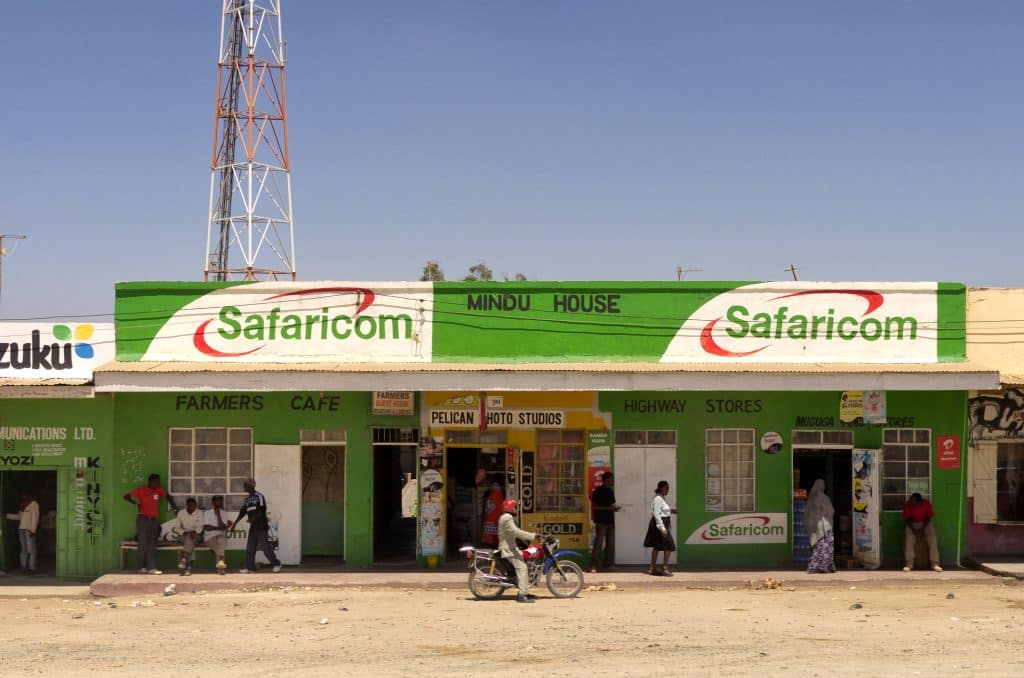
Of all the family jewels on the government auction block, however, none boils Kenyans’ blood as much as the deal to sell taxpayers’ majority stake in the country’s cash cow, Safaricom, East Africa’s most valuable company.
Lawmakers last week approved the Ruto administration’s plan to sell a 15 percent share in the state-owned telecommunications provider to a British corporation’s South African subsidiary, Vodacom, for about $1.6 billion. Vodacom’s acquisition of six billion shares will increase its stake in Safaricom to 55 percent, effectively transferring control of Kenya’s mobile and data network—as well as its widely-used digital payment app–to foreign investors.
And just as troubling as Safaricom’s sale is its price of roughly 25 cents per share. While the international business media and industry regulators have joined government ministers in defending a price point that is nearly 24 percent higher than Safaricom’s current stock valuation, many Kenyans pillory the purchase price as too low, noting that it is about a dime less than Safaricom’s all-time high five years ago, and fails to take into account the industry’s dynamic growth. Some opposition lawmakers have suggested that the sale price should be doubled to 50 cents per share to more accurately reflect its value.
Moreover, a wide range of trade groups and civic associations have questioned the government’s lack of transparency in negotiating the sale price with Vodacom.
“The proposed price of (25 cents) per share has not been accompanied by a clear explanation of the valuation methodology, raising concerns over price discovery and accountability,” said Eliabeth Kalunda, chairperson of the Institute of Certified Public Accountants
In a public hearing two week ago, David Mwangi, a representative for the Association of Accountants from the Mount Kenya region in the central part of the country, said the pending sale to Vodacom would cost taxpayers the equivalent of $78 million in annual dividend payments, offsetting the purchase price in roughly a generation.
‘Robbing Kenyan Youth of Their Future.’
Kenya’s laity have expressed their disquiet in a series of Parliamentary hearings across the country, with many asserting that an initial public offering would not only have been far more transparent but would’ve likely fetched a higher sale price while affording Kenyans the opportunity to buy shares in the company and subsequently maintain local ownership of a vital national resource.
“Safaricom plays a critical role in Kenya’s digital economy through mobile money, connectivity and data services,” Peter Githinji, a resident of Kirinyaga in central Kenya told the Parliamentary Committee on Public Debt and Privatization. “Handing more control to a foreign entity raises serious concerns.”
Duncan Andaje Cheto, an accountant who works as a cab driver here, told the Kansas City Defender that the unpopular president and his ruling party are selling off profitable state-owned enterprises for a song to enrich their cronies,including Ruto’s son who works for the main law firm handling the transaction–and to finance pork-barrel projects that they hope will persuade voters to reelect them next year.
“They could’ve negotiated a better price but there are political considerations. By selling public assets, they are really robbing Kenya’s youth of their future.”
If nationalization–transforming privately owned institutions and industries into publicly owned institutions and industries– is the motherlode of decolonizing movements from Cuba to Venezuela to Burkina Faso, privatization is, in effect, a worldwide settler reclamation project that has reduced the Black community, writ large, to a global network of informal settlements. Consequently, people of African descent own practically nothing of material value, either on the continent or anywhere else in the world.
Colonization by Another Name
The question of private versus public property, of course, represents the historic fault line that bitterly divided European settlers and Native Americans in the New World, and Africans in the Old. But the Soviet Union’s 1991 collapse renewed the debate by triggering a second scramble for Africa, reminiscent of the first that began in 1884 when Western European envoys met in Berlin to partition the continent for colonial annexation. With a primary economic artery severed, African leaders tried to stanch the bleeding by turning to Western financiers, who seized on the opportunity to pitch their vision for transferring ownership of Africa’s nationalized industries and public utilities–water, electricity, airports, and telephone service–to Western investors, whose innovation, they theorized, would lower prices and improve service delivery.
The reality, however, has been far different.
Nigeria sold 13 power distribution companies and six generation plants to private investors in 2013. The national grid collapsed 12 times in 2024 alone, despite charging record high rates for electricity. In December of that year, a Nigerian lawmaker, Adams Oshiomole, delivered a passionate speech on the senate floor lamenting his earlier support for the privatization legislation.
“…(T)his privatization is not working, and I hope that this senate will find the courage to stop the extortion, abuse of power, lack of consumer protection and barefaced stealing…”
Similarly, Ghana’s piecemeal privatization has caused some household electricity bills to skyrocket. One African American expat living in the capital city of Accra wrote this week on social media: “I have (been) spending over $300/month and this just doesn’t seem right, especially with the regular power outages hell this is far more than what (I) spend in the U.S.”
In neighboring Guinea, the privatization of the country’s water system in the 1990s led to a seven-fold price increase. South Africa’s privatization efforts led to the worst cholera outbreak in the nation’s history when government officials in the province of KwaZulu Natal on the country’s eastern edge prepared to sell its water infrastructure to a private vendor. The Black majority government installed taps to underserved rural areas but increased the price dramatically in an effort to demonstrate the utility’s earnings potential. When customers couldn’t afford to pay, the municipalities shut off their water, forcing thousands to drink from the same river that was used as a toilet by their neighbors. Local hospitals reported nearly 115,000 cases of cholera at the height of the health crisis.
(Ironically, South Africa’s white-minority apartheid government seldom cut off electricity or water service to customers who were delinquent on their bills for fear of the fire next time.)
While its impact is most acute in Africa, the world’s poorest continent, privatization is a global phenomenon that was born, ironically enough, from a white backlash to African Americans in the 1980s.
“Don’t just stand there; undo something!” President Ronald Reagan famously barked at his subordinates as part of his strategy to marginalize the militant Black voices at the center of a workers’ movement that was gobbling up more than half of the nation’s gross domestic product for wages as recently as the 1970s.
Sending jobs offshore was seminal to Reagan’s plan; not only did it lower labor costs, it also helped to politically quarantine African Americans who were radicalizing their white co-workers on the factory floor and in the union halls.
Deindustrialization, however, also created a dilemma for investors: how could they make money without making anything of tangible value?
Privatization was one answer. The Reagan White House became Ground Zero for an unprecedented dismantling of the global public sector, hiring for-profit enterprises to manage everything from homeless shelters to schools to toll roads, and prisons to parking meters to postal service.
The results are unambiguous. While there are no known comprehensive studies, reams of evidence strongly suggest that consumers worldwide have never spent so much of their paycheck to park downtown, for a liter of water, a phone call or a kilowatt of electricity, nor have any of these transactions garnered so many complaints.
And no demographic has been squeezed more than r communities of color for whom privatization represents an attempt to recolonize them by undermining their hard-won economic sovereignty. A nongovernmental organization, Public Services International, concluded in a 2014 report:
“In Africa there is no convincing evidence of sustainable private sector investment in water, electricity or transport.”
In perhaps the most infamous case, Bolivia sold its state-owned water system to a consortium of British investors in 1999 for only $20,000. Within a year, the buyers had tripled the price of water in Latin America’s poorest country, with a population of 12 million people, mostly indigenous. And to reinforce its monopoly, corporate executives wrote a codicil into their contract with the state that legally prohibited Bolivians from collecting rainwater for personal use. Massive street protests in 2001 led the government to cancel the contract.
Daniela Gabor, an economics professor at SOAS University in London, recently said of Safaricom’s sale at an international development conference:
“Privatization to me comes from a particular economic ideology that has been powerful on the African continent and elsewhere for the last four decades, called the Washington consensus. And the push for privatization is particularly strong when countries are undergoing an economic crisis or when they are under pressure because the IMF wants them to embrace austerity and to increase fiscal revenues and it happens in fire sales. So I’m very much doubtful that fire- selling your own state-owned companies is a good idea because it doesn’t generate a lot of immediate revenue. It basically is a gift to the private sector and then it reduces your…long-term ability to do development policy in a coherent way because it basically says ‘you know the private sector is in charge of allocating resources, of allocating capital.’ So I’m not surprised that this is happening in Kenya because… it is happening across countries who are undergoing some form of economic crisis or an agreement with the IMF.
It’s a long-term anti-developmental strategy.”
A Pain Shared Unevenly
Last week, as government officials prepared to close the Safaricom deal, news broke that President Ruto’s administration was planning to sell the national carrier, Kenya Airways, to foreign investors for $2 billion. Julius Mawathe, a member of Parliament, told Kenya’s National Assembly in December:
“Eventually we will end up selling the entire country to foreigners.”
In the U.S., federal funding for water infrastructure has declined by 77 percent since the Carter administration, incentivizing privatization. According to a 2019 study by the NAACP Legal Defense Fund, the number of public systems operating under private contracts nearly tripled from 400 to 1,100 between 1993 and 2003. Privately-owned utilities charge 59 percent more for water than do public utilities, according to the social justice organization, Food & Water Watch.
In predominantly Black neighborhoods like north Philadelphia, the increase in families scrambling to raise or borrow money to pay overdue utility bills augurs the coming of spring when Philadelphia Gas Works is legally permitted to shut off the heat. And complaints about soaring utility costs usually fall on deaf ears because industry lobbyists tend to “capture” the state regulators and lawmakers who must improve requests for rate hikes. Responding to pressure from their constituents, the Maryland General Assembly is expected to cut household energy bills by a whopping $9.60 annually. Exelon, the parent company for Baltimore Gas and Electric and Pepco, raked in $2.7 in profits last year. African Americans account for nearly a third of Maryland’s population, and twice that in Baltimore city and the Washington DC suburb of Prince George’s County.
The spike in water and electric bills for consumers nationwide has combined with a subprime mortgage scandal that targeted people of color to feed gentrification and dispossess African Americans of more of their wealth than at any time since the Freedman’s Bank collapsed in 1874. In some cities, property liens for unpaid water bills as low as $300 can lead to the loss of a home, or even children to the child welfare system because parents are required to provide their children with potable water. In the greater Cleveland area of Cuyahoga County, for instance, more than 11,000 water liens were placed on properties between 2014 and 2018. While African Americans account for less than a third of Cuyahoga County’s population, nearly 70 percent of all liens were in neighborhoods with majority Black populations.
As a result of such policies, about 4 in 10 Black households owned their home in 2025, which is virtually unchanged from African Americans’ rate of homeownership in 1970, and nearly 30 percentage points lower than that of whites. In her 2017 book, The Color of Money: Black Banks and the Racial Wealth Gap, Mehrsa Baradaran, a law professor at the University of California-Irvine, wrote that African Americans accounted for 12 percent of the U.S. population when Abraham Lincoln signed the Emancipation Proclamation on January 1, 1863, and owned one-half of one percent of all assets nationwide. Today, Blacks account for roughly the same share of the population, yet their share of all property has increased to only about 1 percent.
So onerous is the cost of utilities in this era of privatization that it has become a touchstone of African American popular culture, or an addition to the Blues narrative. On his 2012 album Behind the Scale, the Maryland emcee Sean Born explains his motivation for selling drugs in an achingly soulful song entitled “Lights On:”
I ain’t trying to be a kingpin
Real Talk, I’m just trying to pay rent
I’m just trying to put some money away
Got to, Man, it only makes sense
I’m just trying to keep my lights on, lights on
I’m just trying to keep my lights on, lights on
I’m just trying to keep my lights on, lights on”