Seventy-Five Years Ago, Civil Rights Leaders Appealed to the UN for Help in Fighting a Black Genocide in the US. They Were Ignored. Gaza is the Inevitable Result
In 1951, Black civil rights leaders asked the United Nations to recognize racial violence in America as genocide. The UN’s rejection of their petition 75 years ago exposed the institution’s racial bias and a pattern of political abandonment that still echoes in the world’s response to Palestinians today.
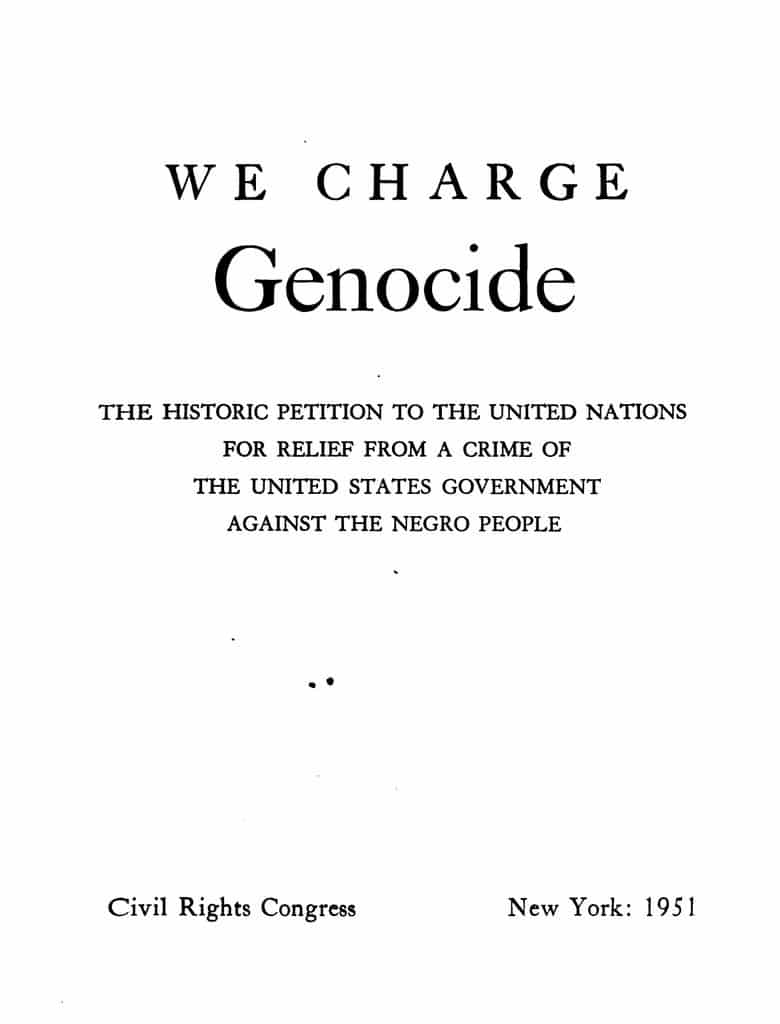
Historians and theologians consider the Civil Rights Congress’ 1951 petition, “We Charge Genocide: The Crime of Government Against the Negro People,” a remarkable example of moral suasion, both for its erudition and elucidation of the millennium’s twin scourges: structural racism and mass murder.
Brilliantly written and exhaustively researched, the 237-page document was equal parts affidavit and sermon, cataloguing in intimate detail the structural violence in the US that had expressed itself since the Civil War primarily as executions and lynchings by both the state and vigilante mobs, and attributing the deaths of 32,000 African Americans between 1946 and 1951 to racial inequality in health care, jobs, education and housing.
Relying on a definition of genocide adopted by the United Nations’ General Assembly in 1948 as “any intent to destroy, in whole or in part, a national, racial, ethnic or religious group,” the appeal by the Civil Rights Congress implored the body to intervene in U.S. affairs, representing one of the earliest and most high-profile attempts to globalize the intifada by invoking international law on behalf of an oppressed, racialized population.
But for all its soaring rhetoric and the signatures of nearly 100 intellectuals and activists including W.E.B. DuBois, Paul Robeson, Claudia Jones, and its author William Patterson, “We Charge Genocide” was met with a curious mixture of silence and invective from the legacy news media, white liberals and even the UN itself. The New York Times and Washington Post acknowledged the petition in news briefs buried in the back pages, the Chicago Tribune characterized it as “shameful lies,” and Eleanor Roosevelt dismissed its allegations as “ridiculous”–which they weren’t– and motivated by communism, which they were.
When White Liberalism Protects the State
Patterson delivered the appeal by hand on December 17, 1951, to the UN General Assembly meeting in Paris and Robeson on the same day to the United Nations’ Manhattan headquarters. In his 1971 memoir, The Man Who Cried Genocide, Patterson wrote:
“A letter was also sent to a select list of prominent men and women and to a number of the country’s leading law schools… inquir[ing] of the addressee whether he or she believed that the UN Convention on the Prevention and Punishment of the Crime of Genocide would apply to the situation of the Negro in the United States. One letter was sent to Mrs. Eleanor Roosevelt, as head of the U.S. delegation of the UN Human Rights Commission.
Replies came from all sides. Interestingly enough, they were, in the main, along the color line. A majority of the Negroes polled believed that the Genocide Convention should be invoked; a majority of the white liberals and personalities were of a contrary view. …
Without exception, faculty members at law schools were adamantly opposed to the genocide charges. Most of them were in favor of the Genocide Convention as an abstract statement of law but rejected any attempt to apply it, declaring that such an attack impeached the integrity of our nation. And this was the consensus of the replies we received from white liberals in general.
Among those who replied was Professor (Raphael) Lemkin, ‘father’ of the Genocide Convention. … How an honest person viewing the American scene impartially could come to any conclusion other than that forms of genocide were being practiced in the United States was difficult for us to see.
Professor Lemkin experienced no such difficulty. In a considerable correspondence with me, he argued vehemently that the provisions of the Genocide Convention bore no relationship to the U.S. Government or its position vis-à-vis Black citizens. Lemkin and other law professors and practicing attorneys were evidently fearful of criticizing a government in relation to its Black citizens….”
At the insistence of the U.S. State Department, which was preoccupied with winning the worldwide competition for hearts and minds in its war of narratives with the Soviet Union, the UN would take no action on the Civil Rights Congress’ petition, representing what may have been the greatest squandered opportunity in world history.
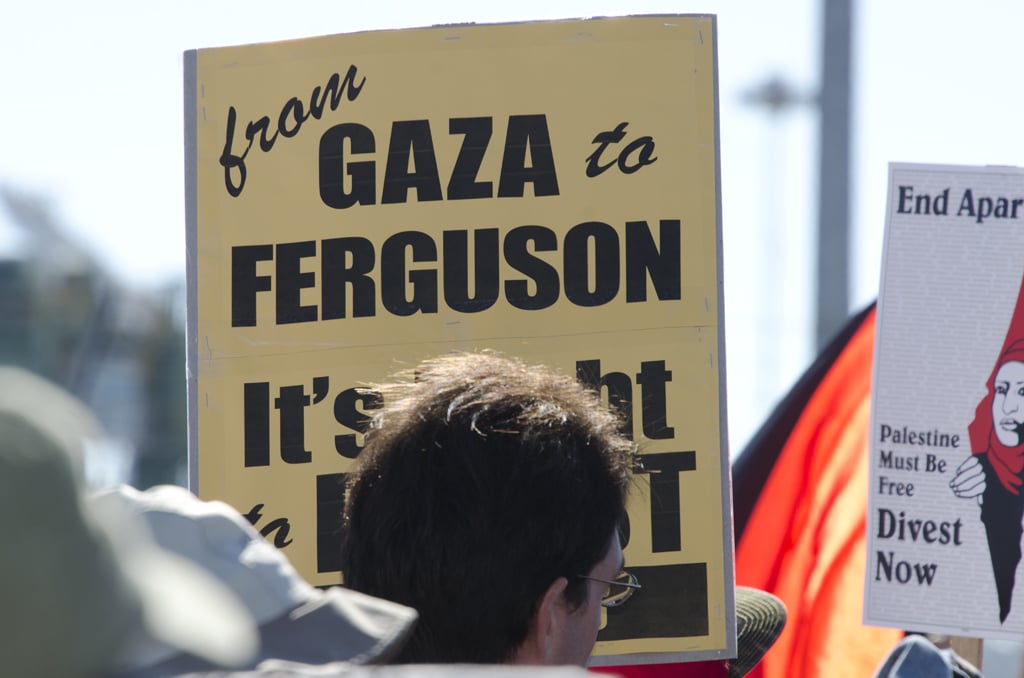
In retrospect, you can draw a straight, unbroken line between the United Nations’ refusal to bring white settlers in the U.S. to heel 75 years ago, and its unwillingness to bring the white settler in Israel to heel in their genocidal campaign in Gaza that is entering its third year in a matter of days.
The UN Chose Silence
The convening last week in Manhattan of the 81st United Nations General Assembly serves as a grim reminder of what was, for all intents and purposes, the organization’s stillbirth.
Far from serving as a bulwark against organized mass murder, the UN has been an instrument for it virtually from its inception two months after the end of World War II in 1945.
Far from serving as a bulwark against organized mass murder, the UN has been an instrument for it virtually from its inception two months after the end of World War II in 1945.
In his address to the General Assembly last Tuesday, Turkey’s President Recep Tayyip Erdogan described Gaza as “the most inhumane, most shameful concentration camp of our time.”
And yet, he said:
“Eighty-one years ago, the United Nations was formed to preserve global peace and stability, but unfortunately, the UN has failed to fulfil its duty.”
Patterson, Robeson and the other signatories to the 1951 petition understood fully that the UN was never going to save African Americans or any other colonized population from settler colonialism. But had the agency’s diplomats accepted the challenge to host a dialogue on the issues raised in their document, it might well have begun to create a regulatory framework for internationalizing the fight against settler colonialism by shining a light on African Americans’ specific grievances, and begun to re-train white people to confront the racism and tribalism that are the rebar of genocide.
Joy James, an author and humanities professor at Williams College, told the Kansas City Defender that the United Nations’ rejection of “We Charge Genocide” was steeped in white liberalism’s reflexive “erasure of Black people,” allowing whites to elude accountability. Similar to the muckraking journalist Ida B. Wells’s reportage on lynchings, “We Charge Genocide” confronted the U.S. with its crimes against humanity at a time when the country was trying to fend off the growing influence of communism and the Soviet Union.
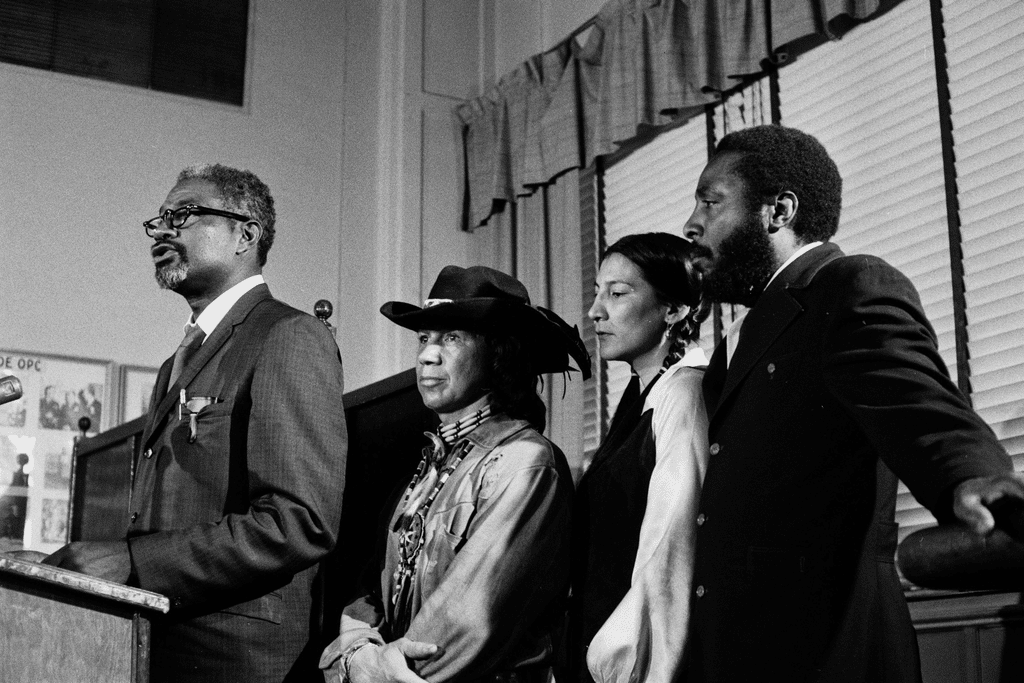
“When Blacks stand up for ourselves, or push politically, we become problematic always,” James said.
The Cost of Looking Away
Simply sweeping the matter under the rug was more convenient for the UN in the short term, but it was ultimately the camel’s nose under the pup tent, perpetuating the same binary, good-versus-evil narratives that undergird Israel’s slaughter of nearly 75,000 Palestinians living under occupation in Gaza, and a campaign of ethnic cleansing in the West Bank.
Had the UN merely had an official dialogue about “We Charge Genocide,” it would likely have begun to disrupt the racist stereotypes depicting Palestinians as terrorists and rapists–and therefore deserving of their suffering–and Zionists as flawed but otherwise honest people under attack. Moreover, the UN’s inertia in 1951 began to normalize the pairing of white supremacy and international law. While it is not a UN agency, the International Criminal Court, for example, has over a 28-year period convicted 12 defendants for war crimes and other atrocities, all but one a Black man.
Referring to President Trump’s threat to “annihilate” or genocide Iran at the United Nations General Assembly, Chas Freeman, a former Assistant Secretary of Defense and U.S. Ambassador to Saudi Arabia, said on the Glenn Diesen Podcast:
“We’re in an age where open genocide is not just committed but boasted about by Israel in Palestine. The same thing is now happening in Lebanon. Who’s doing anything about any of this?” he asked. “People aren’t even wringing their hands about it; they’re just sitting there silently tolerating it. The intolerable has become tolerable.”
The intolerable has become tolerable.
The UN might have set in motion a chain of events leading to an alternate reality by addressing the Civil Rights Congress’ appeal in 1951, Professor James told the Defender.
“Think about Emmet Till’s mama, Mamie Till-Mobley. She has an open casket for a mutilated child, a 14-year-old, and thousands of people come and they have their small children with them, and they all walk past the open casket. They probably wouldn’t let you do that now; they’d call it child abuse. But what the parents were telling their children is that this is the reality you need to know so that we can survive genocide.”
Seventy-Five Years Later
In September of 2025, the U.N. Independent International Commission of Inquiry on the Occupied Palestinian Territory released its findings on Israel’s siege of Gaza. In a New York Times op/ed, the commission’s Chair, Navi Pillay, of South Africa, wrote:
“Our conclusion is stark: Israel has committed genocide against Palestinians in Gaza. This finding is based on investigations and extensive evidence into the period between Oct. 7, 2023, when the war began, and July 31, 2025. It has been corroborated by multiple sources and assessed through the rigorous legal framework of the U.N. Genocide Convention of 1948, to which Israel is a party.”
In 2014, a grassroots organization of Chicago activists adopted “We Charge Genocide” as its name and submitted a report to the United Nations chronicling police abuses against African American and Latino youth in the city.
“Today, police violence in Chicago continues to violate human rights principles—seen in the daily harassment, abuse, and targeting of youth of color by Chicago police.”
Redolent of the original “We Charge Genocide,” however, the newer report also fell on deaf ears, and no concrete actions have so far been taken.
So too does the killing of Palestinians continue virtually unabated. In a recent address, the UN Special Rapporteur on the occupied Palestinian territories, Francesca Albanese, seemed to commune with Patterson, Robeson and DuBois when she warned:
“Disregard for international law will not stop in Palestine. It is already unfolding from Lebanon to Iran, across the Gulf countries and in Venezuela. And if left unchecked, it will spread far beyond. What is lost in Palestine will be lost to us all.”
Author
Related Articles
Following Gloria Steinem’s Death, Black and Brown Feminists Ask: ‘Ain’t I A Woman?’
She spent time on the CIA payroll and a lifetime near power. Gloria Steinem died wealthy, surrounded by family and friends, lionized in the New York Times. Assata died in exile. Black and Brown feminists ask whose liberation the icon’s bourgeois politics served.
‘All They Got to Do is Stop Talking Honky’: How Argentina’s Racist Display at the World Cup Mirrors the MAGA Backlash in the US
A month after the World Cup ended, the spectacle is gone. The racial and political tensions it exposed are not, as Argentina’s President Javier Milei, much like Trump, stokes racial tensions to cover for a sick economy and its savage inequalities.
The Killing of Pan-Africanism: The CIA Drew First Blood. AFRICOM Salted the Earth. Africa’s Elites Signed the Sale to Western Capital.
Malcolm called it the ballot or the bullet. The empire answered with coups, and when the coups were done, it sent contracts. Defender Global Correspondent Jon Jeter has watched the sale for twenty-five years, from a Johannesburg corporate suite to an Addis Ababa classroom, and files a dispatch from the deathbed of the dream and the streets that refuse to bury it.