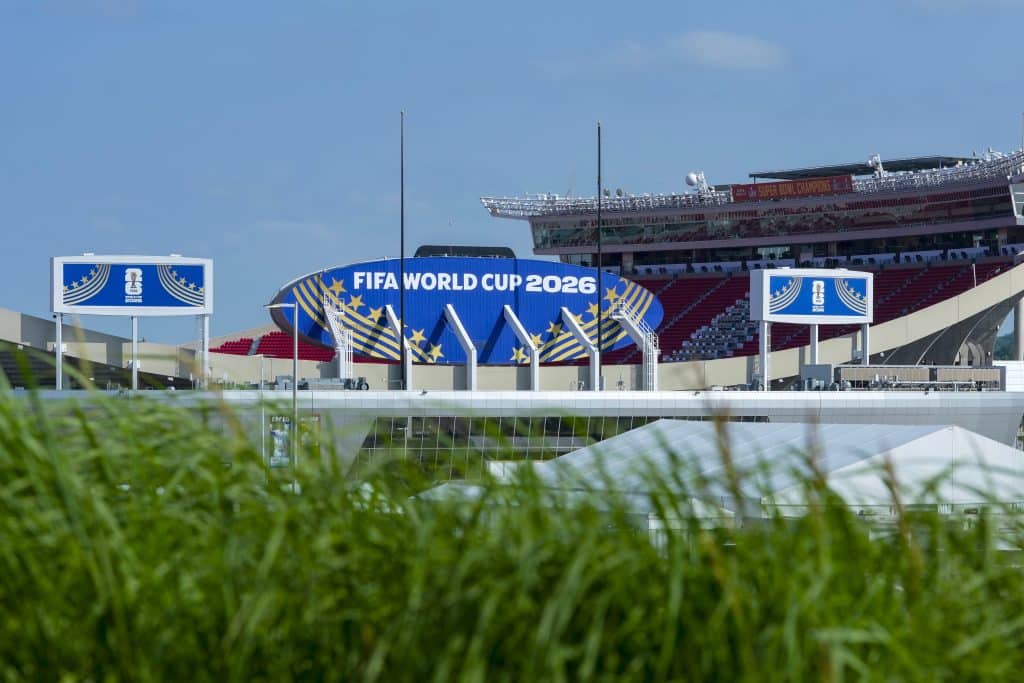
On June 16, the World Cup arrives in Kansas City. Argentina, the reigning world champions, will open their tournament at Arrowhead Stadium, which FIFA has temporarily renamed “Kansas City Stadium.” Five more matches follow through July 11, when the only quarterfinal in the central United States kicks off in a city that has been promised the world: 650,000 visitors, more than $650 million in economic impact, a global spotlight, a rising tide that lifts every boat from the stadium gates to the east side blocks that surround them.
Those promises should sound familiar. They are part of the standard sales pitch for mega-events, made to host cities across the world — Atlanta before the 1996 Olympics, to Los Angeles before 1984, to Rio de Janeiro before 2016, and to Black South Africans before the 2010 World Cup, the first ever played on African soil. In each place, the spectacle came and went. What remained looked nothing like what was promised, and the people who paid the steepest price were almost always Black, poor, or both.
So before the cameras descend on our city, the Defender went looking for the people who have already lived through what Kansas City is now being sold. This story begins some 9,000 miles away, in Durban, South Africa, where the very same monument to those promises still stands on the coastline, gleaming and nearly empty.
The Monument in Durban
Topped by a steel arch that spans the length of nearly four football fields, Durban’s Moses Mabhida soccer stadium rises like a hallucination above the Indian Ocean coastline in South Africa’s KwaZulu-Natal province. Completed roughly seven months before the start of the 2010 World Cup, the $450 million stadium is widely considered a stunning architectural achievement, with a retractable roof, cable car, 120 corporate hospitality boxes and 70, 000 seats.
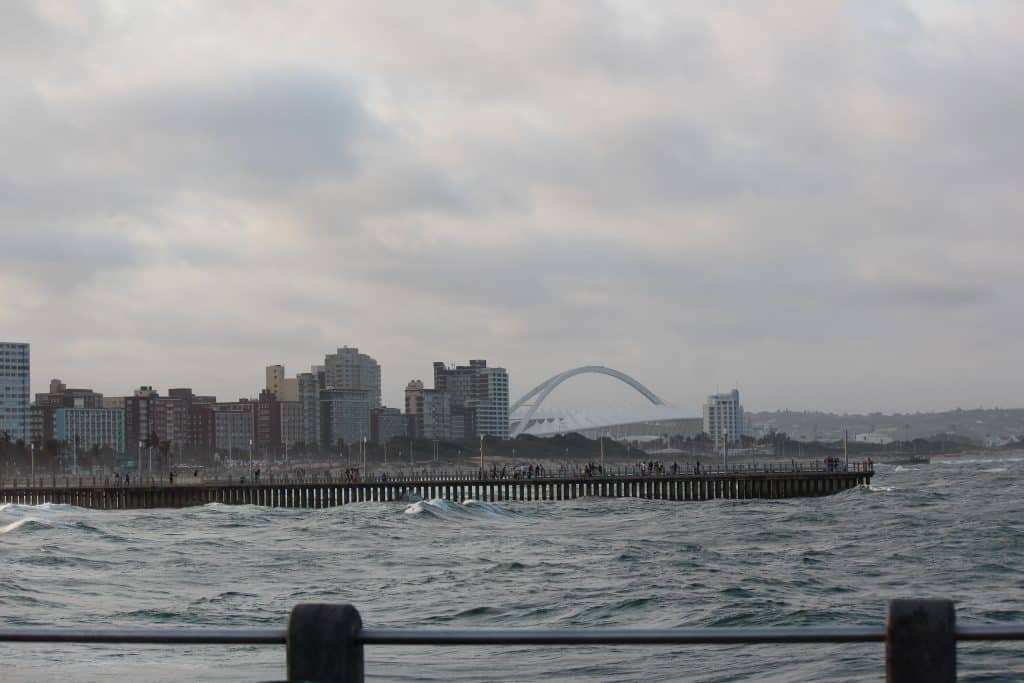
But while it may be state of the art, Moses Mabhida Stadium has gone slightly to seed in the 16 years since it hosted seven World Cup matches attended by celebrities such as Paris Hilton, John Travolta and Leonard DiCaprio. South Africans don’t have much use for it, and those who do—such as the Sharks professional rugby team—can’t afford the rent, continuing to play in a smaller venue practically next door.
The existing stadium nearby could’ve easily been renovated for a fraction of the cost of building the ultramodern Moses Mabhida that is named, ironically enough, for a beloved anti-apartheid icon and leader of South Africa’s Communist Party. But officials with the World Cup’s governing body, known by its French acronym FIFA, insisted that South Africa eschew stadiums near working-class townships reserved for Blacks or mixed-race populations during the apartheid era to build new stadiums, mostly in wealthy white or tourist communities in Durban, Johannesburg, Cape Town and Port Elizabeth.
Noting that Durban has two professional football teams that attract crowds of only a few thousand, Trevor Phillips, the director of the South African Premier Soccer League at the time, asked rhetorically, and presciently: “What the hell are we going to do with a 70,000-seater football stadium in Durban once the World Cup is over?”
The short answer is “nothing,” for which taxpayers shelled out the equivalent of nearly $17 million in fiscal 2023 to pay for the stadium’s maintenance while raking in revenues of less than $3 million annually from concerts and other events; that amounted to operating losses totaling about $13 million for the year.
“So the money that could be spent on clean water, waste collection, and other social needs is instead spent on looking after this stadium that nobody uses,” Thapelo Mohapi, general secretary of Abahlali baseMjondolo, a South African movement of shack dwellers and poor residents fighting for land and housing, told the Kansas City Defender in a phone interview.
“The real issue is that the 2010 World Cup left us with infrastructure that we’re unable to look after, infrastructure that has not created jobs after the World Cup and has not yielded anything really other than financialization of the housing market, or gentrification… In other words, the rich continue getting richer, and the poor, poorer.”
“Money that could be spent on clean water, waste collection, and other social needs is instead spent on looking after this stadium that nobody uses.”
The Promise of a World Cup Windfall
The promise is always the same: the economic windfall from tourism, construction and service-sector jobs will effectively lift all boats. But a wealth of statistics and first-hand accounts from activists and ordinary people in host countries and cities assert that marquee sporting events like the Olympics and World Cup not only fail to boost incomes for working-class populations but in fact widen inequality, and leave African-descended working people especially, holding the bag.
In a 2009 paper for the National Bureau of Economic Research, two economists, Andrew K. Rose and Mark M. Spiegel wrote:
“Economists are skeptical about the economic benefits of hosting ‘mega-events’ such as the Olympic Games or the World Cup, since such activities have considerable cost and seem to yield few tangible benefits. These doubts are rarely shared by policymakers and the population, who are typically quite enthusiastic about such spectacles.“
As one example, the 2016 Olympics in Rio de Janeiro took place during Brazil’s worst economic downturn since the Great Depression. The total cost of the Games eclipsed $13 billion, or roughly 50% above the original budget, causing city officials to cut spending on public services—such as police budgets, health, and education—to pay for Olympic construction and security. With more citizens of African descent than any country other than Nigeria, Brazil would reportedly request a bailout from the International Olympic Committee to help pay a debt that had ballooned to an estimated $40 million.
The U.S. Playbook: Displacement and Policing
The harm brought on by global spectacles is not foreign to the United States. Atlanta knows what it means for a mega-event to leave behind a legacy of displacement.
Three decades before Atlanta was named one of the U.S. hosts for the 2026 World Cup, the city hosted the 1996 Olympic Games, which city officials hoped would cement Atlanta’s image as a modern, global city.
But the ’96 Olympics also became infamous for what happened to the people who did not fit the image that Atlanta leaders wanted to project: unhoused people arrested by the thousands, poor Black residents pushed out of redeveloping neighborhoods, and public housing communities demolished under the banner of urban renewal.
One of the clearest examples was Techwood Homes, the nation’s first public housing project. In the lead-up to the Olympics, Techwood and nearby Clark Howell Homes were largely demolished and later replaced by Centennial Place, a mixed-income development that officials celebrated as a model of urban renewal. But the promise of a revitalized neighborhood did not mean former Techwood residents would get to remain part of it. A public housing community was dismantled in the name of Olympic redevelopment, residents were forced out, and many of the people who once lived there did not return.
“In Atlanta, displacement was less about removing people entirely from the city, and more about relocating them out of particular Olympic-related areas of town,” human geography scholar Seth Gustafson wrote in “Displacement and the Racial State in Olympic Atlanta, 1990–1996.”
The same logic shaped how the city treated homelessness. Researchers have estimated that roughly 30,000 Atlantans were evicted or otherwise displaced between 1990 and 1996, while about 9,000 arrests of unhoused people occurred in 1995 and 1996. The crackdown became one of the clearest U.S. examples of a host city using a mega-event to remove visible poverty from public space.
Atlanta is again preparing to welcome the world. The city expects about 500,000 visitors for the 2026 World Cup, with a study commissioned by the local Chamber of Commerce projecting an economic impact of $500 million to more than $1 billion.
Officials now say the city’s approach is different. But Reuters reported that city workers have torn down numerous encampments in and around downtown in the last two years, including 10 near Mercedes-Benz Stadium. Advocates continue to warn that encampment removals, public-space enforcement and World Cup preparation can reproduce the same basic pattern: treating poor and unhoused people as obstacles to the image a host city wants to project.
If Atlanta’s Olympic legacy shows how mega-events catalyze displacement, redevelopment and reductions in low-cost and social housing stock, Los Angeles’ 1984 Olympics show how global sporting events can expand policing and security infrastructure. Ahead of the Games, the city passed ordinances banning public camping and sleeping on benches, while Los Angeles police conducted sweeps around Olympic venues that targeted unhoused people as well as Black and Latino youth.
The security buildout did not end with temporary crowd control. Olympic security planning involved more than 170 police agencies, while the LAPD hired additional officers at a cost of more than $20 million to “sanitize the area,” per their own words. This apparatus helped normalize a more aggressive policing infrastructure that continued after the spectators left. Three years later, Operation Hammer — the LAPD’s anti-gang campaign — led to the arrests of 24,684 mostly Black youth in South Central Los Angeles, often without cause.
Now, Los Angeles is again preparing for a cycle of global sports events, including the 2026 World Cup and the 2028 Olympics. Civil rights advocates and housing organizers have already warned that the city could repeat old patterns of clearing encampments, expanding surveillance, restricting public space and using public safety language to remove poor people from visible areas before the cameras arrive.
Together, Atlanta and Los Angeles show two sides of the same mega-event playbook: redevelopment and displacement in one city, policing and security expansion in the other. In both cases, the people most harmed were the people least likely to benefit — poor residents, Black and brown communities, unhoused people and those living in places city leaders wanted to rebrand.
South Africa’s Warning
Still, it is South Africa’s experience as the first country on the continent to host the World Cup that is Exhibit A in the people’s rebuttal of the claims made by a global elite who tout the quadrennial soccer tournament, the Olympic Games and other high-profile international sporting competitions as beneficial to local economies. Said Mohapi:
“We were very excited but when the games started we discovered that the people who were building the stadium where the soccer would be played were unable to afford the tickets. That showed us right away that ordinary working-class Black South Africans were not meant to participate in the World Cup,” he said. “We had to watch from home as if we were citizens of another country.”
As it was before voters of all races went to the polls to repeal apartheid in 1994, South Africa remains home to the world’s most unequal distribution of wealth, with an official unemployment rate of nearly 33 percent, or eight percentage points higher than the U.S. at the nadir of the Great Depression. Not only did the 2010 World Cup fail to narrow the income and wealth disparities between Blacks and whites, it also replicated the apartheid government’s exclusion of the Black majority from the mainstream of public life, all while making FIFA an estimated $3.65 billion.
For instance, cities and municipalities charged permit fees that local concessionaires were unable to afford, while FIFA rules restricted trade near World Cup sites to its commercial partners, ceding the field of food vendors at the 2010 World Cup to McDonald’s, Coca Cola and other Western vendors. Referring to South Africa’s head of state during an especially brutal period known as high apartheid in the 1980s, one South African ice cream vendor in Durban, Johannes Mzimela, said to the BBC in 2010:
“They should have called this stadium PW Botha – an oppressor – not Moses Mabhida, our father. It just makes a mockery of what he represented.”
Additionally, government officials demolished informal settlements in and around the sporting venues leading up to the World Cup, redolent of the apartheid state which forbade Blacks from owning land, and razed many neighborhoods to the ground. One of the most notorious examples was Blikkiesdorp, a temporary relocation area outside Cape Town nicknamed “Tin Can Town,” where poor people were moved to hide poverty from visitors.
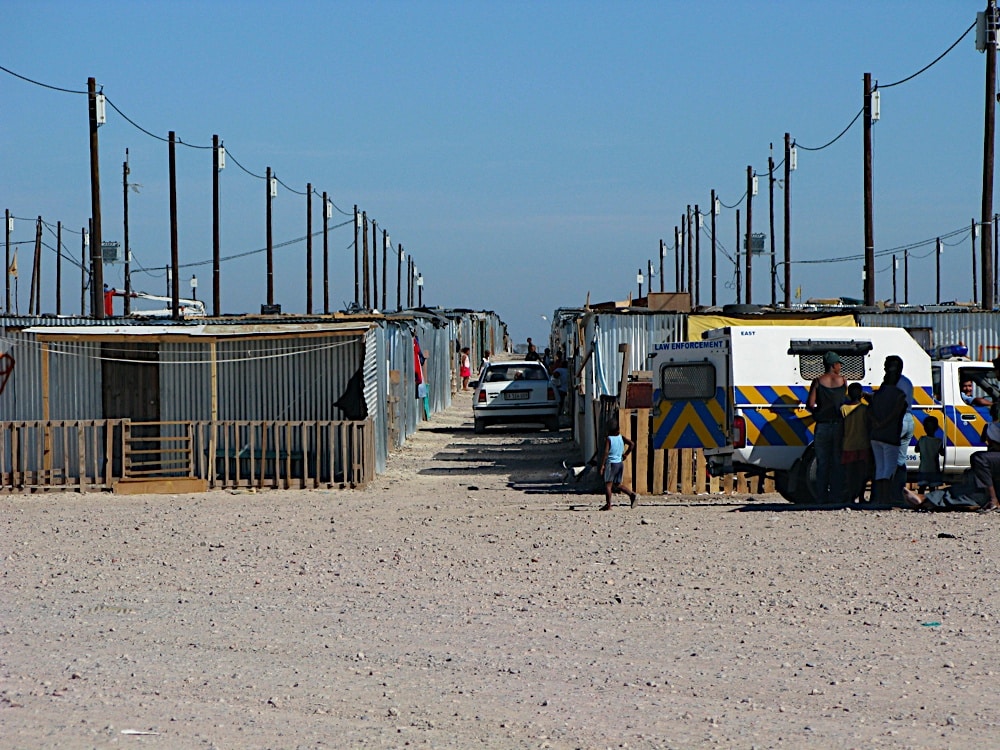
And similar to apartheid, the demolition of homes before the 2010 World Cup accelerated gentrification in Johannesburg, Cape Town and Durban especially, adding as many as two hours to the daily commute of many Blacks who work as domestics or gardeners for whites or middle-class Black South Africans closer to the city center, Mohapi told the Defender. Ironically, municipalities began to activate the use of high-occupancy vehicle, or HOV, lanes in the run-up to the World Cup but only in the mornings, Mohapi said.
“You see, the bourgeoisie wants you to be on time when you’re coming to work, but they don’t care what time you get home or what time you see your children.”
Continuing, Mohapi said:
“Sixteen years ago, I was a young person looking forward to the World Cup; today I live in an informal settlement with my family with no hope of getting a government house or of getting a decent job so that I can look after my family. We’re in a state of hopelessness.
We would have been better off if the World Cup had not come.”
While the World Watches is The Kansas City Defender’s ongoing investigation into what the 2026 World Cup is building in its host cities: the jails, the surveillance, and the displacement the spectacle was designed to keep out of frame. This project was completed with the support of a grant from Columbia University’s Ira A. Lipman Center for Journalism and Civil and Human Rights in conjunction with Arnold Ventures.