“There Was No Warning”: Nobody Wants to Call the Storm That Hit Wyandotte County a Tornado
Climate · Housing · Investigation · Kansas City
“There Was No Warning”: Nobody Wants to Call the Storm That Hit Wyandotte County a Tornado
A radar estimate decided 60 miles per hour, so no phones rang. The sky decided otherwise. Three nights later, thousands in Wyandotte County were still in the dark, waiting on a name no one in authority would give them.
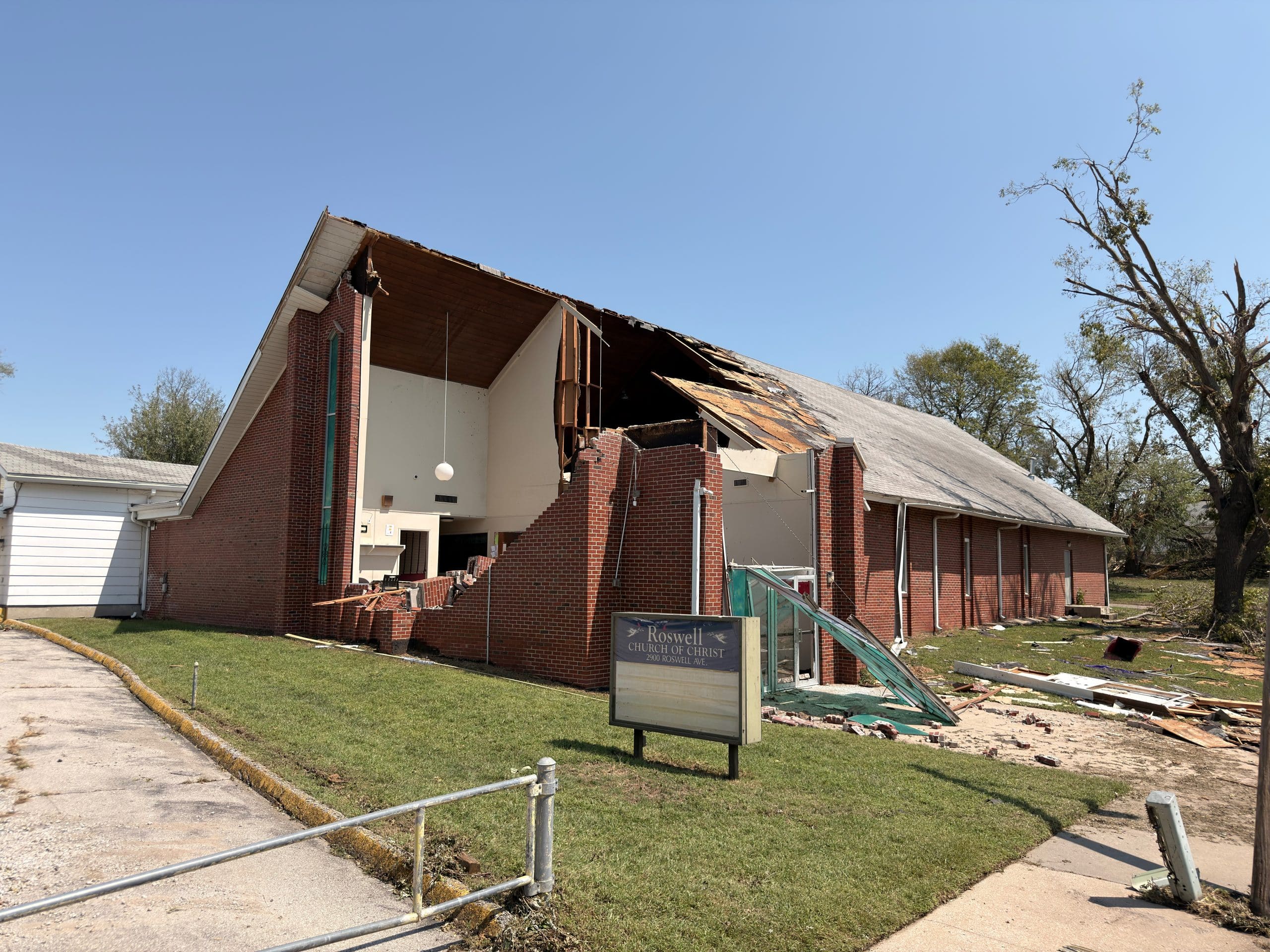
Around 3 a.m. Wednesday the hail came, and it filled the whole dark, no space between one strike and the next, a single unbroken roar on the roof above me and the windows. I live on the second floor of a three-story brick building in downtown Kansas City, Missouri, across the river and a world away from the worst of it. I lay there and tried to make the sound into something I recognized and could not. I have slept through Midwest storms my whole life. I had never heard the sky do this.
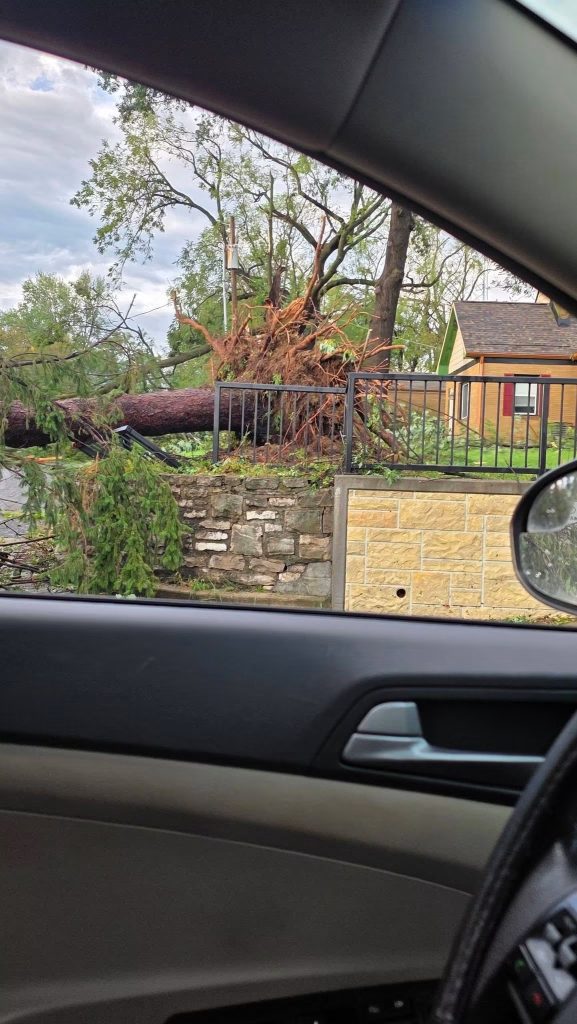
Across the river in Wyandotte County, the storm did more than make noise. It split trees at the trunk, dropped them across porches and fences, collapsed brick, and by 6 in the morning had cut power to more than 16,500 homes and businesses, one of every four customers the Board of Public Utilities serves. The worst of it landed in midtown Kansas City, Kansas, and the north end of the county, along Leavenworth Road, inside the I-635 loop, near 21st and Quindaro. The outage peaked near 18,000 customers and had fallen to about 9,600 by Thursday midday, according to BPU, with thousands of homes still dark three nights later.
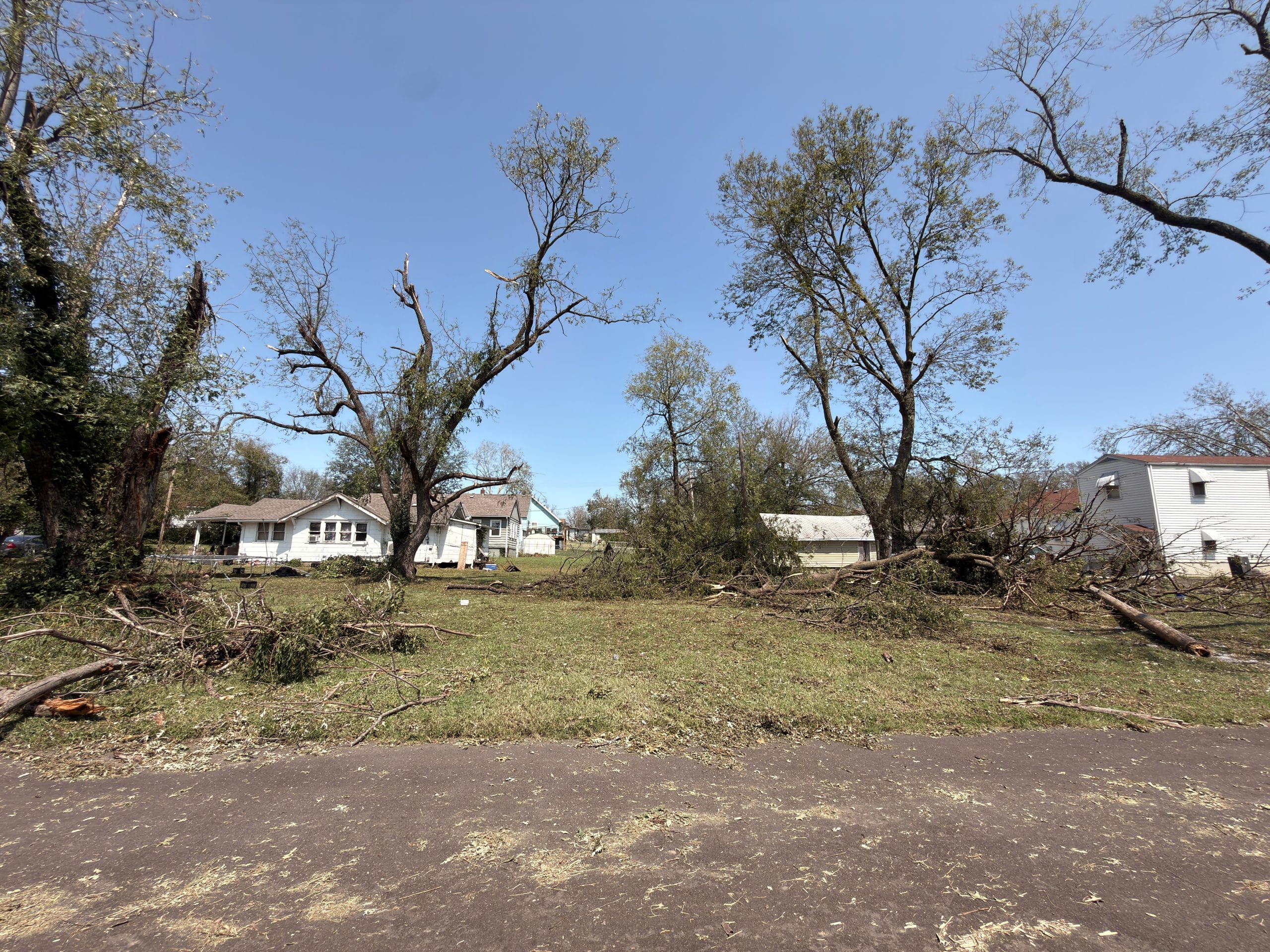
Families went to sleep without a warning, woke to no power, watched their refrigerators warm, and then learned their children had nowhere to be. Kansas City, Kansas, Public Schools closed Wednesday and again Thursday. KCKPS provides free breakfast and lunch to every enrolled student, a benefit the district qualifies for because so many of its families are low-income. Two days closed were two days those meals do not come.
The storm was forecast, watched, and warned. But for thousands of people sleeping in its path, that warning never made a sound. Forecasters at KCTV named damaging wind and large hail as the night’s main threats by Tuesday morning. The National Weather Service posted a severe thunderstorm watch at 10 p.m. At 10:10, the agency’s Pleasant Hill office issued a severe thunderstorm warning for northwestern Wyandotte County. At 10:33 p.m. it issued another, covering the county, and tagged it with the storm’s expected ceiling: hail to one inch, wind to 60 miles per hour, both estimated from radar.
TAG: HAIL 1.00 IN · WIND 60 MPH
Phone-alert threshold: winds 80 mph or hail near baseball size. Tier not met. No push sent.
That tag decided everything that followed. The weather service sorts its thunderstorm warnings by damage threat, and only the top tier, a warning tagged “destructive” for winds of 80 miles per hour or hail near baseball size, pushes an alert through every phone in the storm’s path. A 60-mile-per-hour warning at 10:33 on a Tuesday night reaches weather radios and news segments and almost no one else. The storm that arrived piled hail three inches deep on taxiways at the Charles B. Wheeler Downtown Airport, deep enough that crews brought out snowplows in August, and knocked out power to a quarter of the county’s meters.
The Alert That Never Came
Only warnings tagged “destructive” push an alert to every phone in a storm’s path. Tuesday’s warning was tagged 60 mph. Phones in Wyandotte County stayed silent.
The machine underestimated the storm, and the underestimate is what kept the phones dark.
The silence over Wyandotte County this week runs all the way to Washington. The Trump administration gutted the National Weather Service in 2025, and the agency remains hundreds of employees short even after Congress restored most of its funding. Radar-indicated tags are judgment calls, made by forecasters on overnight shifts in offices running thin.
The weather service has not said how it arrived at its estimate. What the record already shows is the pattern: In April, several tornadoes touched down in the Kansas City area with only minutes of warning from the National Weather Service. On April 13, the agency issued a tornado warning for southeastern Johnson County at 8:18 p.m.; three minutes later, it reported a confirmed tornado near Spring Hill. Two weeks later, on April 27, another warning went out at 5:36 a.m. An EF-0 tornado touched down near Spring Hill two minutes later, followed by an EF-1 near Bucyrus at 5:45 a.m. Twice in four months, the people of this metro got less warning than the sky required.
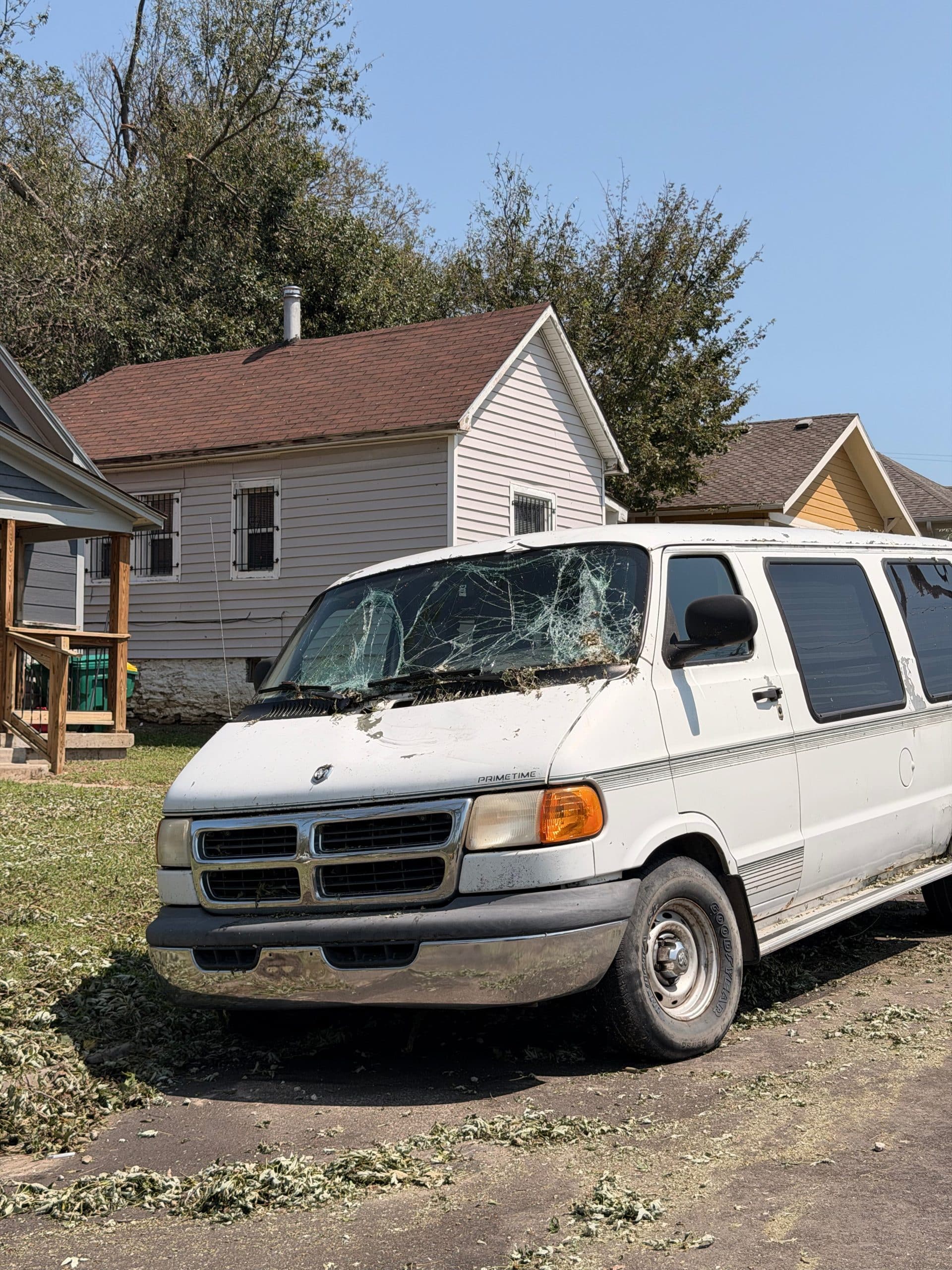
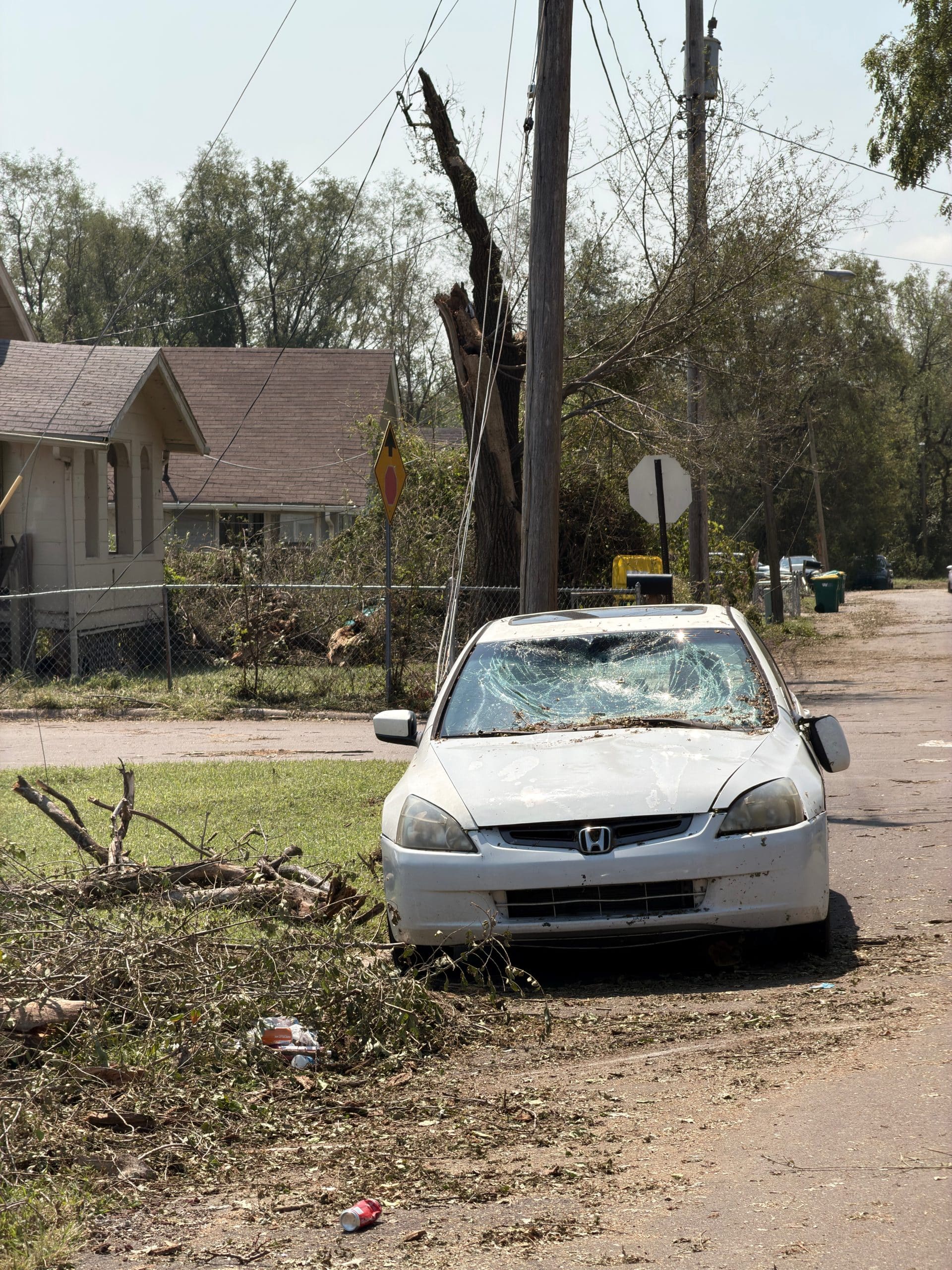
I drove into Kansas City, Kansas, on Thursday and understood the county line as a light switch, one side lit, the other dark. Power lines lay in the grass and across the curbs. Trees I would usually have called immovable stood split down the middle, trunks opened like something soft, and I could not do the math on the force that takes. The stoplights on Quindaro Boulevard hung dead over their intersections, the businesses dark behind them, and I ran a red light I never saw because there was no red to see. Whole blocks felt emptied out. They were not. People were home, in the heat, waiting.
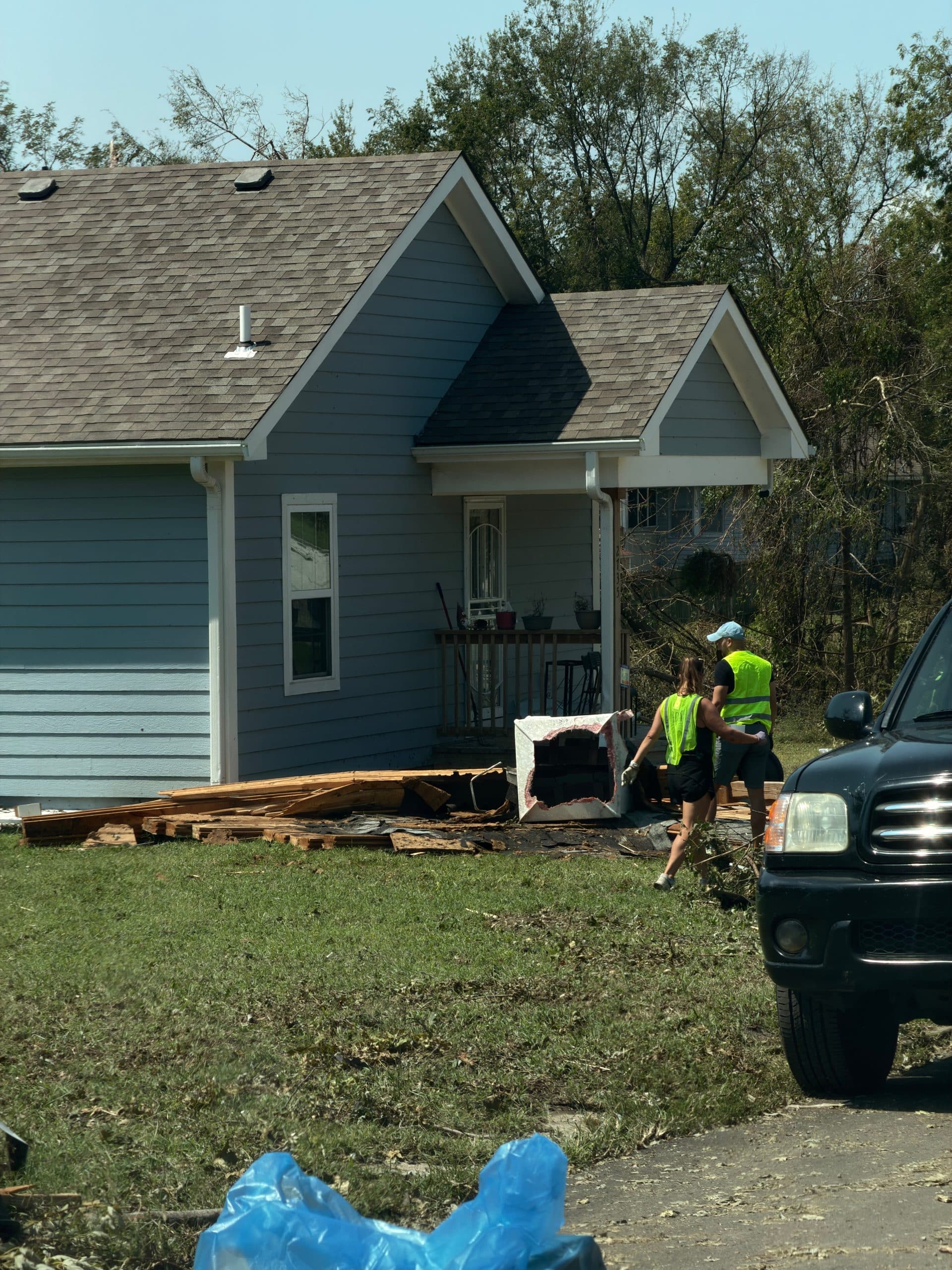
At 3004 N. 27th Street, The Village Initiative had turned its lot into the relief operation the moment required. People worked grills in the direct sun. Volunteers moved cases of water. I was still looking for whomever was in charge when a little boy walked up and asked if I needed some water.
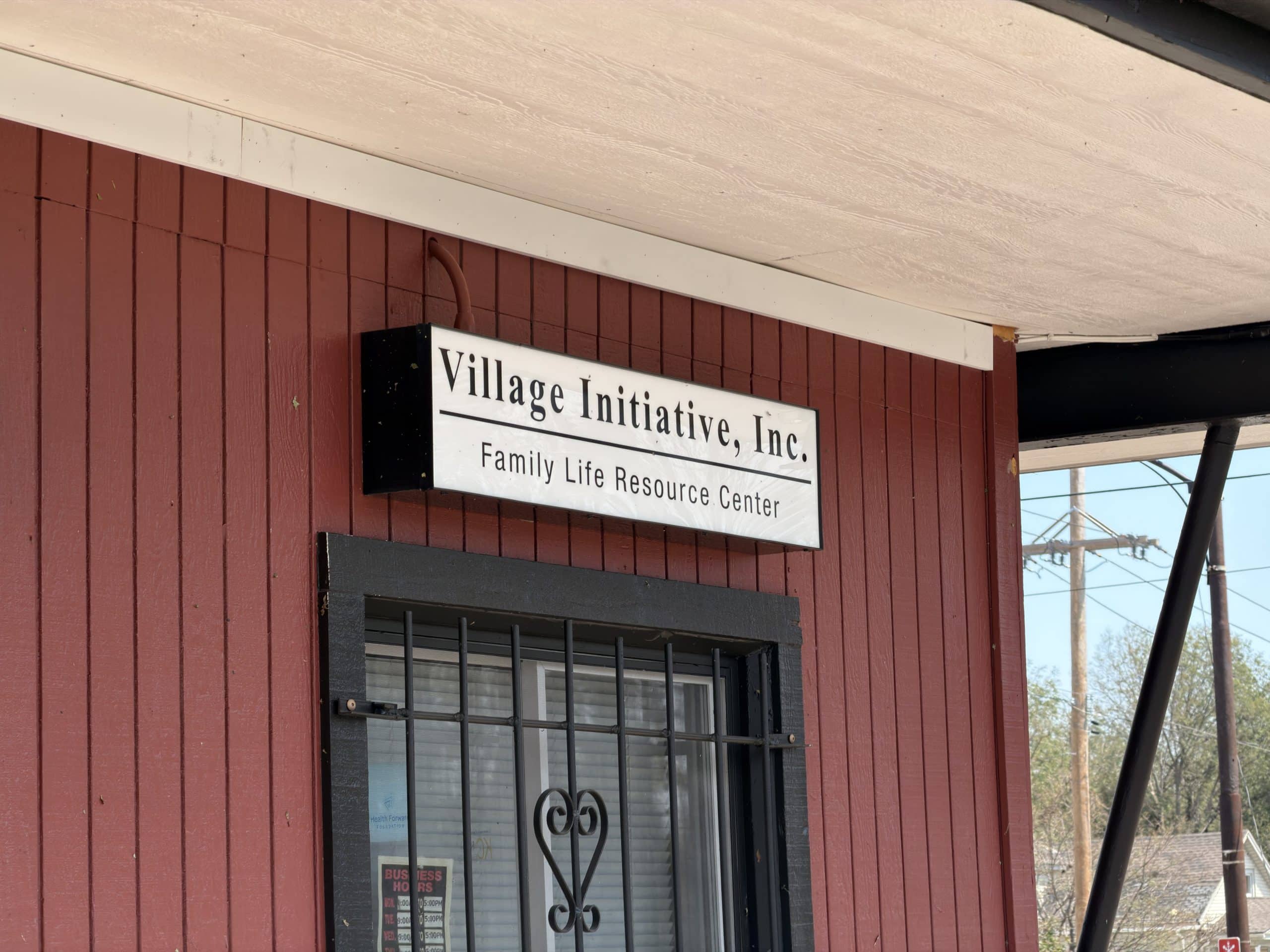
Randy George co-founded the Village Initiative in 2005 with the late Dr. James Maxwell. Two blocks west of where he stood Thursday, the organization’s church building may be a total loss. He told me he has never seen this much damage in one area, and he described the morning after from inside it: “There was no alarms. No preparation. Many of the people woke up to trees falling on their houses,” he said.
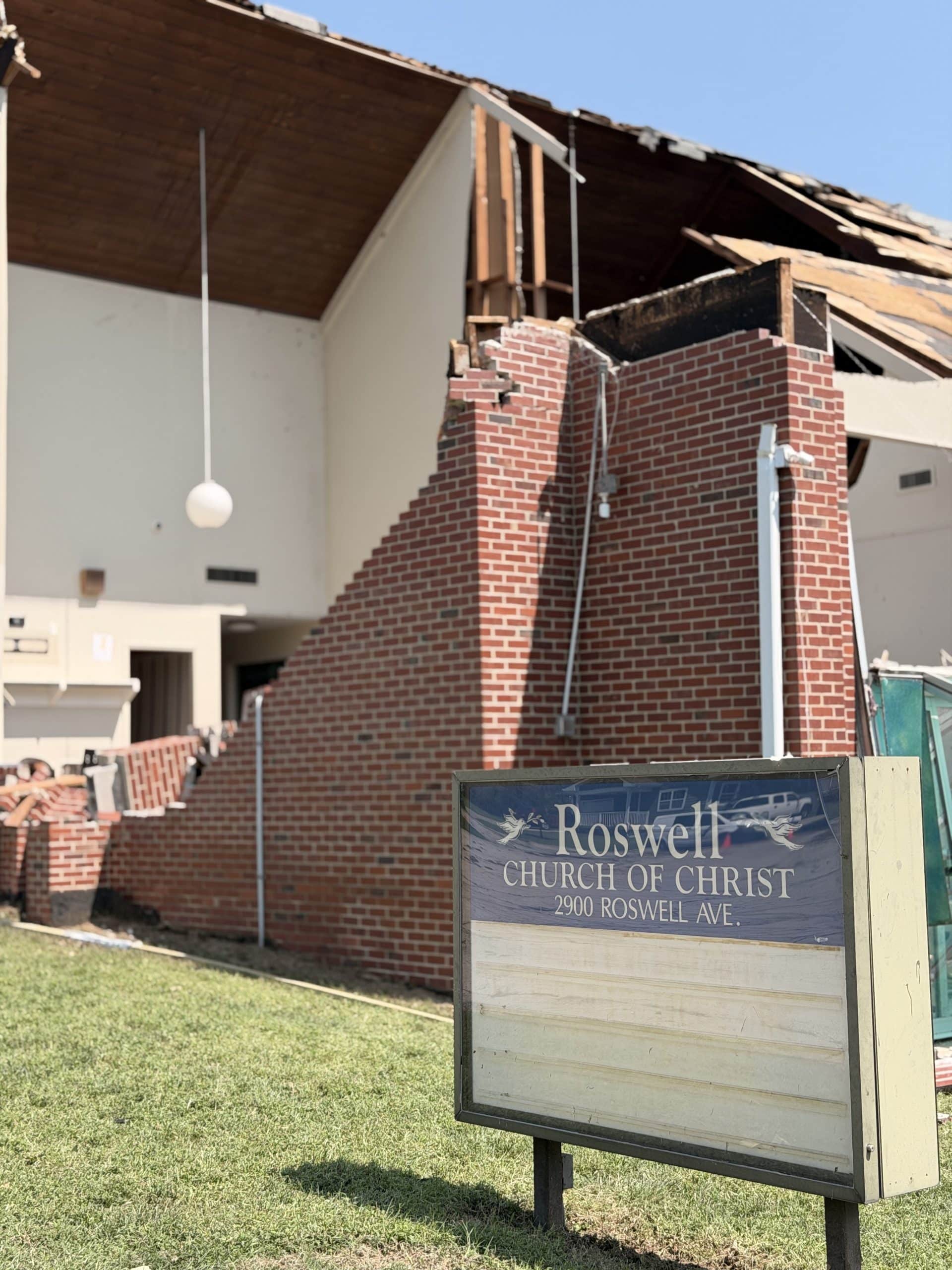
I asked what he believes came through Tuesday night. “The type of damage, it had to have been a tornado,” he said. Then he said something I haven’t stopped thinking about since: “I don’t think people want to call it a tornado. Because there was no warning.”
So they stopped waiting for the name. On porches and in Facebook threads, people looked at the trees splayed across their streets and called it what their own eyes told them it was: a tornado, they said, because a word no one in authority would give them was still a word they could give each other.
Whatever the weather service eventually writes down, the people who lived through it had already decided, and they decided together.
As of Friday, the National Weather Service has not published its damage survey, meaning, officially, no one has determined what this storm was. George is not waiting on the finding. He is waiting on something smaller and rarer: accountability.
“At some point, it would be nice for someone to step up and say, we missed this,” he told me. “What would have happened if people lost their lives?”
No deaths have been reported, and he is thankful for it. He credited three Unified Government commissioners, Evelyn Hill, Andrew Davis, and Jermaine Howard, along with Mayor Christal Watson, the first Black woman to lead Kansas City, Kansas, with showing up and asking what the community needs.
Parked nearby, a truck from Care Beyond the Boulevard, a street medicine nonprofit, saw patients in a steady line: Black and Latinx families with children, elders, and volunteers waving unhoused neighbors over from the street to ask if they needed care.
Asked how long The Village Initiative will keep their storm recovery operations going, George did not reach for a calendar. “As long as there’s need.”
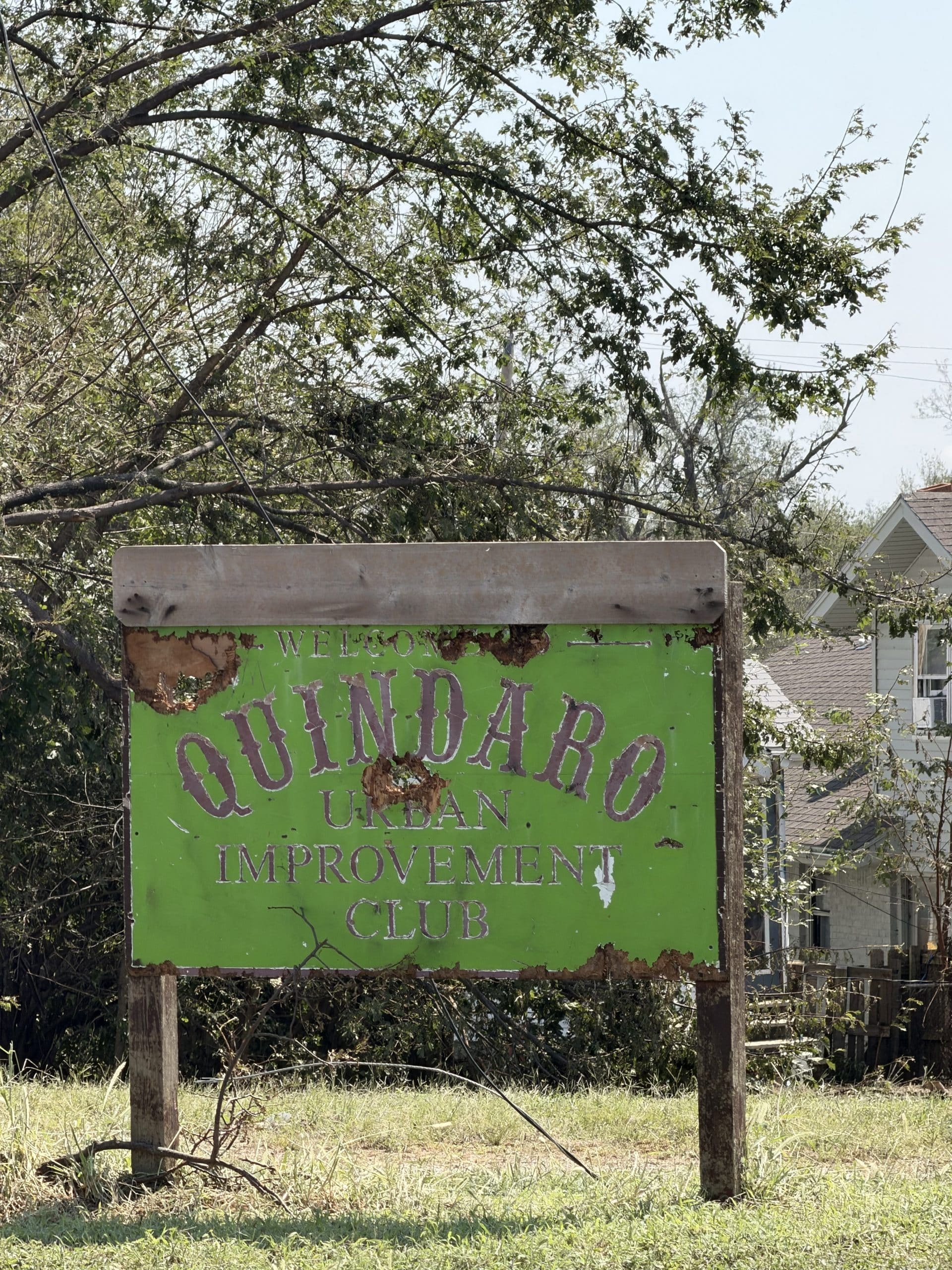
Quindaro · Founded 1857
The Village Initiative sits on 27th Street, and if you follow 27th north, you reach the overlook at Sewell Avenue, above the ruins of Quindaro. The town was founded in 1857 by the Wyandot Nation, New England abolitionists, and Black settlers as a port of entry into free territory, a river crossing where people escaping slavery came ashore in the dark.
After the war, it raised Western University, the first Black school west of the Mississippi, and Douglass Hospital, because no institution would educate or treat its people otherwise. In the 1980s, developers moved to turn the townsite into a landfill, a plan that would have buried its ruins under garbage, and descendants fought them off through a decade of lawsuits. Last year the federal government finally named the Quindaro site a National Historic Landmark. This week, those same descendants ran grills and insulin coolers on the same ground, doing again what it has always asked of them.
All week, residents did the work of informing each other. They traded outage-map screenshots and BPU updates, told each other which streets were impassable, offered chest freezers and extension cords. One woman asked publicly on Facebook who she was supposed to call about the food spoiling in her refrigerator. Twelve people answered her. They suggested a generator she said she could not afford, renters insurance, homeowners insurance, ice. Not one of them knew the state owed her something.
It does, in fact. If you receive food assistance in Kansas and your food spoiled in the outage, you can request replacement benefits, up to a full month’s worth. The catch is finding out. Massachusetts publishes the instructions online. Indiana publishes a form you can download. Kansas keeps its process inside a staff manual: you call or visit a DCF office, a caseworker has you sign a statement of loss, and the agency reissues your benefits. Report it quickly, because the window is short.
If Your Food Spoiled in the Outage
Kansas food assistance recipients can request replacement benefits, up to a full month’s worth. Call or visit a DCF office, sign a statement of loss, and the agency reissues your benefits. The window is short. Report it now.
DCF Food Assistance: 1-833-765-2003
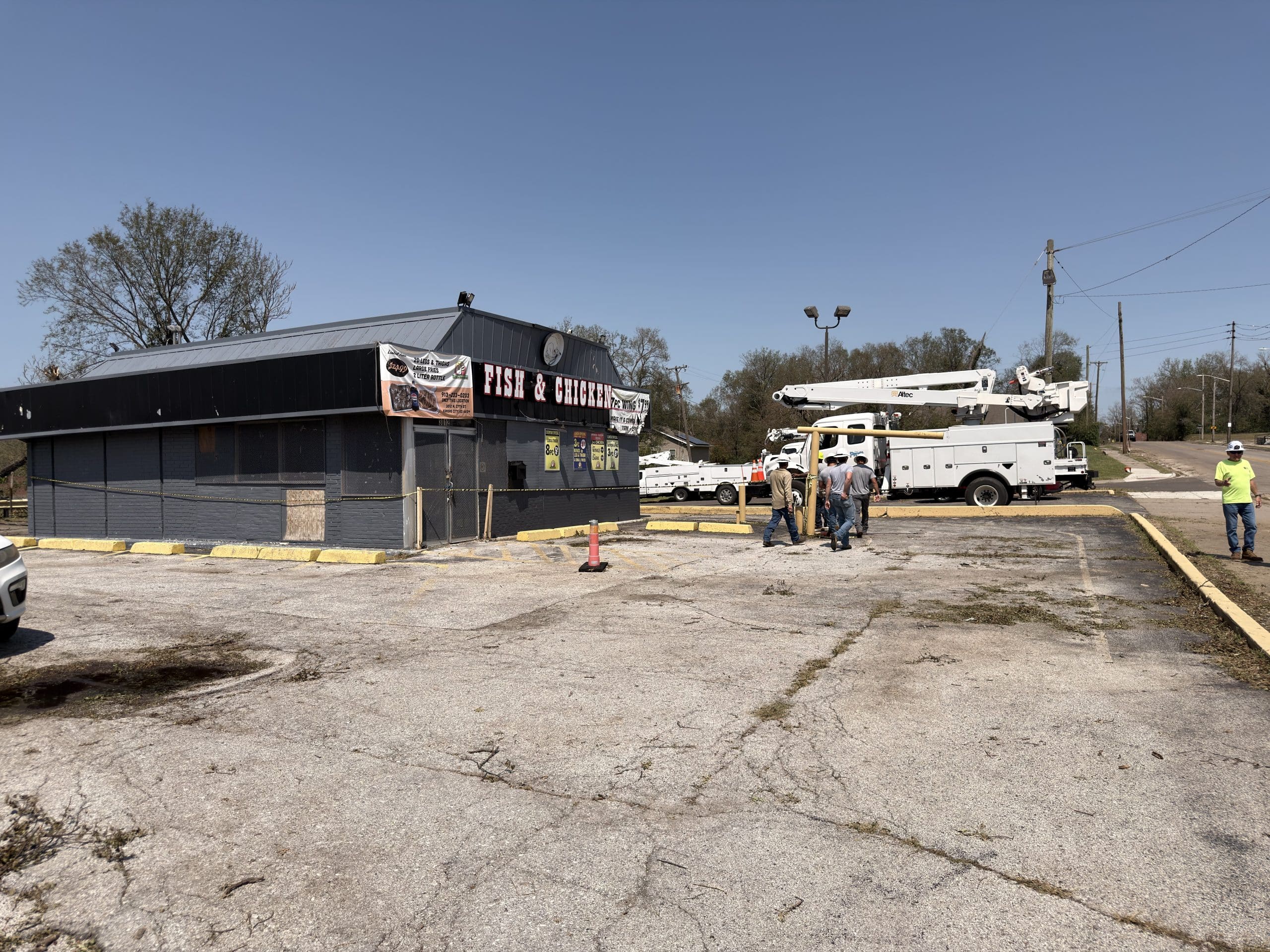
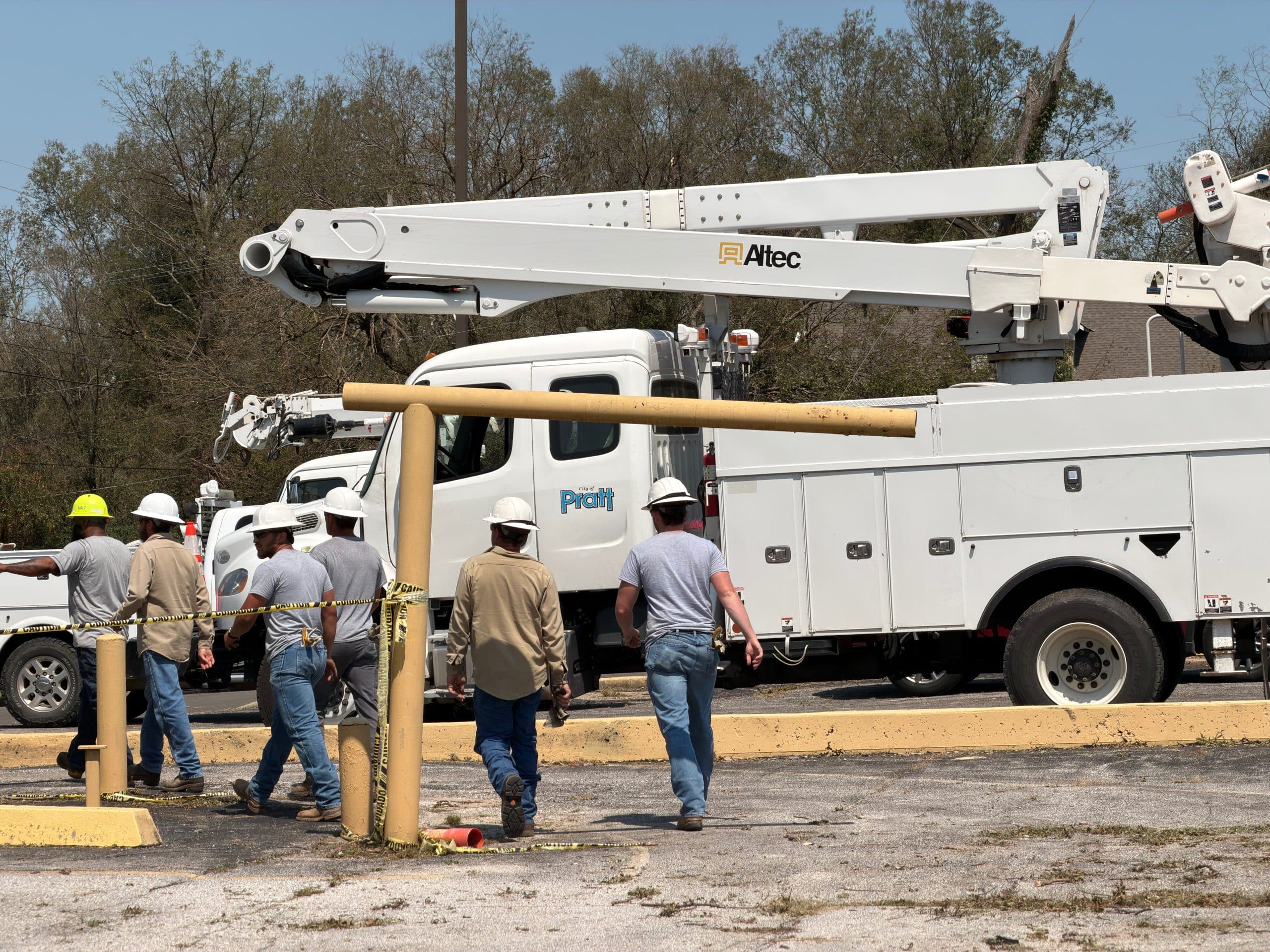
BPU’s own protocol says the goal is to restore power “to the greatest number of customers in the shortest amount of time, prioritizing public health and public safety.” That rule is not neutral in its effects, whatever its intent: a household on a BPU circuit serving fewer meters waits behind the service provided to the denser blocks. And BPU would not discuss the extent of the damage to its grid, telling KSHB it had no comment. Two days later, and the utility company has not released the map: how many customers were out and how fast they came back, street by street.
The fear I kept reading all week was Gary, Indiana, a city that is three-quarters Black, where more than 20,000 homes are still dark ten days after storms hit on August 11. The utility says full restoration will come August 25, two weeks after the lights went out. Seven people died across the state. One was a boy, four years old. Another was Paula Plebanski, 58, killed by flying roofing material. She was unhoused. The storm found her outside because the city had already left her there.
Gary’s mayor, Eddie Melton, said plainly: communities of color are always the last to get turned on, and the last to get rescued.
Across the state line in Illinois, a different utility restored its customers days ago. Asked to explain the gap, a NIPSCO executive offered that no storm is created equal and no service territory is the same.
That is one way to describe a border where one side has power and the other does not. Wyandotte County knows another. Gary’s schools have been closed since August 13. Thousands of residents are now suing the utility, arguing the collapse was preventable, that the trees over the lines were a known risk left unmanaged.
The truth is, nobody in Wyandotte County needed any of this explained to them. Some are calling what is happening in Gary an experiment on Black cities. It does not have to be one.
Two Cities · One Record
Wyandotte County, KS
Storm: August 19–20
No phone alert. Warning tagged 60 mph, below the push threshold.
1 in 4 BPU meters dark by morning.
3+ nights without power for thousands of homes.
2 days of school closed, with the meals that go with them.
No damage survey published. The storm still has no official name.
Gary, Indiana
Storm: August 11
99 mph winds. The utility’s largest outage event on record.
20,000+ homes still dark at day ten.
14 nights. Full restoration promised August 25.
Schools closed since August 13.
7 dead statewide. A four-year-old boy. Paula Plebanski, 58, unhoused.
When Black neighborhoods predict their own abandonment, they are reading a record.
BPU says the lights will come back over the next several days. Wednesday night, my side of the river hummed along like nothing happened. Across it, people iced down what was left in their refrigerators and counted what the storm cost them. Thursday, the buses did not run. In Gary, week two began.
Author

Related Articles

“Not One Cent More”: KC Residents Mobilize to Block Spire’s Gas Price Hike
Spire, Missouri’s natural gas monopoly, wants to increase utility rates 15% a month, even though the company made a 24% increase in market cap last year reaching a $9 billion valuation. Meanwhile, everyday Missourians struggle to afford rent, groceries, and everyday necessities.

“No Cuts, No Compromise!”: Kansas Citians Mobilize to Defend Public Transit as Funding Crisis Looms
Kansas City’s public transit system is at a breaking point. Without immediate funding, a 33% service cut will strand thousands of workers, students, and families who depend on buses every day.
KC Reparations Coalition to Host Urgent Climate Justice Discussion
Join the KC Reparations Coalition for a virtual meeting on October 28th as Dr. Stephen Pinkney exposes the deadly impact of environmental racism on Black communities, and makes an urgent case for including climate in reparations demands.