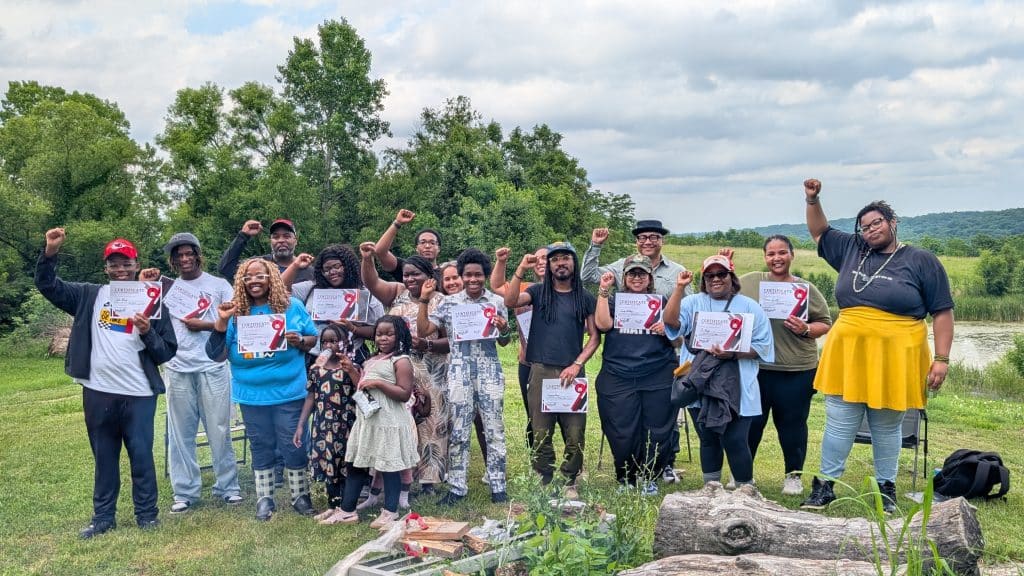
The afternoon was hot enough that some of them wanted the shade. They stayed by the fire anyway.
“If you can hear my voice, clap twice. If you can hear my voice, clap three times and say it’s gonna be all right.” Melissa Ferrer-Civil, Kansas City’s first Poet Laureate and the director of the academy, quieted the circle the way she always does.
More than thirty of them had gathered into a circle on Sankara Farm, twenty-seven acres of Black-owned land on the edge of Kansas City where culturally relevant food still grows in open defiance of the grocery stores that abandoned our neighborhoods.
The farm carries the name of Thomas Sankara, the young Burkinabé revolutionary who told his country to feed itself rather than beg its former colonizers for bread, who planted trees against the spreading desert and was assassinated in 1987 before he turned thirty-eight. He once said you can murder a revolutionary but you cannot murder an idea.
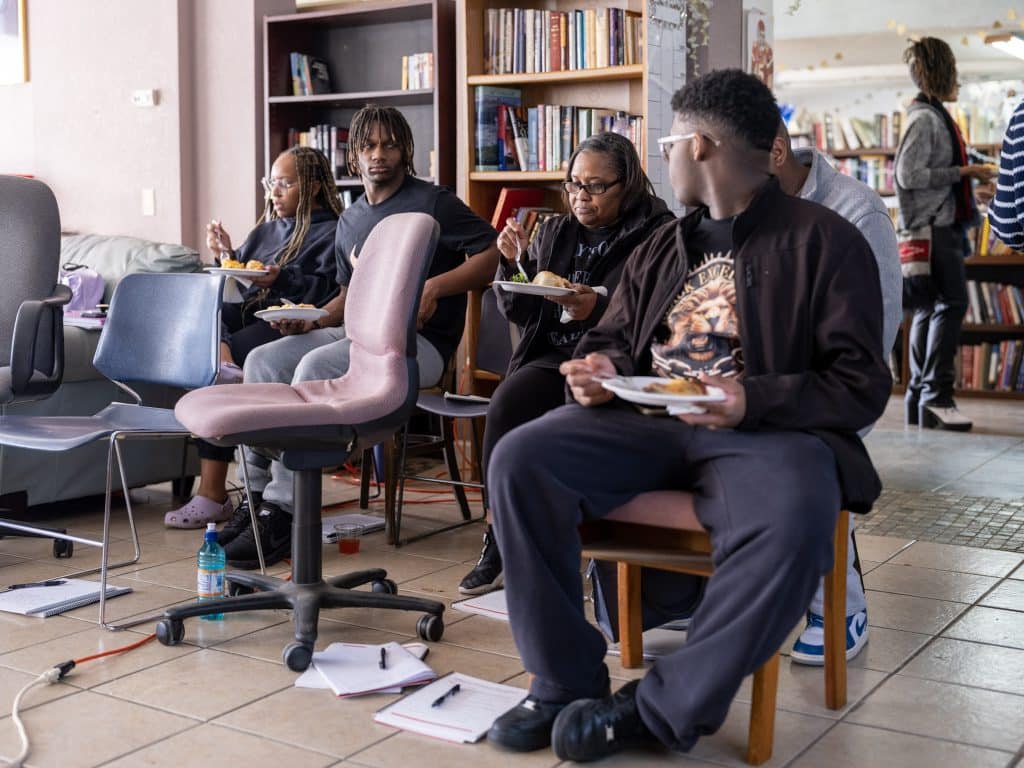
The group gathered around the campfire had come to the end of fourteen weeks. B-REAL stands for Black Radical Education for Abolition and Liberation. The Defender launched it in February 2025 as a direct answer to a war on Black knowledge that started here: the current wave of book bans began when the first title was pulled from a Kansas City school in 2021, and the country followed our lead the way it usually does when there is harm to be exported.
This third cohort carried more high schoolers and middle schoolers than any before it, students learning what the schools are now forbidden to teach.
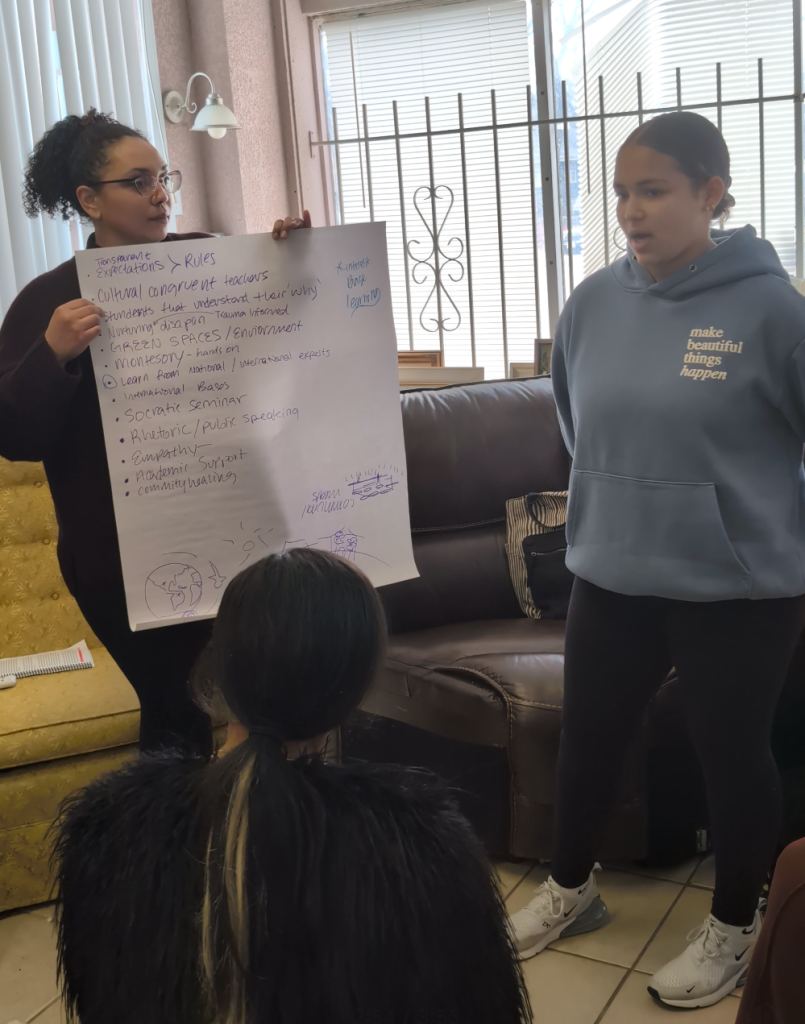
For years what Kansas City sent the rest of the country was a blueprint for institutionalized harm. What it is starting to send now is organizers, and B-REAL is where many are being trained. Three cohorts in, the model is working.
What they were born into
Missouri and Kansas have always been the country’s laboratory for Black education, the place where the nation tests how much it can take from Black children before anyone bothers to resist. In 2023, Missouri’s universities became the first in the nation to abandon affirmative action after the Supreme Court handed them the permission they had been waiting for. This is the same ground where Brown v. Board of Education was argued into existence.
It is fugitive pedagogy in the lineage of the Freedmen’s Schools that taught the formerly enslaved to read, of the Freedom Schools that SNCC organizers built across Mississippi during Jim Crow, of Paulo Freire and the Du Bois Movement School in Philadelphia. It is intergenerational by design, having held students as young as ten and as old as eighty-one in the same room, learning from one another.
The fusion of hard organizing skill with radical Black curriculum makes it the first of its kind in Kansas City, in Missouri, in Kansas, in the whole region.
One through-line across all three cohorts has been Dr. Cristina Mislán, the academy’s resident facilitator and an associate professor of journalism studies at the University of Missouri, who helped the Defender build the school from nothing. Her life’s work has been recovering the Black radical press the country tried to forget, the Pan-African newswire of Claude Barnett, the international pages of the Black Panther Party’s own newspaper, the editorials of Claudia Jones.
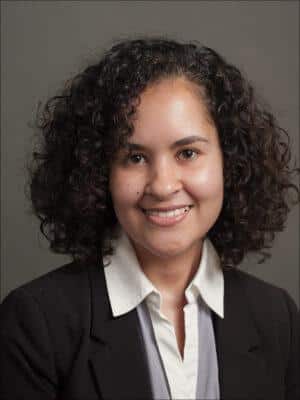
The students call her a human encyclopedia, and they are not exaggerating. She studies that history inside the flagship university of the same state that has led the country’s assault on Black education, and on Saturdays she carries it here, where the tradition she has spent her life recovering is being made flesh again in the people sitting in front of her.
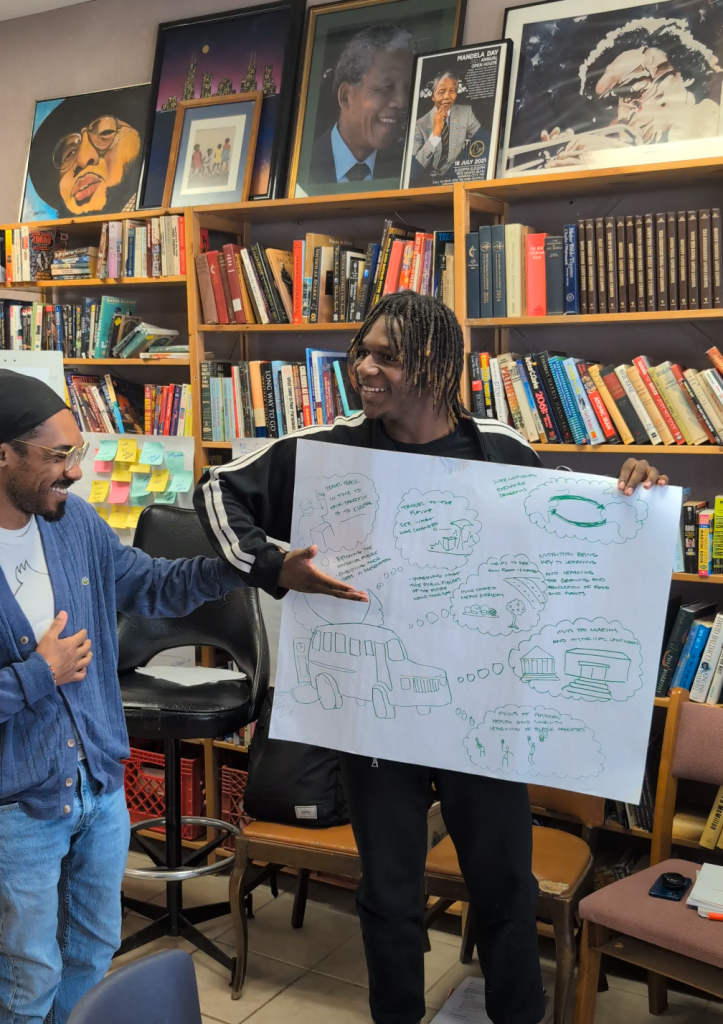
Elijah and Tyler and Molly came as high school students. Aniah came as a middle schooler beside her mother. There were spouses studying next to spouses, parents next to their children, elders next to teenagers who were not yet born when some of these elders first marched.
The circle
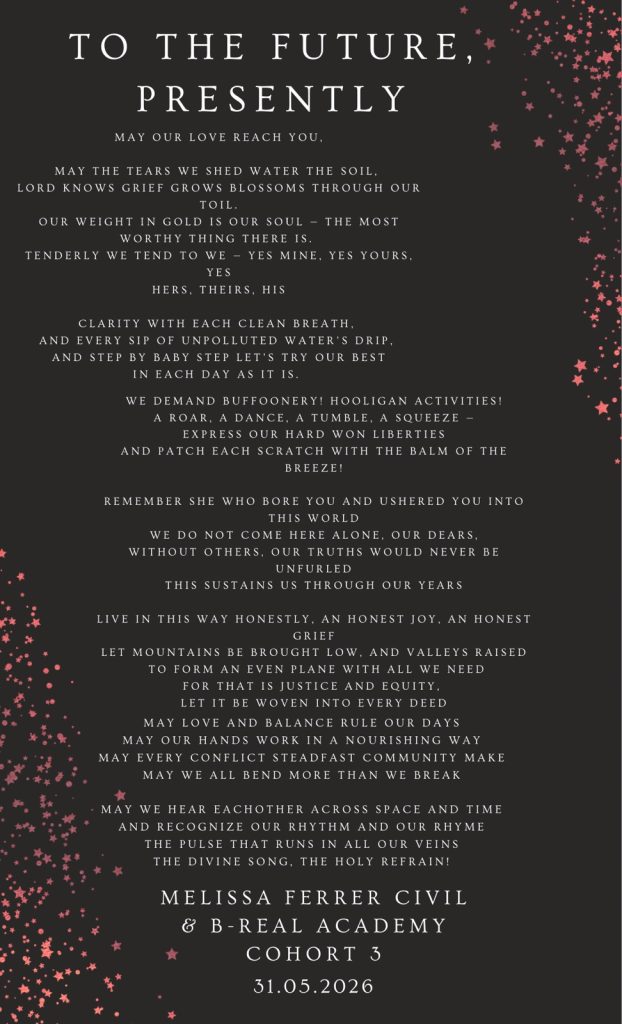
This year’s graduation ceremony included the debut of a collaborative poem created out of letters the students had composed to their descendants seven generations from now. Their words to those unborn children became the lines they would carry home with their certificates.
But first, the group paused to reflect on what beliefs they had carried into the room that they were now choosing to leave behind.
George answered it without flinching. He came in, he said, with a blind spot to the need for radicalism, unable to understand where all the talk of abolishing this and abolishing that was coming from. He was leaving that blind spot in the grass by the fire. Ferrer-Civil thanked him as an abolitionist, and the word landed differently than it would have fourteen weeks earlier. Trudy, his wife, said she had walked in believing she already knew her history and walked out understanding how much had been kept from her. What she was leaving behind was the fear.
Asma admitted she had come in a little naive, unsure what to expect, and honest that she had mostly enrolled so her daughter Aniah would not have to go through it alone. She did not expect the season to work on her too. It gave her a sense of safety she had not felt in a long time, a place to put her guard down, and with that safety came a hard and clarifying lesson about who deserves her energy and who had only ever been draining it.
Elijah, still in high school, named a new way of seeing time. He had learned that the tragedies of the past are not past at all, that they reach directly into the present and operate now through new machinery, through artificial intelligence and the surveillance technology being built along the border. He did not know any of that before, he said, and he would be moving through the world with far more caution and far clearer sight of how racial power actually works.
What they were seeking
When the question turned to what they were taking with them, the answer that kept returning was not knowledge. It was each other.
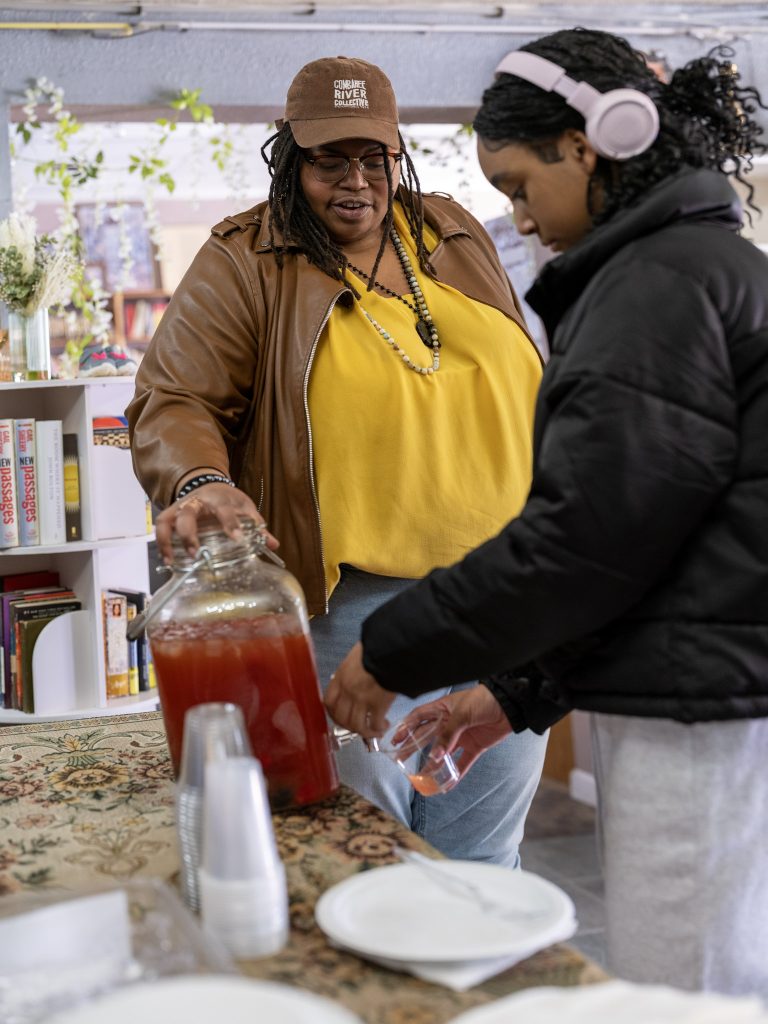
George said it plainly, that he and Trudy had come looking for community above everything, and that the wisdom was a bonus. Asma described the conversations that refused to end when class let out, and how genuinely sad she was to see the season close.
It’s not ending, the circle told her, and they meant it. Across three cohorts now there are dozens of people in this city who know they belong to one another.
Some of the quietest transformations happened in the youngest among them. Aniah told the group what the season had done for her, how a girl who once needed someone to speak for her had learned to speak her own truth and to stand up to those who had grown used to her silence.
It has been amazing to witness, Asma said. “I don’t have to speak for her anymore.”
The next concrete thing
What is the very next concrete thing you will do to build the world you spent fourteen weeks envisioning? One by one, they rose and answered, and the answers were a map of Kansas City’s near future.
It was also a roster of the city’s newest organizers, which is the entire point of the school.
Shelby said she intends to write more radical articles. Another student, who works at a public library, did not have to imagine her contribution because she had already made it. When the staff worried about ICE entering the building, she was the one who walked her supervisor through the steps, using what the cohort had taught her before the season was even over.
Some were heading toward Juneteenth, another toward a city council meeting, several toward stages and putting more art into the world. One said his next step was to get closer to God.
Asma is continuing with the Defender and its mutual aid team, deepening her own study, freshly in love with bell hooks.
Kim Weaver, who arrived with children and grandchildren in tow, wants to recruit more people from Wyandotte County on the Kansas side to join the next cohorts of B-REAL, to bridge a state line that has only ever been used to divide us.
Juneteenth kept surfacing in the circle like a tide, a shared sense that the work has a gathering place and that summer is when the people come home to it.
What grows near you
Then the names were called, and each graduate stood, and took a certificate and the poem stitched from their letters to the seventh generation, and spoke their commitment aloud so the whole circle could hold them to it.
They were sent home with a book too, a self-published cookbook by Chef Aqui, a local chef built around recipes you can make from what grows wild in your own yard. On Sankara’s land, the gift was its own sermon. The lesson of the entire season pressed quietly into a paperback, that what you need to live has been within reach the whole time, in the marrow of a tradition and in the soil under your feet, and that everyone who told you otherwise was lying to keep you dependent.
The fire kept burning while they spoke. Behind them the rows of a Black farm fed families that the city’s grocery chains had written off. Around them sat the youngest cohort B-REAL has ever taught and some of the oldest hands in the movement, holding the same poem, addressed to children none of them will live to meet.
The revolutionary whose name is on the gate understood this exactly. They can take the man. They cannot take the idea, especially once it has been handed, on a hot afternoon by an open fire, to a child who is only in middle school and already learning to speak in her own voice.