Lloyd Gaines vs. Missouri: When an Entire State Tried to Break One Black Man
A lynching? A self-imposed exile? A bribe? What really happened to Lloyd Gaines, the law school applicant who put Missouri’s racist education system on trial and eventually went missing?
Once again, the University of Missouri-Columbia has come under fire for censoring students of color’s voices, most recently by canceling a Black student Back-to-School Bash and instructing a student Palestinian rights group to alter their Homecoming float to be allowed to participate. But no amount of administrative spin can erase the institution’s long legacy of anti-Blackness.
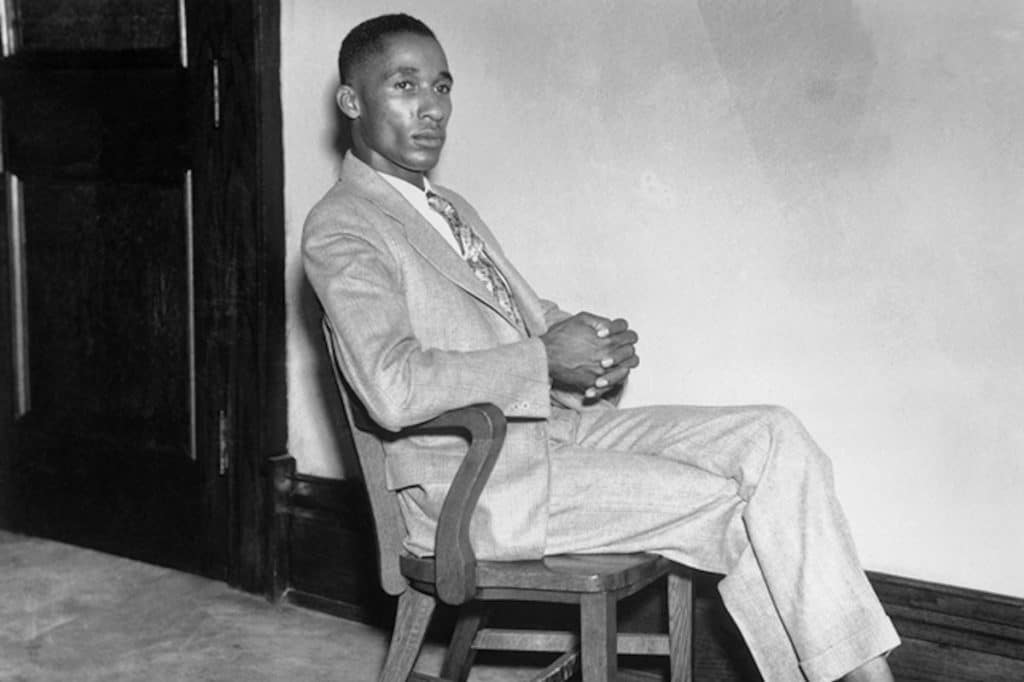
At the center of that legacy is Lloyd Gaines—a Black man whose fight to desegregate Mizzou’s law school became a landmark battle for civil rights, and whose disappearance remains one of the movement’s great mysteries.
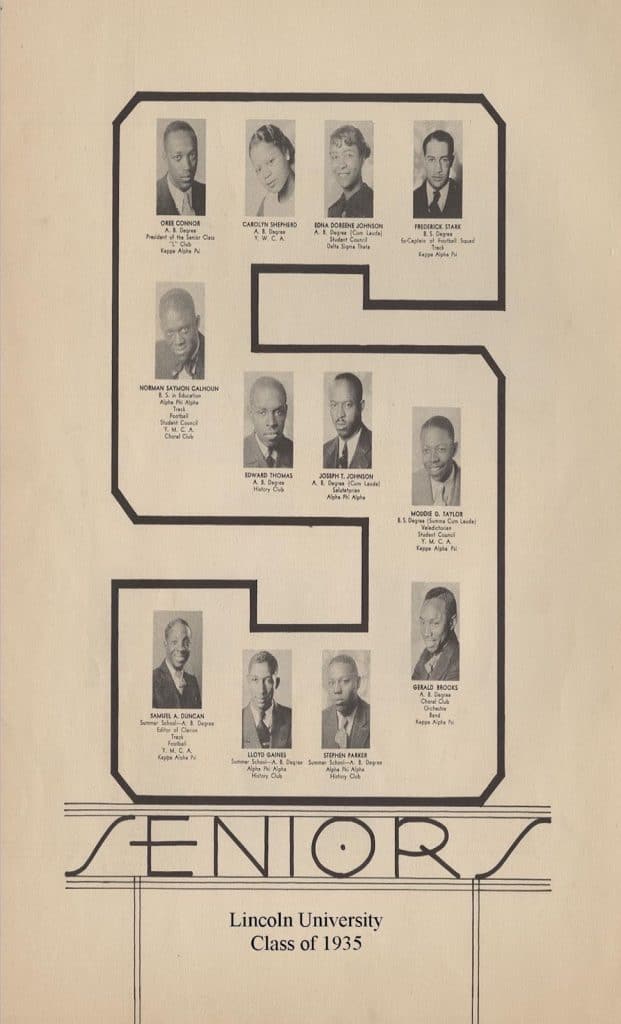
Lloyd Lionel Gaines was born in Mississippi in 1911, and he moved with his family to St. Louis right as he was starting high school. Studious and determined, he graduated from Lincoln University, an HBCU in Jefferson City, with honors in history and was class president. He then set his sights on the University of Missouri’s Law School—a choice that would put him on a collision course with Jim Crow and force Missouri to face its racist admissions policies head-on.
Gaines vs. Everyone
In March 1936, Gaines was denied admission to the University of Missouri’s School of Law because he was Black. His denial lit the fuse for a legal battle that would challenge Missouri’s segregated education system and echo across the nation.
The NAACP saw Lloyd Gaines’ rejection for what it was: a direct assault on Black dignity, equity, and justice. So they took Gaines’ case and challenged Mizzou’s decision to deny him admission into the only public law school in the state at the time. It’s no exaggeration to say that the entire state of Missouri was against Gaines going to the university. From law students to Missouri’s Supreme Court, the full weight of white supremacy came down on a Black man trying to pursue his dream. Missouri clung to the inherently discriminatory “separate but equal” doctrine in the state Constitution to justify Mizzou’s decision.
In February 1937, the Missouri Supreme Court upheld Mizzou’s decision and ruled that Gaines could apply to his alma mater—Lincoln University, which had no law school at the time—or accept the state’s offer to pay for his education in a neighboring state. It was a tactic Missouri routinely used to avoid integrating its own institutions, forcing Black Missourians to leave home for an education they were already qualified to receive.
But Gaines and the NAACP would not let this fly.
Instead, the NAACP argued his case on Nov. 9, 1938, in front of the Supreme Court. The Court’s decision was handed down just over a month later, on Dec. 12. In a 6-2 victory, it was ruled that Mizzou’s decision to deny Gaines’ admittance based on his race was unconstitutional. Chief Justice Charles E. Hughes called out Missouri for giving educational opportunities to its white residents but denying Gaines, who was just as qualified, the same rights. As Hughes wrote in the Court’s opinion:
The white resident is afforded legal education within the State; the negro resident having the same qualifications is refused it there and must go outside the State to obtain it. That is a denial of the equality of legal right to the enjoyment of the privilege which the State has set up, and the provision for the payment of tuition fees in another State does not remove the discrimination.
Chief Justice Charles E. Hughes
Mizzou immediately protested. Spokesmen from the university demanded that Lincoln create a law school for Gaines and that the state pay for him to go elsewhere in the meantime, anything to keep him off their campus.
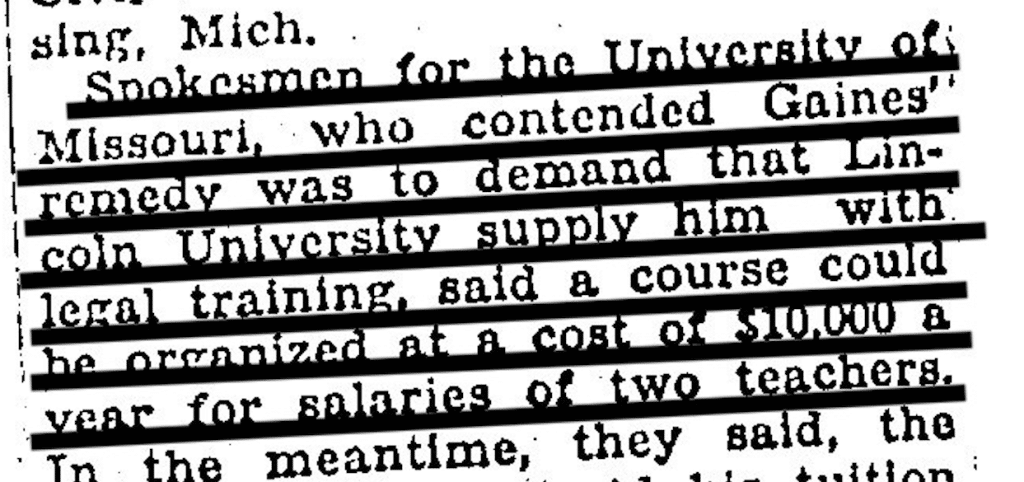
But here’s the catch in the Supreme Court’s ruling: Gaines had a right to legal education in Missouri, but Mizzou didn’t have to admit him. The state had two options: Mizzou admits him because there was no law school for Black students in Missouri, or the state could create a separate law school for him and his Black peers. Missouri opted for the latter. State legislators scrambled to create a law school for Lincoln, rushing to create a department from scratch within a year of the Supreme Court ruling, rather than admitting a qualified Black man into Mizzou’s law school.
Gaines Goes Missing
The last time anyone saw or even heard from Gaines was in March 1939. His last known whereabouts were at an Alpha Phi Alpha Fraternity, Inc. house on South Parkway in Chicago, now known as Martin Luther King Drive. Gaines was bouncing from job to job at the time, and the fraternity members started a money collection to help him out. On that fateful night, he told the housekeeper that he was going out to buy stamps, but never returned.
Gaines was scheduled to appear in court in October 1939 for another round of legal proceedings; this time, a hearing to determine whether Lincoln’s newly furnished law school — pieced together in an old hair tonic factory and cosmetics school in St. Louis—was truly equal to Mizzou’s then 100-year-old, modern-day law school.
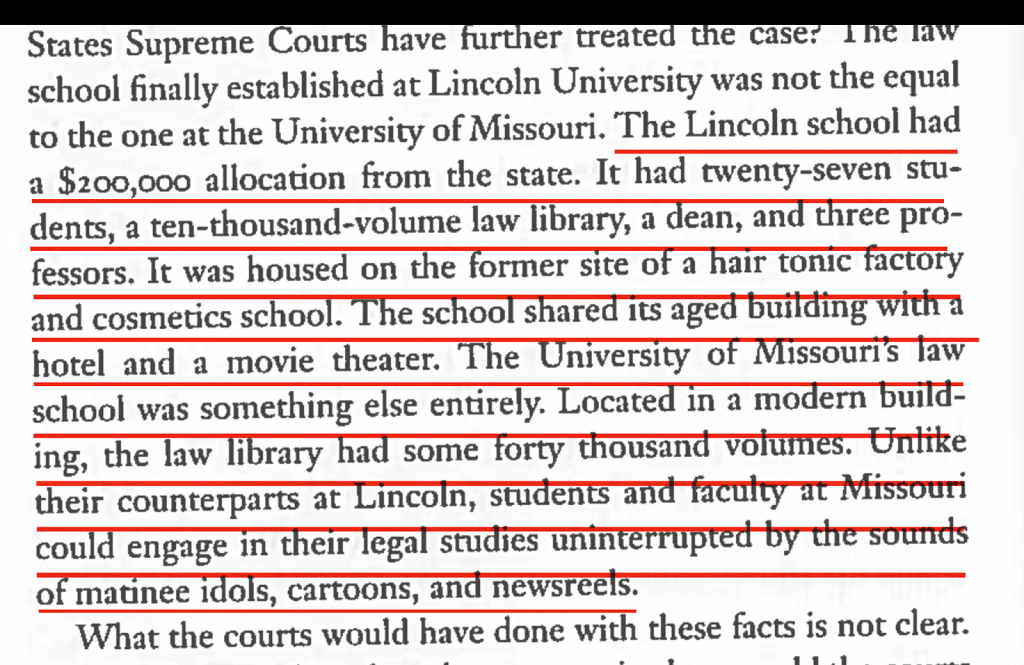
When Gaines failed to appear for his questioning on Oct. 7, the NAACP attorneys found out Gaines had been missing for months. His disappearance sent shockwaves through the Black community. His photo would be slapped on newspapers throughout the country in hopes that he would turn up. The Black press picked up the story by the end of the month, urging the public to help find him.
But Gaines never resurfaced. With no client and no witness, the NAACP was forced to drop the case. A historic legal battle, years in the making, collapsed in the absence of the man who started it.
While the Lincoln University Law School, which the state hastily put together to keep Gaines out of Mizzou, did have students who passed the bar, it only remained open for 16 years as Brown v. Board of Education desegregated universities across the country, and remaining programs at Lincoln were absorbed into Mizzou’s law program.
To this day, no one knows what happened to Lloyd Gaines.
The Legacy Mizzou Can’t Bury
In the decades since his disappearance, Mizzou has tried to patch over the past. The university named the Black Culture Center on campus after Gaines and presented him with an honorary law degree in 2006. There is also a picture of him in the university’s law library.
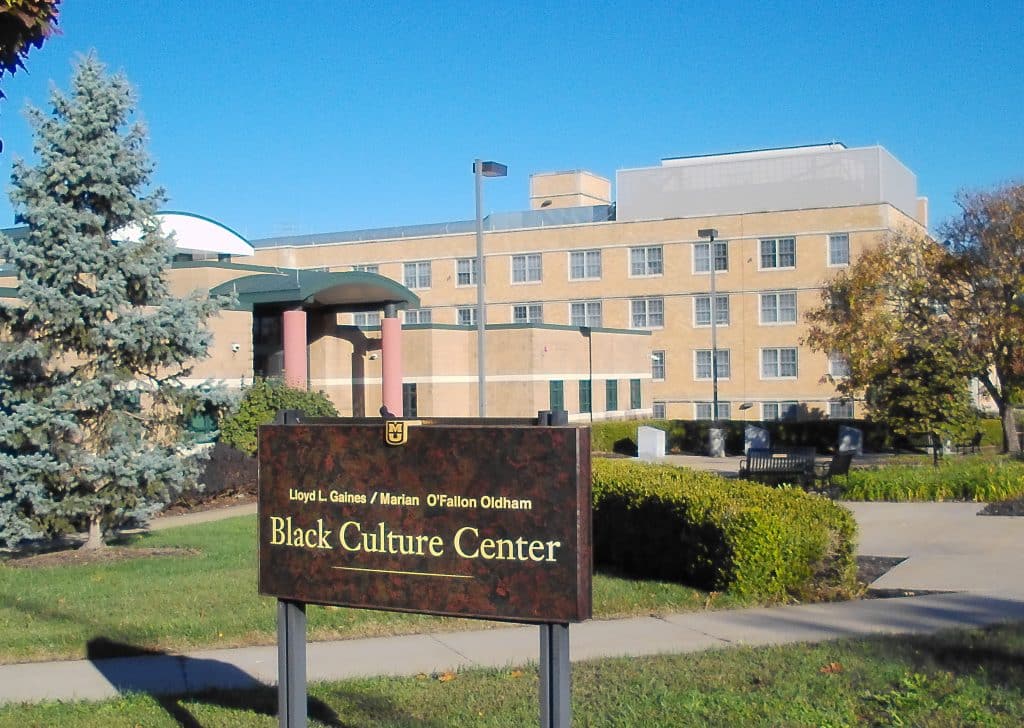
But no tribute can undo the dark history of how an entire state went up against one man who wanted to pursue a professional degree in the place he called home. No plaque can change the fact that Mizzou and Missouri have systematically shut out Black students long before 1950, when the first Black students were finally admitted into the university.
Though Gaines disappeared and ultimately never stepped foot in Mizzou’s law school, his fight cracked open a door, empowering other Black students to apply after him. One student who was inspired by his defiance was Lucile Bluford, another brilliant Black student who was denied admission due to her race, this time into the school’s journalism program. Like Gaines, she didn’t just accept the rejection; she sued the university for racial discrimination and kept fighting for her right to study journalism in her home state (although she never won her case). She also wrote about Gaines’ disappearance 20 years later, keeping his memory alive. Today, a dorm on the university’s campus is named after her.
Gaines’s undeniable legacy and historic impact cannot be censored. His fight forced Missouri to reckon with itself, and his name remains a radical imprint on Mizzou’s legacy. It took one Black man to change the trajectory of Mizzou forever, and his fight showcases that Black students have long left their mark on this campus and will do so for years to come.
Author

Related Articles
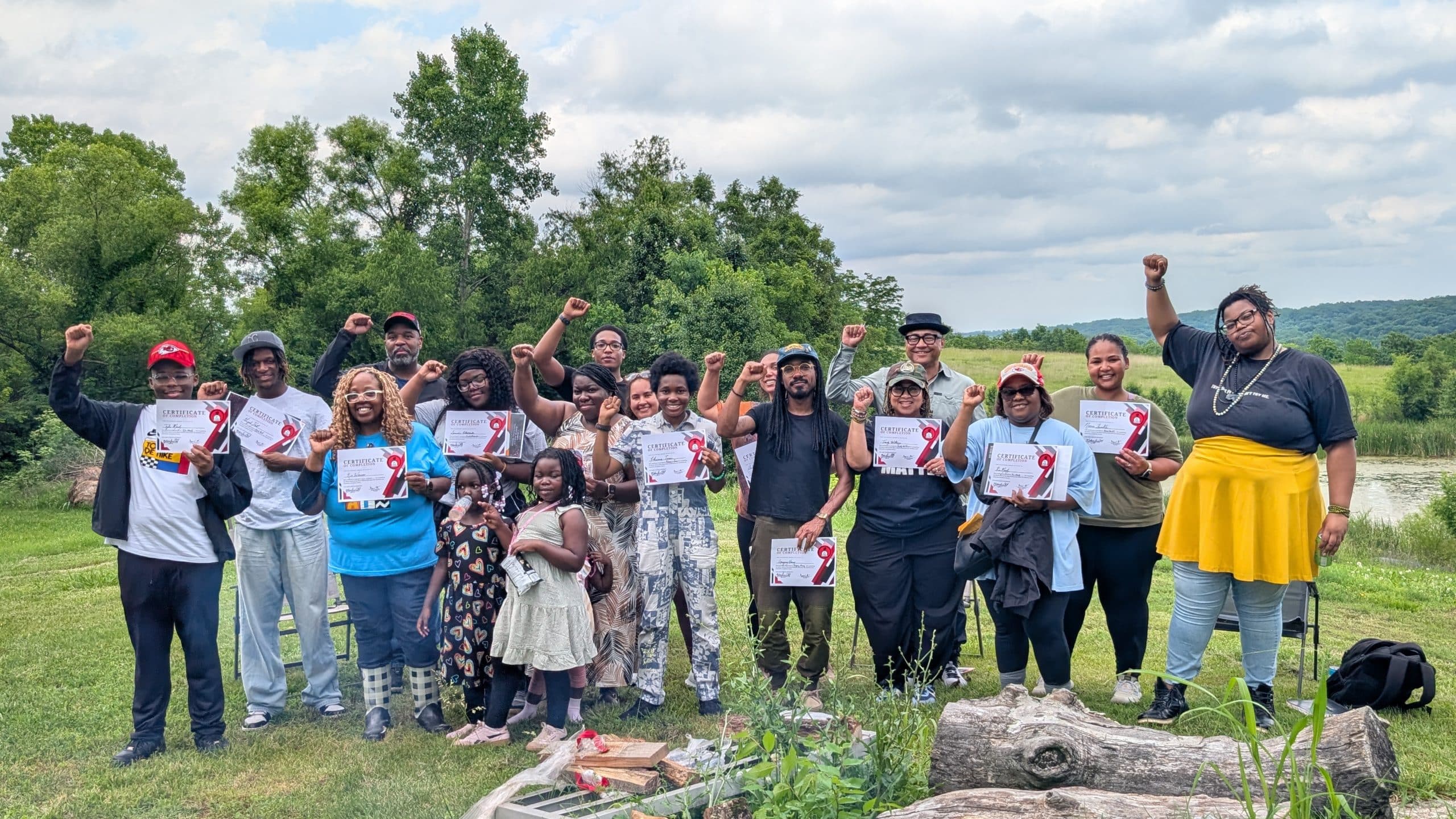
Kansas City’s Black Abolitionist Freedom School Is Working, and It Just Graduated a New Class of Organizers
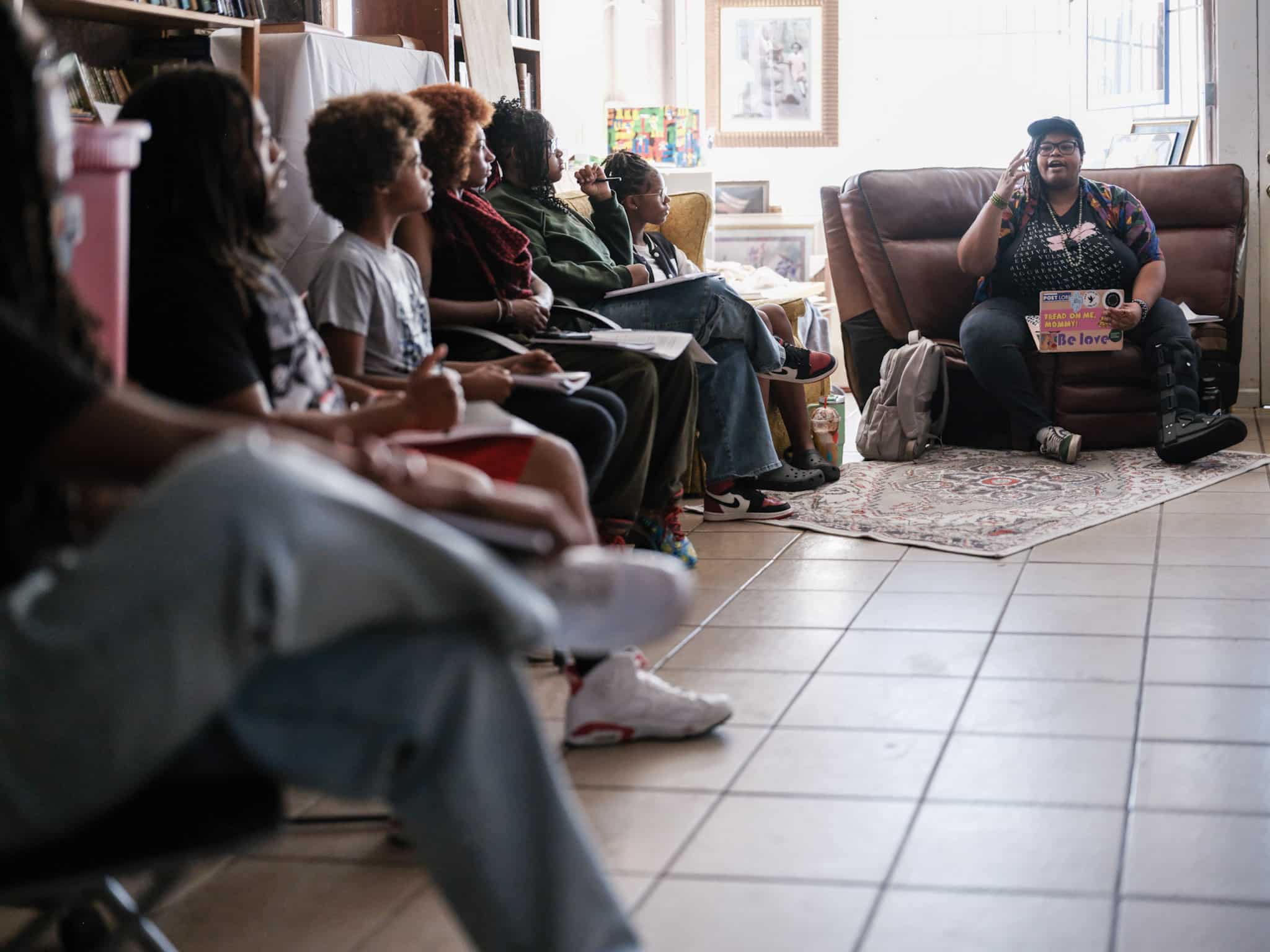
B-REAL Academy, the only abolitionist freedom school of its kind in the region, just graduated its third cohort, the largest and youngest yet. In one year since its launch it has held students from ten to eighty-one in the same room, in a city that is emerging as a new national organizing hub.
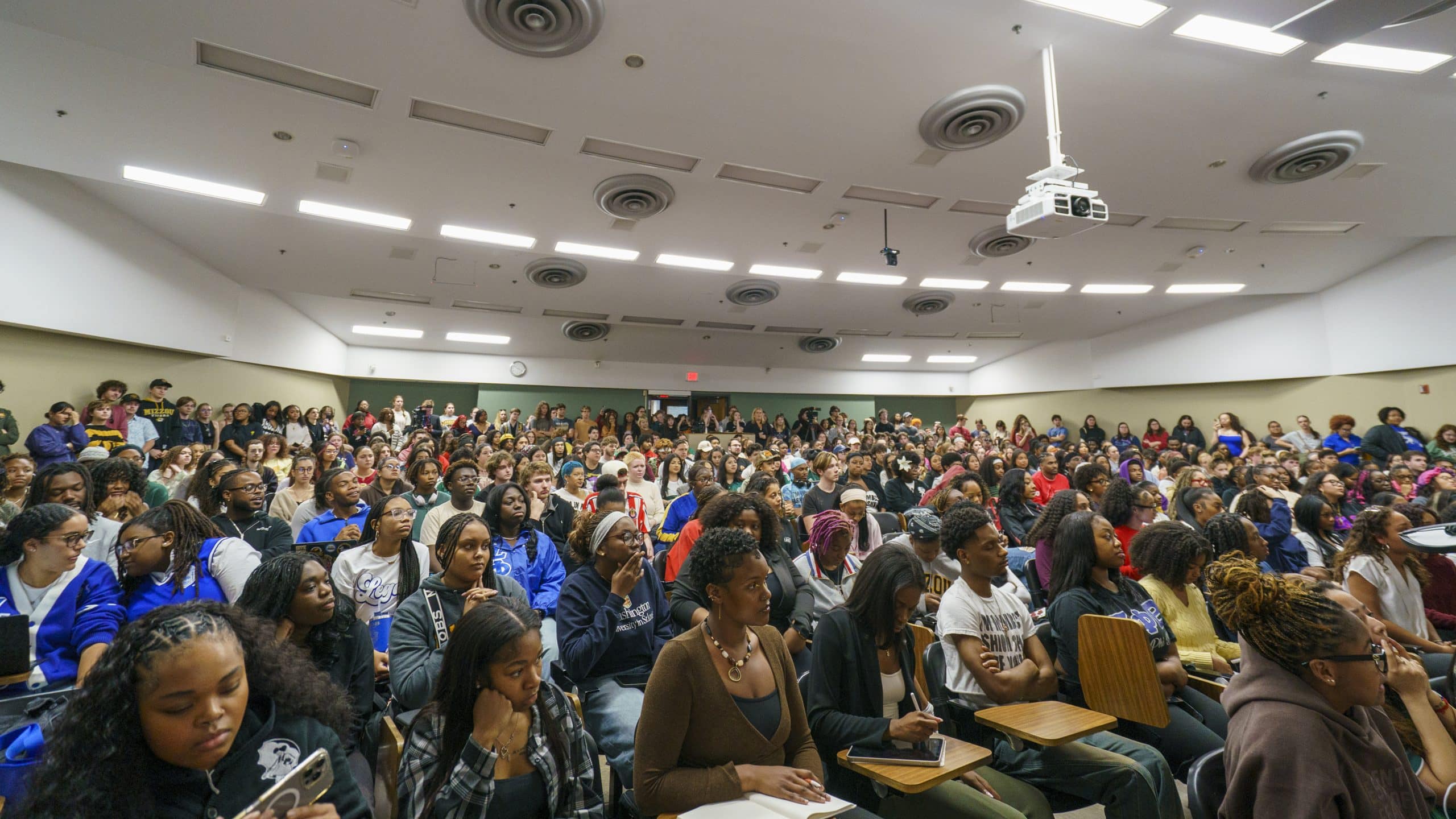
Mizzou Protected a Student Who Joked About Killing Black People. Then It Defunded the Only Black Student Government in America.
On Monday night, students packed every seat in the Schlundt Hall auditorium and lined the walls. More than a thousand watched on a livestream. They’ve toppled a Mizzou president before. They can do it again.
The Defender’s Abolitionist Freedom School Is Back — Cohort 3 Applications Now Open
The Defender’s Abolitionist Freedom School is accepting applications for Cohort 3. The 14-week organizer, activist & Black study training program for Black people across Missouri and Kansas launches this spring. Applications close February 21st.