(Credit: Vaughan Harrison/The Fountain City Files Podcast)
A QUIET VERDICT
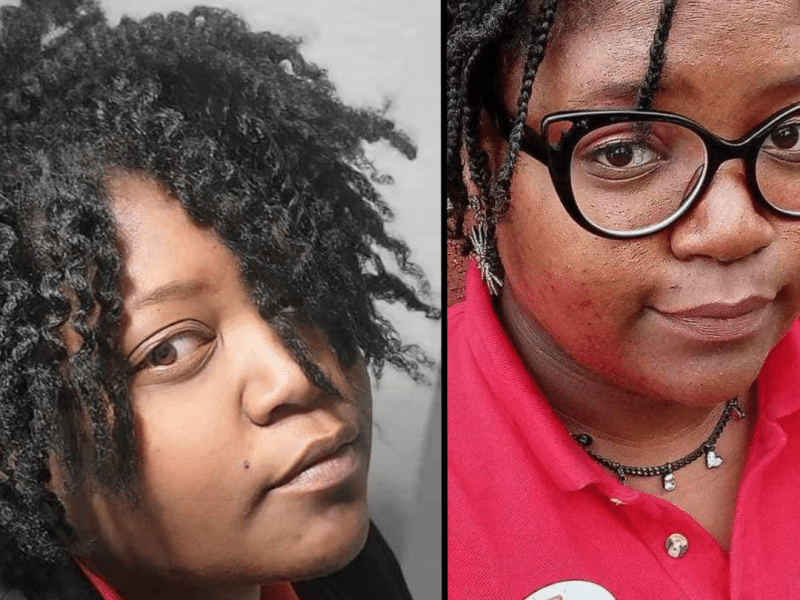
The last time Kris Wade had seen Jaynie Crosdale, it was the summer of 2022. By fall, Kansas City police were calling.
Had she seen her? Did she know where she might be?
Wade didn’t pause. “If nobody’s seen her,” she told them, “she’s dead.”
She was right.
Wade is the executive director of the Justice Project KC and a longtime outreach worker who has spent decades alongside women in Kansas City living at the intersection of homelessness, addiction, exploitation and street survival. She knew Crosdale well, since 2005, and she also knew what it meant when someone as visible as Jaynie suddenly disappeared.
In Kansas City, the process of reporting someone missing begins long before a police report is filed. It begins with a quiet verdict: a judgment made by a dispatcher, a detective, or a first responder about whether this disappearance counts. Whether this person’s life, their history, their habits, earn them urgency. For the most vulnerable — especially Black women and girls — that verdict has rarely gone in their favor.
The crisis isn’t only that people go missing. It’s that some people have to prove they’re worth finding.
The Bridge
When a Black woman goes missing in Kansas City, the clock starts, but not always with the police. Sometimes it starts with a phone call to a hotline. Sometimes it’s a flyer going up on Facebook at 11 p.m. Sometimes it’s a man in a safety vest, alone, knocking on doors in a neighborhood most people wouldn’t enter after dark.
That’s AdHoc Group Against Crime.
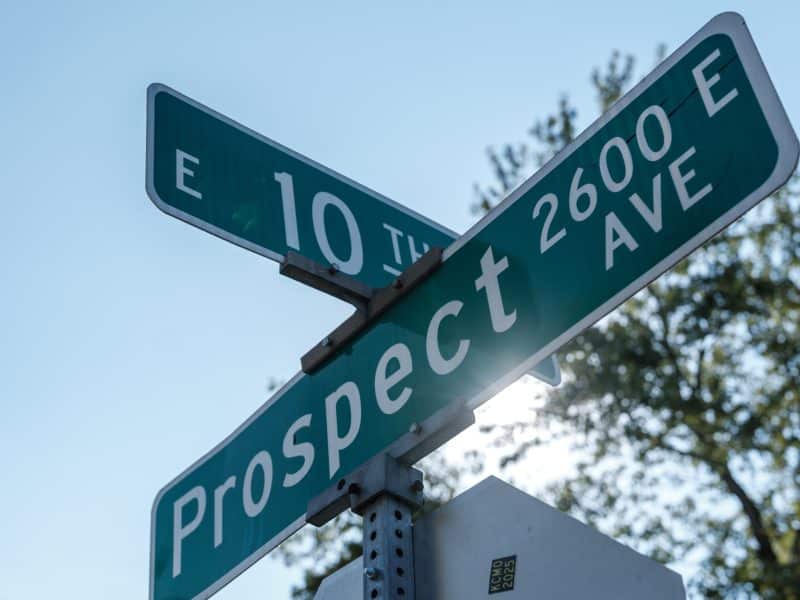
Founded in 1977 by civic leader Alvin Brooks, AdHoc began because a group of concerned Kansas City residents refused to accept the silence surrounding the murders of Black women along the Prospect Avenue Corridor — women whose deaths, as Adhoc president Damon Daniel puts it, the media and law enforcement dismissed as the consequences of “living their lifestyle.” Those cases were solved, but the conditions that made them easy to dismiss were not. So AdHoc wasn’t finished.
Nearly five decades later, AdHoc has grown into something far broader: grief counseling, emergency relocation, violence intervention, cognitive behavior programs, employment readiness, and a 24-hour hotline fielding everything from shooting responses to missing persons reports. But when your child hasn’t come home, you aren’t seeking a resource hub. You just need someone you trust to pick up the phone.
One of the people answering that call is Edward Burnett, AdHoc’s community health and intervention specialist, who is on the ground, helping families navigate missing-person cases when they feel police are not moving fast enough. He said missing-person calls are among the most urgent calls AdHoc receives.
“We’ll get a missing person call — it could literally be somebody just went missing, and they haven’t seen them since Christmas — and, in their words, ‘the police don’t seem to be doing anything,’” Burnett said.
For many Black families, that frustration is bound up in a long history of criminalization, overpolicing, and neglect.
“If the person that’s supposed to be helping you is the person you distrust, what can you do in those situations?” he said. “I think it’s not up to the Black community to fix that. I think it’s up to the police to do that.”
That communal distrust can shape what families are willing to share and when. Burnett said some relatives hold back sensitive information because they fear it will hurt more than help. They fear that if they disclose details about drug use, criminal records, mental health struggles, or street involvement, the information will be used against their loved one rather than understood as part of their vulnerability.
That is part of what makes AdHoc’s role so specific.
“Our mission statement is that we are that trusted bridge between the community and [the police],” Burnett said. “So that’s what I try to be.”
In practice, that can mean mediating between grieving families and detectives, going door to door in neighborhoods looking for answers, helping families organize canvases and searches, and keeping cases from slipping into silence.
That bridge doesn’t replace the system. But for many Black families in Kansas City, it’s the only way to reach the system at all.
ON PAPER
On paper, adults can be reported missing to KCPD immediately. But families and advocates say that, in practice, the disappearances of Black women are not always met with the same urgency as those of others.
Part of that gap, they say, is shaped by the stereotypes attached to Black women and girls: that they are unstable, irresponsible, caught up in drugs or sex work, or otherwise less worthy of immediate concern.
These stereotypes are built on dehumanizing assumptions. But even when Black women are navigating homelessness, addiction, mental illness or sex work, those circumstances are not reasons for less urgency. If anything, they are precisely what make them more vulnerable.
Advocates say that dynamic was evident in the case of Jaynie Crosdale. Wade described her as “pretty much a fixture on Independence Avenue” who was “out there 24/7.” Her life on the streets, along with struggles with addiction and mental health issues, made her deeply vulnerable. But also highly visible.
To Wade, that meant the very conditions that made Crosdale vulnerable also made her highly visible — and should have made her disappearance impossible to ignore, especially by police.
“East Patrol and Central Patrol have arrested her a million times for stuff,” she said. “You guys should know her like the back of your hand.”
Yet, after she went missing in 2023, KCPD labelled Crosdale as a “potential witness” in connection with the Haslett case instead of publicly treating her as a missing woman who could be in danger, implying her complicity rather than vulnerability.
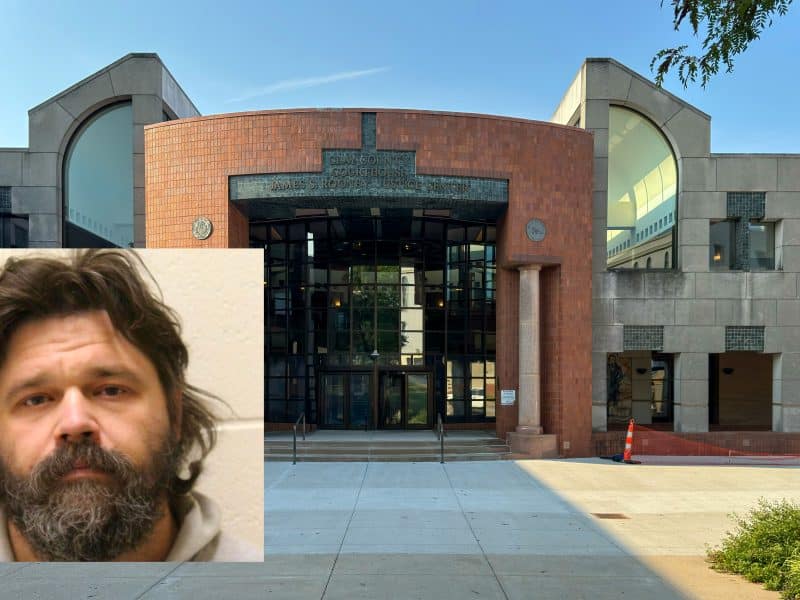
Haslett is now set to stand trial for the murder of Crosdale in October 2026.
Haslett will also stand trial in the kidnapping and torture of TJ, another woman whose disappearance was visible to the community long before it was treated with urgency by those sworn to protect her. After The Defender amplified community reports of women being abducted from the Prospect corridor in 2022, KCPD dismissed those reports as unfounded. Weeks later, TJ escaped from Haslett’s basement in Excelsior Springs.
To many, cases like Crosdale’s and TJ’s may feel extreme. But advocates say they are not anomalies. They are part of a broader pattern in which danger is not immediately recognized for what it is. Instead, vulnerability is too often read as instability, unreliability, or a matter of choice.
That logic is reflected in a softer barrier many families say they face when trying to report a loved one missing: the notion that an adult may be “voluntarily missing,” or has simply left on their own and does not yet merit urgent concern.
This is where AdHoc often steps in.
“There are detectives, lieutenants and sergeants that we can call directly and say, ‘Hey, this is AdHoc Group Against Crime, working with this family … Is there any information you can give me regarding this case, any sort of update?’” Daniel said. “And it’s reciprocated as well, in terms of us being able to say, ‘Hey, here’s the information that we heard … This is what the community has said.’”
For many families, even getting a case number can become a turning point. It is more than paperwork. It becomes leverage: proof that a report exists, something to reference when pressing for updates, and a tool AdHoc can use to help move communication forward.
That was part of what made Sirrena Truitt’s case so fraught. In 2022, after Truitt’s family began searching for her, relatives said they encountered roadblocks and dismissiveness from police. Her niece, Alois Johnson, said a detective asked, “Why do you care?” and suggested Truitt’s drug use and criminal history diminished the urgency of her disappearance. Her stepbrother, David Finnell, later said he was unable to obtain a case number during one interaction with police.
When the family did later receive a case number, police said the report had been “generated in error” and did not correspond to a missing-person investigation. Months later, after Truitt’s body was found, family members said they learned the case had been closed without their knowledge.
A snapshot
The same disparity in urgency is reflected, imperfectly, in the city’s own data.
Every day, KCPD publishes a missing persons analysis on its website in a PDF that breaks down active cases by race, sex, and age. It is, by national standards, a rare gesture toward transparency. Few departments publish anything this granular, this regularly. But the document carries a caveat buried in its own footer: totals may not match due to software misclassifying individuals. The numbers don’t always reconcile. And without a public archive of past reports, any single day’s snapshot exists in isolation, a photograph with no album. KCPD is publishing the data. What the data means, and for whom, is a harder question.
Even so, the snapshots we reviewed point to a clear pattern. Across 27 KCPD missing-person reports published between Jan. 21 and March 21, Black women and girls averaged about seven active missing cases per report date, accounting for roughly 30% of all active cases in the snapshots reviewed, despite making up just 14% of Kansas City’s total population. Black women and girls were listed as actively missing nearly twice as often as white women and girls on an average report date, about seven cases compared with about four. The disparity was even more pronounced among youth. Across these snapshots, Black girls were listed as actively missing about four to five times as often as white girls, averaging about six cases per report date compared with about two. Black girls also made up about 40% of all active juvenile missing cases on average across the snapshots reviewed.
Those numbers do not represent a census of every day in that three-month period, and they should not be read that way. But across the dates available, they show that Black girls appeared again and again as a significant share of the city’s active missing-person cases.
WHO CALLS FIRST WINS
Kris Wade has been doing this work longer than most people have known what to call it.
A trafficking survivor herself, Wade was recruited off a Chicago train platform at 18 by a man whose entire job was to find girls who had nobody looking for them. She eventually got out. Decades later, she has spent years on the streets of Kansas City doing outreach, walking women through court dates, training police departments, and sitting with people the system decided were not worth the paperwork alone and started carrying other people instead.
She has seen what happens when first contact goes wrong. Wade tells the story of a client who escaped a trafficking situation and did exactly what you’re supposed to do: Called the police. Told them everything. The problem was that everything, in this case, was extreme enough that two rookie officers decided it didn’t sound real. The client was trans, visibly traumatized, and describing things that most people, even cops, don’t have the framework to process. Waterboarding. Branding. Captivity. Instead of being treated as a victim, they were taken to a psychiatric unit. The police report noted they seemed psychotic. That they didn’t make sense.
That document followed them everywhere.
“Every time she tries to get help,” Wade says, “they think, oh, well, she’s crazy.”
This is what Wade calls the “bad paper trail.” It begins at first contact, in that initial moment when a traumatized person encounters a system that isn’t equipped to believe them. The report gets written. The label gets applied. And from that point forward, every institution that person touches inherits the verdict the first one rendered: unstable, unreliable, not credible.
This is why, Wade says, the question of who calls the police first is never just a procedural detail. “Whoever calls the police first wins.” She has watched abusers use this knowledge deliberately, calling in their victims before their victims can call in them. She has watched women leave in handcuffs when they should have left in a caseworker’s car. She has watched the phone call that was supposed to help become the document that made everything worse.
It is also why organizations like AdHoc become, for many Black families in Kansas City, the first call rather than the second. Not because the system is entirely beyond reach. But because the cost of reaching for it wrong, in the wrong order, at the wrong moment, can follow a person for years.
STILL HERE
Wade knew Jaynie Crosdale was dead before anyone confirmed it. She had been paying attention longer than they had.
Wade is still here. Still answering the phone. Still walking women through systems that weren’t built to see them.
Jaynie Crosdale was not hard to find when she was alive. Patrol officers had arrested her. Outreach workers knew her name. She was visible to anyone who was paying attention.
But visibility is not the same as value. And being known is not the same as being protected.
Jaynie Crosdale was not invisible to the people and institutions that could have protected her. And still, they failed to act on what her absence meant. For Black women and girls in Kansas City, that remains the deeper crisis.