This article is the first release of Power Grab: A Kansas City Defender investigative series on data centers and the communities paying the price for the AI boom. The piece includes reporting contributions from Cody Boston.
Daniel and Charity Moorehead moved to Bly Road in eastern Independence in 2022 from the suburbs with their four kids. Their home, on five acres, is a little taste of country right outside the city, surrounded by farmland and other homesteads on acreage.
Soon, it will also be surrounded by a data center.
Nebius, a Dutch tech company, plans to build a hyperscale data center off of Little Blue Parkway in Independence. The 400-acre development was purchased from Kansas City-based NorthPoint Development in December 2025 and was enthusiastically announced as “exciting news” on the city’s Facebook page before most residents had heard a word about it.
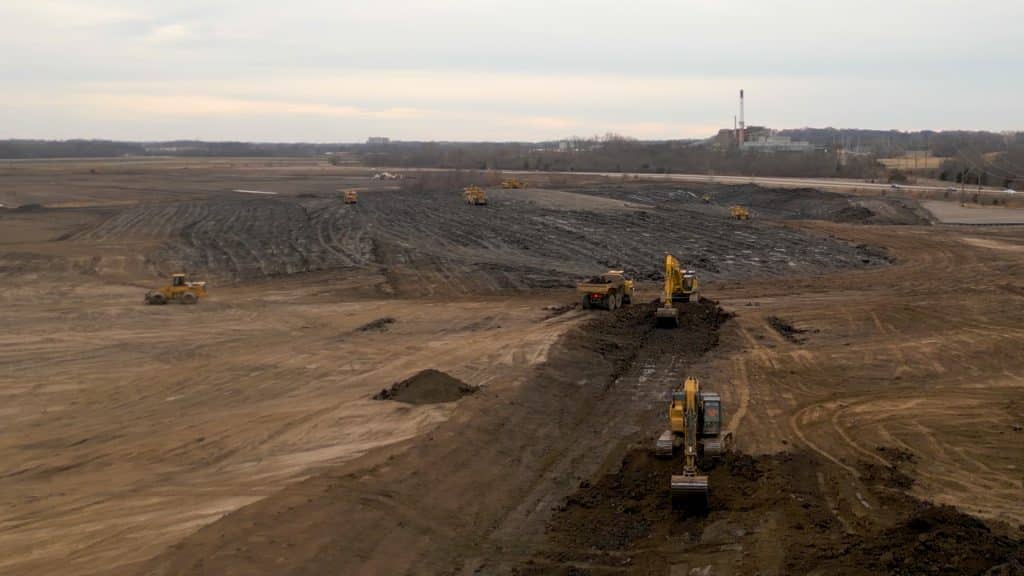
Moorehead and neighbors found out when construction crews started rolling in.
“[I] didn’t really worry about it until several million dollars’ worth of trucks started showing up and tearing up the land down at the bottom of the hill,” said Daniel.
Now, Bly Road residents like the Mooreheads are worried about what it will mean to live next to a data center. This particular development, located in the Eastgate Commerce Center, will be the first data center owned solely by Nebius in the United States. The four buildings that will eventually make up the Nebius data center will cover over 2 million square feet. While Nebius says they will use noise reduction technology, data centers are often notorious for the noise they emit, and the construction project is expected to continue into 2030. However, the Mooreheads are also concerned that they can no longer leave due to the impact on their property values.
“It just feels like we’re between a rock and a hard place,” said Charity. “If they build, we don’t want to stay here, and if they build, we can’t leave here.”
The decision isn’t just financial for the Mooreheads.
“We had a miscarriage this past year at about 14 weeks,” said Daniel. “My son is buried on our back property because we wanted to be close to him, and to think that we have to leave him behind if we were to leave it’s pretty challenging. So when I say blood, sweat and tears, it’s all three. We put a lot of effort into making this a wonderful place.”

The Mooreheads and their Bly Road neighbors aren’t alone in their concerns over the Nebius data center. Locally, the group Stop the AI Data Center in Independence has been hosting community forums, showing up to city council meetings and handing out flyers to alert Independence residents about the incoming data center project.
“We really didn’t expect that many people to show up,” said Rachel Gonzalez, one of the leaders of the community group, of their first meeting on January 21. “So much so that we only booked one side of the library room, and it turned out that so many people came that we had to buy the other side of the library.” She says around 75 people came to that first meeting.
Now, the group’s Facebook page has over 2,500 members, and hosted a community forum on February 10 that drew over 200 residents, as well as city officials and international news outlets.
Tax Breaks for Nebius
On March 2, the city of Independence will vote on a Chapter 100 charter for Nebius, which gives the company tax abatements for the $6.6 billion data center. The city will hold a $150 billion bond on the data center’s title, and Nebius will make PILOT payments, or Payments in Lieu of Taxes, to the city to pay off the bond.
Nebius will receive something more than 90% in tax breaks on the data center. In practice, that means Nebius will pay just ten cents on every dollar it would otherwise owe on the equipment, servers, and infrastructure inside the facility. For a $6.6 billion project, the savings for Nebius are enormous.
This is on top of the tax breaks that all data centers in the state of Missouri receive through the statewide Data Center Sales Tax Exemption Program. That program, created by the state legislature, exempts qualifying data centers from paying any state or local sales tax on construction materials, equipment, and utilities for up to 15 years. Data centers in Missouri saved more than $903 million through the program in fiscal year 2022 alone, according to reporting from KSHB. For Nebius, this means billions of dollars in equipment, servers, and construction costs that will go entirely untaxed by the state.
The PILOT payments laid out in the city’s Chapter 100 increase throughout the 20-year term of the agreement. Nebius will pay a smaller amount for the first 12 years of the abatement, with increases each year starting in year 13. According to city documents, the PILOT payments average around $32 million dollars a year.
In a February 26 meeting, assistant manager Charlie Dissell said that the Chapter 100 can also be a mechanism to make sure the data center follows the regulations put in place by the city.
“Those chapter 100 documents that are getting considered right now are very specific in that if they don’t meet that requirement, the city can pull the abatement from them,” said Dissell.
If Independence City Council adopts the Chapter 100, they’ll give away at least $6 billion in tax revenue to Nebius over the 20-year agreement.The city’s entire PILOT payments will earn a projected $640 million for the city by the end of the 20-year term.
In a February 23 public study session at Independence City Hall, Mark Coulter, local counsel for Nebius, answered questions from the city council about the project. When asked to explain if Nebius would proceed with the project without the tax abatements from Independence, he responded with a pre-prepared answer.
“Projects of this size are often highly collateralized, meaning the capital deployed is leveraged against anticipated future earnings,” read Coulter. “As such, they are not “capital rich,” regardless of capital expenditures made, and taxes cannot be financed. The current tax code does not contemplate such a large concentration of high-value property, and there are no other entities which would be taxed at such a rate. If abatements are not received it is unlikely the project would proceed at the same level of investment, if at all.”
In plain terms, Nebius is telling Independence that without massive tax breaks, the company will either scale back the project or walk away entirely. It is a familiar playbook in corporate tax incentive negotiations, where companies leverage the promise of investment to extract public subsidies from cities competing for their business.
“I don’t think any big corporation should get tax incentives,” said Mary Hoff, who also lives on Bly Road and whose house faces the data center development site. “If a big company with that kind of money comes in, they should be paying more taxes than any of us — people that live here.”
The 20-year tax subsidies proposed for Nebius bring up important questions around AI as an industry and whether there is an AI bubble — and if it bursts, what would happen to this project.
“There is a struggle in almost every corporation I know of to find actual value and return on investment in most AI expenditures right now and that does not seem to be changing anytime soon,” said resident Daniel Moorehead, who works in the IT field and utilizes AI at work.
Utility needs
Nebius’s Independence data center will operate on a closed-loop cooling system, meaning it won’t require as much water as similar data centers. According to the city of Independence’s website, Nebius’s water needs will require a total of six million gallons for the initial fill of the facility at full scale, plus an annual replenishment of 20%. The city’s website cites 400,000-640,000 gallons annually, or “roughly 1,753 gallons per day,” though this math doesn’t factor in the final scale of the project. In addition to the six million gallons for the initial fill, the annual replenishment actually equates to closer to 1,200,000 gallons per year, or over 3,200 gallons daily.
While closed-loop systems use less water than data centers that rely on evaporation, engineers and researchers have long documented a significant tradeoff: they require substantially more energy to operate. According to IEEE Spectrum, closed-loop designs that eliminate water evaporation can raise electricity demand, which in turn increases indirect water use at the power plants generating that electricity.
A 2025 analysis from the Uptime Institute found that the energy penalty varies widely by climate and design, but the pattern holds: what a closed-loop system saves in direct water consumption, it often shifts to higher power demand. In a region like Independence, where a natural gas power plant will supply that electricity, the water savings at the data center may simply move the water burden to the power plant.
The 1.2 GW of power that Nebius will eventually scale to is equivalent to the power usage of about a million households. For reference, Independence has about 55,000 households.That means this single data center will consume roughly 18 times more electricity than every home in the city combined.
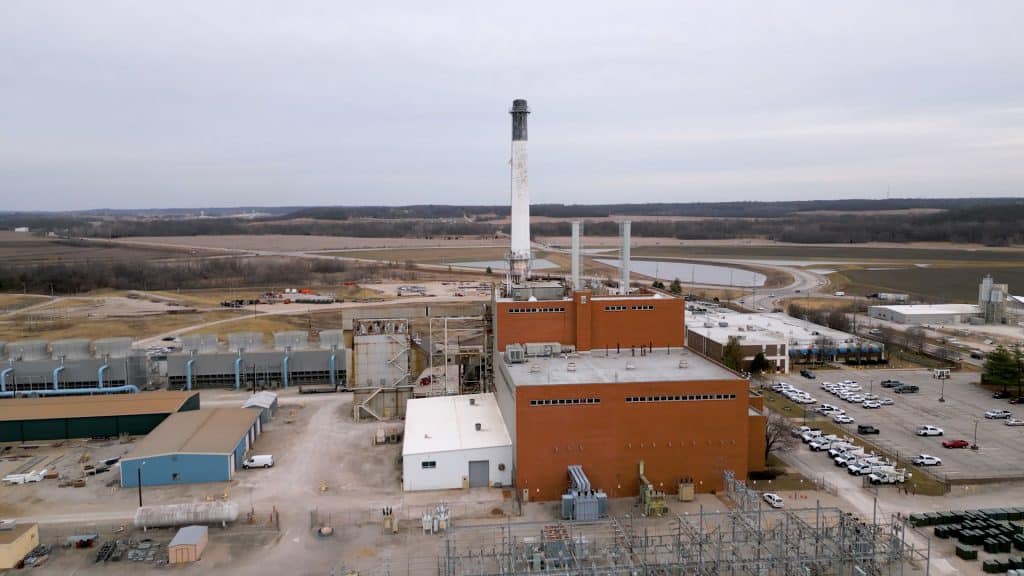
To power the Nebius data center, the Dutch company will be working with Independence Power and Light to reopen a power plant at the site of the decommissioned Blue Valley Power Plant, which was closed in 2020. When Blue Valley was operational, it could generate up to 90 MW of energy, so changes will need to be made so it can handle the needs of the data center, which are more than tenfold. According to the City of Independence’s website, Independence Power Partners (IPP) will privately finance the upgrades. Until that power plant is ready, power will be purchased from Evergy and NextGen. The city voted on the power purchasing agreement at their meeting on February 4. The city claims that Nebius will pay for all of its power usage and costs will not be shared with Independence Power and Light customers.
City officials have attempted to compare the data center to Nebius’s other projects abroad. At an Independence city council meeting on February 4, city councilwoman Bridget McCandless said she had spoken with the mayor of Mäntsälä, Finland, where Nebius has a data center.
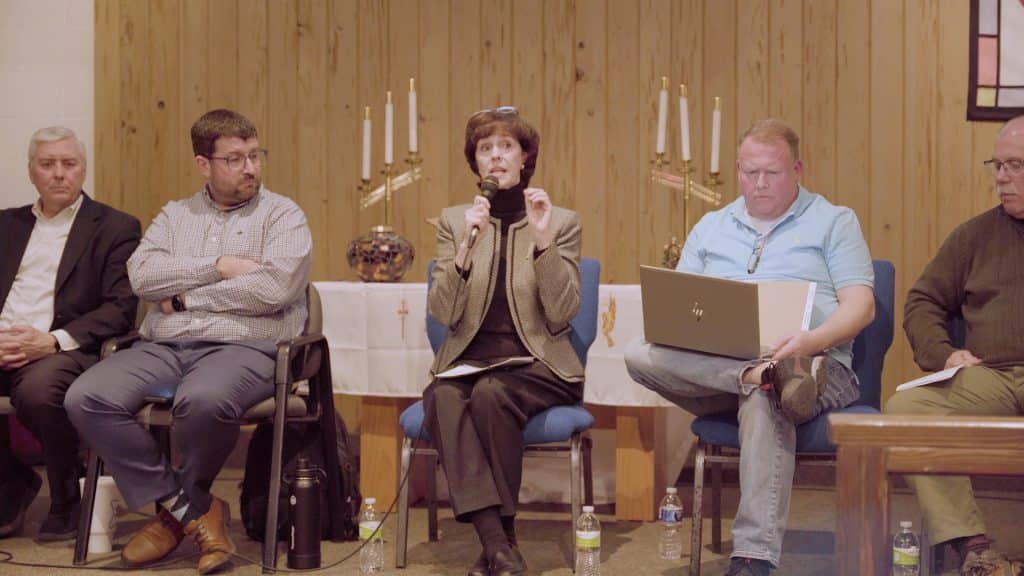
“I was happy that they felt like that had been a very good investment for their community,” said McCandless during the meeting. McCandless said the Finnish mayor reported no noise complaints and stable electricity rates since the data center opened, though she acknowledged the scale comparison has obvious limits.
Environmental Concerns
The data center’s proposed site is at Missouri Highway 78 and Little Blue Parkway. Less than a mile away sits the Little Blue Trace Trail, a Jackson County park that encompasses 15 miles of trails along the Little Blue River. It is one of the few green spaces in Independence. Many data center opponents are concerned about how the data center will affect the local birds and wildlife, and bald eagles nest at the Little Blue Trace Trail and is a popular attraction for visitors. Nebius says it plans to support “programs that protect and restore the Little Blue River through monitoring, clean-up efforts, and best management practices.”
“I sit on my screened-in back porch now, and I can watch the woodpeckers come, the blue jays, the cardinals, they all come and eat,” said Hoff, the Bly Road resident. “We had migrating birds come the beginning of December, right down here at the construction site….they come every year. They came this year and landed and didn’t have enough food…All these beautiful birds that were out there in the dirt looking for their food.”
A common concern around data centers nationwide is water pollution. A major Rolling Stone and Food & Environment Reporting Network investigation published in late 2025 documented how Amazon’s data centers in Morrow County, Oregon contributed to a severe nitrate contamination crisis in local groundwater. In that case, the data centers used evaporative cooling with water already polluted by agricultural runoff, and the evaporation process concentrated the nitrates to dangerous levels before the wastewater was discharged onto surrounding farmland and seeped back into the aquifer that 45,000 residents relied on for drinking water.
Former county commissioner Jim Doherty tested 76 residential wells and found that 74 of them exceeded federal safety limits for nitrates. Residents reported clusters of rare cancers, miscarriages, and kidney disease. A federal class action lawsuit has since been filed against major polluters in the area. While Amazon has disputed its role in the contamination, Oregon’s Department of Environmental Quality documented nitrate levels in local wells at more than seven times the state’s legal limit.
The situation in Oregon differs from what is proposed in Independence. Nebius’s closed-loop system would not discharge cooling water into the environment the way Amazon’s evaporative system did. However, the Oregon case illustrates the broader risks that massive data center operations can pose to local water systems, and why residents are right to demand transparency and independent monitoring before construction advances.
At the construction site of the Nebius data center in Independence, ground is being moved to mitigate flooding. On an FAQ page dedicated to the Nebius data center on the City of Independence’s website, the city has a list of potential questions from citizens. Under “Will the water used to cool the data center be discharged into the stormwater drainage system?” the city responds that no, it has adopted new standards.
“These standards require the installation of stormwater collection area (detention pond) to manage runoff from surrounding land and parking lots. These detention ponds do not receive, capture, or treat wastewater generated by industrial or commercial operations.” In a February 23 public study session at city hall, interim city manager Lisa Reynolds also stated that the city’s aquifer was not near the site of the data center, but near the site of its Courtney Bend Water Treatment Plant on the north side of town.
A Bipartisan Issue
Since returning to office, President Donald Trump has signed executive orders fast-tracking AI infrastructure development across the country, rolling back Biden-era safety regulations and clearing the path for companies like Nebius to build massive data centers with minimal federal oversight. The goal is to keep ahead in the global AI arms race. But in Independence, both conservative and liberal residents have come together to raise questions about what it means to live next to the developments that will power the AI revolution.
“The data center project in Independence has brought together all sorts of different people from different political backgrounds,” said organizer Rachel Gonzalez. “I have been surprised by the different people that have attended our events.”
At a time when the country feels divided politically, data centers are becoming a converging point for residents of all political backgrounds — especially in the Midwest — to come together to voice concerns and even open resistance. At least 25 data center projects were cancelled across the country in 2025, according to Heatmap News, and the movement is on the rise as word about site fights spreads. Just this month, a citizen group in Montgomery County near St. Louis filed a lawsuit against a proposed Amazon Web Services data center project.
Independence data center opponents feel frustrated that the city seems to be moving forward with a project that raises concerns for residents around environmental, health, utility cost, and tax concerns.
“I feel that the mayor and city council and even the school board that has voted on the resolution to support this data center are blinded by the potential dollar signs that this project could bring to a point that they aren’t considering the damages that it could do to our community, and especially the people closest to the data center,” said organizer Rachel Gonzalez. “I don’t think that any amount of money could make this deal make sense for Independence.”
The people who live closest to the site of the data center proposal, like the Moorehead family, feel that their concerns are being ignored over the potential tax revenue that the project could bring to Independence.
“This is our home,” said Daniel. “This is where our family lives, and that’s what our city council should be representing. And unfortunately, that’s not being taken into account. All they see is some sort of windfall for the city that I’m still unconvinced is going to be there. But they’re willing to do massive amounts of damage to local area to do that on all fronts. I think I’m pretty frustrated with the decision I might have to make.”
The Chapter 100 for the tax abatements for Nebius’s data center will be voted on by the Independence City Council on Monday, March 2 at 6 p.m. Public comment is welcome.