While Cutting Buses for the Poor, KCATA Signed a Secret Deal to Harvest Their Faces for a Private Company’s AI
A secret contract. No policy protecting riders’ data. The Defender obtained the deal KCATA signed to harvest bus riders’ faces for AI.
The KCATA Surveillance Files
EXCLUSIVE: While Cutting Buses for the Poor, KCATA Signed a Secret Deal to Harvest Their Faces for a Private Company’s AI
Officials described the program as dead before it began. A contract obtained by The Defender shows a signed, auto-renewing agreement giving a failing penny-stock company rights to riders’ faces, video, and voices, with no policy to protect the data and a clause keeping the deal quiet.
Background image: a security camera aboard a bus, via Getty Images.
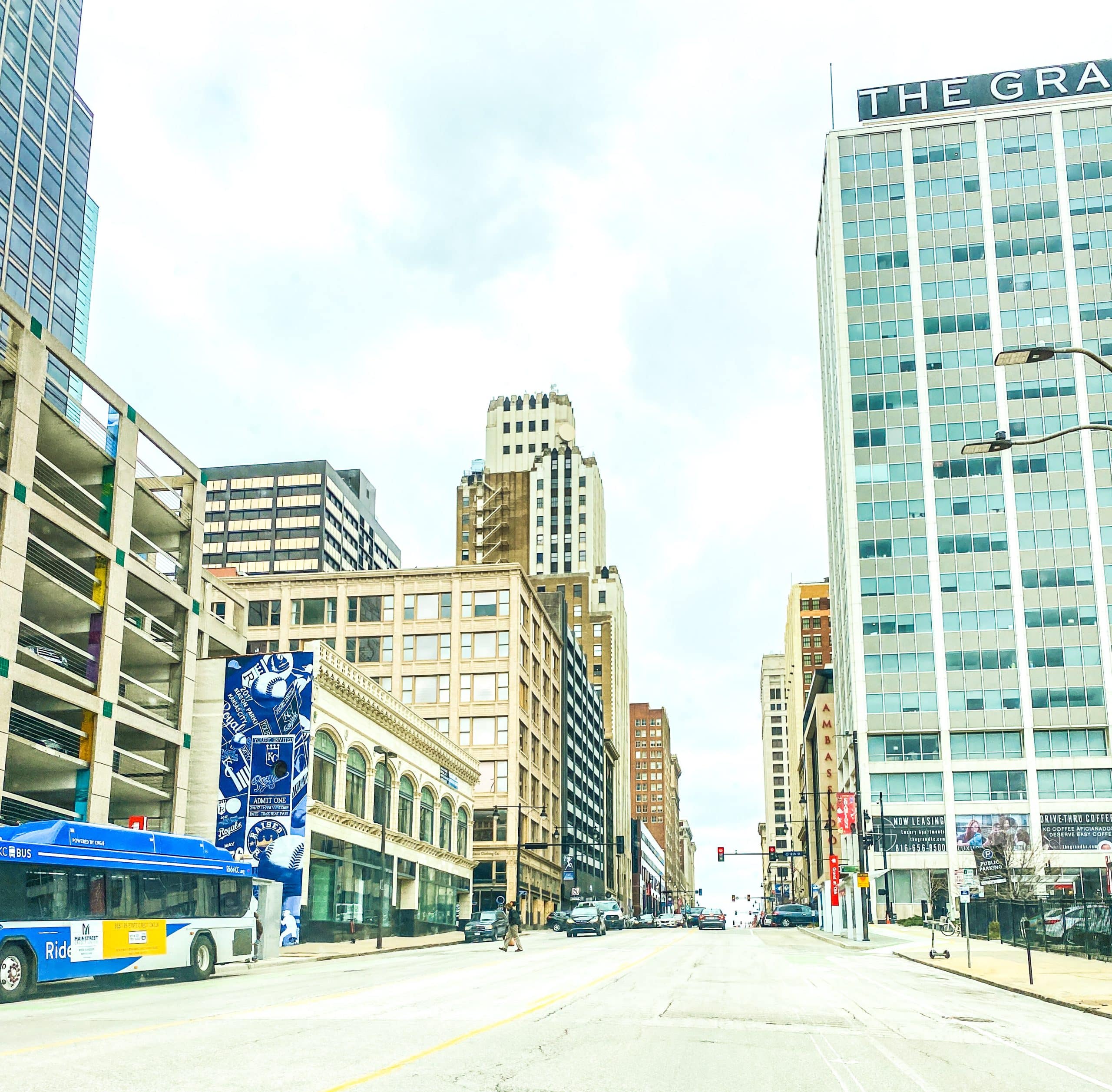
Every rider who steps onto a Kansas City bus does something ordinary. They tap a card, find a seat, and watch the city move past on the way to a shift, a clinic, a classroom. What almost none of them know is that their transit agency signed a contract that treated their faces as raw material.
On July 24, 2025, the Kansas City Area Transportation Authority entered a three-year agreement with SafeSpace Global, a Knoxville penny stock, to put artificial intelligence cameras on its buses. The contract, obtained by The Kansas City Defender, reads like a data deal. It authorizes the company to capture riders’ faces, generate facial recognition profiles from them, and use their video to train its algorithms, turning the daily commutes of Kansas City bus riders, disproportionately Black and disproportionately poor, into training fuel for a private company’s artificial intelligence. No previous report has confirmed whether a contract was ever actually signed. The Defender has now obtained it.
All along, KCATA’s public communication about the program has been fuzzy at best. It was finalizing in the summer of 2025, delayed by the time of the World Cup, and stalled by early summer 2026. The program kept drifting rather than ending, with no point at which the agency ever said, on the record, that it was off. The contract shows why the drift never resolved into a clean answer either way: it was still there, signed and binding, the entire time.
One year. Two records.
The contract remains in force through July 24, 2028. Then it renews itself.
KCATA signed the contract with no policy anywhere on its books to protect riders’ biometric information. The agreement barred both parties from saying anything publicly without written consent. And acknowledging that a pilot never launched is not the same as disclosing what was actually signed: a multi-year contract with AI training rights, audio capture, an annual renewal clause, and a data privacy addendum written in the language of nursing home surveillance. None of that was disclosed until The Defender obtained the document.
The effort to put AI cameras on buses was first sold to the public as security for the 2026 World Cup. That tournament has come and gone without them. What remains is the paper, and the paper is the story.
The contract never died
Had the pilot gone live, Kansas City would have been among the first American transit systems to scan riders’ faces, though no one may ever be able to confirm that. Small municipal contracts like this one are nearly impossible to track, said Sarah Hamid, Director of Strategic Campaigns at the Electronic Frontier Foundation. “These vendors rely so heavily on their growth model being these small municipal contracts, because it is very difficult to govern them across the board in the United States.”
AI features get added quietly onto camera systems cities already own, sometimes through nothing more than a vendor-side software upgrade no rider will ever see. New Orleans has already seen live facial recognition operating through a public-private partnership, and this month British Transport Police brought live facial recognition into the London Underground for the first time.
KCATA is the same agency that says it cannot afford to run the buses. Kansas City has fought over KCATA’s budget for years, ended six years of fare-free service in June by imposing a two-dollar fare and going cashless in a way that shut out riders without smartphones or bank cards, and has moved to cut routes and thin service for the people who depend on it most. The arithmetic beneath that fight is stark. KCATA’s operating costs climbed from about $84 million in 2021 to $113 million in 2024 while the city held its contribution near $71 million, and four times since 2025 the council has rescued service with last-minute money only after cuts were already announced.
As the routes shrink, the mayor has held transit funding at City Hall while riders organize against the losses. In the words of Adam Hollis, lead of KC DSA’s Automated License Plate Reader (ALPR) Task Force, “Law enforcement in the KC metro have spent millions of dollars in taxpayer money on mass surveillance over the years, and it has now escalated to funding AI facial recognition for public transportation.” An institution pleading poverty on service nonetheless signed a multi-year facial recognition contract. That agreement was signed by SafeSpace chief executive Scott Boruff and by Frank White III, then KCATA’s president and chief executive. Its initial term runs three years and renews on its own each year after that, meaning it is a binding, multi-year contract, executed and filed away, and the riders it covered were never told it existed.
What the contract authorized
The core of the document is its data privacy addendum, which spells out what SafeSpace would collect. The categories are both specific and biometric. Facial features and facial templates. Photographs and video frames used to generate facial recognition profiles. Infrared and depth data. Metadata recording each rider’s entry, exit, movement, and location. The agreement defines the material it gathers as recorded video and audio, which means the system was built to listen as well as to watch.
- FACIAL FEATURES AND FACIAL TEMPLATES
- PHOTOGRAPHS AND VIDEO FRAMES FOR FACIAL RECOGNITION PROFILES
- INFRARED AND DEPTH DATA
- RECORDED VIDEO AND AUDIO
- ENTRY, EXIT, MOVEMENT, AND LOCATION METADATA
Further, its language describes tracking people through a “facility,” naming hallways, entrances, and common rooms, the vocabulary of the nursing homes where SafeSpace got its start. KCATA appears to have signed a template built for monitoring residents in care facilities and pointed it at the riding public of a major American city.
“facility” … hallways, entrances, and common rooms
Then there is what the company could do with what it gathered. A provision in the agreement’s eleventh section grants SafeSpace the right to use riders’ data, in de-identified form, to train its algorithms and to feed shared and aggregated analysis. Access to that data would reach beyond SafeSpace to what the contract calls its “assigned operators and/or other service providers,” a category the document never names.
“assigned operators and/or other service providers”
Hamid describes the business logic to that clause. “A lot of these companies are pre-IPO, so they’re focused on three things. They’re focused on market penetration, they’re focused on product differentiation, and they’re focused on valuation. And valuation includes the data that they own,” she said. “They’re trying to find novel ways to own data, claiming ownership over training data, claiming ownership over intermediary products, and planting their flag in the space as early as possible to make sure that they can inflate their valuation.” For a company whose most recent quarter produced $11,258 in revenue, the faces of Kansas City’s riders may be the most valuable thing it holds.
No rule on the books
The Defender is awaiting KCATA’s response on whether it has any policies specific to this technology. Thus far, it seems the only relevant rule the agency maintains is a boilerplate computer-use policy, and it doesn’t address AI camera systems.
The lack of documented policy is more dangerous for a transit agency than almost anywhere else in local government. “Biometric data is quite different, because that allows for targeted identification,” Hamid said. “We don’t even know, for instance, if warrants would be required [to access rider data]. We don’t understand what the data governance structure is going to be here whatsoever.”
The company Kansas City handed all of this to is not an established name in public safety. SafeSpace Global is a penny stock trading around eleven cents, carrying an accumulated deficit of $23.7 million and a going-concern warning in its own filings that it may not survive the year.
Its chief executive previously ran an oil company the Securities and Exchange Commission charged with accounting fraud. The Defender’s earlier investigation traced how the company sold the Kansas City relationship to investors as proof its business was real, though the contract barred either party from issuing press releases about the deal without the other’s written consent. Whether KCATA blessed SafeSpace’s promotion of the Kansas City relationship, or whether a struggling company publicized a government contract it was bound to keep quiet, is something neither party has explained.
No one outside the company appears to have ever tested the technology Kansas City signed onto its buses. Hamid and colleagues who reviewed SafeSpace at The Defender’s request could locate no independent third-party benchmark of its facial recognition algorithm, no evaluation by the National Institute of Standards and Technology, and no published measure of how it performs across race or skin tone.
Signed, then quiet
Chuck Ferguson, KCATA’s interim chief executive, says that the program never got off the ground. Missouri declined to fund the program over civil liberties concerns with the facial recognition component. Because the state money KCATA was counting on to pay for the pilot never arrived, Ferguson wrote in correspondence obtained by the Defender, no cameras captured anyone and no data ever changed hands. That claim has not been independently verified. Yet, three facts are not in dispute. The contract was signed. It authorized everything above. And for a year, none of it appeared anywhere in the public record.
Ferguson confirmed in the same correspondence that the signed agreement contained data-sharing terms, and said KCATA does not share rider data unless it is tied to a criminal investigation by the appropriate authorities. The contract itself anticipated that footage could be produced in state or federal investigations, and specified that SafeSpace bore no responsibility for how any of that data was retained or handed over.
In July, the Defender requested information from KCATA regarding its AI surveillance data sharing programs, criteria, and decision making, and has yet to receive a substantive response. We have emailed questions to Ferguson twice for additional clarification and received no response.
Read the document
The executed agreement runs 33 pages: a Master Services Agreement, a Statement of Work, and a Data Privacy Addendum. Five of its clauses are excerpted below, verbatim, with a plain-language note on what each one does. The full document follows.
“The Term shall automatically renew for successive, additional periods of one (1) year … unless either Party gives the other Party written notice of termination at least thirty (30) days prior to the end of then current Initial Term or Renewal Term.”
What this clause does
The initial term runs three years, through July 24, 2028. After that the contract renews itself annually unless one side sends written notice thirty days ahead. Doing nothing keeps it alive.
“Neither Party may issue press releases relating to this MSA without the other Party’s prior written consent.”
What this clause does
The clause that kept the deal quiet. Neither the agency nor the company could announce it without the other’s written permission.
“SafeSpace Global may also process de-identified Customer Data for algorithmic training, as well as for shared or aggregated data analysis and reporting purposes.”
What this clause does
Customer Data is defined in Section 1.5 as the recorded video and audio the cameras capture. This sentence is the AI training right.
“SafeSpace Global is not responsible for Customer Data retention or production in litigation, state or federal investigations, or for any other purpose”
What this clause does
If footage ends up in a state or federal investigation, the company bears no responsibility for how that data is retained or handed over.
“Residents of the data exporter’s business … Room or unit number … Behavioral patterns (e.g., fall detection, elopement alerts) … movement and location within the facility (e.g., hallway, entrance, common room)”
What this clause does
The addendum’s categories of people are employees, residents, and guests or visitors, with fields for room numbers, fall detection, and elopement alerts. This is the paperwork of a nursing home, signed by a transit agency.
Open the full contract as a PDF
The riders in the frame
Now, KCATA is turning to DOJ funding. By its own interim chief executive’s account, KCATA received a DOJ grant for Shot Spotter (or a like system) that claims to detect gunfire and alert police, as well as a grant for an AI camera project. ShotSpotter’s record is itself extremely contested. When Chicago’s inspector general reviewed more than 50,000 of the system’s alerts, evidence of a gun-related crime turned up in roughly nine percent of them.
The amount of funding for the DOJ grant is $1.031 million, but federal money arrives with obligations of its own. “Sometimes those grants have requirements for entering into shared task forces, entering into shared databases,” Hamid said, agreements she urged the public to “investigate deeply.” What KCATA has agreed to in exchange for its $1.031 million is a question the agency has not answered.
So what happens when these systems fail? The inaccuracies and misidentification rates of facial recognition technologies are perhaps among the most well documented technological harms of the past decade.
In 2019, the National Institute of Standards and Technology tested 189 facial recognition algorithms and found that Black and Asian faces were up to one hundred times more likely to be falsely matched than white faces.
The Innocence Project counts at least seven people wrongfully arrested off a facial recognition match, six of them Black, among them Robert Williams, handcuffed on his front lawn in Detroit in front of his wife and daughters, and Porcha Woodruff, arrested for carjacking while eight months pregnant. Missouri itself has already named the danger. When the state’s Supreme Court struck down St. Louis’s red light cameras in 2015, the gap between the person the camera saw and the person who received the charge sat at the center of the case.
And the London trials that preceded this month’s Underground rollout scanned more than half a million faces and produced exactly one alert. It was a misidentification.
British Transport Police mainline station trials preceding the London Underground rollout.
KCATA’s original justification of whose facial recognition data would be shared was narrow, a watchlist of banned riders and missing persons. Paige Collings, an attorney and digital policy activist at the Electronic Frontier Foundation and a board member at European Digital Rights, has tracked live facial recognition on both sides of the Atlantic. Those lists, she told me in an interview, never stay what they claim to be. Sometimes people land on them as victims rather than suspects, or through prints taken fifteen years ago in cases where they were cleared, and when the technology gets a match wrong, the burden falls on the person in the frame. “You’re effectively guilty until you’re proven innocent,” she said, “and being proven innocent requires you to pass over more information to the state.”
PAIGE COLLINGS, ELECTRONIC FRONTIER FOUNDATION
The fight is already organized
None of this is settled or beyond reach. The fight over what Kansas City’s buses become is actively underway.
Sunrise Movement KC has spent years pressing the city to fund the buses and welcomes riders ready to join that work. KC DSA’s ALPR Task Force is mapping and contesting the surveillance cameras already on Kansas City’s streets, and anyone with a phone and a bus window can help them do it. In August, KC DSA hosted an ALPR Week of Action and continues to organize through its ALPR Task Force. And KCATA’s Board of Commissioners meets monthly and takes public comment, which means any rider can stand up in that room and ask the questions this agency still has yet to answer.
While the World Watches is The Kansas City Defender’s ongoing investigation into what the 2026 World Cup built in its host cities: the jails, the surveillance, and the displacement the spectacle was designed to keep out of frame. This project was completed with the support of a grant from Columbia University’s Ira A. Lipman Center for Journalism and Civil and Human Rights in conjunction with Arnold Ventures.
Did KCATA sign a facial recognition contract for its buses?
Yes. KCATA signed a three-year, auto-renewing Master Services Agreement with SafeSpace Global on July 24, 2025, authorizing AI cameras that generate facial recognition profiles of riders. The Defender obtained the executed contract.
What data would SafeSpace collect from Kansas City bus riders?
Per the contract’s data privacy addendum: facial features and facial templates, video frames used to generate facial recognition profiles, infrared and depth data, audio, and metadata on riders’ entry, exit, movement, and location.
Could SafeSpace use riders’ data to train its AI?
Yes. The contract permits SafeSpace to process riders’ de-identified data for algorithmic training and for shared and aggregated analysis, and grants data access to unnamed “assigned operators and other service providers.”
Does KCATA have a policy protecting rider biometric data?
No policy specific to AI cameras. KCATA’s interim CEO could point only to an internal employee technology-use policy and acknowledged it was not written for AI camera systems.
Did the program actually launch?
KCATA says it did not, because state funding never arrived. That claim has not been independently verified. The signed contract itself is confirmed.
Was the KCATA facial recognition contract kept secret?
The contract barred either party from issuing press releases without the other’s written consent, and it appeared nowhere in the public record for a year while officials described the program as stalled. It became public when The Kansas City Defender obtained the executed document.
Author

Related Articles
Kansas City Killed the Data Center. The Tax Scheme It Was Feeding Is Still Alive
A Miami fund bought a 126-year-old downtown building, quietly signed away the right to demolish it, then asked Kansas City for permission to demolish it anyway and build a 20-story data center. A leading legal scholar reviewed the paperwork The Defender obtained and called it by its name. This week, Kansas City said no.
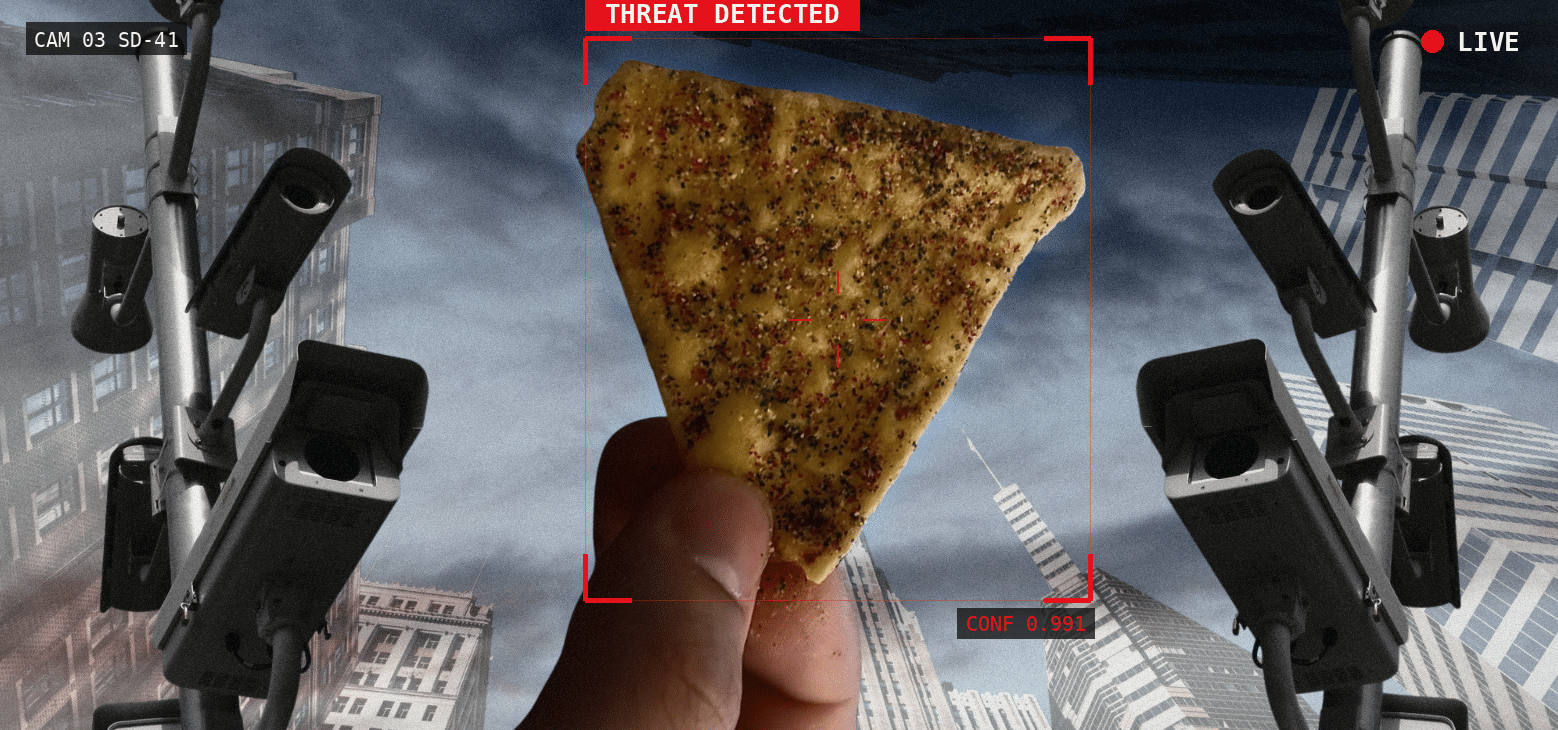
Eight Police Cars Swarm a Black Teen, Guns Drawn, Over a Bag of Chips. The AI That Called Them Is Coming to Schools Nationwide
From Baltimore to Kansas, states are pouring millions into militarized surveillance software for schools. An investigation into the AI that sent armed police after a Black teen holding a bag of Doritos.
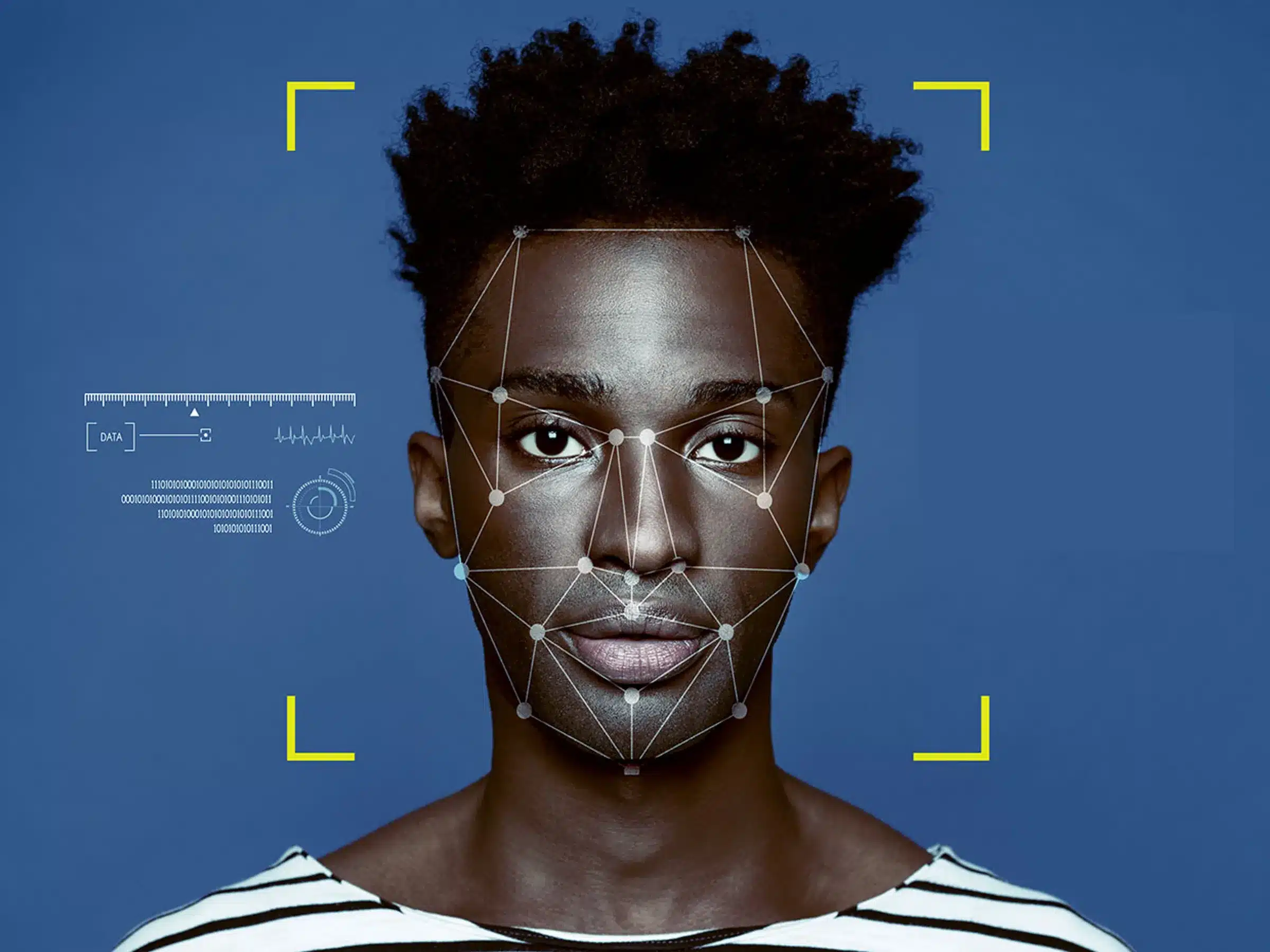
Kansas City Prepares to Launch America’s First Public Bus Mass Biometric Surveillance Program
Kansas City wants to be the first city in the country to scan the face of every person who boards a public bus. The riders it would test the technology on are its poorest and its Blackest, and the company behind the cameras is a penny stock fronted by a man whose last company collapsed in fraud.