The dogwood trees were blooming on my aunt’s block the week Kansas City lost a child it never learned to claim. I was nine. My aunt’s house off E 62nd Terrace was where everybody ended up on the weekend. Music loud enough to reach the street, meat on the grill, my cousins and I running between the kitchen and the porch and the front lawn, all of us sweating and laughing in the thick humidity of a gathering storm. A life that was not amazing, but was mine and was sweet enough.
A boogeyman arrived in Kansas City that spring, and he did not leave for four years.
The TV was on in the living room. I walked past it and caught the fragmented edge of a news anchor’s words. A child’s body. Some woods at 59th & Kensington.
Before I could put the pieces together fully, the channel changed and the energy of the adults in the room shifted. That’s how I first knew something was off. Through the glance adults exchange when they think you aren’t watching. The whispers that cut off the second you catch on. By the time the pieces assembled themselves in me, they had already begun to form a shape that my nine-year-old understanding could not hold. That shape has lived outside of me ever since.
A young girl. Her head cut from her body. Left in the woods two minutes from where I had been playing outside. And no one, it seemed, was willing to stand up and say her name.
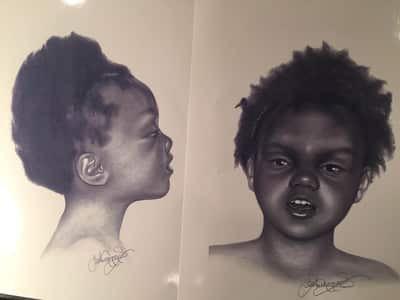
A boogeyman had arrived in Kansas City that spring, and he would not leave for four years. Parents stopped letting their kids outside after dark. The whole city held its breath, and some of us have never fully exhaled. This story reached every corner of Kansas City. Mention Precious Doe on social media, even now, and people surface from everywhere. “I remember when…”
Everybody remembers. Where they were. What they were doing. Who they were with. Everybody still carries it in their stomach, that low-hanging dread that didn’t lift then and hasn’t lifted since. She was a Black child found in a Black neighborhood, and the city could not bring itself to learn her name.
Four Years of Silence
In the evening of April 28, 2001, uniformed KCPD officers responded to 59th and Kensington on a call and came up on a child’s body- naked and decapitated. Three days later, two blocks east in the same woods, a searcher named Billy Stegall found her head in a knotted black trash bag. Dr. Thomas Young, Jackson County’s forensic pathologist at the time, has spent the years since writing about what he calls the Sherlock effect: the myth that a clever detective can reason backward from evidence and evidence alone. He couldn’t. No one could.
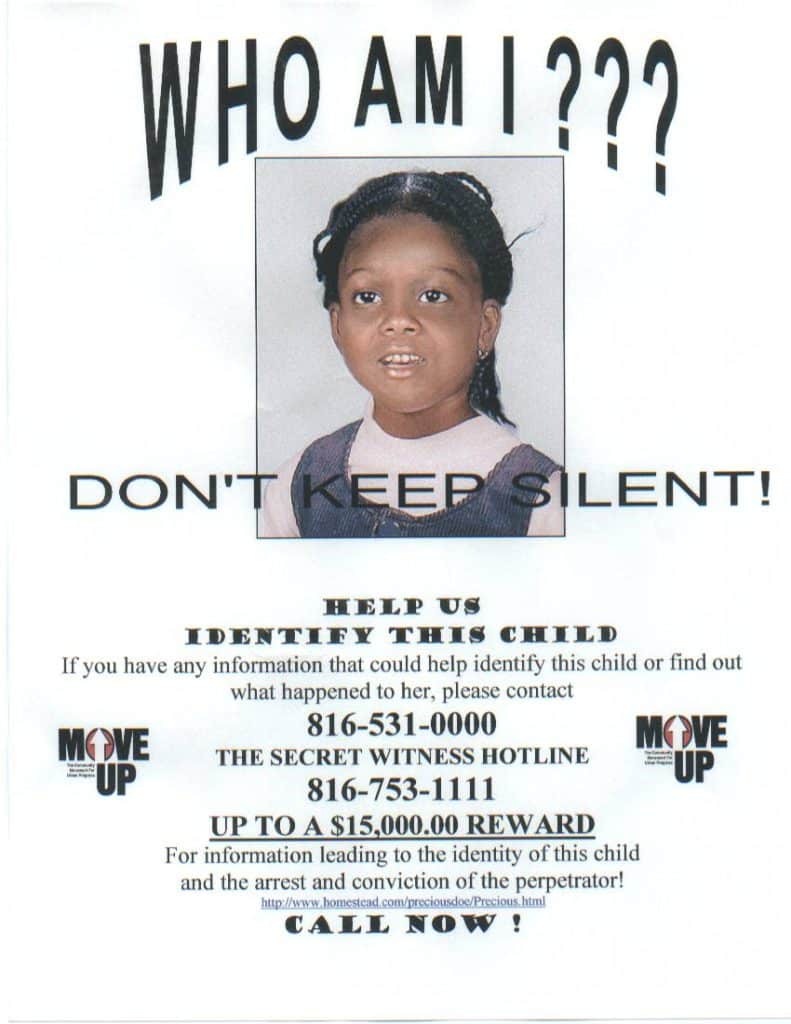
“If you don’t know who this person is, you don’t know anything,” he told me. Over four years, Kansas City produced an arsenal of guesses: an FBI composite sketch, a clay facial reconstruction from LSU’s FACES Lab in Louisiana, and countless smaller renderings that circulated on flyers, vigil programs, and newspaper ads. More than 1,500 leads. Six hundred tips. Three airings on America’s Most Wanted. An exhumation. None of it worked. For four years, a child lay identified only by the nickname our grieving city gave her: Precious Doe.

The case broke only after a tip KCPD had failed to act on was forced back into motion.
Thurman McIntosh, an 81-year-old man in Oklahoma, was not Erica’s blood. He was Harrell Johnson’s grandfather, making him Erica’s step-great-grandfather by marriage. And in April of 2004, he began calling Kansas City detectives from Muskogee to tell them his own grandson had killed the child the city was calling Precious Doe. A detective wrote up the first tip, he said.
Nothing happened.
McIntosh called again. And again. Over the course of a year, by his own count, he called detectives forty or fifty times. They did not return his calls.
A year is four seasons. A year is a full kindergarten class Erica never sat in. In a year, a man in Muskogee picked up a phone 40 to 50 times to turn in his own grandson for killing a baby.
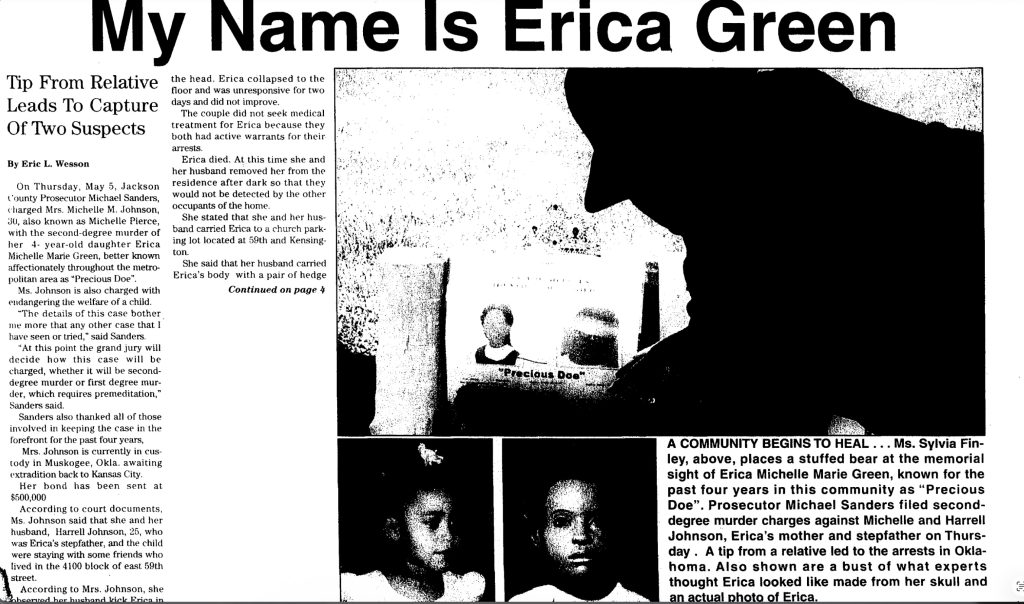
When McIntosh realized the police were not moving, he called The Kansas City Call. According to Eric Wesson, then the paper’s editor, Wesson answered the phone and connected McIntosh with a colleague, who passed him to the activist and comic-book publisher Alonzo Washington. McIntosh had seen Washington’s annual ad for Precious Doe, sponsored by General Mills, in the paper.
No one in Oklahoma ever reported Erica missing, because no one in Oklahoma knew she was dead.
Only then did the case move. By the time Sgt. David Bernard drove to Muskogee, Erica had been dead for four years. Michelle Johnson, Erica’s mother, gave her statement under questioning after detectives confronted her with what her husband’s grandfather had spent a year trying to make them hear. According to Dr. Young, what she told them matched the autopsy findings point by point.
What she told police, per the probable cause statement in Case #01-040862: Her husband, Harrell Johnson, kicked Erica in the head because she would not go to bed. The child fell unresponsive. Neither of them called for help. Harrell had outstanding warrants. She died overnight. He took her body out a bedroom window. He cut her head from her body with a pair of hedge clippers from the yard. He put her head in a trash bag and dumped it in a dumpster at a church parking lot, then went back and moved it to the woods when his wife told him it could not stay there.
She was nearly four years old. She had been in Kansas City less than a month. She was born in an Oklahoma state prison in 1997, to a mother already known to the state’s child welfare system through prior abuse and neglect referrals, and had spent almost her entire life in the care of a woman named Betty Brown in Muskogee. Following Erica’s death Michelle had an excuse anytime she was asked where her daughter was. She would tell people that Erica was with someone else. A story she would maintain with family and friends for the next four years. No one in Oklahoma ever reported Erica missing, because no one in Oklahoma knew she was dead.
This same mother attended Erica’s first funeral. She stood at press conferences and begged the killer to come forward. She walked alongside Alvin Brooks, the founder of the AdHoc Group Against Crime, handing out flyers bearing an artist’s rendering of what her own daughter may have looked like.
Brooks said he remembers her turning to him and saying, “Mr. Brooks, hopefully we find out who this baby belongs to.” He told me, twenty-four years later: “And that was Michelle. That was her mother.”
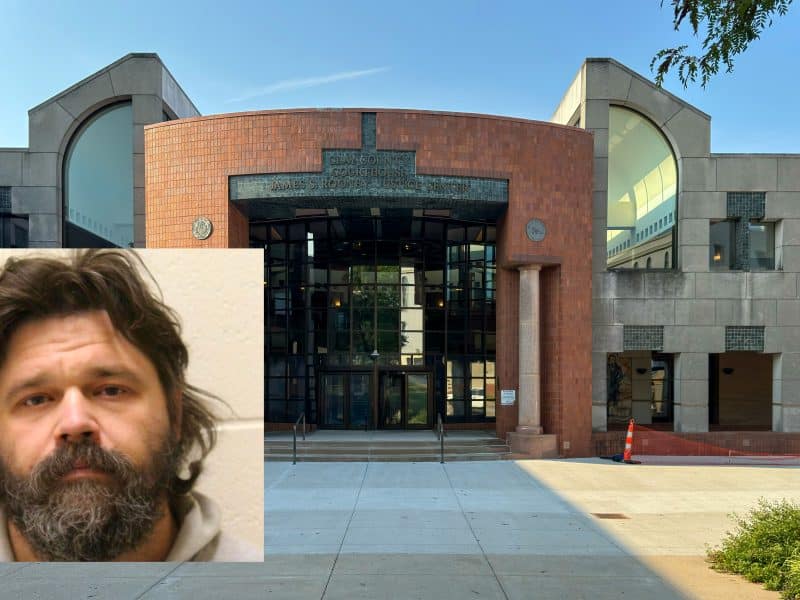
On November 20, 2008, Judge John M. Torrence sentenced Harrell Johnson to consecutive terms for murder in the first degree, endangering the welfare of a child, and child abuse resulting in death. He was sent to Potosi Correctional Center, a maximum security prison in Washington County, Missouri, to serve out a life sentence. Michelle Johnson, who cooperated with prosecutors and testified against her husband, was convicted of murder in the second degree, abandonment of a corpse, endangering the welfare of a child, and tampering with physical evidence. She received 25 years, her four sentences stacked consecutively. She did the full sentence, “25 flat,” as Brooks put it, denied parole along the way, and remains incarcerated at Chillicothe Correctional Center.
Wesson, who covered the case from discovery to conviction, said her sentence was too light. “This is your child,” he said, “and you’ll have to live with this the rest of your life knowing that you were a part of your child getting killed and covering it up.”
Thurman McIntosh died in Muskogee in March 2010. He was 86. But he lived long enough to see his grandson sentenced for the murder he had tried many times to report.
The Weight Alvin Brooks Carried
Alvin Brooks was at 59th and Kensington on the morning of Monday, April 30, 2001. A homicide detective had called him. By then, Brooks had spent decades responding to violence in Kansas City. He had been to every kind of scene this city could produce. But not this kind.
This was different.
He was back at the scene of the crime Tuesday, when Billy Stegall found the head. Friday afternoon, he was on the air with Jermaine Reed on Gospel 1590 KPRT, asking Kansas City to bring their children to a celebration of life ceremony the next day at 59th & Kensington to write notes to a baby girl they only knew as Precious and read them aloud in the park.
He came back to the site at night, alone, and stood where she had been left, and prayed. “God help us to find out who that baby is,” he thought to himself
After the trials were over, he read the case file. Cover to cover.
Brooks was a pallbearer when Erica was buried whole. He is ninety-three now, and he is still working. He is trying, with Councilman Darryl Curls, to put a full statue of a child on the land where Erica’s body was left.
“She became this nation’s child,” he said.
Present Tense
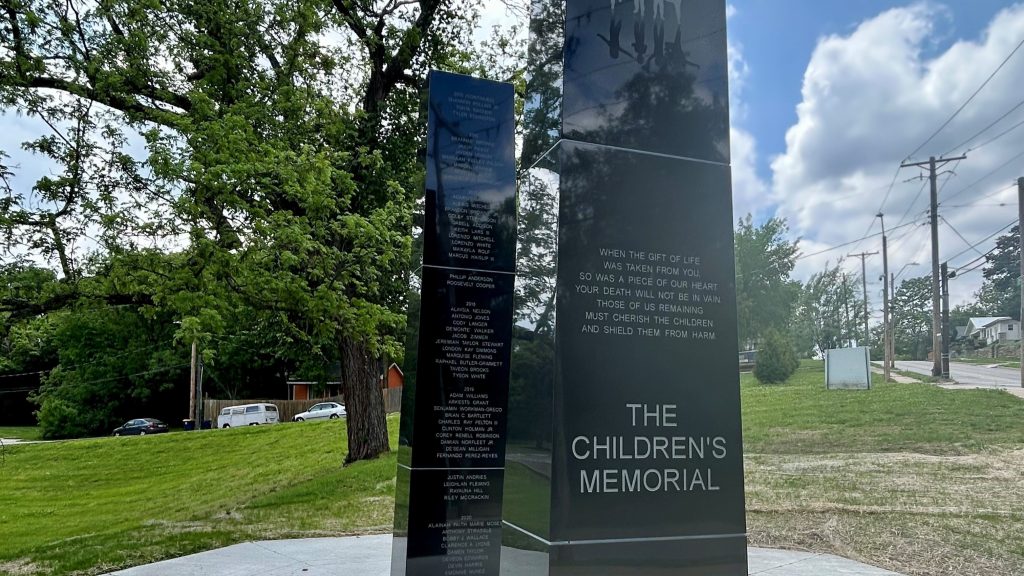
In May of 2025, the Children’s Memorial at Hibbs Park was unveiled, bearing more than 150 names of Kansas City’s murdered children. Erica’s name sits at the top.
Her death did produce one procedural change in the state where she was born. In 2013, after a federal civil suit filed by her biological father, Larry Green, Oklahoma’s Department of Human Services, Department of Corrections, and OU Medical Center agreed to a set of procedures known collectively as Erica’s Rule: infants born to incarcerated mothers must now be referred to DHS for safe placement before leaving the hospital. A policy bears her name. Oklahoma moved because it was forced to.
Reclaiming Erica’s name is not enough.
The system that let a four-year-old lie unidentified for four years, that sat on a tip from the killer’s own grandfather for nearly a year, that required a Black community newspaper to do the work of detectives, did not retire when this case was closed.
Little Black girls are simply less protected in Kansas City. Across 27 KCPD missing-person reports we analyzed this year, Black girls were listed as actively missing about four to five times as often as white girls, averaging about six cases per report date compared with about two. Black girls also made up about 40% of all active juvenile missing cases on average across the snapshots reviewed.
And these patterns do not end when Black girls become adults. Across 27 KCPD missing-person reports we analyzed this year, Black women and girls accounted for roughly 30 percent of all active cases despite making up 14 percent of the city’s population.
In 2022, community members in South Kansas City reported women being abducted from the Prospect corridor. KCPD dismissed those reports as unfounded rumors. Weeks later, a woman escaped from the basement of Timothy Haslett Jr. in Excelsior Springs. Jaynie Crosdale, a woman so visible on Independence Avenue that patrol officers had arrested her dozens of times, also went missing that same year. The department labeled her a potential witness rather than a victim. Her remains were found in a barrel floating in the Missouri River.
The names may change but the math doesn’t.
I am angry at Harrell and Michelle Johnson.
I am also angry at a city that made it possible for a man to call the police department over 40 times, name his own grandson as the killer, and be ignored for nearly a year.
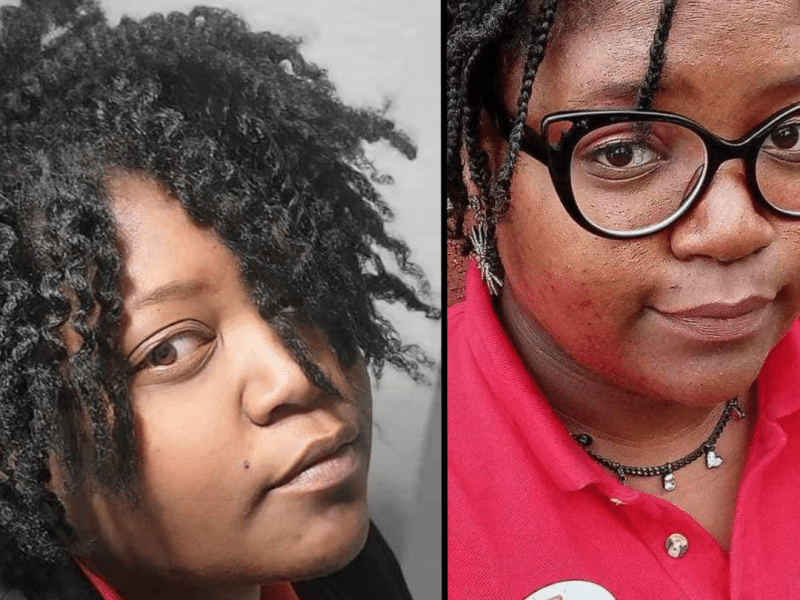
Both angers live in me. One does not absolve the other. They are the same wound, cut at different depths. I did not know it at nine, but Erica Michelle Marie Green is the reason I became an investigative journalist. She is also the wound I have been circling for twenty-five years, trying to find language precise enough to hold what Kansas City did to her, what Kansas City failed to do for her, and how those are the same silence.
Her name was Erica Green. She was born May 15, 1997. She was nearly four years old when Kansas City lost her, and she has been with us for twenty-five.
Say her name.
Say the one she already had.