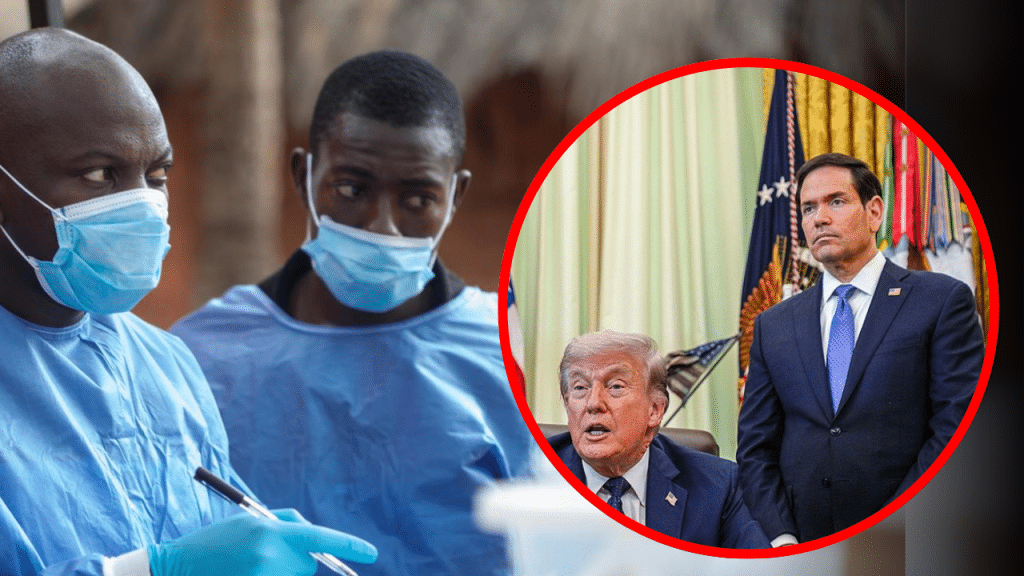
May 6, 2026–Government officials in Ghana last week rejected the Trump administration’s $109 million healthcare deal that would’ve required the West African nation to turn over the sensitive medical records of its 35 million citizens.
Ghana becomes the third African country to rebuff the America First Global Health Plan, following Zambia and Zimbabwe. Kenyan President William Ruto’s administration signed the deal in December but High Court Judge Bahati Mwamuye suspended the transfer or sharing of any personal medical information until a hearing later this year to determine its constitutionality.
Plainly stated, this is biological data harvesting on a continental scale. The Trump administration is offering African governments the dollars they need for medicine in exchange for the genetic material, pathogen samples, and medical records of their citizens.
Those samples will be transferred to U.S. pharmaceutical companies, which will use them to manufacture drugs and vaccines the same African populations may never be able to afford. It is the colonial template updated for the biotech century. Extract the raw material on the continent, manufacture the value in Boston and New Jersey, sell the finished product back at a price the source country cannot pay. The raw material this time is the African body itself.
At issue is language in the bilateral agreements requiring signatories to hand over to the U.S. the “biological specimens” and “detected pathogens with epidemic potential” for their citizenry.
In explaining why Zimbabwe rejected $367 million in healthcare funding, the country’s Permanent Secretary for Information, Nick Mangwana, last month described the arrangement alternately as “asymmetrical” and “lopsided” and in terms that recall Henrietta Lacks, the 31-year-old African American woman whose cancerous cells were harvested by doctors at Baltimore’s Johns Hopkins University in 1951 without her consent or knowledge, leading to seismic advances in medical research that continue to fatten Big Pharma’s bottom line to this day.
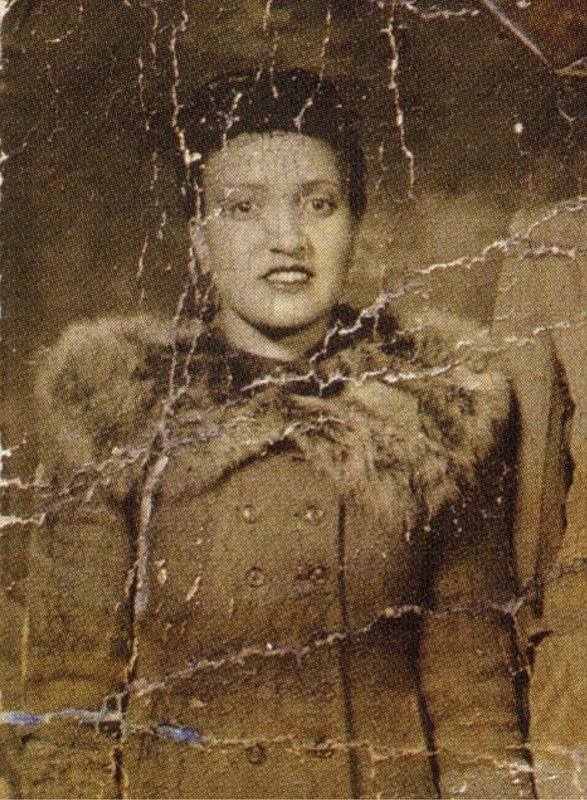
According to the World Health Organization, the replication of Lacks’ uniquely durable cells, known as the HeLa line, led to the creation of the polio vaccine, and innovations in HIV, cancer and infertility treatments. Lacks died penniless and only in recent years, following the 2010 publication of a bestselling book about her, did her heirs begin to recoup money from the use of her cells.
In a statement, Mangwana accused the Trump administration of planning to use Zimbabweans’ medical information in a similar fashion, enabling pharmaceutical companies in the U.S. to get a jump on the global competition in developing, as one example, a vaccine for the next pandemic, the profits from which would not be shared with Zimbabwe. He wrote:
“Zimbabwe was being asked to share its biological resources and data over an extended period, with no corresponding guarantee of access to any medical innovations– such as vaccines, diagnostics, or treatments– that might result from that shared data.”
Continuing he wrote:
“In essence, our nation would provide the raw materials for scientific discovery without any assurance that the end products would be accessible to our people should a future health crisis emerge.”
In an interview with reporters, he elaborated:
“Whatever data we give them, whatever outcome they get from it, they would then develop treatments, vaccines and then commercialize it. So they’re going to make a lot of money out of Zimbabweans where Zimbabweans get pretty much nothing…
So the deal was not in our interest at all. That’s why we said no… Africans are not guinea pigs and we are not for sale.”
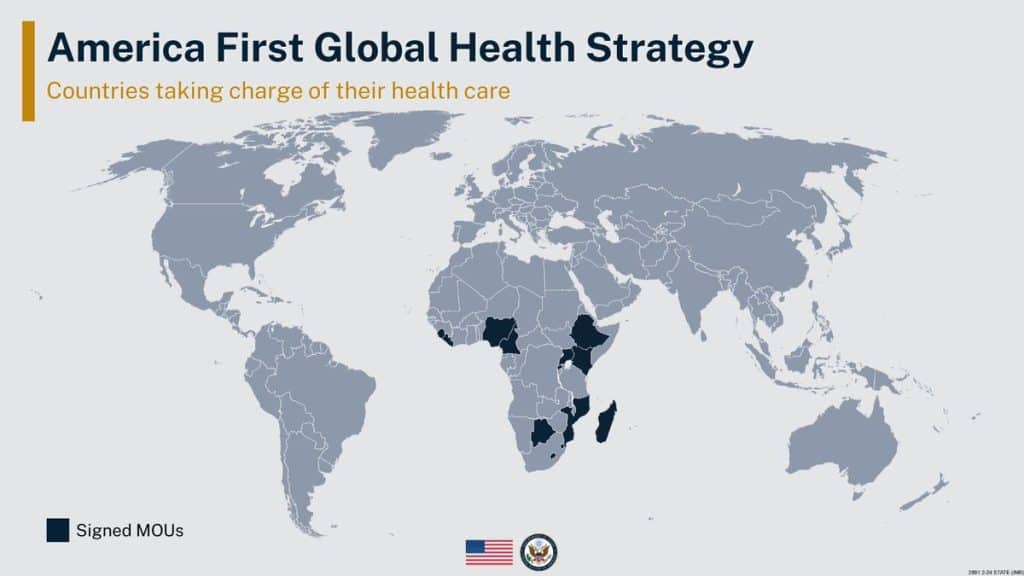
Between 16 and 21 African countries have so far signed bilateral health pacts with the State Department that are intended to replace funding that was slashed when Trump shuttered the international aid and development agency, USAID, only weeks into his second term.
Medicine as Ransom
State Department officials contend that the administration’s overhaul of healthcare funding will wean African nations off their dependency on foreign aid by gradually shifting healthcare costs from the donor nation to client states. Under the cooperation framework that it rejected, for instance, Zambia would’ve been required to contribute $340 million of taxpayer money to defray healthcare costs, and hire tens of thousands of healthcare professionals.
Moreover, State Department officials say the new approach will attract foreign investment, stimulate economic growth and spark technological innovations in health, all of which would benefit Africans across the continent.
But policy experts say the America First Global Health Plan is a cynical effort to outmaneuver China for the physical resources–both minerals and biological– that are the rebar of a high-tech global economy, as evidenced by U.S. Secretary of State Marco Rubio’s ultimatum for Zambia to “take-it-or-leave-it” and his intensifying threats to withhold life- saving HIV drugs if the bilateral accord is not signed.
The embargo on medicines is tantamount to a death sentence for the world’s poorest continent,where the typical lifespan of 64 lags far behind that of the United States, where life expectancy is 79.
Julius Kachidza, the chair of Zambia’s Civil Society Self-Coordinating Mechanism, told reporters in February:
“I’m a person living with HIV. If the HIV program in Zambia is distorted or it’s disrupted or it’s derailed, I’ll be the first casualty, as well as hundreds of thousands of other people.”…(It) “would be apocalyptic.”
Chitimbwa Chifunda, the director of Oxfam’s Zambia office, told the Kansas City Defender in a phone interview:
“As a government, we are so dependent on external financing that the U.S. government is trying to use that to gain access to the minerals and other information that they need to keep the Chinese at bay. Our government is in a tight spot.”
From Cobalt to Cells
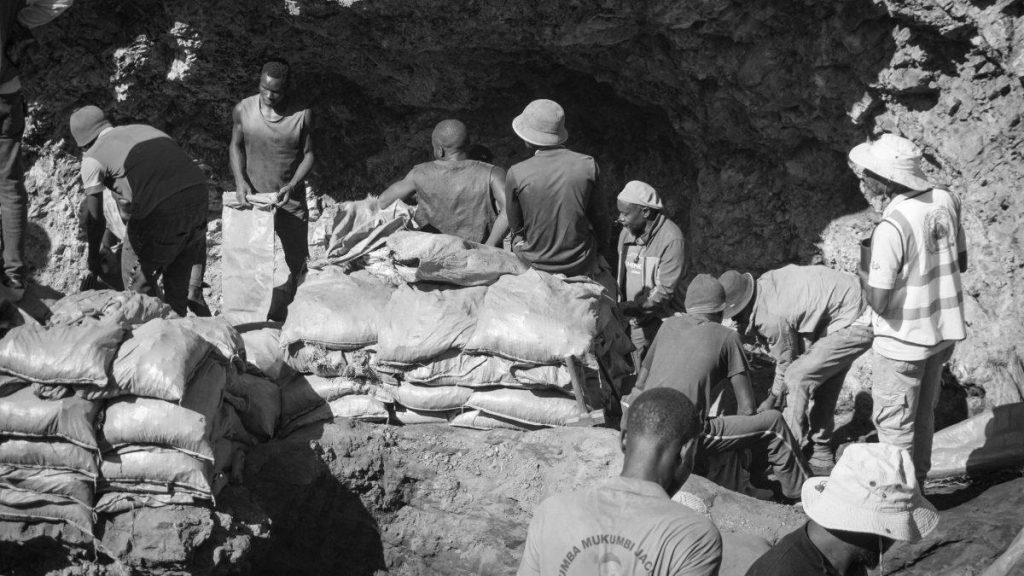
Virtually from the moment the Scottish explorer David Livingstone alighted in Zambia in 1855, European settlers have coveted the cobalt, zinc and copper buried underneath the soil of the landlocked, southern African nation. The British industrialist Cecil Rhodes negotiated concession rights with unsuspecting tribal chiefs in 1888, and for the next thirty-six years his British South Africa Company owned the country lock, stock and barrel. Not until 1924 did Zambia become a British colony, representing an improvement of sorts from a human rights perspective, elevating Zambians from mere assets on a corporation’s balance sheet to colonial subjects.
And so it wasn’t altogether surprising when the Trump administration last fall proposed that Zambia provide U.S. mining corporations with tax breaks and preferential access to its mines in exchange for $1 billion in healthcare funding over a five-year-period.
The demand for the medical records of 22 million Zambians, however, was shocking yet entirely consistent with the logic of Western imperialism that extracts –often at gunpoint–raw resources from countries in the global South, ships those unprocessed commodities to factories in Europe or the U.S. where value is added, then returns a finished product to the countries of origins where it is sold at a premium price. Kenyan farmers, as one example, typically earn less than 10 percent of the retail price for a cup of coffee sold at Starbucks or any of the upscale coffee houses in the country where a small cup of joe goes for about $2.10.
But instead of bottling cashews, canning fruit or cutting diamonds, the Trump administration seeks to turn a profit for investors by transforming Africans’ biological information into patented medicines that produce windfall profits for Big Pharma.
“This is a return to colonization,” Ace Robinson, the founder of Equity is the Word, a global advocacy organization focused on improving health outcomes for marginalized populations, told the Defender in a phone interview. “It’s an updated American version of European colonization.”
On social media, some Africans have described the America First Global Health Care Plan as a form of extortion in which Trump is cast in a role similar to that of Belgium’s King Leopold II who seized personal ownership of the vast territory today known as the Democratic Republic of Congo in 1891. His 17-year-reign of terror resulted in the deaths of an estimated 10 million Congolese and his soldiers were infamous for hacking off the hands and arms of Africans’ wives and children to coerce them to work harder and longer on the rubber plantations.
The Pandemic They Almost Ended
Asia Russell, director of the HIV advocacy organization, Health Gap, told NABJ in a phone interview that the America First Global Health Plan is wholly insufficient to replace USAID programs such as the President’s Emergency Plan for AIDS Relief, or PEPFAR, which has invested more than $100 billion into 55 countries since its inception in 2003. With its heavy reliance on easily accessible data and participation from nongovernmental organizations such as her own, “PEPFAR was tantalizingly close to ending the AIDS pandemic in our lifetime,” Russell said.
“We could disaggregate the data and say ‘hey, the numbers in this province don’t look like those in the other provinces; what’s going on here?’’ Noting that the Trump administration is proposing a 54 percent in Zambia’s health care funding, she said: “If civil society was allowed in the room, we would demand to know why 54 percent was being cut, we would be the ones who could say ‘if you cut that amount of money, you will see child mortality rates increase by xx percent’ because that is our job to know things like that. The Trump administration knows that and that’s why these negotiations are going on in secret.
One of the things that made PEPFAR successful was the recognition that when health is used as a bargaining chip everyone loses!”
Africa’s leaders have been asked to trade the cells of their citizens for the medicine to keep them alive. Three have refused. Whether the rest can hold the line depends on how much pressure Washington is willing to apply, and how much African are willing to absorb.
This story was supported by the Black Writers and Journalists Workshop.