Fill the jobs, audit the books: Stacy Lake’s back-to-basics pitch for a county on fire
Ahead of the Nov. 3 election, Democratic nominee Stacy Lake lays out her plan for Jackson County and how Black residents should judge whether it’s working.

Stacy Lake never planned to become a politician.
She always wanted to help her community, but the courtroom is where she always planned to do it.
A civil litigation attorney for more than a decade, Lake started out representing people caught in the municipal court system, where a single ticket can snowball into harsher charges and mounting fines. She later took on discrimination cases, where tight filing deadlines can kill a claim before it ever reaches a courtroom.
Then came Jackson County’s 2019 reassessment.
Property values shot up in her Hyde Park neighborhood and across Kansas City’s East Side. Lake used her legal training to help neighbors, many of them elderly, fight their new values. What began as an effort to help them contest their assessments became, for Lake, an indictment of Jackson County government itself.
She tried to persuade other attorneys and political figures to challenge then-County Executive Frank White Jr. in 2022. One by one, she said, they declined. Either it wasn’t their turn, they couldn’t overcome White’s name, or they wouldn’t run without a guaranteed win.
“I kept on asking them, ‘Well, what about the community? Who’s going to run for the community?'” Lake said. “And so that’s when I decided if no one was going to champion the community’s needs, then I will do it.”
She lost that primary to White but took about 47% of the vote.
Now, Lake is the Democratic nominee for Jackson County executive. On Nov. 3 she faces Republican Alan Rohlfing, a 31-year military veteran from Lee’s Summit. If she wins, she takes office Jan. 1, 2027, inheriting a county government that has lurched from crisis to crisis: botched reassessments, a recalled executive, an indicted interim executive, a legislature in open conflict and a brand-new jail already under investigation for the deaths of at least two people held there.
“There’s been a lot of people that have been profiting off of the dysfunction of Jackson County dollars,” Lake said, “and I’m going to put a stop to that.”
Her answer starts inside the institution. She stresses transparency and says she would audit the books, fill empty leadership posts, professionalize county government and fix the assessment system.
From there, she pitches government as a vehicle for material investment back into the community — public transit, county infrastructure, small businesses, homeownership and anti-poverty alternatives to counter a carceral approach to public safety.
The central question is whether she can turn a vision that will take a decade or more into changes residents can begin to see sooner. Lake knows it won’t happen overnight, and she is asking voters for patience.
From Kansas City to Taipei
Lake was born in Kansas City and grew up in Leawood, Kansas. Her father immigrated to the United States from Anguilla. Her mother’s family has roots in Kansas City going back nearly a century, when her great-grandfather came to Kansas City to become pastor of Woodland Avenue Christian Church in 1932.
At the University of Kansas, she studied finance and enrolled in the Chinese language program, which she fell in love with. She went on to study Chinese language and culture in Taiwan, spending about two and a half years in Taipei at National Taiwan University and National Taiwan Normal University.
She came back to the U.S. for law school at UMKC. In the summer of 2012, she interned at an international law firm in Beijing. The firm ended up offering her a full-time job, the kind of position she had spent six years working toward.
“Time kind of froze for me,” Lake told The Defender. “I realized in Beijing, China, that there wasn’t anything that I could do here that would help my community in Kansas City.”
She turned the job down, much to a lot of people’s surprise, and came home. She helped her brother build the Lake Firm, and four years later she launched her own civil litigation practice, the Stacy Lake Firm LLC, in 2018.
“That’s probably the first time I realized how I wanted to help the community,” she said.
Lake started out in municipal law: misdemeanors, traffic tickets, DUIs. The work showed her how punitive the system is, she said, especially toward Black people and those who don’t understand how it works.
She walked through how a single ticket snowballs. Miss a court date on a speeding ticket, and a warrant follows, along with a suspended license. The next traffic stop brings a driving-while-suspended charge, which is more serious and more expensive to fix. Before long, a person can be facing four suspended-license charges, five speeding tickets and two no-insurance tickets, with attorneys quoting at least $2,000 in fees before a single fine is paid.
The cost to get your license back to a good standing then becomes prohibitive to a certain group of people who can’t afford those charges. For some, she added, even that first ticket is the difference between paying rent and losing their home.
Lake later moved into civil litigation, focusing on what she calls “the dirty side of discrimination law.” Slip on an icy sidewalk outside a store, she explained, and you have five years to sue. Face discrimination at work, and you generally have 180 or 300 days to file with the U.S. Equal Employment Opportunity Commission, or the claim is gone.
“The average person,” she said, “they don’t know this.”
2019: “That just broke something in me”
For Lake, as for thousands of Kansas City homeowners and renters, the 2019 reassessment changed everything, devastating her neighborhood of Hyde Park.
Property values shot up across the county, where total assessed valuation rose almost 20%. On Kansas City’s East Side, the hikes were far steeper. Many low-income homeowners saw increases of 200% to 300% on average, and some more than 1,000%. A later state audit found Jackson County’s assessment increases were more than 70% higher than those of any other Missouri county.
Lake believes the East Side, home mostly to Black and low-income families, was singled out.
Part of the jump was a long-overdue correction. Jackson County had undervalued property for years, and after the Missouri State Tax Commission found its assessments out of compliance, the county was tasked in 2018 with bringing all 301,000 parcels up to market value.
Then-Director of Assessment Gail McCann Beatty, who took over the department shortly before the 2019 cycle, told KCUR at the time that “the market has significantly increased” and that many homes had been undervalued.
Critics, including Lake, say the problem wasn’t the correction itself but how the county carried it out. As she helped elderly neighbors through the appeals process, Lake became convinced the county had cut corners.
“The more that I dug into the entire situation, the more I realized that they didn’t comply with the statutory prerequisite to increase our property values over 15%,” she said.
Missouri law requires a physical inspection before an assessor raises a home’s value by more than 15%. McCann Beatty maintained that reviewing photos of properties satisfied the law.
The moment that changed Lake’s course came at a Hyde Park Neighborhood Association meeting. As she recalls, Beatty told residents, most of them elderly, that if they couldn’t afford their higher taxes, they would have to take out a loan to pay them.
“That just broke something in me,” Lake said, “and that led me to investigate the Jackson County government, which exposed me to the years of corruption that Jackson County has been partaking in.”
During her 2022 campaign, Lake said she warned voters that a worse property tax crisis was coming in 2023. It came. That year, residential values rose about 33.7% countywide, with the steepest increases on the East Side. In the East Side’s 64128 ZIP code, where the median income is under $21,000, values rose more than 70%.
The JACKSON plan
Lake’s platform is a seven-point plan spelled out in the letters of the county’s name:
- Justice system reform
- Auditing county government
- Countywide infrastructure improvements
- Keeping taxes and utilities affordable
- Small business rejuvenation
- Ownership initiative for single-family households
- Neighbor-to-neighbor transportation to connect the county’s cities
A second chance at work
Lake supports a countywide “ban the box” policy. Today, many employers in the county require applicants to disclose a criminal record up front, and often toss the application without a second look. Under ban the box, applicants would still disclose their record, but only after the employer has gotten to know them and decided they want to hire them.
Kansas City, Missouri, has had a ban-the-box law for private employers since 2018. A countywide policy would carry that protection to other cities and to unincorporated Jackson County.
Crumbling roads and buildings
Asked why so much of Jackson County is crumbling, Lake answered in one line: “Because of lack of true investment into the community.”
Asked where the money has gone instead, she answered, half-joking: “Into city stadiums?”
Stadiums have dominated debates over public money here. In 2024, Jackson County voters rejected a sales tax extension for new Royals and Chiefs stadiums. This August, the Kansas City Council committed $600 million to a new Royals ballpark without a public vote. Lake argues that kind of spending misses most residents.
“Investing in infrastructure that only benefits a certain group of people doesn’t really create a vast impact on uplifting people’s lives,” she said.
The county’s own buildings tell the story. Lake says they are more than half a billion dollars behind on deferred maintenance and that most are not ADA-compliant. She also noted that Jackson County, the second-largest county in Missouri, has no public law library, a gap she says hurts people representing themselves in court.
As executive, Lake would also serve as the de facto local government for unincorporated Jackson County, where the county is responsible for the roads. In parts of eastern Jackson County, she said, roads are so cratered it’s unsafe to drive faster than 30 mph. And if the Jackson County government is not investing in their communities, they don’t get anything.
She questions whether the county’s Special Road and Bridge Fund has been properly used.
“There’s no reason in my mind that our roads shouldn’t be safe in our community,” she said. “We have enough money to do it. We just need to have more of a drive to make sure that these projects are completed.”
Small business
Lake, who has owned her law firm for eight years, says local governments don’t do enough for small businesses. As executive, she would create a small business committee to find ways the county can help owners succeed. After the audit, she wants to launch a grant program, along with an emergency fund for sudden costs, like a smashed storefront window, which she said can decide whether a business survives the year.
She also wants to end decades of misplaced priorities.”It’s my belief that for the past several decades, our local governments have been more focused on divesting in the community,” she said. By that she means “providing taxpayer incentives to out-of-state corporations to come in and to put in businesses that one could say could harm the community.”
“I’m not going to allow that practice to continue in Jackson County,” Lake said.
Housing
On housing, Lake put it bluntly: “It is my opinion that right now there is an attack on single-family home ownership in Jackson County.”
As rising assessments push up taxes and mortgage payments, longtime owners sell and corporations buy the homes, shrinking the supply and artificially inflating values. She wants to stop that practice, starting with an assessment department whose policies follow the law and are “focused on ethics and equity.”
“When people own homes, they are more likely to invest more into their areas, into those communities,” she said. “I want to create a government that actually incentivizes our residents into acquiring single-family homes.”
Transit
“There is no reason why our county and even the city of Kansas City should be in the state that it is today,” Lake said. “It makes no sense with the amount of money that we generate in our region and the population mass that we have. We have enough money and people to have a true public transportation system.”
Her years in Taipei showed her what a real system looks like. Here, you can’t take a bus from Kansas City to Lee’s Summit, and in some cases you can’t easily get to Independence.
As executive, she wants to build a bus rapid transit network connecting most of the county’s cities, fast enough “that when you’re taking the rapid bus transit line, you’re going to get to one city to the next faster than actually driving your vehicle.” She expects that to take 10 to 12 years. Rail could come later, once the concept is proven.
The payoff is jobs. Right now, she said, someone in Buckner can’t work in Grandview without a reliable car.
The jail, public safety and ICE
Lake becomes animated when talking about the county’s new $320 million detention center, which held its ribbon-cutting in March. She opposed the site from the start. Building there displaced more than 100 residents of the Heart Village mobile home park, and the land sits in a historical floodplain between two creeks.
Now she wants the jail investigated. At least two people have died in the facility since it opened, and the Missouri State Highway Patrol is investigating both deaths.
“I don’t care what a person has done to get into jail. Every person deserves to be treated humanely,” she said. She wants tighter oversight of jail staff, who she said hold “an extreme position of power.”
Her broader view of public safety comes from years in court. “A lot of crimes that are committed are crimes due to poverty,” she said. People with jobs and enough money to cover housing, food and savings, are less likely to offend. Her answer is to bring more good jobs to the county and expand programs that give people the skills to get them.
On ICE, Lake was direct. “I strongly oppose ICE conducting illegal activities in Jackson County,” she said. But she noted that control over whether sheriff’s office resources assist ICE rests with the elected sheriff, Darryl Forté. As executive, she said, she would start talks with Forté about keeping county resources out of ICE operations.
Walking into a fire
Jackson County government has spent the past two years in near-constant turmoil.
In September 2025, more than 85% of voters recalled White about 15 months before the end of his term. The recall effort began in 2024 amid anger over property assessments and gained steam after White opposed a sales tax extension for new Royals and Chiefs stadiums, which voters rejected that April. The campaign was backed by Democracy in Action, a nonprofit that is not required to disclose its donors and has not. Democracy in Action’s executive director, Guy Howard, is the brother-in-law of Bridgette Williams, who leads the Heavy Constructors Association, which supported the stadium tax.
Lake calls White one of the greatest baseball players of all time but says he lacked the leadership the job required. “The captain goes down with the ship,” she said.
To replace him, the County Legislature appointed Phil LeVota as interim executive. Legislators had him sign a notarized affidavit swearing he did not intend to run in 2026. He filed to run anyway, then withdrew weeks later. In August, a federal grand jury indicted LeVota on bribery and fraud charges, alleging he offered county jobs to a potential candidate in exchange for dropping out of this year’s executive race. LeVota has pleaded not guilty.
The Legislature has been in its own crisis. In July, legislators removed Manny Abarca as chair, citing “general dysfunction,” as he faced misdemeanor charges in Kansas and Missouri, including domestic battery. Abarca has pleaded not guilty to the battery charge.
Days earlier, Abarca had publicly accused a fellow legislator and a staff member of trading legislative action for campaign donations, and federal authorities opened an investigation. No one has been charged.
That is the government Lake is asking to run. She won the Aug. 4 Democratic primary with 45.9% of the vote, beating five rivals including Abarca, former Lee’s Summit Mayor Bill Baird and former Legislator Dan Tarwater.
On Nov. 3 she faces Republican Alan Rohlfing, a 31-year military veteran from Lee’s Summit.
The number one function of the Jackson County executive is to collect taxes, Lake said, and right now, the county can’t do that job well. It has had no director of assessment for more than 300 days, and has no director of collections or director of finance. Whoever wins takes office Jan. 1, 2027, the start of a reassessment year.
“I am walking into a fire,” Lake said. “Because 2027 is a reassessment year without an assessor, without a director of collections, without a director in the finance department.”
The vacancies also cloud the county’s plan to repay overassessed homeowners. Under a proposed class-action settlement, about 207,800 homeowners whose 2023 or 2024 assessments rose more than 15% would receive an estimated $250 million, mostly as credits on their 2026, 2027 and 2028 tax bills. The next executive will have to deliver most of them.
“The truth of the matter is, the person who would be implementing that policy would be the director of collections,” Lake said, “and we don’t have a director of collections.”
Lake knows she won’t fix that overnight. She is asking voters for “grace for the first six months” while she untangles what she calls a web built over 30 years.
That is why the audit comes first. People want accountability, she said, and many no longer trust how officials have handled their positions of power and taxpayer dollars. In her view, residents are willing to pay taxes for good work in their communities. What they reject is officials spending that money on corruption or special interests.
Lake says she isn’t in it for the money. She told The Defender she has turned down about $50,000 in campaign contributions that didn’t align with her values. She called herself an environmentalist to the core and said she can’t support anything that conflicts with those beliefs.
What does persuade her, she said, are advances like public transportation. That makes her a hard politician for special interests to deal with, she argued, and less likely to fall into the trappings of corruption.
How to hold her to it
If elected, Lake said she would focus first on three things: an audit of county government, a countywide public transportation system and countywide infrastructure improvements.
The audit comes first, including retooling budgets so tax money is spent in the most efficient and effective way possible. “We have to fix the internal issues before we can actually do things countywide,” she said. Transit is the hardest, she said, and will take at least 10 to 12 years.
Asked what in her plan would most directly improve life for Black residents, Lake named transit as the long-term change that could “revolutionize Jackson County as a whole.”
Neither will be finished in one year, and transit won’t be finished in one term. So after her first year, she wants residents to judge her on something more immediate: whether county government works.
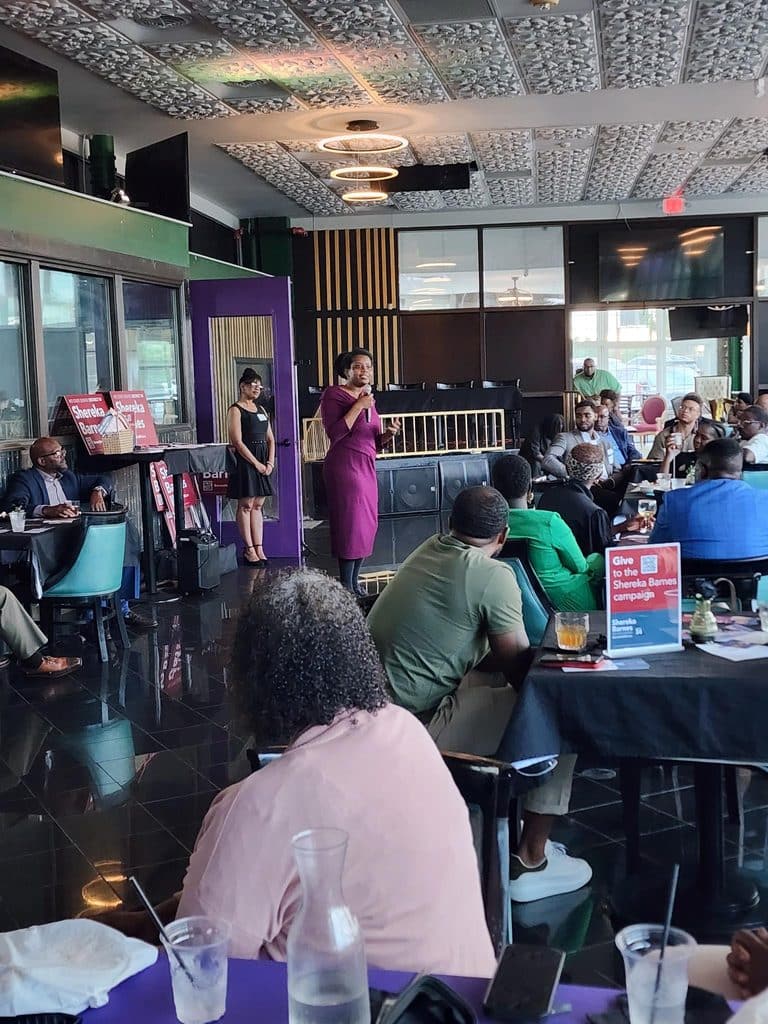
Start with two questions, she said. Did the audit happen? Has the assessment process improved? The second isn’t only a homeowner’s issue, she noted. When the county raises values on commercial property, including apartment buildings, that cost gets passed on to the renters as well.
Beyond that, “I really want people to look at how Jackson County government is working internally,” Lake said. “Are the processes better? Are our government officials more open and transparent to the needs of the Jackson County people? Is our government more accessible and easier to deal with than before?”
“Those would be the markers,” she said.
“I just truly hope that this time next year there’s going to be massive changes in Jackson County,” she said, “because massive changes need to occur.”
Election Day is Tuesday, Nov. 3.
Author

Related Articles
The People’s Ballot: Kansas City’s Voter Guide for November Elections
The Kansas City Defender’s voter guide breaks down every measure and race on your November 3 ballot in plain language, from Prop A to Amendment 3 to COMBAT.

Why a Daughter of Kansas City Is Voting NO on Prop A
Health Forward’s McClain Bryant Macklin on the new map’s line along Troost Avenue, what Prop A does, and how to vote by Nov. 3.
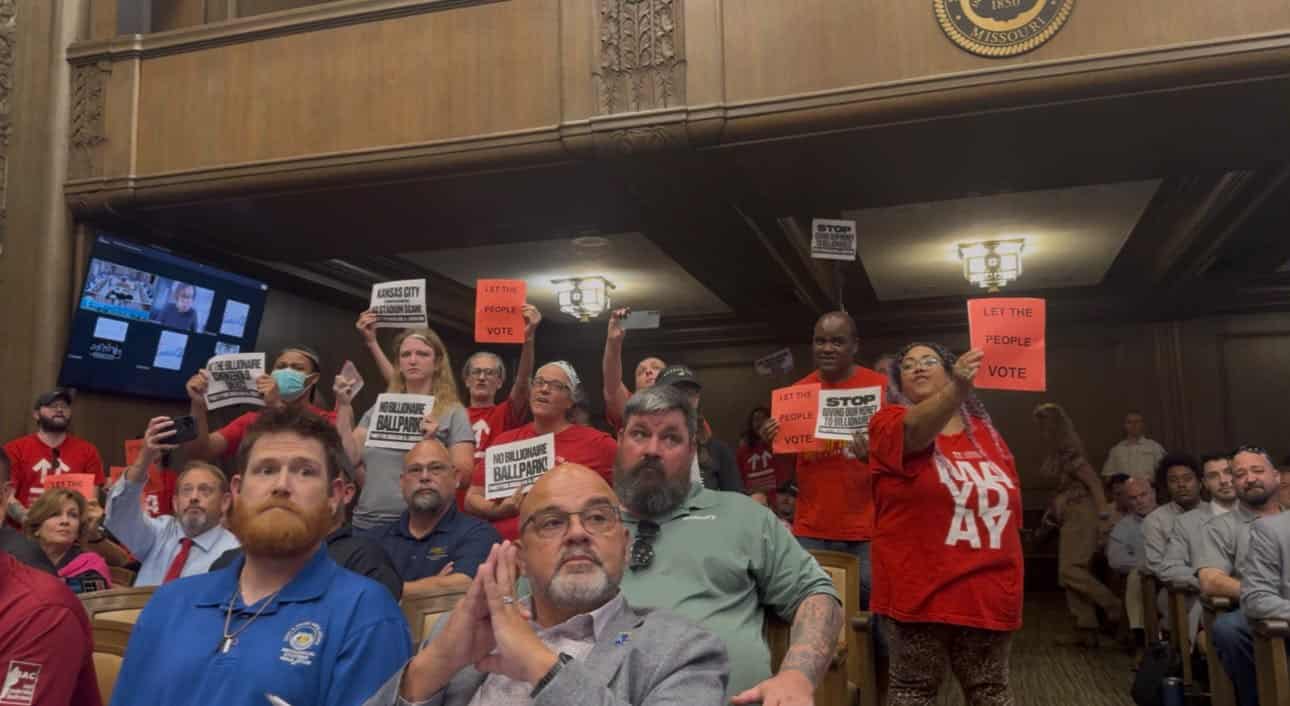
The People Said Let Us Vote. The Council Gave a Billionaire $600 Million Instead
Two days after city officials violently arrested a community leader, I sat in a chamber swarmed with police and watched eleven council members give a billionaire one of the biggest public deals this city has ever seen, without letting a single resident speak.