‘It is… a Bloodbath’ for Nelson Mandela’s Party
Thirty-two years after apartheid, Black South Africans are still waiting on the land, the jobs and the wealth. Jon Jeter reports from the Africa Desk.
Africa Desk
‘It is… a Bloodbath’ for Nelson Mandela’s PartyIn South Africa, White Minority Rule Makes a Comeback
While Americans are coming to grips with the Democrats’ midterm domination, South Africans are dealing with their own Blue wave, but from a white minority party with close ties to apartheid. Thirty-two years after Nelson Mandela’s party, the African National Congress, came to power, the country’s Black majority has grown impatient waiting for change.
By Jon Jeter, Africa Desk CorrespondentNovember 10, 2026
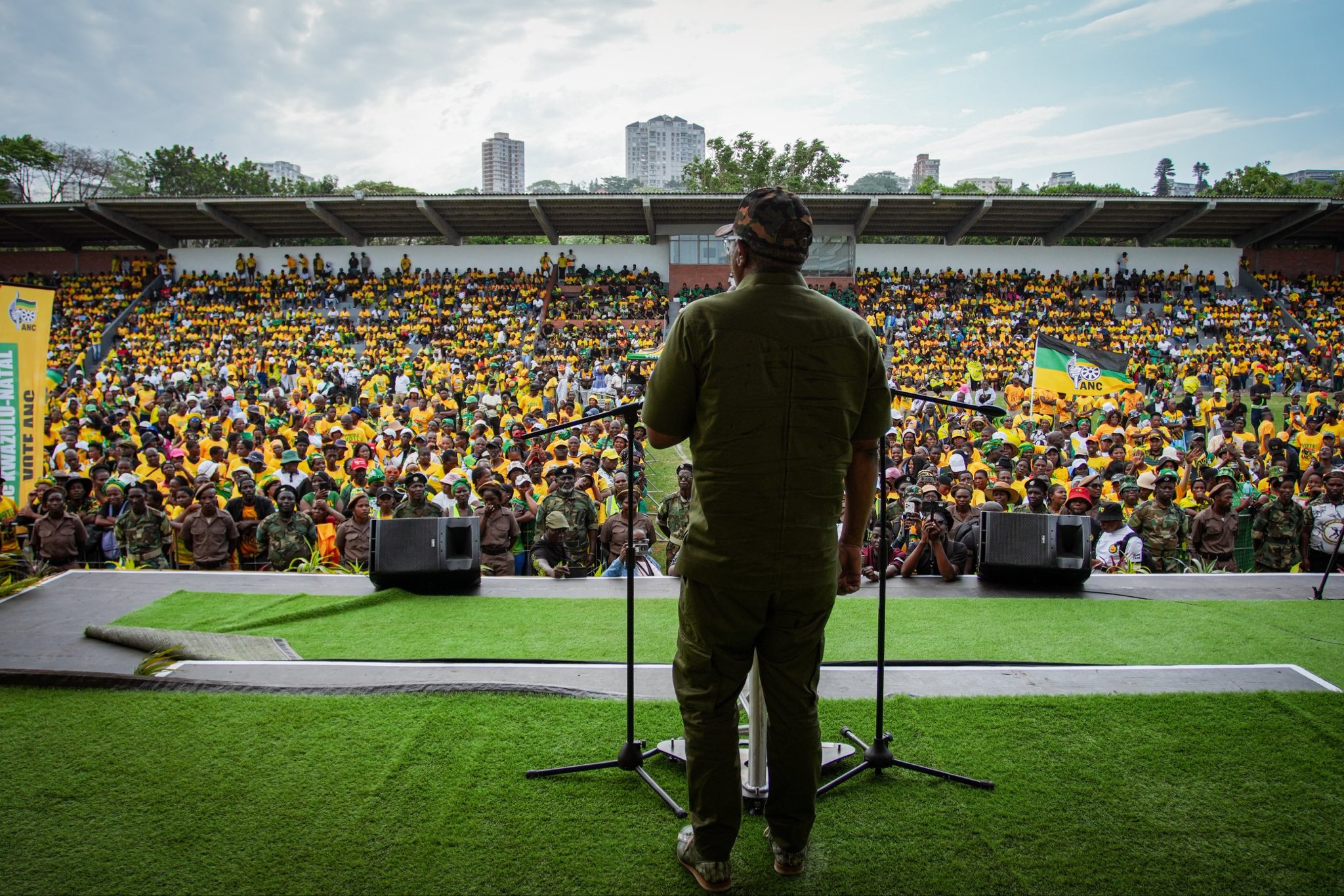
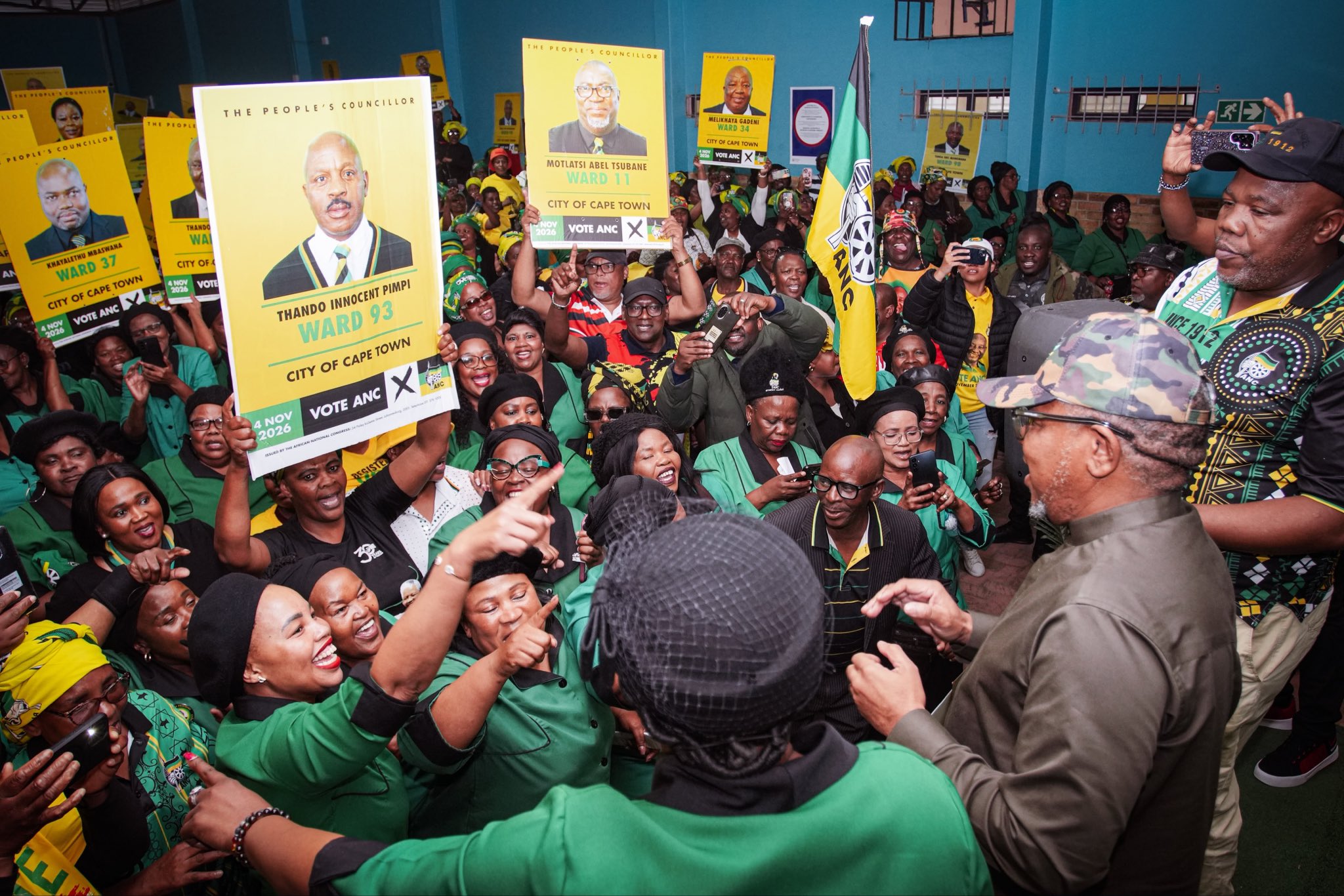
An ANC rally at Curries Fountain Stadium in KwaZulu-Natal on Nov. 1, three days before the vote. Photo by the African National Congress via X
South of the Drakensberg mountains that soar above KwaZulu-Natal’s lush savannas, and east of the shimmering port city of Cape Town, Nelson Mandela Bay begins at the water’s edge on the Indian Ocean coastline. Named for South Africa’s iconic liberation hero, the municipality includes the city of Gqeberha, pronounced geh-BEAR-ha, formerly Port Elizabeth, that was known during high apartheid as a stronghold of white supremacist backwardness, similar to Mississippi’s reputation during the Jim Crow era.
It was in Port Elizabeth that security forces fatally beat Steve Biko in August, 1977, and eight years later, police in the nearby town of Cradock would taunt the children of four slain Black activists by driving down the street they lived on asking amusedly: “How’s your Dad?”
And so, in retrospect, it was an omen when the only ruling party a free South Africa has ever known, Mandela’s African National Congress, launched its 2016 campaign for local elections in Nelson Mandela Bay Stadium and could barely fill half of its 46,000 seats. The ANC’s leadership at the time blamed the meager attendance on a conspiracy between bus companies and the party’s rivals that left tens of thousands of supporters stranded in the metro area’s all-Black townships.
It is clear today, however, that the ANC’s poor showing a decade ago forecast the tsunami that made landfall last week. South Africa’s teeming Black majority went to the polls and restored power to the party representing the white minority in Nelson Mandela Bay and, even more shockingly, in the Johannesburg metro area that includes Soweto, the all-Black township widely recognized as the hub of the global fight against apartheid.
With 100 percent of the vote counted, the Democratic Alliance, or DA, a pro-business party created by a merger with the ultraconservative National Party that introduced apartheid in 1948, has won 44.17 percent of the votes in Nelson Mandela Bay, compared to the ANC’s tally of 25.48 percent. The DA also finished ahead of the ANC in Johannesburg, with the party winning 34.79 percent of the vote compared to the ANC’s 20.25 percent.
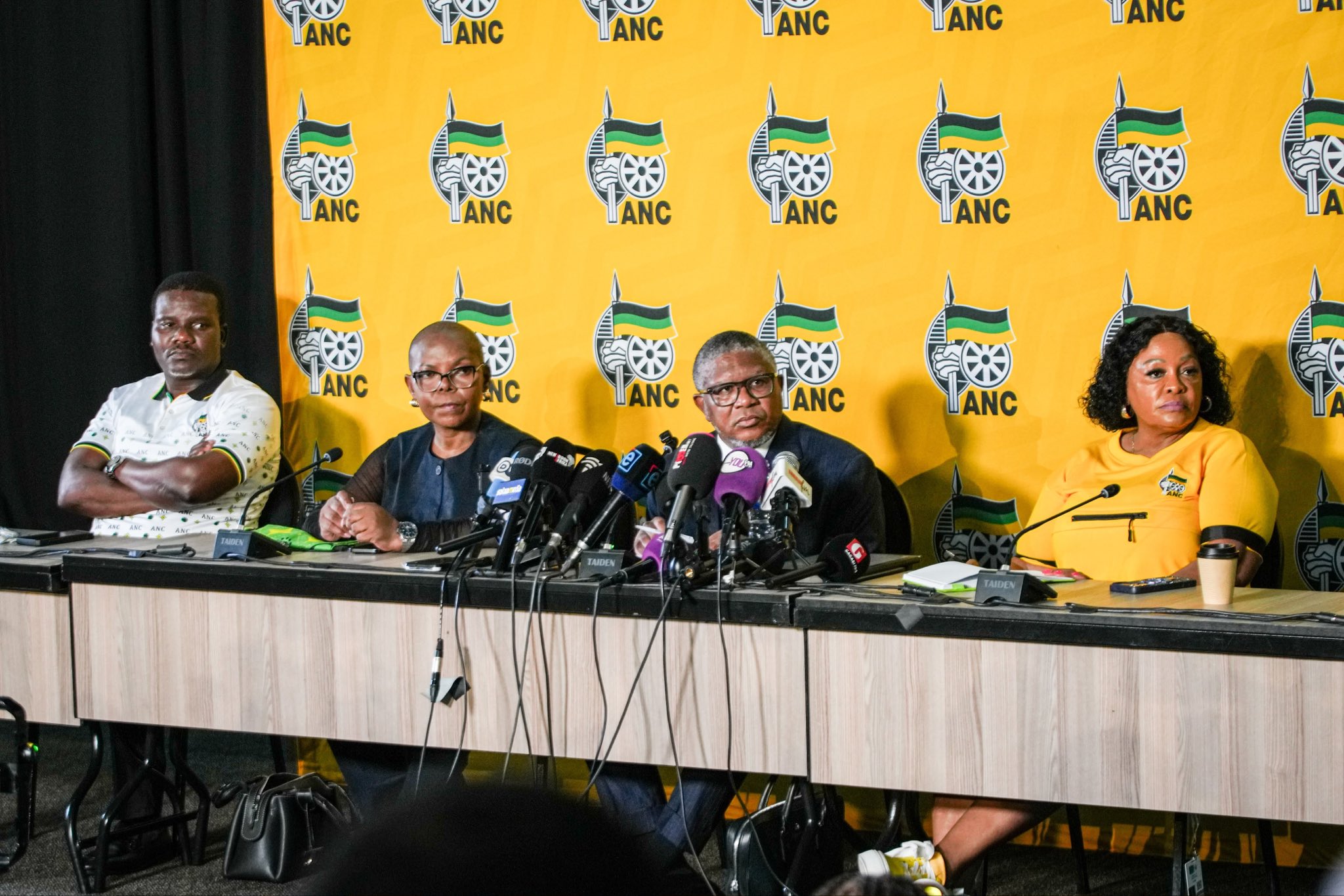
With half the vote counted nationwide, Qaanitah Hunter, the host of the Debrief Network told listeners:
“ANC leaders are shellshocked!… It is, by all accounts, a bloodbath for the ANC!”
Qaanitah Hunter, the Debrief Network
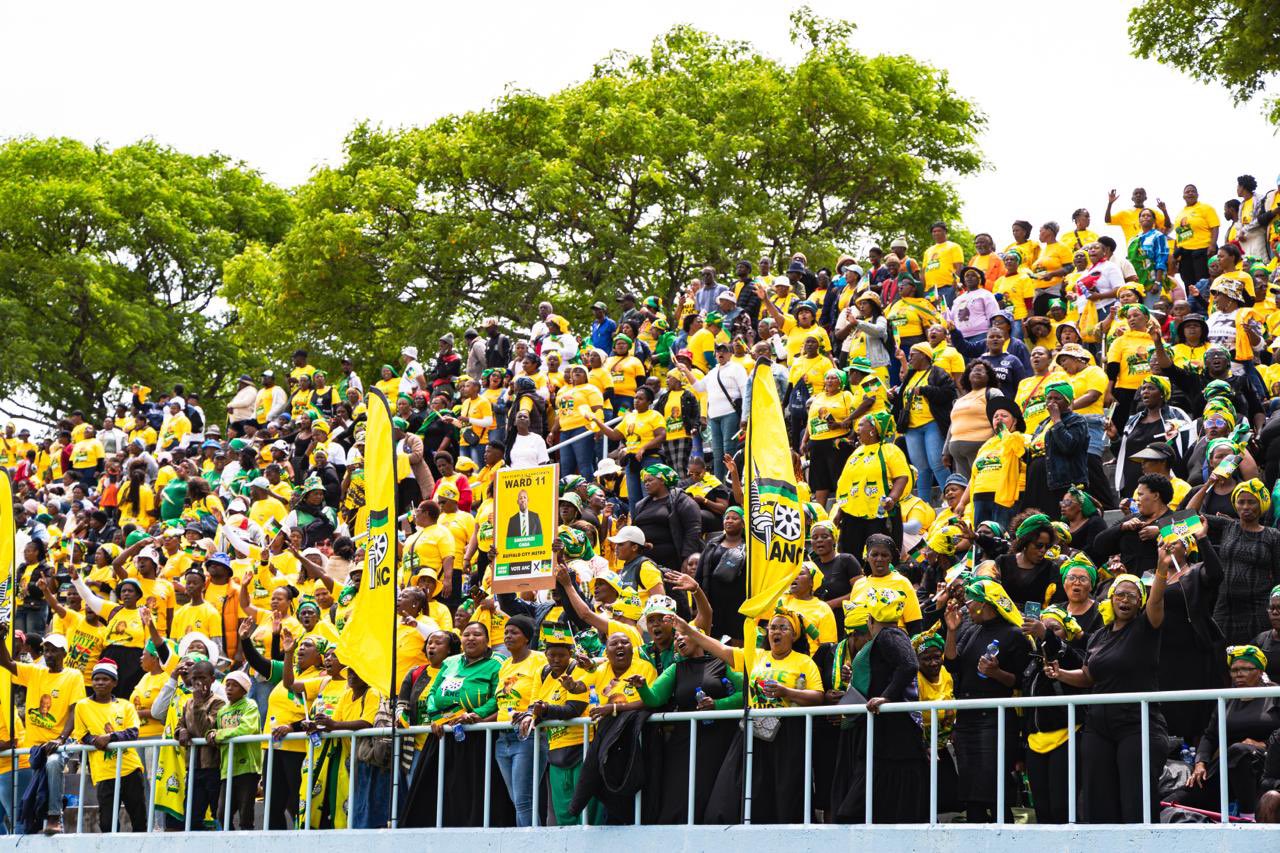
It is a stunning reversal of fortune for the continent’s oldest and most celebrated liberation organization that led South Africa’s largely peaceful transition to democracy in 1994 when voters of all races went to the polls for the first time to abolish white minority rule. The ANC continues to control a plurality of seats spread across South Africa’s 257 municipalities but the decline is unmistakable: in the 2006 local elections the ANC won 2 of every three votes cast yet only 1 of every 3 in last week’s poll. Over that period, a number of political parties have emerged to challenge the ANC, the DA most of all.
The emptying stadium
Each dot is 100 of the 46,000 seats in Nelson Mandela Bay Stadium. For 2016 the dots show the crowd. For election years they show each party’s share of the vote.
- 2006 local elections2 of 3The ANC won two of every three votes cast.
- 2016 campaign launchHalf emptyThe ANC opened its local election campaign in Nelson Mandela Bay Stadium and could barely fill half of its 46,000 seats.
- 2026 local elections1 of 3The ANC won one of every three votes cast in last week’s poll.
- Nelson Mandela Bay, 202625.48%The ANC’s share of the vote. The Democratic Alliance won 44.17 percent.
- Johannesburg, 202620.25%The ANC’s share of the vote. The Democratic Alliance won 34.79 percent.
- ANC
- Democratic Alliance
- Other parties
- Empty seat
The ANC’s abandonment of the socialist principles it espoused in its iconic 1955 Freedom Charter for a pro-business, neoliberal approach to government has left apartheid more or less intact, materially speaking, and Black South Africans with neither a pot to piss in nor a bed to shove it under in the country of their birth, metaphorically speaking.
According to the national census, South Africa’s unemployment rate is among the highest in the world; one in three able-bodied adult South Africans is jobless today, compared to one in four workers in the U.S. at the nadir of the Great Depression. Nearly four in ten South Africans, roughly 23 million people, live below the poverty line. About 31% of South Africans live on the equivalent of $3 a day or less, virtually all of them Black or mixed-race.
Much of that is attributable to the ANC’s failure to redistribute the country’s principal means of wealth accumulation: whites account for 7.3 percent of the population but continue to own nearly 75 percent of all arable land while Blacks account for 81 percent of the population yet own only 4 percent of all farmland.
Who lives here, and who owns it
White South Africans
Black South Africans
Black poverty stands in stark contrast to ANC politicians’ penchant for living high off the hog while their constituents suffer. That opulence, combined with a series of corruption scandals, has turned public opinion against the party. In 2022, a former intelligence officer accused South Africa’s billionaire President, Cyril Ramaphosa, of attempting to cover up the theft of $4 million in cash from his game farm in the northeastern province of Limpopo.
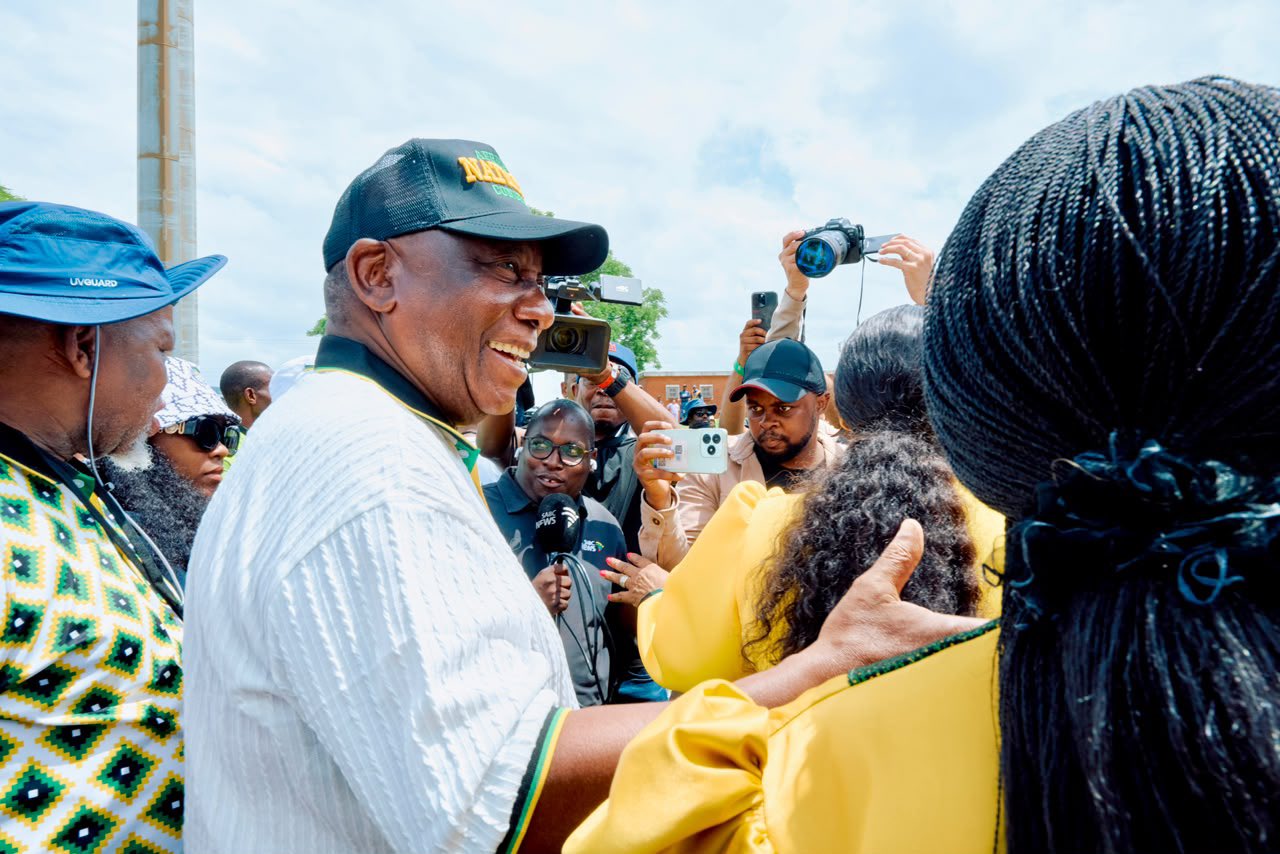
A former labor leader and top Mandela lieutenant, Ramaphosa has denied any wrongdoing, saying that the money stuffed inside his sofa had been stolen by the handymen who stuffed it there but the cash accrued from the legal sale of buffaloes. Speculation abounds, however, that he did not report either the cash or its theft to avoid paying taxes. A South African High Court in July paused a parliamentary effort to impeach him.
Professor William Gumede, an associate professor of governance at the University of the Witwatersrand, told me in a phone interview 10 months ago:
“The ANC has simply not delivered for Black people in South Africa.”
Professor William Gumede, University of the Witwatersrand
But it has delivered for whites, said Thapelo Mohapi, the Secretary General of Abahlali baseMjondolo, Shack Dwellers’ Union in the Zulu language that is native to South Africa, a nongovernmental organization that advocates for the poor. Aside from its failure to return stolen land to its rightful owners, the ANC has either interpreted existing laws or proposed legislation that would effectively restore apartheid-era privileges to South Africa’s white minority, and a smattering of Black property owners who have prospered in the post-apartheid era. Of the ANC’s decline, Mohapi told the Defender in a recent phone interview:
“We have seen this coming for quite some time. Since it took power (in 1994) the ANC has been governed by a group of elites who have looted the state. The interests of the Black and marginalized people who suffered during apartheid are no longer the interests of the ANC’s elite leadership.”
Thapelo Mohapi, Abahlali baseMjondolo
As one example, Mohapi cited pending legislation to overturn key provisions in South Africa’s 1996 constitution that extended squatters’ rights to Blacks who were dispossessed by apartheid. The bill, authored by ANC lawmakers, would eliminate those protections, and facilitate speedier evictions.
In the same vein, the ANC’s leadership has targeted for prosecution a populist firebrand, Julius Malema, who leads a Marxist-influenced opposition party, the Economic Freedom Fighters, often encouraging landless Blacks to seize white farms and leading teeming crowds in chants of “Kill the Boer!” a song popularized during apartheid, referencing the epithet that translates as “redneck.” A judge in April sentenced the 45-year-old lawmaker to five years in prison for the illegal possession of a gun after firing a rifle into the air at a 2018 political rally. Said Mohapi:
“The white supremacists are watching as Blacks fight among themselves for the crumbs they have left behind after they have taken away our resources, taken away our economy, our wealth and leaving us to die of starvation on the ground. Instead of fighting the monster we are fighting among ourselves and so there is a growing dissatisfaction with the ANC to the extent that there is a belief that the right-wingers, the whites, who engineered apartheid are the best option to actually take us out of the economic doldrums that we are facing.”
Thapelo Mohapi, Abahlali baseMjondolo
The irony, Mohapi said, is that the conservative Democratic Alliance is virtually joined at the hip with the ANC in its neoliberal policy formulations and its emphasis on multiculturalism rather than racial redress. The difference, he said, is that the DA has coupled its free-market policies with a sterling reputation for efficiency and service delivery, particularly in Cape Town, where the DA has governed since 2006. In recent years, however, the DA has driven Cape Town’s gentrification with policies that have raised exponentially the cost of housing, pushing Blacks and mixed-race populations, classified as “colored” under apartheid, farther and farther out of the city.
“That is what they are going to do to Johannesburg,” Mohapi said. “Whites in South Africa have never had it so good.”
The ANC has been losing municipal elections for several years now, especially in the province of KwaZulu-Natal on the country’s eastern border that is governed by an upstart party launched by former President Jacob Zuma. That party, known by the abbreviation, the MK, was named for the ANC’s military wing, spear of the Nation or uMkhonto weSizwe in Xhosa, created by a young Nelson Mandela and Walter Sisulu following the 1960 Sharpeville massacre. The MK’s nationalist ideology, Mohapi said, is driving the wave of xenophobic attacks in South Africa, manipulating poor and uneducated Blacks who are eager to confront other poor Blacks, but not the whites who are responsible for their immiseration.
By winning only a plurality of votes in Nelson Mandela Bay and Johannesburg and not an outright majority, the DA will be required to form a coalition government with another party, or even two.
Such an arrangement would echo South Africa’s 2024 national elections, when the ANC lost its parliamentary majority for the first time and formed a coalition government with the DA and several smaller parties. The agreement led to the appointment of white ministers to sensitive cabinet positions including prisons, agriculture and education. A union spokesman, Phakamile Hlubi-Majola, described the DA at the time as the “party of the oppressors” and complained that the appointment of a DA minister to oversee education would give the party “the keys to the minds of our children”.
Writing in a local online newspaper at the time, Mphumzi Mdekazi, a doctoral student at Cape Town’s Stellenbosch University, opined that “the DA is driven solely by the group interest of white people, its interest is diametrically opposed to the historical mission of the ANC and of African people.” In summation he denounced as “native traitors” anyone who accommodated the DA’s inclusion in executive government.
I first compared Black South Africans’ intra-racial class divide to that among African Americans in a 2001 Washington Post article in which I interviewed Ramaphosa, then a millionaire corporate executive and board member for several white-owned firms who hired him as part of the ANC’s affirmative action policies. I wrote:
The Washington Post, 2001“In their deepening polarization, working class (B)lack South Africans are no different from those of Washington DC, Chicago’s South Side, or many other predominantly (B)lack U.S. communities after the 1960s civil rights movement, which enabled the best educated to move up and out of their segregated milieu, while the neighborhoods they left behind deteriorated.”
And in yet another twist, it was parochial notions of racial solidarity that led the Dutch/French Huguenots known as Afrikaners to create apartheid in the first place, tipping the scales in favor of their poor brethren who were jostling with Black South Africans for low-paying jobs and housing.
During the long struggle against apartheid, white South Africans would cynically mock the ANC’s leadership as a disingenuous lot that cared not a whit about Black liberation and merely wanted white privilege for themselves. Tragically, there is some truth to that analysis. When I was the Post’s southern African bureau chief in the early aughts, I befriended a white woman who was a member of the United Democratic Front, a multiracial coalition of 400 organizations that mobilized against apartheid. She named two Black ANC ministers at the time who had white girlfriends, Afrikaner women who resembled the actor Charlize Theron, who they put up in apartments in Johannesburg’s tony northern suburbs and ostentatiously attended celebrity events with, arm-in-arm. I knew one of the ministers and had indeed spotted him at soirees with a white woman, not his wife, on his arm.
Seventy-eight years, in order
- 1948The National Party introduces apartheid.
- 1955The ANC adopts the Freedom Charter and its socialist principles.
- 1960The Sharpeville massacre.
- 1977Security forces fatally beat Steve Biko in Port Elizabeth.
- 1985Four Black activists are slain in Cradock. Police taunt their children.
- 1994Voters of all races go to the polls for the first time. The ANC takes power.
- 1996A new constitution extends squatters’ rights to Blacks dispossessed by apartheid.
- 2006The ANC wins two of every three local votes. The DA begins governing Cape Town.
- 2016The ANC can barely fill half of Nelson Mandela Bay Stadium.
- 2022Ramaphosa is accused of covering up the theft of $4 million in cash from his game farm.
- 2024The ANC loses its parliamentary majority and governs in coalition with the DA.
- 2026The DA finishes first in Nelson Mandela Bay and Johannesburg.
- 2029The next national election.
To that end, many Black South Africans foresee a bleak future for the Rainbow Nation. Said Mohapi:
“It would not shock me at all to see South Africa return to white minority rule in 2029. It is not at all out of the question that we might once again have a white president.”
Thapelo Mohapi, Abahlali baseMjondolo
Jon Jeter is the Africa Desk Correspondent for The Kansas City Defender and a former southern Africa bureau chief for The Washington Post.
Author
Related Articles
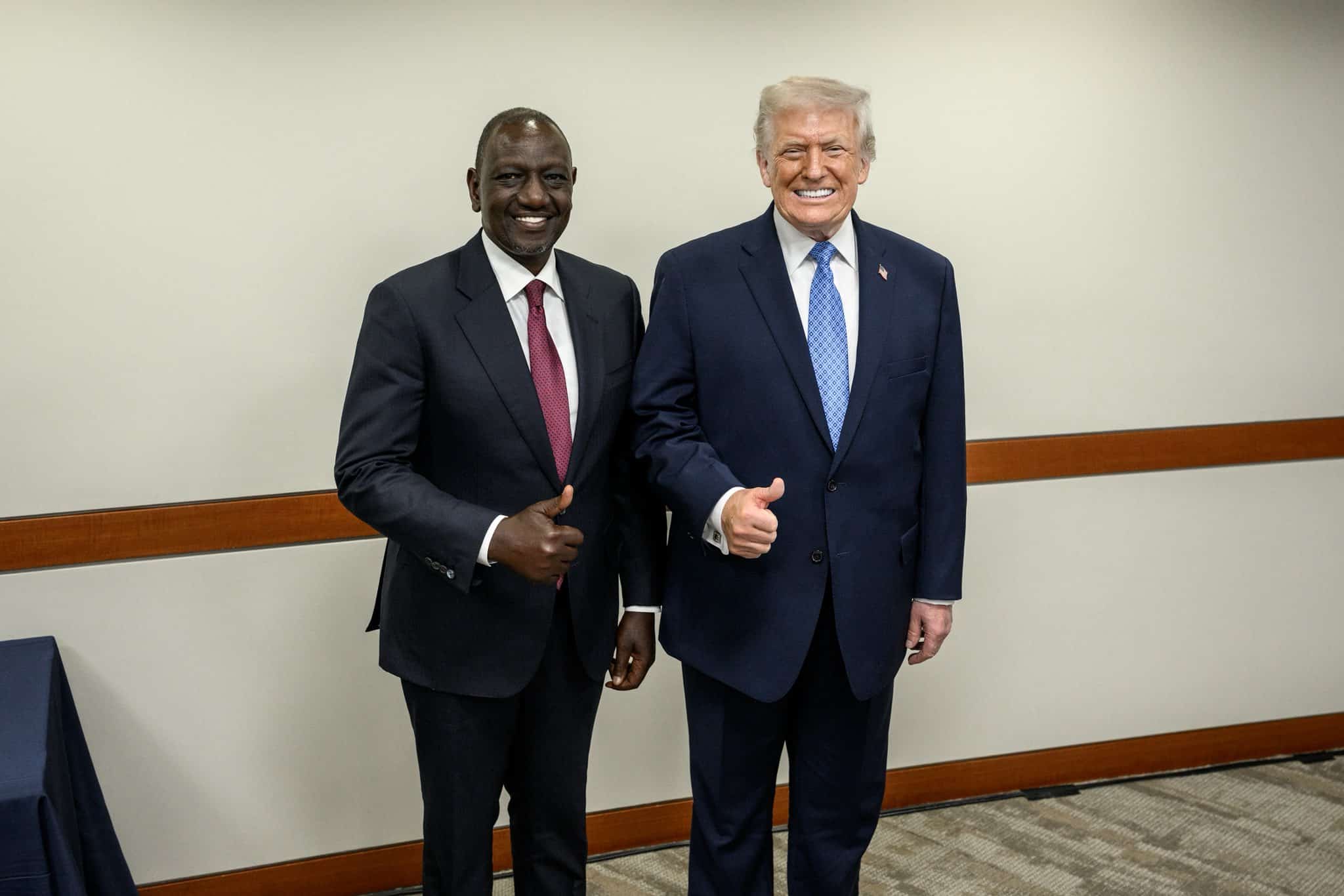
Trump’s African ‘Mini-Me’
Kenyan President’s Bluster, Broken Promises, Performative Politics, and Mishandling of the Economy Invites Unflattering Comparisons to His US Counterpart
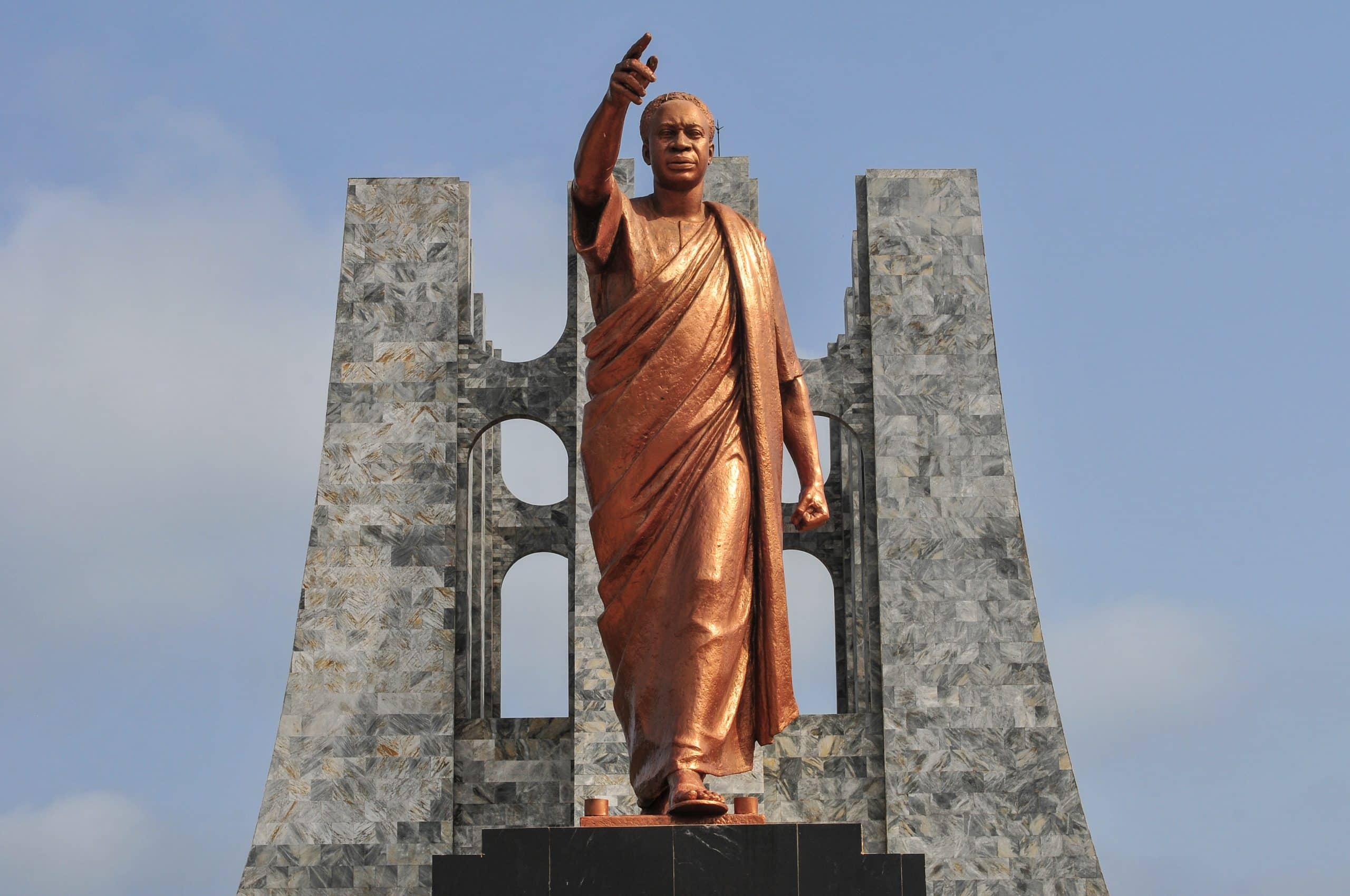
The Killing of Pan-Africanism: The CIA Drew First Blood. AFRICOM Salted the Earth. Africa’s Elites Signed the Sale to Western Capital.
Malcolm called it the ballot or the bullet. The empire answered with coups, and when the coups were done, it sent contracts. Defender Global Correspondent Jon Jeter has watched the sale for twenty-five years, from a Johannesburg corporate suite to an Addis Ababa classroom, and files a dispatch from the deathbed of the dream and the streets that refuse to bury it.
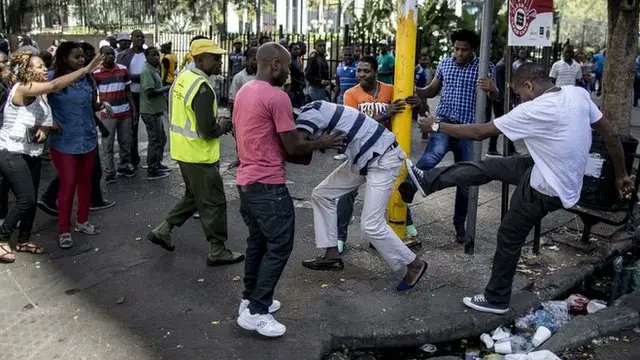
South Africans Are Hunting Immigrants Door to Door With Machetes. It Made Them the Villain of the World Cup.
From Nairobi cab stands to Lagos livestreams, Africans who once sheltered the ANC’s revolutionaries are celebrating every defeat of South Africa’s national team, as mobs with machetes hunt immigrants door to door in Johannesburg and Durban to the chant of “abahambe,” they must leave. It is MAGA’s playbook and ICE’s manhunt run on African soil, colonial violence surviving its colonizers.