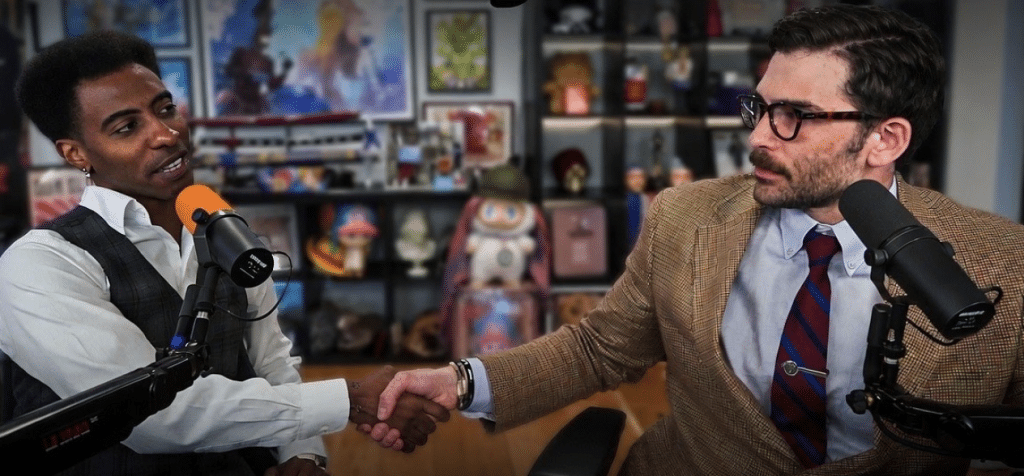
On the last Sunday in June, tens of thousands of people around the world tuned in to a live broadcast taking place in western Missouri.
The World Cup was in town that weekend, and the cameras of the planet with it. The broadcast was about a primary election, in a district that Missouri lawmakers redrew in September 2025, deliberately, so that no one would ever have to think about it again.
Yet, on a Sunday night in June, they moved thirty thousand dollars into a Missouri primary because somebody finally talked about rent, jails, Black liberation and reparations, the genocide in Gaza, used their language, on their platforms, without apology.
By the end of the broadcast, viewers had donated more than $30,000 to a Kansas City organizer who has never held elected office. Within two weeks, he was featured on The Majority Report, a YouTube program with more than two million subscribers.
Importantly, many of those in the audience were overwhelmingly young. The very same people we are constantly told, every single cycle, do not care about politics, cannot be reached, and will not vote.
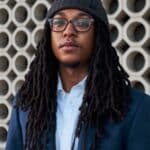
His name is Hartzell Gray, but this story is not about him. It is about the future of politics in America, arriving early in Missouri’s 4th District, and what its arrival reveals about where political attention, money, and power are migrating in this country. And it ends with a question aimed directly at young people and Black Kansas City: when the moment we keep demanding finally shows up on a ballot, do we show up for it?
The Gerrymander Was Supposed to Be the End of the Story
I would like to start with the map, which I’ve covered before. As I’ve reported previously, Missouri Republicans redrew the state’s congressional lines at the White House’s instruction, carving Kansas City into three districts. The new 4th takes the portion of the city west of Troost Avenue, the street that has served for a century as the dividing line of Kansas City apartheid, and stretches it 150 miles south to Dade County, stitching the urban core onto a vast rural region that votes nothing like it.
The design worked as intended, on paper. Princeton’s Gerrymandering Project gives Republicans a ten-point advantage in the new district. The incumbent, Republican Mark Alford, won his last election with 71 percent of the vote. Seven Democrats filed anyway. The math was supposed to make them invisible.
But the math did not account for what happened next.
Hasan Piker, Twitch, and the Broadcast Towers They Didn’t Plan For
Gray is a lifelong Kansas Citian, a former radio host, and a tenant organizer who came up through this city’s housing movement. When the gerrymander split his community into a new district, he moved his campaign with it. He carries the endorsement of Kansas City’s Democratic Socialists of America chapter, the same national organization behind Zohran Mamdani’s rise in New York, and he is running on Medicare for All, reparations for Black people, abolishing ICE, and ending American support for the apartheid state of israel.
On June 29, Gray sat for an interview with Hasan Piker. In case you are unfamiliar, Piker broadcasts politics on Twitch for roughly eight hours a day to more than three million followers, a stream he describes as “AM radio, but for Zoomers.”
There is a strong case that no single person in American politics holds more of this generation’s attention.
The Guardian named him one of the biggest voices on the American left, Democratic strategists spent the past year hunting for the left’s answer to Joe Rogan and kept landing on his name, and party operatives now treat his stream as a required campaign stop for anyone who wants young voters in the midterms.
On that day in late June, all of that attention pointed at Kansas City. They talked about the modular jail the city built for the World Cup. About bus fares. About stadium deals. The most valuable resource in American politics is the sustained focus of young people, and for one night, Kansas City had nearly all of it.
The Kansas City Star covered the moment by describing Piker as “controversial” three times in a single article. But what they didn’t cover is why millions of people, most of them young, now get their political information from a Twitch stream instead of a metro daily.
The truth is that the civic conversation about Missouri’s future is happening at a scale local legacy media has not absorbed, on platforms it often covers only as spectacle.
After New York’s Socialist Sweep, Missouri Is the Test
Six days before that stream, New York City primary voters delivered a clean sweep to democratic socialist candidates for the House, unseating two sitting members of Congress. The Washington Post found the wins were powered by a multiracial coalition of young voters who expanded the electorate rather than waiting for it. The victories rattled the party establishment from Brooklyn to Washington.
The politics of Obama is dead. The high road is dead.
Young people want radical, leftist politics that demand the complete upending of the system as we know it, and they are not waiting for permission to build them.
New York proved that appetite is real. Across this country, a younger generation is starving for radical politicians who don’t apologize, politics that fight back instead of managing decline, politics that treat the status quo as the emergency it is. But New York proved it where the map was friendly. Missouri’s 4th is the harder test: whether that hunger can win inside a district drawn as a weapon against it. Gray said as much on the stream, arguing the movement has to run candidates everywhere, including districts built to preserve right-wing Republican control. Of the political class that drew those maps, he was blunter: “it’s time for us to come after theirs.”
The money tells the same story from another angle. Through March, Gray’s campaign had raised about $235,000, with a mass majority of it arriving in donations under $200 and no corporate PAC money. Alford has raised over $1.1 million. Nearly half of that came from PAC contributions in his last cycle, with less than 3 percent from small donors.New quarterly filings, the first to capture the stream windfall, are due to the FEC on July 15. Whatever those numbers show, the shape is already clear: one campaign is funded by an institution while the other by The People.
They did not plan for a generation that built its own broadcast towers.
World Cup Jail, Bus Fares, Gaza: Why the Country Recognized Kansas City
There is a reason a global audience adopted a Missouri primary, and it is not novelty. The issues in this district are the issues everywhere, arriving here in their most concentrated form.
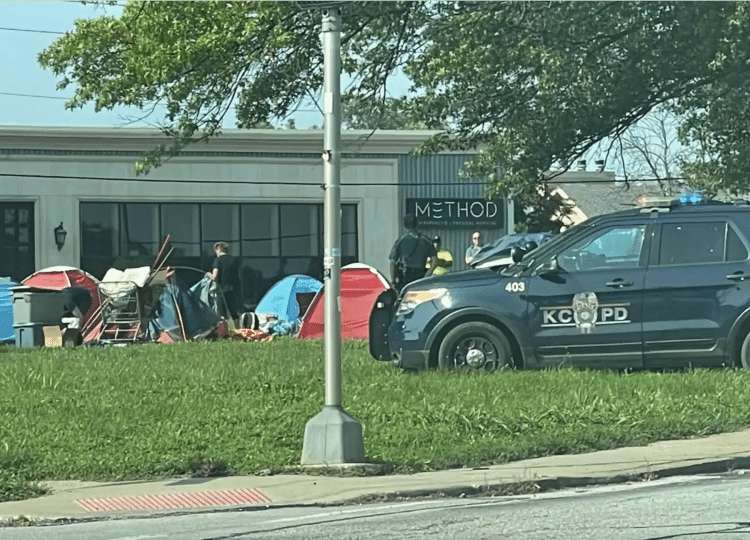
This city spent $25.8 million on a modular jail for the World Cup, a facility that city council members themselves compared to an ICE detention center, built by a company tied to the contractor that built Guantanamo Bay. A coalition of 23 organizations, whose campaign The Defender has covered, warned that the jail will remain in the community long after FIFA leaves. The builders made the first half of the argument themselves: construction delays pushed the facility past the tournament it was built for, leaving Kansas City a permanent jail and no World Cup to excuse it. The city reinstated bus fares on the workers who keep it running in the same season it opened its arms to the world. Public money flows toward stadiums while the housing trust fund runs on fumes. Data centers, the genocide in Gaza, waged with munitions assembled at a Boeing plant in Missouri, ICE in the streets during an international tournament: every fault line in American politics runs directly through this state.
So when Gray talked about Kansas City to a national audience, that audience recognized its own cities. The 4th District is without question not an outlier, but is instead what I would describe as a microcosm, our country compressed.
Young Voters, Black Kansas City, and the Question That Belongs to Us
I want to end this story with both an agitation and analysis, to our own people.
Every cycle, the commentary class, many of our elders rightfully mourn that young people do not vote, and the numbers behind the lament are real.
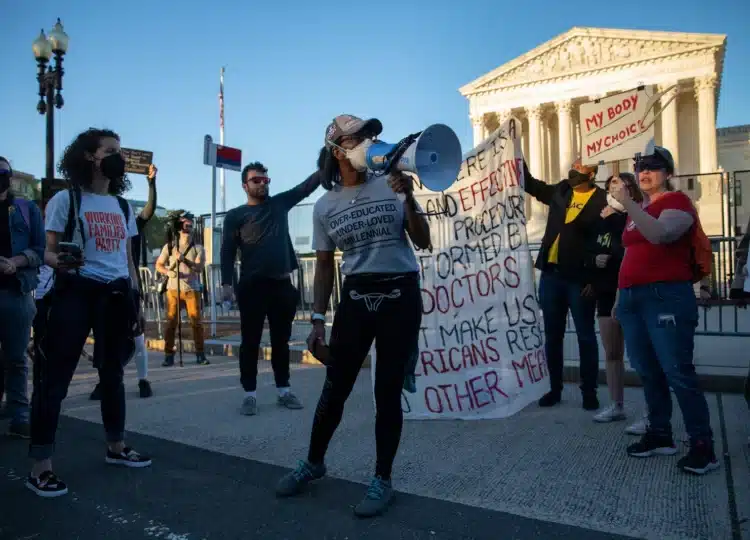
In the last midterm election, 23 percent of young people cast a ballot. Among Black youth, the figure was 15 percent. Those numbers get weaponized as proof of apathy. But New York just demonstrated they are something else entirely: a choice, one that can be unmade the moment young people decide an election actually belongs to them.
Which puts a mirror in front of Kansas City. For years, our communities have demanded voters and candidates who are young, movement-raised, and unbought. One of the most electric young candidates in a generation is now running from this city, in a race the whole country is watching, alongside six other Democrats: Jeanette Cass, Jordan Herrera, Randy Miller, G. Rick, Ashleigh Rogers, and Wayne Russell.
Whoever any of us supports, the August 4 primary will measure something larger than one campaign. It will measure whether the communities that call for new leadership show up when new leadership appears on a ballot. Early voting opens July 21. The map’s designers are betting we won’t. The lesson of New York, and the lesson of every freedom movement this city’s elders carried, is that the bet only pays if we honor it.
Missouri is a microcosm, the country, compressed.
The people who drew this district were betting on distance. Distance between Troost and Dade County, between a voter and a reason to believe, between what happens in Washington and what happens on Southwest Boulevard. They assumed attention was scarce and would stay that way.
They did not plan for a generation that built its own broadcast towers.
Whether that attention becomes votes in Cass and Bates counties is genuinely unknown, and anyone who tells you otherwise is selling something. What is known is that the future of politics did not wait for permission to arrive in Missouri. It is already here, streaming live from Kansas City to the world. The only question left is who is watching from home, and what we decide to do about it.
Context on the 4th District Race
Hartzell Gray is a Kansas City community organizer, tenant organizer, and former radio host running in the Democratic primary for Missouri’s 4th Congressional District on August 4, 2026. He is endorsed by Kansas City’s Democratic Socialists of America chapter and drew national attention after a June 29, 2026 interview with Twitch streamer Hasan Piker, during which viewers donated over $30,000 to his campaign.
Seven Democrats are running in the August 4, 2026 primary: Jeanette Cass, Hartzell Gray, Jordan Herrera, Randy Miller, G. Rick, Ashleigh Rogers, and Wayne Russell. Incumbent Republican Mark Alford is seeking re-election, and Libertarian Thomas Holbrook is also running.
Missouri’s primary election is Tuesday, August 4, 2026. No-excuse absentee voting in person runs from July 21 through August 3, 2026. The general election is November 3, 2026.
In a 2025 mid-decade redistricting, Missouri lawmakers split Kansas City into three congressional districts. The new 4th District includes the Jackson County portion of Kansas City west of Troost Avenue and stretches roughly 150 miles south to Dade County. The Missouri Supreme Court upheld the map, and Princeton’s Gerrymandering Project estimates it gives Republicans a ten-point advantage.
The race drew national audiences after candidate Hartzell Gray appeared on Hasan Piker’s Twitch stream on June 29, 2026, where viewers donated more than $30,000, and was later featured on The Majority Report. Interest also follows the June 2026 New York primaries, where democratic socialist candidates swept House races, raising questions about whether similar campaigns can compete in Republican-leaning districts.
The “World Cup jail” is a $25.8 million, 100-bed modular detention facility Kansas City approved in October 2025 at 7740 E. Front Street ahead of the 2026 FIFA World Cup. Construction delays pushed its opening past the tournament, and a coalition of 23 organizations led by Decarcerate KC has campaigned to stop it from opening, warning it could remain in use long after the World Cup.