‘All They Got to Do is Stop Talking Honky’: How Argentina’s Racist Display at the World Cup Mirrors the MAGA Backlash in the US
A month after the World Cup ended, the spectacle is gone. The racial and political tensions it exposed are not, as Argentina’s President Javier Milei, much like Trump, stokes racial tensions to cover for a sick economy and its savage inequalities.
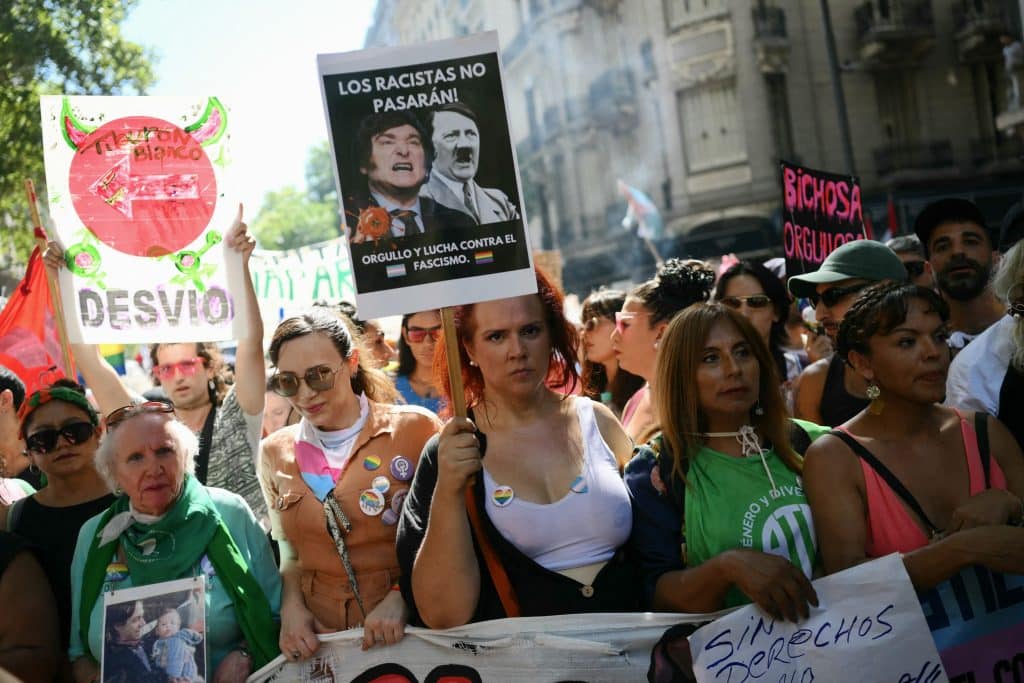
The World Cup has come and gone, but in its absence, the quadrennial mega-event leaves behind far more than the lasting legacy of a new world champion. In the cities it touches, the tournament reshapes infrastructure, policing, development and displacement long after the final whistle. Culturally, the Games serve as a microcosm of the world itself — a global pressure test where power, prejudice and politics surface in everything from the policies and ideologies of host countries, to the behavior of fans and the identities represented by the teams themselves.
That was especially true this year. Against the backdrop of genocide in places like Gaza, Sudan and Congo, the rise of xenophobia and persecution of African migrants in South Africa, and the growing reach of far-right politics from the United States to Europe and Latin America, questions of race and belonging followed the tournament just as closely as the matches themselves. For many fans, the conversation surpassed which country might win, and instead focused on which teams, supporters and national cultures seemed most willing to embrace Black people — and which made clear that they did not.
Few countries became a sharper case study than Argentina.
Long one of international soccer’s most celebrated teams, Argentina entered the tournament already facing scrutiny after players were captured on video singing a racist chant about Black members of France’s national team in 2024. During the World Cup, an Argentine fan spewed racist invective at IShowSpeed, a Black streamer and social media influencer, while videos and accounts of racist behavior by Argentine supporters circulated widely online. In an Instagram post, the actor Samuel L. Jackson urged Black fans to support the eventual winner, Spain, in the tournament final, describing Argentina as “one of, if not the most racist country in the world.”
Samuel L. Jackson’s Instagram posts from the tournament. He urged Black fans to back Spain in the final, calling Argentina “one of, if not the most racist country in the world.”
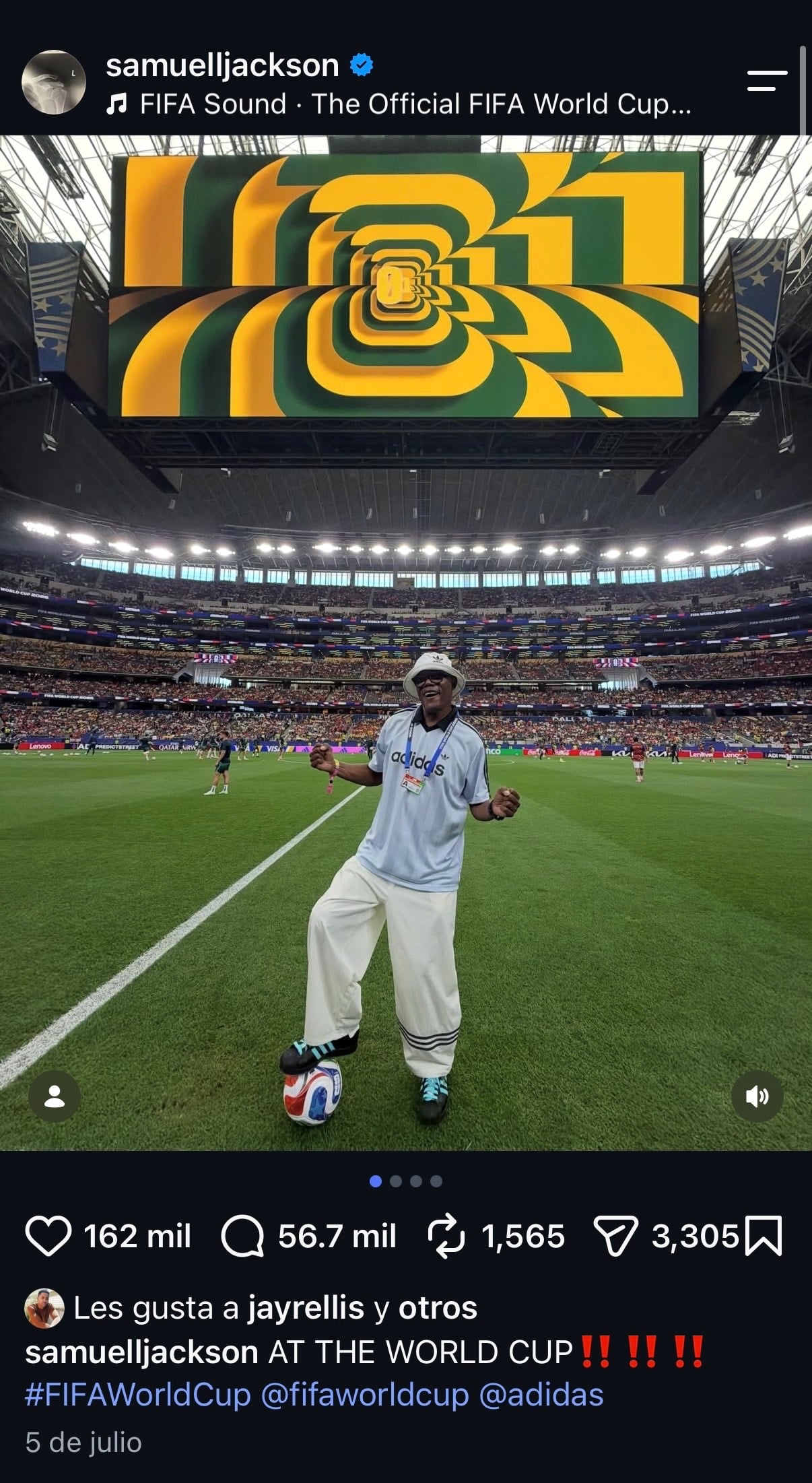 A–1 · Instagram
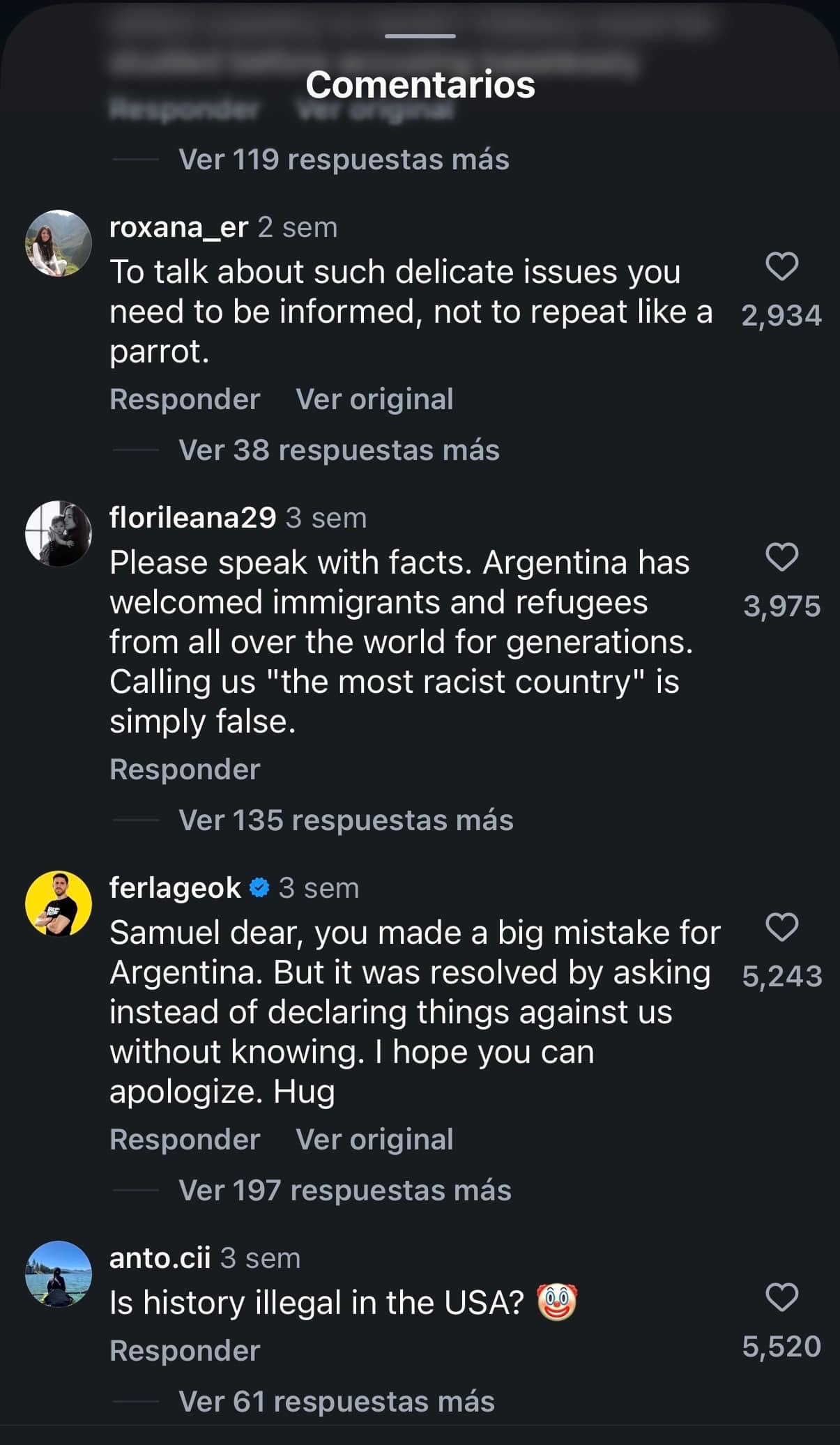 A–2 · Instagram
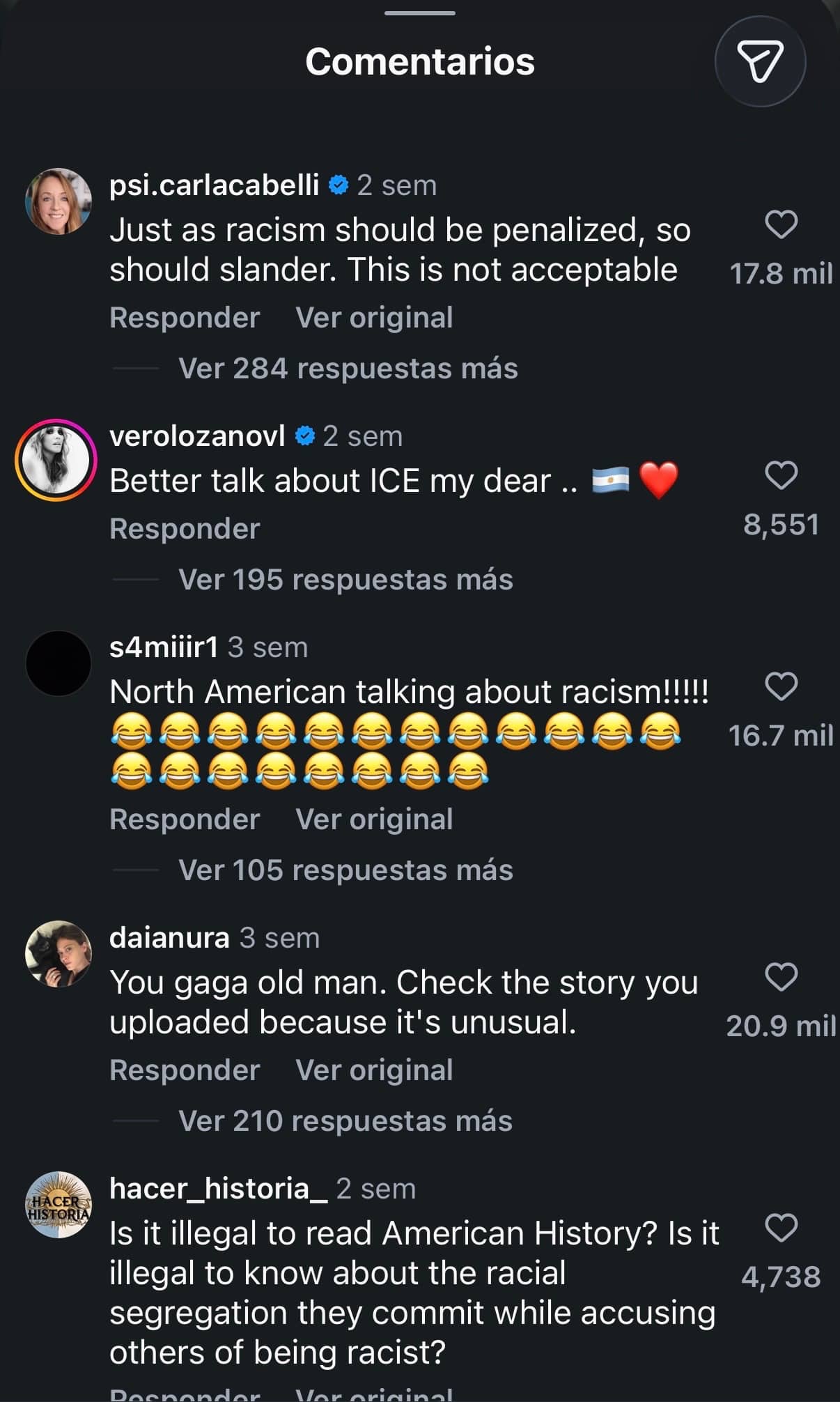 A–3 · Instagram
The backlash surrounding Argentina’s World Cup run extends far beyond the behavior of a few fans or players. It reflects a much older struggle over who gets to be considered Argentine, how the country came to imagine itself as white, and what happens to Black people when a nation writes them out of its own story.
A burger restaurant in Llavallol, Buenos Aires Province uses an anti-Black slur throughout its branding and social media marketing. The buns on the burger are notably Black.
 B–1 · Instagram profile
 B–2 · Marketing
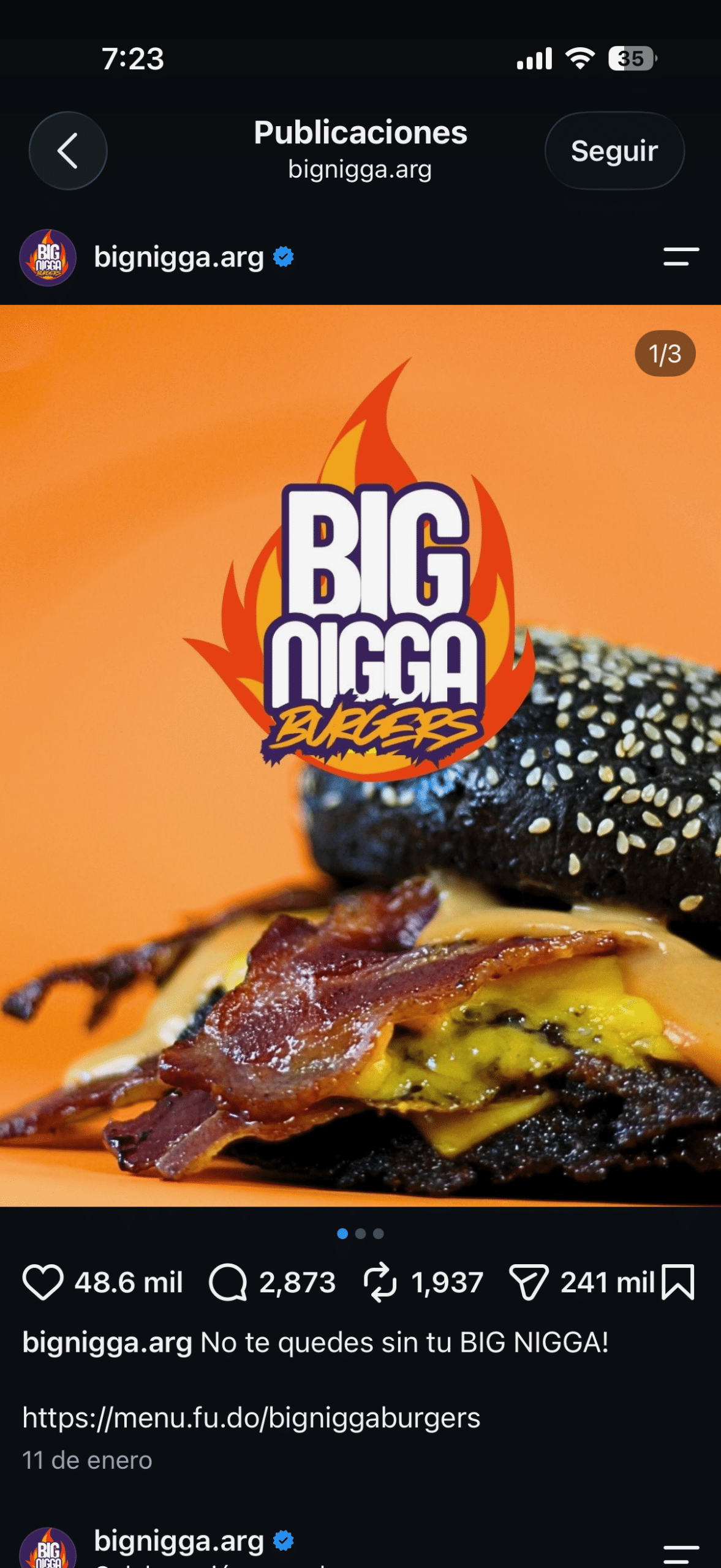 B–3 · Marketing
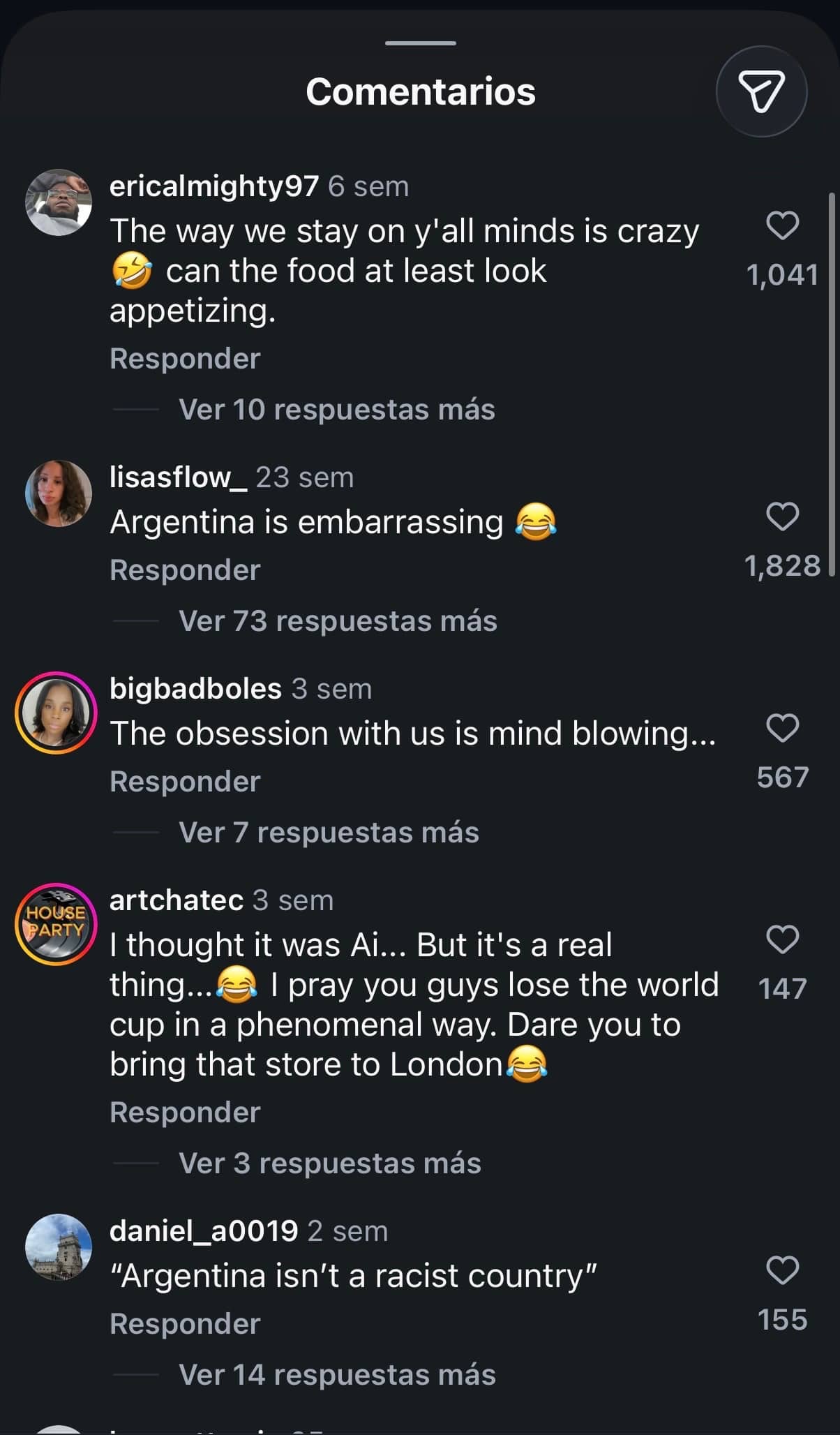 B–4 · Marketing
 B–5 · Marketing
 B–6 · Marketing
Sixteen years apart, two Black journalists encountered that contradiction firsthand, revealing how Argentina’s particular history of anti-Black violence and erasure fits within a larger global system of anti-Blackness.
After living 33 years in the U.S. and four years in South Africa, I arrived in Argentina in the final days of 2002 as the Washington Post’s man in South America. As a towering, blue-black, 37-year-old African American and the great-grandson of a slave, I was, to put it mildly, like a fish out of water in a country where whites seldom relied on white supremacy to qualify their dispossession of Blacks.
So accustomed was I to brittle European settlers defensively whitesplaining white-minority rule in South Africa or the origin of say, rock music—no, it is not the Beatles or Elvis—that I was stunned to hear one Argentine after another respond unhesitatingly to questions about the Tango’s roots:
“Well, we stole it from the Blacks.”
In reporting a story about the growing sex trade in one Buenos Aires neighborhood, the white sex workers from Argentina and Paraguay described how they colluded with the Black sex workers from Haiti and the Dominican Republic to stimulate business for each other. If, for example, a customer balked at the price and threatened to take his business to the Black women working a block away, the Argentine sex workers would entice him by warning: “You don’t want to do that! Those putas are crazy; they put some kind of spell on men!”
Accordingly, the Black sex workers would reciprocate in an act of interracial, working- class solidarity that helped me grasp the role that racism plays in weakening social movements by pitting workers against each other along tribal lines. So too did an Argentine woman I befriended who would often taunt me–deservedly so–for my bad Spanish, to which I would respond playfully, “What do you know, you’re just a white girl.”
The first time I said it she punched me in my arm, the second time harder and the third time she hit me so hard that I got the message that she did not find my characterization of her as “white” the least bit funny. Finally, she explained that “white” in her mind meant a vacuous, jejune Yankee woman who had scarcely a care in the world, as embodied by the female characters on the television show “Friends.” She loathed women like that and considered herself a revolutionary and a Marxist who cared deeply about politics and humanity.
“I am not white,” I recall her saying after she had assaulted me. “I am Argentine.”
Long described in demographic estimates as a country where as much as 97 percent of the population is of European descent, Argentina was the wealthiest and most industrialized nation in South America for most of the 20th century, and virtually everyone who wanted a job could find one. Then in 1991, with the blessing of the world’s two most powerful financial institutions, the IMF and the World Bank, Argentina’s investor-friendly government decided to root out inflation by pegging the exchange rate of the local currency, the peso, to the U.S. dollar, sharply limiting the number of banknotes in circulation.
Within two years, the monetary policy known as “dollarization” curbed inflation, but it also effectively raised prices on locally produced goods, making Argentina’s products too expensive to sell abroad and goods shipped into the country artificially cheap. Much like the disillusioned, bankrupt protagonist of Ernest Hemingway’s The Sun Also Rises, Argentina went broke, “gradually at first, and then suddenly.” Confronted with a deluge of foreign products and unable to sell their merchandise abroad, Argentina’s manufacturers went under or scaled back drastically. By the time I arrived in the country, its indigenous auto industry was producing fewer cars than at any time since 1965. The nation’s unemployment rate quintupled.
Still, even at the nadir of the country’s economic crisis, there was no sense that Argentines were competing against each other. In 2003, a panhandler explained to me that the purge of the country’s Black population through war, disease and an immigration policy that favored Europeans had rendered anti-Black racism inert.
Black people had once been a far more visible part of Argentinian life. In 1778, Africans and Afro-descendants made up at least 37% of Argentina’s population, with numbers increasing to more than 50% in some major provinces. But the number of Black people declined over the following century through a combination of war, epidemics, poverty, interracial marriage and mass European immigration. Black men were disproportionately drawn into the country’s 19th-century wars. And as Argentina increasingly fashioned itself as a white, European nation, Black Argentines were also pushed out of census categories, national histories and the story the country told about itself.
One Hundred Argentines
Each figure below stands for one person in every hundred. Tap through the timeline and watch a nation write more than a third of itself out of its own story. The erased do not disappear. They become outlines.
“We are all white and almost all Catholic, so when something goes wrong for our neighbor, we don’t blame them because we know it could happen to us next. We know exactly who to blame: the upper class.” A panhandler, Buenos Aires, 2003
Sixteen years after Jon arrived in Argentina, I spent a semester studying and reporting in Buenos Aires.
As a sophomore who had recently declared a minor in Spanish, I saw New York University’s expansive study-abroad program as an opportunity to put my growing language skills to use. Before traveling to a country I had never imagined myself visiting and knew little about, I spoke with other Black students who had studied at the university’s sole South American site. They warned me that I would be stared at, touched without permission, overtly sexualized and subjected to invasive questions about my hair, body and identity.
They were right.
My Blackness made me hypervisible. Yet Afro-Argentines faced the opposite: invisibility, buried beneath a national mythology that Argentina was white because its Black population had simply disappeared.
But the Black communities I met rejected that story.
During my semester abroad, I interned with DIAFAR, a Black-led organization fighting the historical and political erasure of Afro-Argentines. I translated articles from its newspaper, El Afroargentino, from Spanish into English. Additionally, I worked with Agrupación Xangô, where I helped young members practice English ahead of a cultural exchange in the United States. Through that organization, I met and profiled Carlos Álvarez Nazareno, an Afro-Uruguayan and Argentine activist whose work challenged the country to recognize the Black people it had written out of its national identity.
I also reported on other Black activists and African migrants whose lives complicated the belief that Blackness was extinct or inherently foreign to Argentina. The people I met represented distinct histories of Blackness in Argentina. Some were Afro-Argentines whose roots in the country stretched back generations. Others had migrated from elsewhere in Latin America and the Caribbean, while newer African migrants were building lives in a nation that treated Blackness as alien and threatening.
One of those migrants was Moustafa Sene, who arrived in Argentina from Senegal at 23 in 2007.
When Sene first came to Buenos Aires, he told me, he could walk through parts of the city for an entire day without seeing another Black person. By the time I interviewed him in 2018, that had changed dramatically.
“You walk seven or 10 blocks and you usually see an African,” he told me in a quick, soft Spanish.
Sene estimated that roughly 4,500 Senegalese migrants were living in Argentina at the time.
Many had arrived in Argentina searching for economic opportunity, driven by limited job prospects for young people in Senegal. Historically, he said, most Senegalese migration remained within Africa, with migrants moving to countries including Côte d’Ivoire, Gabon, Liberia and South Africa before larger numbers began moving to Europe. As European countries made migration more difficult, newer destinations in Latin America became increasingly attractive.
But arriving in Argentina presented its own challenges.
Most Senegalese migrants did not speak Spanish when they arrived. Many learned the language informally through daily life and street work rather than in classrooms. Some had limited formal schooling, making it even harder to navigate a new language, government bureaucracy and job market.
Many make their living selling jewelry, clothing and other goods on the street, placing vendors in direct conflict with police harassment, violence, arrests and confiscation of merchandise.
These dangers came with consequences.
In 2016, Senegalese activist Massar Ba was found gravely injured on a city street, reportedly crying out that someone wanted to kill him. He had suffered severe injuries to the head, hip, and lower abdomen, but despite the gravity of his injuries, the police arrived late, and only to call an ambulance. He died in the hospital the following day.
Ba was a prominent advocate for Senegalese street vendors facing police harassment, and had previously filed a complaint against the Metropolitan Police over their treatment. His death became a rallying point for Afro-Argentine and African migrant organizers — including Sene and Nazareno — who demanded an investigation, connecting his case to the broader racism and institutional violence facing Black people in Argentina (as officers did not secure the scene or preserve evidence, leaving community members themselves to identify nearby surveillance cameras that might have captured what happened.
“Many people see us as inferior because our ancestors were enslaved. So because the white man was the master, today they want to think — or make us believe — that we still have the role of the slave and that they are still the masters…That’s not how it is. That is history now. We are going to keep fighting and defending ourselves so that it never happens again.” Moustafa Sene
As World Cup fans all over the world testified, however, racism in Argentina has indeed amplified over the span of a generation as Wall Street’s austerity policies have transformed the economy into a mirror of the United States’—savagely unequal—and Trump’s mini-me President Javier Milei has stoked dormant tribal resentments to legitimize the widening gap between the rich and poor.
A Google search of racially motivated police killings in Argentina turns up only one, 17-year-old Lucas González, who was tortured and fatally shot by plainclothes officers in 2021. González was mixed-race.
“They stigmatized them [González and his friends] because they were ‘morochos’ [brown-skinned], because they came from a deprived neighborhood,” the boy’s father, Hector, told reporters at the time. “They saw them, they waited for them, they tortured them, they burned his body with cigarettes.” Three police officers were convicted of “aggravated homicide with malice and racial hatred.”
Alan Cibils, a white Argentine economist and retired professor of political economy at the Universidad Nacional de General Sarmiento in Buenos Aires, told the Kansas City Defender in a phone interview:
“Is Argentina racist or not is a valid question and one that we should be debating more,” he said. “Of course, any country founded on European settler colonialism is racist from the very foundation…The racial superiority of the Spanish and the Portuguese endures til this day in Argentina… but the most racist country in the world is quite an exaggeration.”
Still, Cibils acknowledged that there has been an uptick of racism in recent years, coinciding with the 2015 presidential election of a conservative businessman, Mauricio Macri, followed by Milei’s election as president eight years later. Claiming that “woke is nothing more than a systematic plan…to justify state intervention and increase public spending,” Milei has proclaimed his political affiliation with Trump and aped his crusade against multiculturalism by closing the Ministry of Women, Gender and Diversity and the National Institute against Discrimination, Xenophobia, and Racism. Moreover, police in Buenos Aires have begun to crack down on immigrant Senegalese street vendors under the leadership of Milei and the city’s mayor, Jorge Macri, the former president’s brother.
Said Cibils:
“Milei has a very xenophobic and misogynistic agenda… the repression targets poor people or anyone who protests. He is against anything and everything that promotes rights for excluded populations. That has enabled certain sectors of society to express their (bigotry) freely where they might have not been comfortable expressing it before.” Alan Cibils, economist
Under Milei, Argentina’s rightward turn has accelerated. But for Black Argentines and African migrants, neither the racism exposed during the World Cup nor the country’s political shift to the right began with him.
Former President Mauricio Macri marked Argentina’s first major rightward turn in recent years, but Carlos said his government ultimately failed to carry out the sweeping structural changes it sought. Under Milei, that project has moved faster and with greater force.
“Macri was the first government from the right to get power, but he couldn’t make strong changes,” he said. “But this neoliberalism is going faster than Macri.”
Milei has also benefited from powerful support abroad, particularly from the Trump administration. In 2025, the U.S. government pledged up to $20 billion to help stabilize Argentina’s struggling economy, while the IMF separately approved another $20 billion in loans.
For Black Argentines and African migrants, then, the deeper story is not that racism suddenly appeared with Milei. It is that longstanding racism has become more visible, more politically permissible and more materially consequential.
Eight years after my time abroad, Argentina’s World Cup run brought Nazareno and me back into conversation.
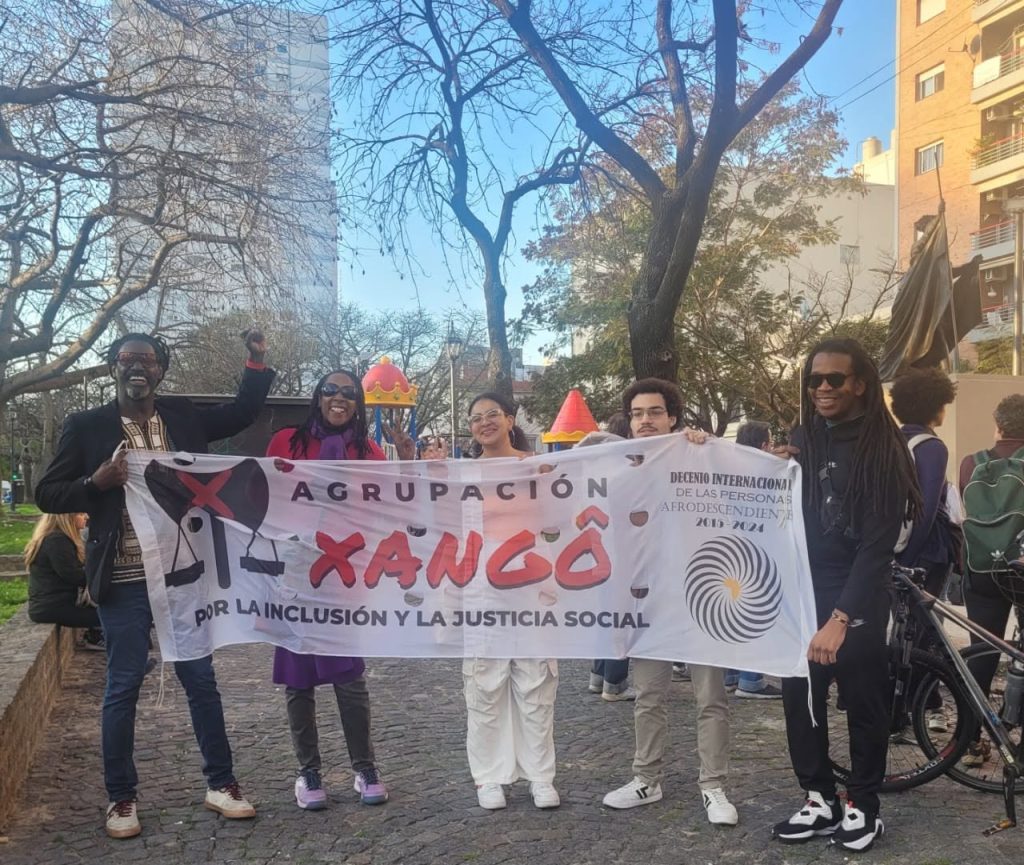
He said that scrutiny was pushing white Argentines to reflect more critically on their own racial identities and the country’s image of itself.
“With the World Cup, people are again asking why Argentina does not have Black people on the team,” he told me. “The discussion is on the table again—the questions about racism…I think they realize there are some things they have to think about,” he said.
Nazareno saw the backlash as evidence that a conversation Black organizers had been pushing for years had become much harder for Argentina to avoid. But the World Cup was not solely responsible for that visibility.
He said years of organizing by Afro-Argentine, African migrant and Afro-LGBTQ groups had strengthened networks, expanded anti-racist movements and created new cultural and political spaces.
“The networks of coordination have become much stronger,” he said. “The Afro-Argentine movement is more dynamic and more connected.”
For communities that had spent generations fighting erasure, the visibility itself is an achievement.
But Nazareno drew a sharp distinction between being seen and having power.
“We are more visible now. That does not mean that the social situation of Afro-Argentine people has changed.” Carlos Álvarez Nazareno
In many ways, he said, their material conditions had gotten worse under Milei, due to the dismantling of the institutions and social programs that once offered limited protections to marginalized communities. Nazareno said most notably, Black Argentines no longer have an institutional space to be heard.
“There is no place where you can present something against the racism and discrimination that you have suffered, in an institution or just in the street,” he said.
In 2022, far-right activists in La Plata, a city outside Buenos Aires, opened the Centro Cultural Kyle Rittenhouse, named after the American right-wing vigilante who fatally shot two people during 2020 protests against police brutality and racism in Kenosha, Wisconsin. The center was raided by police later that year. Graffiti beside the center reads, “A leftist is better dead than red,” alongside a crossed-out hammer-and-sickle.
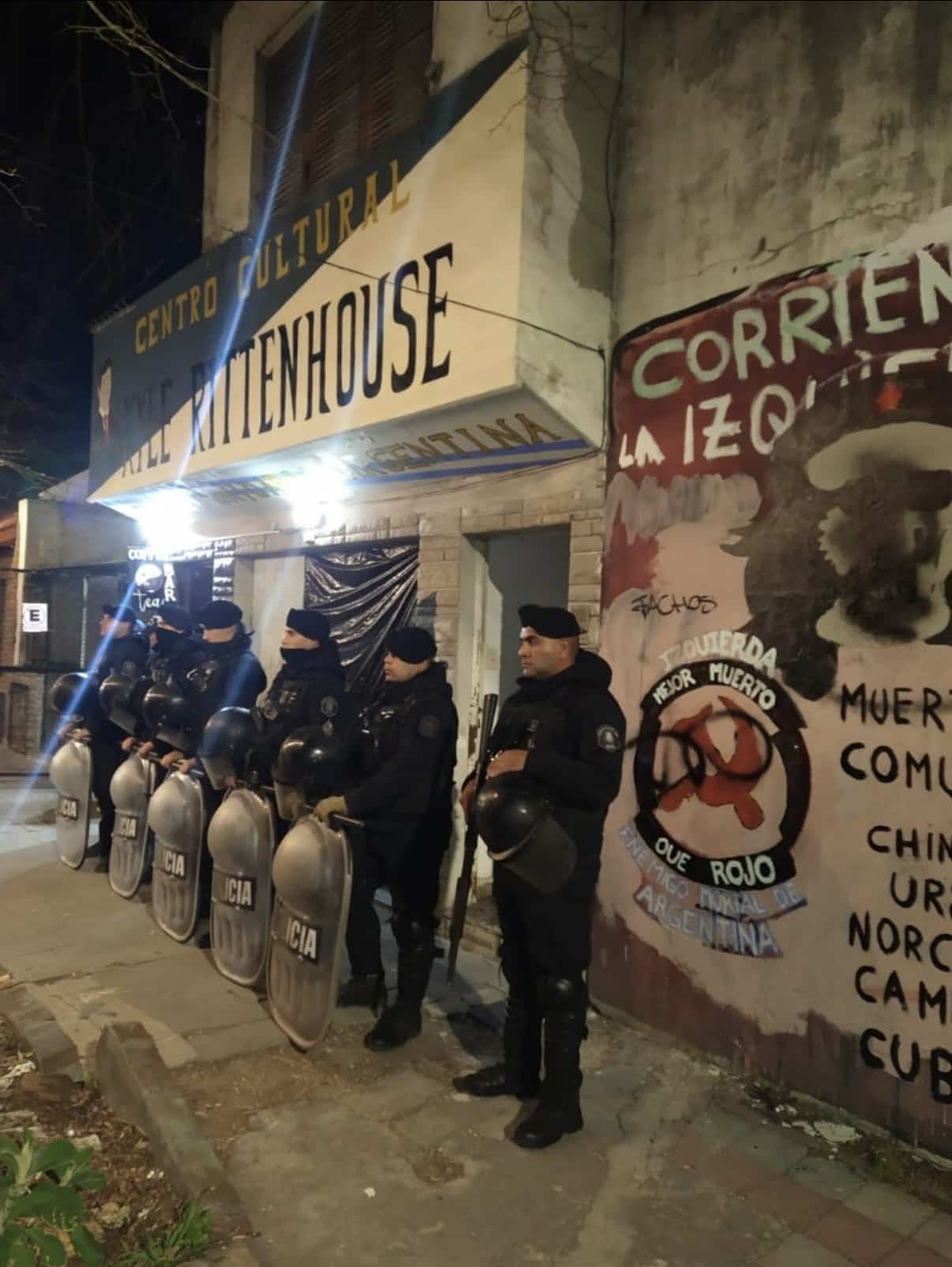 C–1 · Police raid, La Plata
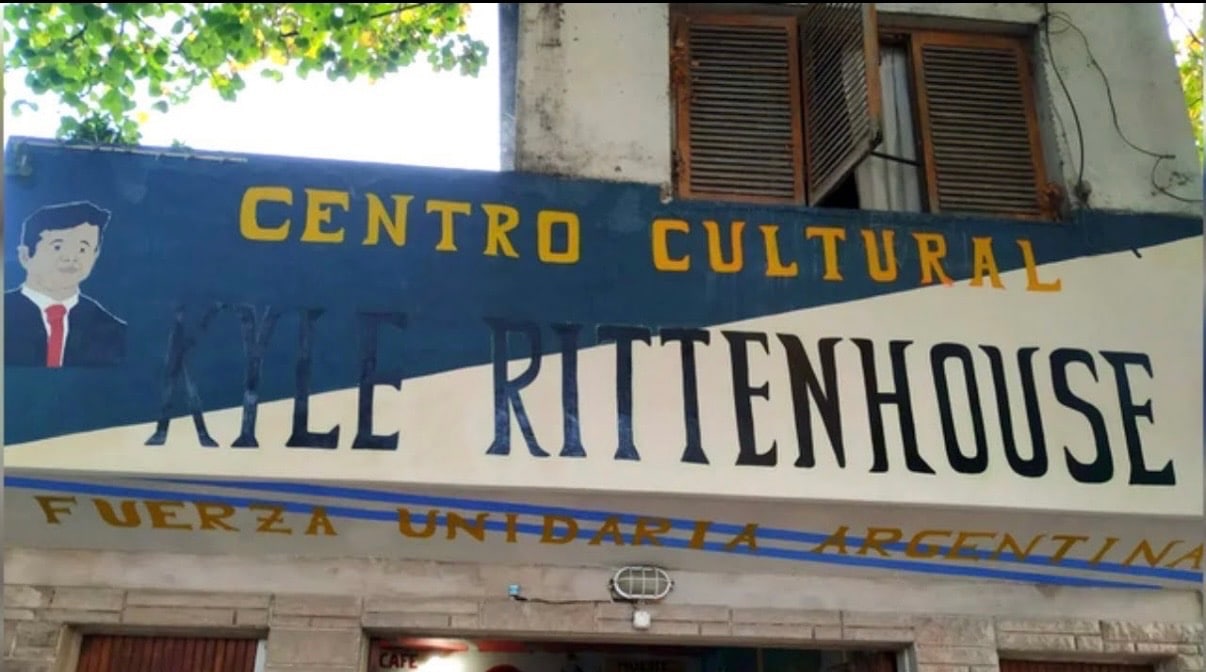 C–2 · The center’s exterior
He also described deteriorating public health and social services. Older Afro-Argentines and Black migrants, he said, were particularly vulnerable as government support for healthcare, pensions and other basic needs deteriorated.
And the street-vending economy that was thriving among African immigrants in 2018 had changed.
Nazareno said authorities in Buenos Aires had removed many vendors from neighborhoods where they once sold goods openly, arresting some and confiscating others’ merchandise.
Rather than disappearing entirely, some vendors adapted by pooling their resources and renting space together inside ferias and galerías, indoor markets where they could continue selling clothing and other goods.
“Taking all the vendors out of those [neighborhoods]; was brutality,” Nazareno said.
But he did not describe racism as something that had disappeared and suddenly returned with Milei.
“I don’t think racism increased. I think racism is more visible nationally and internationally.” Carlos Álvarez Nazareno
That is an important distinction.
The comparisons to the white backlash in the U.S. with the advent of the Make America Great Again, or MAGA, movement are apt. Whites’ racial resentments in Argentina are typically reserved for the country’s indigenous population—in my experience, when you hear an Argentine utter the words “los Indios,” you are about to catch an earful of racial invective.
But Milei’s class project needs to cast a wider net for scapegoats to blame for the country’s precipitous economic decline. Argentines who attended this year’s World Cup overwhelmingly represent the country’s wealthy or la clase alta, who are largely descended from the caudillos or plantation owners who cheered on cancer when it killed the populist first lady, Eva Peron, and referred to supporters of her populist husband, Juan Peron, as mierda de negro, or nigger shit.
But by the late 40s, Blacks had been virtually scrubbed from Argentina’s national self-image. In that context, “Black” did not refer only to people of African descent. It was also used to mark Indigenous, mixed-race and poor working-class Argentines as socially inferior. The usage recalls the political definition advanced by Steve Biko, the South African anti-apartheid leader whose Black Consciousness movement treated “Black” as a unifying identity for people oppressed under white rule. Said Cibils:
“The protesters (who supported the Perons) were darker-skinned and they called them Negroes. It’s mixed with classism,” Cibils. This is what the ruling elites never forgave Peron for: having included the darker- skinned working class into Argentine working life. The elites never forgave him for having to deal with these people.”
Similar to the surge in whites’ bigoted violence and microaggressions in the U.S. over the last decade, Argentina’s display of racism at the World Cup exemplified racism’s utilitarian nature as explained by the assassinated Black political prisoner George Jackson in a letter to another Black inmate at California’s Soledad Correctional Facility:
“I’m always telling the brothers some of those whites are willing to work with us against the pigs. All they got to do is stop talking honky. When the races start fighting, all you have is one maniac group against another.”
Quoted here as the piece began: in his own words