Of all the atrocities to scar the face of South Africa’s blemished history, among the deadliest unfolded in a town about 70 miles northwest of Johannesburg when police opened fire on striking mineworkers, killing 34 and injuring nearly 80 others.
The attack was reminiscent of the 1960 Sharpeville massacre when police gunned down 69 Black people protesting white-minority rule, and the Soweto uprising 16 years later when police fatally shot as many as 700 anti-apartheid demonstrators. The carnage on a hilltop overlooking a platinum mine in the town of Marikana, however, did not transpire in 1962 or 1972 or even 1982 but in 2012 on a late winter morning in the southern hemisphere, fully 18 years after voters of all races went to the polls for the first time to elect the African National Congress, or ANC, as the nation’s ruling party, and Nelson Mandela as its president.
In a chain of events that Orwell might very well have rejected as implausible, the ANC not only parroted its white minority predecessors’ penchant for responding to Blacks’ grievances with gunfire, but the party’s prosecutors initially tried to hold 270 striking miners criminally liable for their slain co-workers’ deaths.
Worse still was the role played by Cyril Ramaphosa, a board member for Lonmin, the British-owned corporation that owns the platinum mine. At the urging of Lonmin executives, Ramaphosa pressured government ministers to beef up police presence at Marikana, characterizing the strike in an email as “dastardly criminal” and urging “concomitant action” against striking miners.
A key figure in the fight against apartheid, Ramaphosa founded the National Union of Mineworkers, or NUM, in 1982 and served as its first General Secretary. When Mandela was released from prison eight years later, Ramaphosa was the chairman of the ANC’s National Reception Committee and stood beside Mandela when he made his first public address in 27 years to a crowd of nearly 100,000 from the balcony of Cape Town’s City Hall.
In the runup to the 1994 election, Mandela would say privately that Ramaphosa was his choice to succeed him as president, but when a rival, Thabo Mbeki, outmaneuvered him in internecine party negotiations to grab the deputy president position under Mandela, Ramaphosa went into business, capitalizing on post-apartheid South Africa’s affirmative action policy, known as the Black Economic Empowerment program, requiring blue-chip firms to diversify their corporate leadership. He invested his income from those ventures in the country’s mining, energy, telecommunications, banking and even retail sectors—acquiring the 20-year master franchise agreement to operate South Africa’s McDonald’s restaurants in 2011—and today some analysts estimate Ramaphosa’s personal wealth at $1 billion.
Mirroring Ramaphosa’s material fortunes in the post-apartheid era were Lonmin’s shop stewards, who the bosses began to shower with pay raises, cars and mobile phones, and reassign to cushy desk jobs. Marikana’s rank-and-file mineworkers complained that the company’s largesse had bought off the shop stewards, and the widow of one of the employees killed in 2012 recalled her husband saying that “(t)he NUM is a sellout,” leading to the “wildcat” or unauthorized work stoppage. In a confrontation five days before the police massacre, NUM officials opened fire on striking mineworkers who approached Lonmin’s main office at Marikana, although no injuries were reported.
Ramaphosa would return to politics four months after the massacre when then-President Jacob Zuma appointed him as his top deputy. In 2018, Ramaphosa succeeded Zuma, who was forced to resign following accusations that he used his position as head-of-state to enrich himself. Ramaphosa’s presidency has also been marred by scandal, however, including most recently, accusations that his government has tacitly endorsed a wave of violent xenophobic attacks that has expelled more than 53,000 foreign nationals from neighboring African countries over a period of five weeks, inviting simultaneous comparisons to the American Descendants of Slaves movement to exclude Blacks born in the Caribbean and Africa from any reparations payment; the nativism of the Make America Great Again, or MAGA campaign; and the Trump administration’s terrorism against Latino immigrants, especially.
Many Blacks, both on the continent and across the diaspora, view South Africa’s “Afrophobic” pogrom as a betrayal of the very same Pan-African solidarity that was instrumental in abolishing apartheid. Wrote Ahmed Aminu-Ramatu Yusuf, a former Nigerian cabinet official:
“My case is primarily, strictly and solely against the ANC that has totally rubbished the history of Black people all over the world. The history that largely arose from Black people’s struggles and resistance against foreign invasion, enslavement, colonialism and Apartheid. The history that gave birth, nourished, grew, flowered and developed Pan-Africanism!”
A Great Fracturing Among Africa’s Sons and Daughters
One-hundred-and seven years after W.E.B. DuBois organized the first Pan-African Congress in Paris, the political and cultural movement to unite Africans everywhere in a global intifada against settler colonialism is drawing its final breaths, if indeed it’s not dead already.
In his pivot from freedom fighter to crypto-fascist, Ramaphosa is hardly an outlier, but part of an international cadre of political elites from Kansas City to Kampala who’ve rejected outright the logic of Black solidarity across international borders for a Western financial system that closely resembles European settler colonialism’s divide-and-conquer strategy intended to pit African against African.
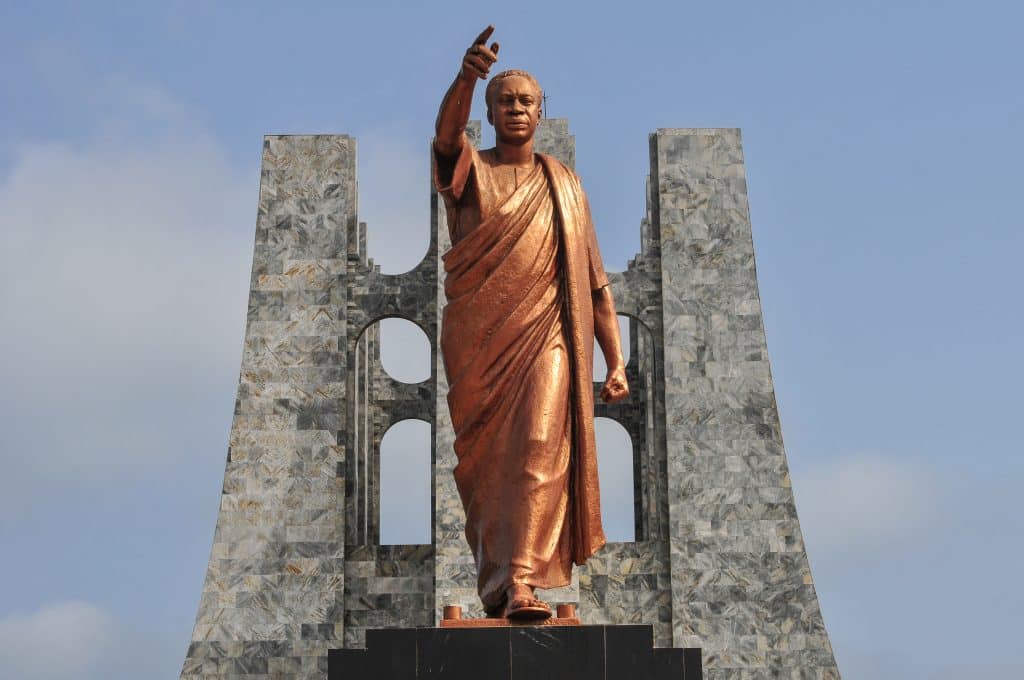
It is difficult to overstate how central Pan-Africanism was to 20th century decolonizing struggles, particularly after the end of the second World War. From Kenneth Kaunda to Kwame Ture, Malcolm X to Maurice Bishop to Mickey Leland, and Frantz Fanon to Fidel Castro, virtually every liberation icon from the Cold War era adhered to the framework. “Ghana’s independence is meaningless unless it is linked up with the total liberation of Africa,” Ghana’s President Kwame Nkrumah proclaimed shortly after the country won its independence from the British in 1957. Six years later, Nkrumah would join Ethiopian Emperor Haile Selassie and Egypt’s President Gamal Abdel Nasser to inaugurate the Organization of African Unity. Their core objectives were peace and prosperity through social, political and economic cohesion.
But instead of coming together, Africans across the world have undergone a great fracturing, largely along ethnic and class lines, beginning in earnest with the dissolution of the continent’s key ally, the Soviet Union, in 1991.
Instead of peace, Africans are at war with one another more than ever. Of the historic high 61 armed conflicts reported across 36 countries in 2024, 28 were in Africa, including in the Democratic Republic of Congo where more than 100 militias continue to battle government forces in the eastern part of the country for control of the region that is rich in minerals required for the production of electric vehicles and mobile phones. Similarly, Sudan plunged into a civil war in 2023, pitting government soldiers against a formidable paramilitary group, the Rapid Support Forces, or RSF, that is backed by the United Arab Emirates. Human rights organizations accuse the RSF of committing genocide in an attempt to ethnically cleanse the western Darfur region of Africans.
The surge in state violence has, unsurprisingly, done nothing to lift African incomes. Despite abundant natural resources, Africa remains the world’s poorest continent with 46 percent of its population of nearly 1.6 billion people earning $3 a day or less.
Failing to deliver anything of material value to their constituents, African heads of state have begun to attack democracy to stay in power. In January, Uganda’s President, Yoweri Museveni won a seventh term after security forces terrorized supporters of his main rival– a former pop singer who is known by his stage name Bobi Wine– in a campaign reminiscent of southern sheriffs in the Jim Crow South, patrolling campaign events on horseback and in armored vehicles and combat fatigues, disrupting rallies with batons and tear gas, arresting and torturing Wine and his supporters, according to both the candidate and human rights groups. Ugandans report seeing security forces stuffing ballot boxes.
“It was one of the worst-rigged elections I have seen in Africa,” Ray Hartley, research director of a South African-based think tank, The Brenthurst Foundation, told reporters.
South of Uganda in Zimbabwe, President Emmerson Mnangagwa this month signed legislation abolishing the democratic principle of one man one vote, authorizing Parliament to instead choose the country’s president.
Similarly, Ethiopians last month reelected Prime Minister Abiy Ahmed but voting was suspended in large swaths of the Tigray region due to security concerns where ongoing violence between the country’s two largest ethnic groups, the Amhara and the Oromo, threatens to erupt into a civil war that some say could rival the Rwandan genocide 32 years ago that left as many as 1 million people dead after 100 days of intense fighting.
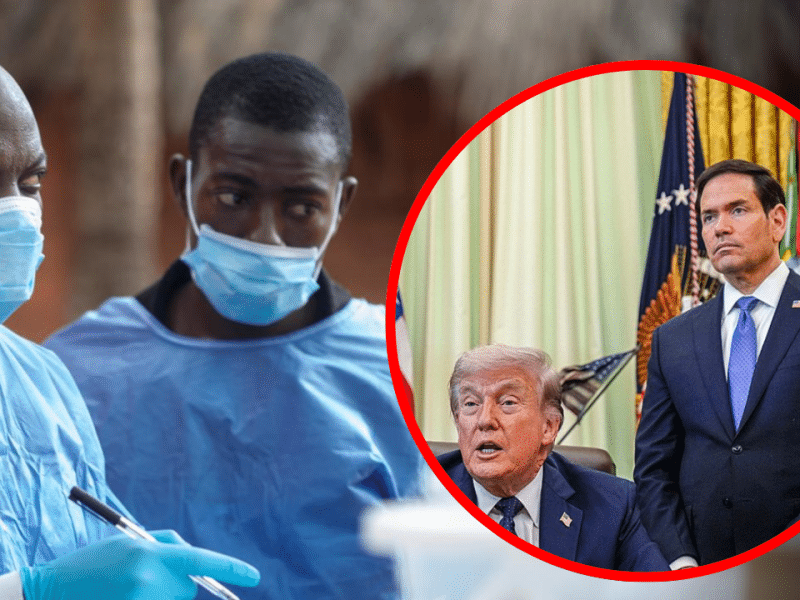
If Pan-Africanism has a single Judas, however, it might not be Ramaphosa but Kenya’s President William Ruto who in June 2024 deployed 400 police officers to Port-au-Prince to lead a a United Nations’ multinational security mission battling gang violence. The United Nations’ peacekeeping efforts are notorious in the global South for widespread abuses and sexual assaults in Haiti, the Central African Republic and the Democratic Republic of Congo but Kenyan scholars surmise that Ruto has aggressively courted favor from both Trump and the Biden administration which in 2024 designated Kenya a major ally that was not a member of the North American Treaty Organization, the first country in sub-Saharan Africa to receive that status. That helps explain Ruto’s decision to open a facility to quarantine seven U.S. aid workers who may have been exposed to an outbreak of the Ebola virus while working in the Democratic Republic of Congo. Following massive protests, a Kenyan judge ordered Ruto’s administration to suspend construction of the site but the Reuters news agency reported that the work continues unabated. Kenya has never reported an Ebola infection.
A Collision Between Pan-Africanism and Western Finance
“I don’t think Pan-Africanism is dead but it is critically ill,” an Ethiopian aid worker, Elias Negash Abay told the Kansas City Defender in an interview. “The xenophobia in South Africa provides cover for the whites to continue to suck the resources out of the country and they are aided and abetted by South Africa’s Black elites who have become like Obama.”
Through his expansion of the U.S. Africa Command or AFRICOM, and military intervention that toppled Libya, the most prosperous country on the continent, Obama dramatically expanded the Pentagon’s fingerprints on the continent, increasing the availability of arms, helping to fuel a record 22,037 deaths tied to militant Islamist groups in 2025, and worsening tensions between Arabs and darker-skinned Africans, a relationship that was a feature of pan-Africanism and figured heavily in the populist rhetoric of Libya’s slain leader Muammar Gaddafi.
While AFRICOM has increased terrorism on the continent, it has fed international defense contractors to include Lockheed Martin, Boeing, General Dynamics, Raytheon, and Northrop Grumman. Those five corporations alone won $2.1 trillion in Pentagon contracts between 2001 and 2020.
It is that neo-colonial collusion between Western finance and African dispossession that has fueled the evisceration of Pan-Africanism as a policy framework, the Sahel states notwithstanding. I did not realize it at the time but I witnessed the beginning of the shift from Pan-Africanism to neoliberalism as a Washington Post foreign correspondent in 2002 when I attended a ceremony in Durban South Africa to rebrand the Organization of African Unity. I wrote:
“With their sovereignty no longer in question but their continent still profoundly poor, more than 40 African heads of state gathered here to transform the OAU into the African Union, a new coalition focused more on the continent’s integration into the global economy rather than its liberation from colonial rule.”
Continuing I wrote of the AU:
“Its centerpiece is an economic recovery plan known as NEPAD, which will establish a peer review committee to ensure that members comply with specific standards of good governance, a free press and financial transparency in exchange for debt relief, aid and liberalized trade with the West. The organization even aims eventually to inaugurate a single continental currency. “
That integration into a global economy that views Blacks as ATMs has been a poison pill. Conversely, the idea of a single continental currency was authored by Libya’s Gaddafi, who was arguably the leading Pan-Africanist in the world at the time of his death. In addition to getting their hands on Libya’s mineral and oil wealth, Western leaders wanted to stop the creation of an African currency, backed by gold, that would’ve reduced the continent’s dependence on the U.S. dollar and subsequently boosted incomes and economic development. At the inaugural event, Gaddafi said from the dais:
“We accept assistance. We refuse conditions. We are not pupils who need someone to teach us. If you insult the beggar, he will drive you away.”
Exporting the School-to-Prison-Pipeline from the U.S. to Africa
Pan-Africanism’s imminent death is deeply personal for me in large measure because I witnessed the beginning of its transition as a young journalist who didn’t fully comprehend the historical significance of my own reporting. For instance, in 2000, I interviewed Ramaphosa in his corporate suite in a tony Johannesburg suburb for a story about the widening class divide between South African Blacks in the post-apartheid era. Feigning empathy, he said to me at the time:
“There is a feeling that (B)lack empowerment is really (B)lack enrichment.”
In retrospect, I’ve come to understand that Pan-Africanism and liberal white ideas for Black redress are, as Steve Biko asserted, incompatible, a lesson that was reinforced for me when I returned to Africa in September of 2025 to teach English at the American International School of Ethiopia, founded by a white woman from Minnesota, Leea Gibson, and her Somali-born husband. About six weeks into the first semester, two school administrators and a female teacher burst into my 12th-grade English class to pat the students down for contraband in the form of cell phones. I wrote of the experience for Black Republic Media:
“At that moment, an awful clarity cleaved my soul in two just as the school bell rang signaling the end of class. Following orders from the stereotypical “nice white lady” sitting at home in Minnesota 7,700 miles away, AISE’s quisling administrators were intent on creating a correctional facility for gifted, middle-class Ethiopian kids, redolent of the zero tolerance policies and school resource officers that combined to both terrorize and criminalize schoolchildren of color across the U.S.
Leea Gibson had, in fact, exported the school-to-prison pipeline to the only country on the African continent that Europeans had not colonized. None of my kids at AISE were likely to end up in jail, but banning natural hairstyles, teaching from stupefying Eurocentric books, relying on unimaginative standardized tests, and stopping and frisking students were all part of a deliberate effort by Gibson to destroy the students’ confidence, turn them off from learning, discipline the most banal indiscretions, and transform AISE into a site of suffering every bit as much as public schools in Philadelphia, New Orleans or Oakland, particularly in the privatization era that began in Bill Clinton’s second term in the White House.
The American International School of Ethiopia represents a form of cultural genocide, reminiscent of Canada’s state boarding schools for the indigenous that sought “to kill the Indian to save the child.” Similarly, Dr. Gibson wanted to kill the African by forcing Ethiopian children to assimilate, to accept the European settlers’ norms as superior and their own as degenerate, to delegitimize African grievances against settler colonialism and to ultimately create a new generation of Manchurian candidates– like mini-Barack Obamas– who could be turned against other people of African descent both on the continent and across the diaspora.
The school reform campaign upon which Dr. Gibson modeled AISE’s curriculum was ostensibly intended to narrow the racial achievement gap in U.S. schools but has instead widened it.
In one telling text exchange that evinced her white savior complex, Dr. Gibson wrote to me:
“It seems you are trying to start a revolution for African power or human rights-but you are fighting against real Africans who are (b)orn and raised in Africa who are working hard for their children. It doesn’t make sense.”
Far more troubling than Gibson’s racial bigotry, however, was the lack of response from Africans. I appealed to AISE’s administrators, teachers, the Minister of Education and private attorneys, all African, to intervene in addressing Gibson’s miseducation of African children.
No one so much as lifted a finger.
And yet it may be premature to write Pan-Africanism’s obituary. In the Sahel region, the governments of Burkina Faso, Mali and Niger have expelled French troops, walked out of the colonial-era currency arrangements and regional blocs that tethered them to Paris, begun to reclaim their gold from Western mining firms, and launched both farming and manufacturing projects to reduce their dependence on the West. In Burkina Faso’s capital, Ouagadougou, interim President Ibrahim Traoré quotes Thomas Sankara to crowds too young to remember the assassinated Pan-African leader and too clear-eyed to forget what was done to him.
The elites betrayed Pan-Africanism but they never owned it. It was born in the holds of slave ships and mining compounds and segregated schoolhouses, and it survives where it was born, among the people with nothing left to sell.
Ramaphosa and Ruto can bury the movement’s name but they cannot bury its necessity. And necessity, on our continent and in our diaspora, has always been the mother of revolution.