The hot water has been out for two weeks. Pests live in the walls. The exterior doors don’t lock. In some apartments the heat has not worked in years. And in some buildings, raw sewage backs up into the basement.
A Naing’s father is blind. His mother has cancer and breathing problems and the vent over their stove doesn’t work, so every day when A Naing cooks, his mother cannot breathe and has to leave the apartment. For the last two weeks A Naing has been boiling water on that stove so his parents can bathe. “That’s not right,” he told the crowd at last Wednesday’s rally.
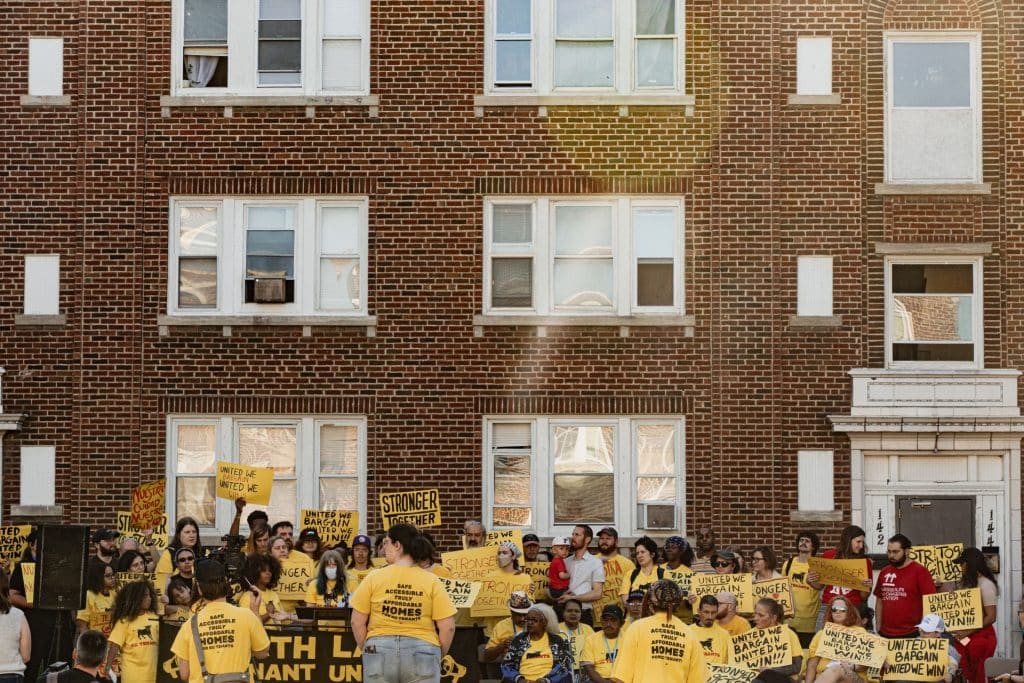
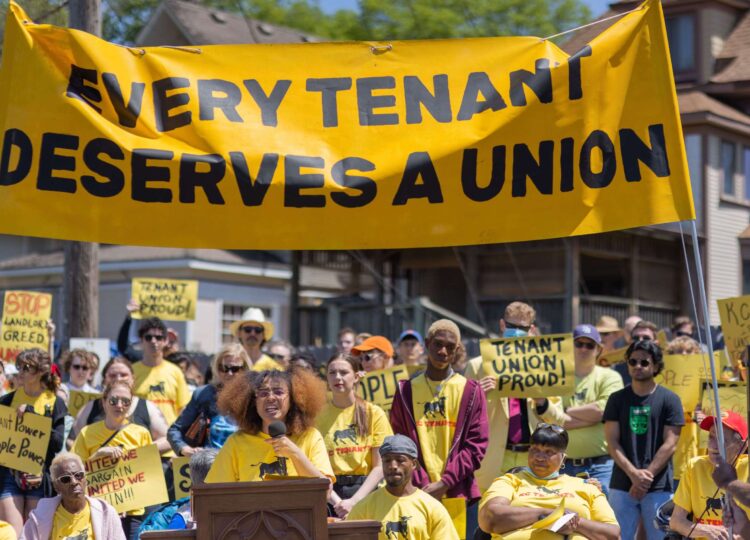
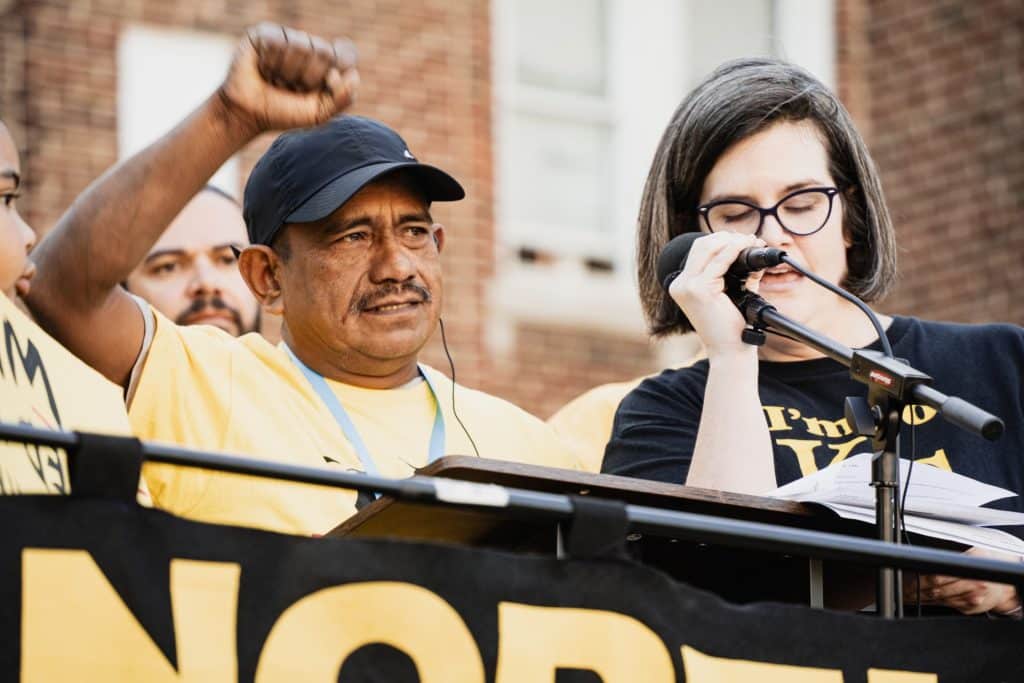
Artemio Barrera, a longtime tenant on dialysis and a leader of the North Lawn Tenant Union, has spent more than a thousand dollars of his own money repairing what his landlord will not. He has patched the wall where a rodent burrowed through. He has fixed what his neighbors needed fixed. “Every time something is wrong, I report it over and over again, and I end up fixing it myself,” he said at the rally.
The slumlord who extracts rent from these families, while relegating them to these horrifying conditions doesn’t even live in Kansas City, he lives in Chicago.
His name is Yisroel Levovitz. He is the principal of Wiser KC LLC, a limited liability shell he uses to own a block of apartments on North Lawn Avenue in the Historic Northeast.
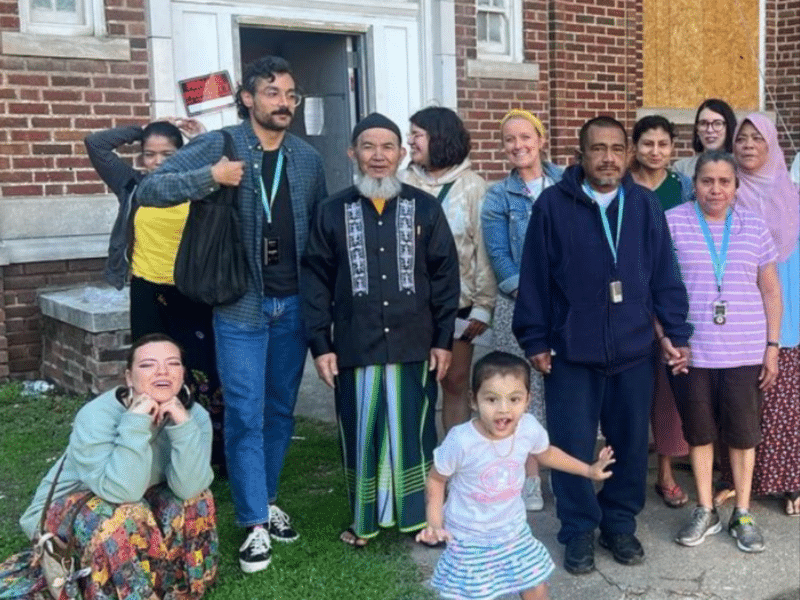
The families who live in those apartments are Burmese refugees, Mexican, and Black working-class Kansas Citians. Many of them have been there for years. None of them are the reason their homes are falling apart. Their homes are being stripped because Yisroel, like many avaricious slumlords, has built his business on the rot of other people’s homes.
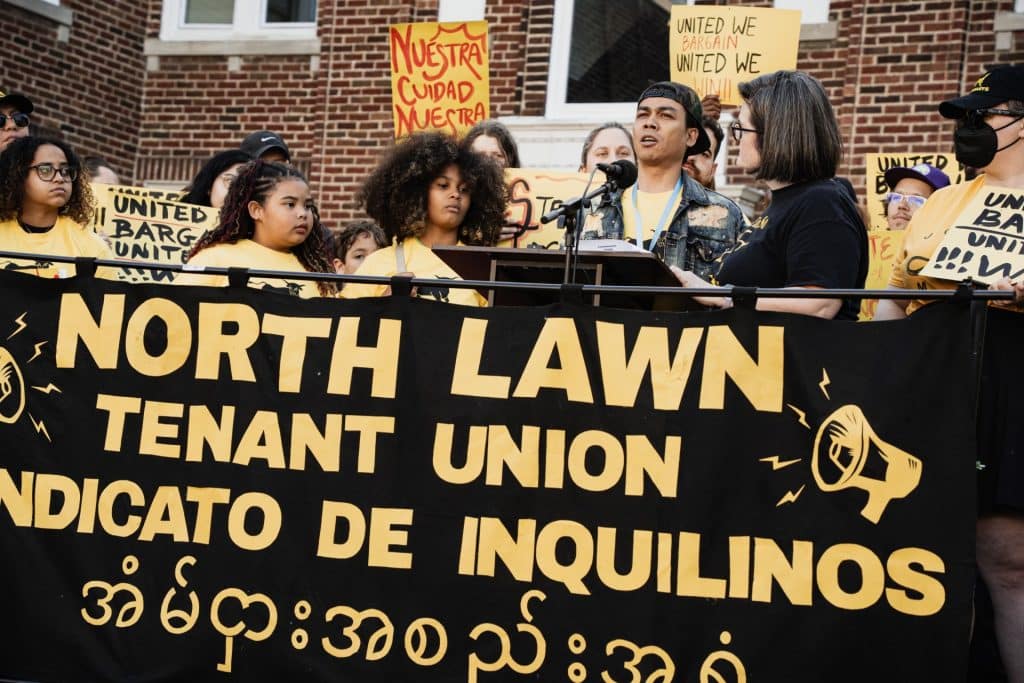
On Wednesday night, more than eighty tenants and neighbors stood on the sidewalk at 148 North Lawn and put their demand to this slumlord. They told him that ninety-four percent of his tenants had signed a union card and that he would meet them at the bargaining table.
But this isn’t the first time they’ve made this demand. Three years ago, the original eight families on this block beat their previous landlord and forced the most protective housing agreement in the history of the state of Missouri.
There are nearly a hundred of them organizing now, and they have come back for him.
A Historic Victory, and What Came After
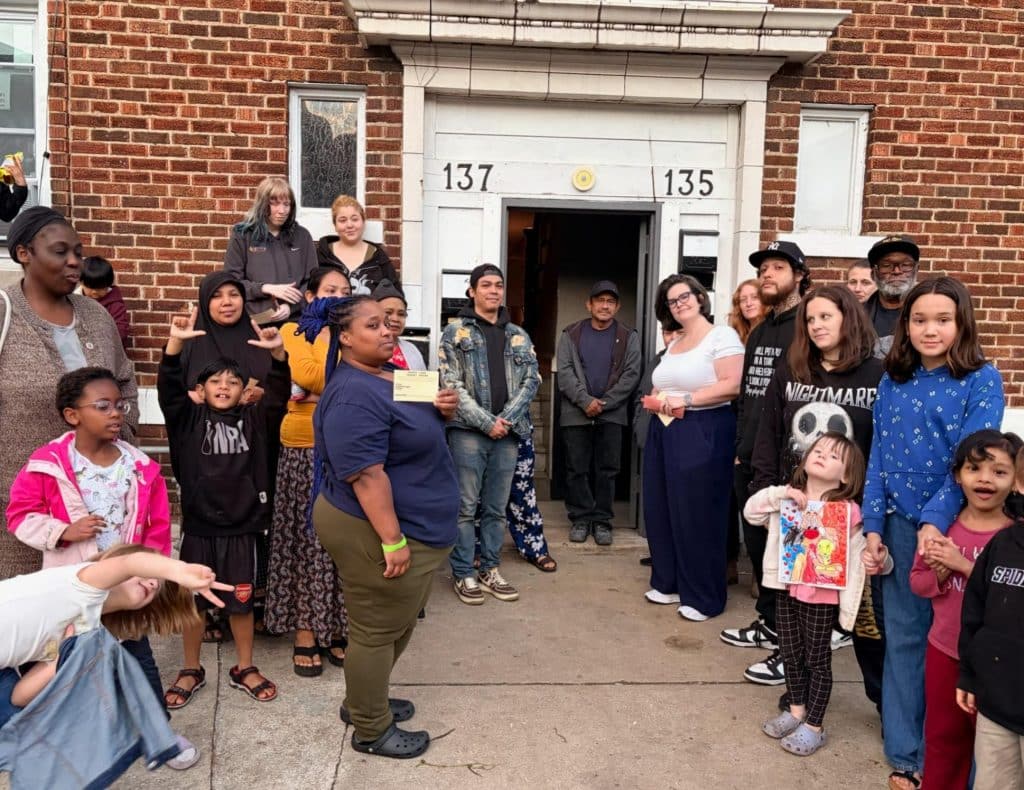
Three years ago this month, a smaller group of tenants on this same block did something that almost never happens in this country. They beat their previous slumlord. Two landlords, actually.
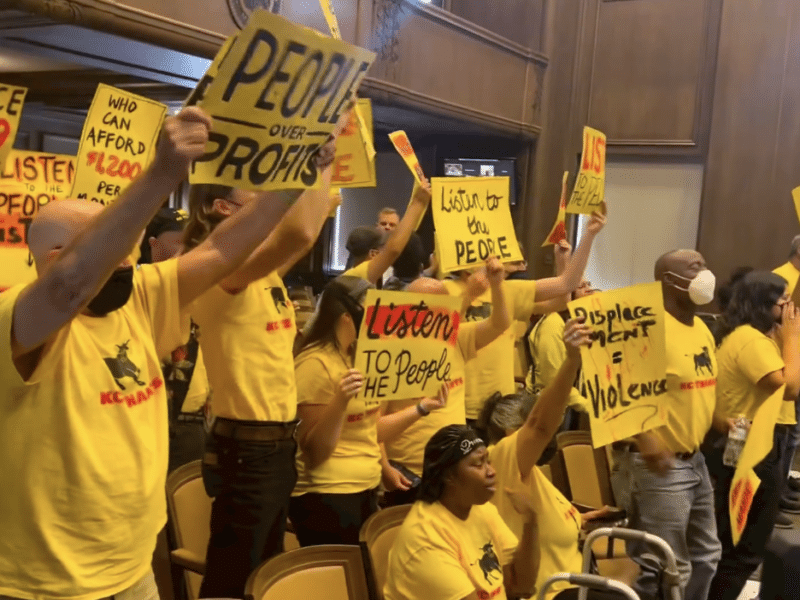
In January 2023, the families on North Lawn were left without heat during the coldest weekend of the year by then-owner, Parker Webb of FTW Investments. They organized with KC Tenants. They won the restoration of heat. Weeks later, Webb sold the buildings to Wiser KC LLC, which immediately issued lease non-renewals and rent hikes of up to 300 percent, moving the monthly rent on the same families from $400 to $1,200. The tenants did not stop organizing. They built public pressure across the city, leaned on deep neighborhood relationships, and brought the fight to City Hall.
In April 2023, the original eight North Lawn families forced their new landlord and the City of Kansas City into a rent stabilization agreement that was the most significant city intervention to prevent displacement and preserve affordable housing in Kansas City’s history.
According to the agreement filed with the city, they secured renovation, relocation across the street into rehabbed units, and a city subsidy of $450 per unit per month on top of the $400 tenants would continue to pay. Before the deal, the tenants had spent years living in what it called inbelievably inhumane conditions with broken windows, holes in ceilings, appliances that did not work, and a property plagued by cockroaches, mice, and other pests.
The agreement made the original eight households, by KC Tenants’ own description, the most protected tenants in the state of Missouri. A KC Tenants organizer later wrote that in refusing to move, the tenants “called into question a system that treats their lives like line items in a New Jersey landlord’s budget.”
The principal at the time, Eli Rosenblatt, was based in New Jersey. Primary ownership of the Wiser KC LLC portfolio transferred last year to the aforementioned Yisroel Levovitz, who is based in Chicago.
The agreement was built on the assumption that the landlord would hold up their end, but they did not.
And while Levovitz lets his tenants go without hot water and heat, he has been marketing the same properties to investors in a different language entirely.
Commercial real estate listings posted through broker Michelle Lutz of Lutz Sales + Investments show 118–148 N Lawn, the block of buildings where tenants report pests, unsecured exterior doors, and years without working heat, advertised as “The Lawn Apartments,” a “luxury rehab” completed within the last twelve months, with “brand-new furnaces in all of the units” and “new LVP flooring, modern kitchen cabinetry, updated fixtures, and tile showers.”
The asking price was $4.39 million. The listing has since been removed.
A second North Lawn listing, bundling two buildings at 123–125 and 129–133 N Lawn Ave and marketed as ‘The Carolina & The Dakota on Lawn,’ remains listed for sale at $2.23 million.
Again, city inspection records tell a different story than the marketing materials.
This is a standard move in the extraction playbook. Cosmetic renovations get photographed for investor listings. The tenants pay rent into a property that is simultaneously being packaged and sold to the next investor, who will inherit the same buildings, the same extraction logic, and, if nothing changes, the same tenants.
“Yisroel thinks he can take his money and run,” Luna Nelson-Cerna, a tenant union leader, said at Wednesday’s rally. “But he better think again.”
She spoke about what the buildings actually mean to the people who live in them. “We know our neighbors. We talk out back just about every day, and the kids all play together. For us, it’s about stability. We want safe, healthy, affordable places to live. But Yisroel has never provided that.”
Naming It Plainly
This is what the people who teach housing as a human right mean when they say the commodification of shelter is a form of violence. The conditions in these buildings are not the result of accident or oversight or bad luck, but are the result of a deliberate calculation by an avaricious landlord several states away who has decided that the cheapest way to extract rent from working-class immigrant and Black families is to let the buildings collapse around them and bill them for the privilege of waiting out the collapse.
The man does not have to look at the sewage or listen to the children whose parents cannot bathe them in hot water. He lives hundreds of miles away and to him the buildings are nothing more than an asset on a spreadsheet and the humans living in them only viewed as revenue line items.
The Deportation Threat: A Landlord’s Best Friend
The conditions on North Lawn do not exist in a political vacuum. The Trump regime has weaponized immigration enforcement as a tool of displacement. ICE operations targeting apartment buildings (particularly as we saw in Chicago) have made tenants in mixed-status households afraid to report violations, call 311, or show up at public meetings.
An immigrant tenant who fears deportation is a tenant a landlord can underpay in maintenance, overcharge in rent, and threaten into silence. In Chicago, a landlord was found to have coordinated directly with federal agents to raid his own building, using immigration enforcement as a displacement tool against Black and Latino tenants.
The Stateline news service documented this pattern nationally, finding that immigration enforcement has disrupted tenant-landlord relationships across the country and made the most vulnerable renters less likely to seek help.
The Fight Runs Through All of Us At Once
The union on North Lawn is Burmese and Mexican and Black. It speaks at least three languages on the same flyer. It has held together across the differences that capital is always trying to weaponize to keep tenants from seeing themselves as a single class with a single landlord and a single fight.
The rent extracted from a Burmese refugee in a building with no hot water and the rent extracted from a Black family in a building with sewage in the basement is the same rent, flowing into the same accounts, padding the same Chicago portfolio.
There is no version of Black liberation in this city that does not require Black tenants to stand with refugee tenants and immigrant tenants on the same picket line, because there is no version of housing extraction in this city that does not run through all of them at once. Kansas City’s tenant organizing movement makes abundantly clear that solidarity is a precondition of survival.
KC Tenants has built a citywide union of nearly 10,000 members on this understanding, with victories at MAC Properties, Independence Towers, Quality Hill, four tenant champions on City Council, and an active rent strike at Bowen Tower in Raytown.
North Lawn is one front in a longer campaign to break the regime of speculation that has treated the homes of working-class Kansas Citians as the personal investment vehicles of distant capital.
The Bargaining Table
On Wednesday night at 148 North Lawn, the union delivered its demand. Barrera put it directly to the landlord.
“Yisroel, our homes are not your investment. I’ll see you at the bargaining table.”
The deeper demand, the one underneath that one, is the demand tenant unions have always carried. Our homes are not your investment. Our children are not your collateral. The buildings you collect rent from are not abstractions on a balance sheet. They are someone’s home. They have always been someone’s home. They will always be someone’s home, with you or without you.
Three years ago the eight original households said it three ways on the same picket sign. They said it in Burmese. They said it in Spanish. They said it in English. We won’t go. They didn’t. They aren’t going now. And there are 94 percent more of them than there used to be.
This story is developing. The Kansas City Defender will continue to follow the campaign.